Ancient Origins and Legendary Foundations
The temple’s history is rooted in antiquity, referenced in Rajtarangini and various local legends. One prominent tale recounts Ravana, the demon king of Lanka, as a devotee of Goddess Ragnya Devi. Due to his misdeeds, the goddess relocated from Lanka to Kashmir, where she became the patron deity of Kashmiri Pandits. The legend of the sacred spring, believed to have been revealed to a Brahmin through a divine vision, adds to the temple’s allure.
Historical Development & Architectural Evolution
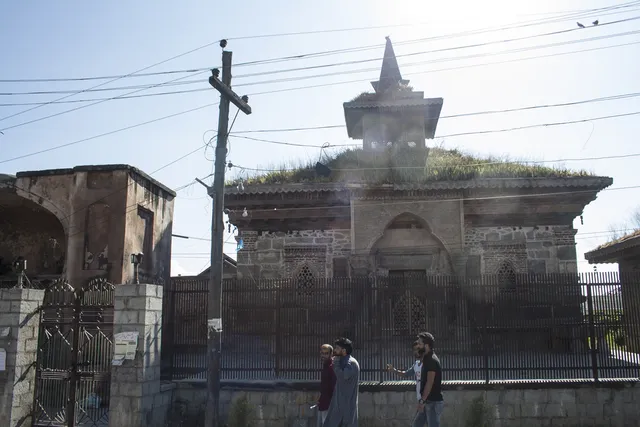
Though the site has been sacred for centuries, the current structure was commissioned in 1912 by Maharaja Pratap Singh and later renovated by Maharaja Hari Singh. The temple combines Kashmiri and Hindu design, featuring a white marble sanctum built on an island in the middle of the sacred spring, accessible via a quaint bridge. The main shrine houses the idol of Goddess Ragnya Devi and is surrounded by chinar trees, adding to the serene atmosphere. Remnants of older structures beneath the spring attest to its ancient sanctity.
Religious Significance and Ritual Practices
Kheer Bhawani is the kuldevi (patron goddess) of Kashmiri Pandits. The temple is named for the traditional offering of kheer (sweet rice pudding), symbolizing devotion and gratitude. Daily rituals include prayers, aarti, and the pouring of kheer, milk, and flowers into the spring. The annual festival of Jyeshtha Ashtami is the temple’s most significant event, drawing pilgrims for collective rituals, hymns, and prasad distribution.
The Sacred Spring: Mystique and Beliefs
Color-Change Phenomenon
The septagonal sacred spring is the focal point of the temple, renowned for its ability to change colors—ranging from blue, green, and white to rare instances of red, pink, or black (Raegnya Bhagwati Blessings; Ground Report). These changes are interpreted by devotees as divine signals:
- Light Colors (white, pink) Auspicious, indicating peace and prosperity.
- Red/Crimson Warning or sign of challenges.
- Black/Dark Considered ominous, believed to foretell turmoil (e.g., prior to the 1990 exodus or significant regional unrest) (Jammu.com).
Spiritual and Scientific Interpretations
Devotees see the color shifts as expressions of the goddess’s moods. Science attributes the changes to factors like mineral content, algae, and light reflection (Raegnya Bhagwati Blessings).
Rituals and Offerings
Devotees offer kheer, milk, and flowers into the spring. The act of offering is central, with many pilgrims tying yellow threads (mangal sutra) on their wrists and collecting water as a sacred relic. The water is believed to have healing and purifying powers (Myoksha).
Festivals and Cultural Importance
Kheer Bhawani Mela (Jyeshtha Ashtami)
Held in May or June, this festival is the spiritual and social highlight of the year. Thousands of pilgrims—mainly displaced Kashmiri Pandits—converge at the temple for collective prayers and offerings. The mela is marked by:
- Mass Gatherings Community reunions and spiritual celebrations.
- Ritual Offerings Especially kheer, as a symbol of devotion.
- Communal Harmony Local Muslim communities participate, assisting pilgrims and providing offerings (thedailyguardian.com).
Practical Visitor Guide
Visiting Hours and Entry
- Timings Typically 6:00 AM to 7:00 or 8:00 PM; extended during festivals.
- Entry Fee Free for all visitors; donations are welcome (Gokshetra).
- Online Darshan Booking During peak seasons, book slots via the official temple website.
Accessibility and Facilities
- Wheelchair Access Paved pathways and ramps; accessible restrooms.
- Transport About 20–25 km from Srinagar; taxis and buses available (ChaloGhumane).
- Restrooms and Drinking Water Available on premises.
- Medical Aid Basic facilities at the temple; advanced care in Srinagar.
Dress Code and Etiquette
- Clothing Modest attire required; cover shoulders and knees.
- Footwear Remove before entering the temple.
- Photography Restricted inside the sanctum; permitted in designated outdoor areas.
Travel Tips and Safety
- Arrive early during festivals.
- Secure valuables in crowded conditions.
- Respect rituals and local customs.
- Follow security guidelines, especially during large gatherings (News9Live).
How to Reach
- From Srinagar 45 minutes to 1 hour by car/taxi.
- Nearest Airport Sheikh ul-Alam International Airport, Srinagar (33 km).
- Nearest Railhead Jammu Tawi (290 km).
Accommodation Options
- Tulmulla Limited options; basic lodges.
- Srinagar Wide range of hotels, guesthouses, and houseboats; advance booking advisable during festivals (Gokshetra).
Nearby Attractions
- Indira Gandhi Memorial Tulip Garden Asia’s largest tulip garden (Gokshetra).
- Thajiwas Glacier Trekking and scenic views near Sonmarg (ChaloGhumane).
- Gadsar Lake High-altitude alpine lake.
- Dal Lake Houseboats and shikara rides in Srinagar.
- Mughal Gardens Nishat Bagh, Shalimar Bagh, and Chashme Shahi.
- Shankaracharya Temple Panoramic views over Srinagar.
- Other Religious Sites Shri Amarnath Ji and Mata Vaishno Devi (KashmirTourPackage).
Local Experiences and Cultural Insights
- Try Kashmiri cuisine such as Rogan Josh and Kahwa.
- Shop for Pashmina shawls and carpets in Srinagar markets.
- Experience the region’s unique blend of festivals and interfaith traditions.
Frequently Asked Questions (FAQ)
Q: What are the Kheer Bhawani Temple visiting hours?
A: Generally 6:00 AM to 7:00 or 8:00 PM; timings may extend during festivals.
Q: Is there an entry fee or ticket required?
A: Entry is free; no tickets required.
Q: How can I reach Kheer Bhawani Temple from Srinagar?
A: Approximately 25 km by taxi, bus, or private vehicle.
Q: Is the temple accessible for differently-abled visitors?
A: Yes, with ramps and accessible restrooms.
Q: When is the best time to visit?
A: During the Kheer Bhawani Mela in May–June for a cultural experience, or in spring/autumn for a quieter visit.
Q: Is photography allowed?
A: Only in designated outdoor areas; restricted inside the sanctum.
Essential Contacts
- Local Police Dial 100 (emergency)
- Tourist Information Srinagar Tourist Reception Centre
- Medical Aid Facilities in Tulmulla; hospitals in Srinagar