Place
Salem
India Updated Apr 2026
The air in Salem smells of mango sap and diesel exhaust, a combination that makes perfect sense once you realize this Tamil Nadu city produces both the sweetest Alphonso mangoes in India and enough steel to build half the country's buses. From the four encircling hill ranges that trap morning mist like smoke in a bowl, you can watch textile looms clatter through the night while the lights of Yercaud twinkle 4,600 feet above—Salem's impossible geography of industry and paradise compressed into thirty-five kilometers.
 Photo: Frank van Dijk / Pexels
- Attractions
- 20
- Audio
- 54 min
- Trip length
- 2–3 days
- Best season
- October–March
Why Salem
Built from cited sources · see the method · How we make our guides →
This is Kongu Nadu country, where the Tamil spoken carries the flat vowels of the west, and lunch arrives on stainless steel thalis instead of banana leaves. The district headquarters building displays a British cannon pointed at nothing in particular, while inside, clerks process permits for sago factories that make the pearls in your bubble tea. Silver anklets here cost half what you'd pay in Chennai because the metal travels exactly zero kilometers—Salem refines it, beats it, sells it from the same workshop.
The city's real genius is timing. Come May and the plateau above town erupts in a purple blaze of kurinji flowers that bloom once every twelve years, just as the plains below hit 42°C. That's when locals escape to Yercaud's 22°C evenings for ₹25 bus rides, carrying steel tiffins of mutton biryani from Selvi Mess because even hill stations taste better with Salem spice. Between the mango orchards that glow like lanterns at dusk and the textile mills humming through power cuts, this place has mastered the art of being two contradictory things at once.
Yercaud’s Cheap Thrill
A 35-km switchback ride lifts you to 1,515 m where the lake steams at dawn and the botanical garden labels every leaf like a library. Locals call it the Poor Man’s Ooty; the views cost ₹30 in the state bus and taste of eucalyptus.135-Foot Minaret
Tipu Sultan’s 1780 Jama Masjid skewers the skyline with a brick minaret taller than a 12-storey building; climb the internal spiral and the city spreads below like a weaving loom.Mango City
Arrive April–June and the freight trucks on Omalur Road exhale the perfume of Alphonso; the district ships 300,000 tonnes a year and the juice bars sell it by the glass for ₹25.
Places to Visit
Not every monument, just the ones we'd walk you past ourselves.
-
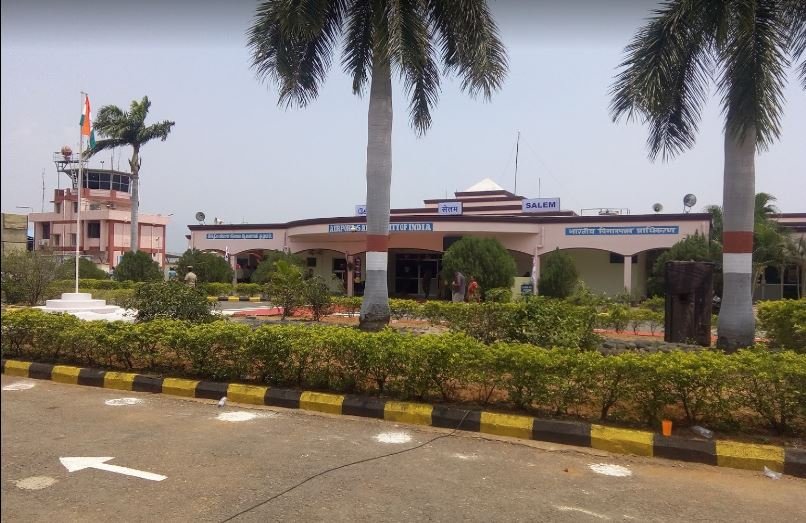
Salem Airport Salem Airport, situated in the heart of Tamil Nadu’s vibrant city of Salem, serves as a crucial gateway to Central Tamil Nadu and its surrounding districts…
- Kiliyur Falls Nestled in the scenic Shevaroy Hills of Tamil Nadu, India, Yercaud is a captivating hill station known for its picturesque landscapes, rich history, and…
- Vinayaka Missions University Vinayaka Missions University, officially known as Vinayaka Mission’s Research Foundation (VMRF), is a prominent deemed-to-be university located in the…
Neighborhoods
Where to wander, by quarter — each with its own rhythm.
Five Road
Where Salem's teenagers escape parental supervision. The intersection spits out five lanes of traffic and an equal number of Instagram-friendly cafés—Cafe Culture's neon signs compete with filter-coffee veterans who've been here since the junction had traffic lights. Come 8 pm, the air fills with exhaust and sizzling tandoors as families queue for Barbequeen's ₹269 unlimited Mandi, a price point that makes college students weep with gratitude.Fairlands
Government quarters and mango warehouses share walls here, creating streets that smell simultaneously of bureaucracy and ripe fruit. The museum hides hero stones older than the city itself, while Forest Meadows hosts Salem's only proper New Year's Eve rager—10,000 people, drone shows, and bouncers who learned crowd control at temple festivals. It's where bureaucrats' kids sneak beers behind marriage halls named after long-dead Gounder chieftains.Old Fort Area
The original walled city compressed into three square kilometers of collapsing grandeur. Kottai Mariamman's gopuram rises above houses so old their door numbers are painted in pre-Independence script; during July's fire-walk festival, the streets run red with kumkum water and the air crackles with drumbeats loud enough to drown the mosque's 135-foot minaret. Here, textile merchants still weigh silver on scales older than their grandfathers, and every other building claims Tipu Sultan once tethered his horse outside.Shevaroy Hills (Yercaud)
Technically outside city limits, but Salem's residents treat the 35-km drive like crossing town. The road climbs through 20 hairpin bends where trucks crawl in first gear while monkeys wait for passengers to toss banana peels. At 4,600 feet, colonial-era bungalows sink into coffee estates, and the lake reflects sky so perfectly that first-time visitors often photograph the reflection instead of the actual clouds. Weekends see Chennai license plates parked beside Tamil Nadu state buses, both disgorging families who've come to escape the heat that Salem itself manufactures.New Bus Stand Vicinity
Salem's cardiovascular system pulses here. The integrated terminus handles 2,000 buses daily, and the surrounding streets have evolved to feed people who might wait four hours for a connection. Selvi Mess serves biryani from aluminum pots scraped clean by 2 pm; nearby, stalls sell mango slices dusted with chili powder to passengers who'll eat them sticky-fingered through four-hour rides to Coimbatore. The air tastes of diesel and anticipation.Ariyanoor
Four kilometers of highway temples that turn NH 544 into a devotional traffic jam. The 1008 Lingam complex glitters with polished black stones arranged like a stone garden for Shiva, while buses 68A and 75 wheeze past carrying pilgrims who've come to add one more lingam to the count. Behind the temples, mango orchards stretch to the horizon—during May's harvest, the fruit sells for ₹40 a dozen from roadside carts, cheaper than water bottles at the petrol pump opposite.
Plan your trip
Before you go
- Getting There
- Fly Salem Airport (SXV) if IndiGo’s patchy 2026 schedule lands when you do; otherwise Trichy (TRZ, 135 km) or Coimbatore (CJB, 150 km). Salem Junction is a divisional rail hub—daily expresses to Chennai, Bangalore, Cochin. NH 44, 544 and 79 slice through town.
- Getting Around
- No metro; the city moves on TNSTC town buses (₹5–₹15) from Old and New Bus Stands. Autos run on metre-refusal—bargain to ₹60 for 5 km. Rental two-wheelers appear near Junction station; no public bike-share yet.
- Climate & Best Time
- Winter (Nov–Feb) 19–32 °C, dry and gold. Summer (Mar–May) tops 38 °C; district issued heat-wave warnings March 2026. Monsoon rain peaks Sept–Oct (180 mm). Visit Nov–Feb for city temples, June–Sept for Yercaud waterfalls.
- Language & Currency
- Tamil first, English works in hotels and booking apps; Hindi draws blank stares. Currency is Indian rupee—keep ₹20 notes for bus snacks; UPI QR codes are everywhere.
Where Mango Groves Meet Steel Mills
From Kongu country market town to Tamil Nadu's industrial hill-gateway
- c. 300 BCE
Megalithic Urnfields
On the Shevaroy ridge, villagers still unearth black-and-red ware urns the size of water barrels when they terrace new coffee plots. Archaeologists say the burials belong to an Iron-Age community that traded the gneiss hills for salt and conch shells from the Bay. The dead were folded into urns with bronze spears and the first mangoes ever cultivated in South India.
- c. 750 CE
Sugavaneswarar Temple Rises
Pandya stone-masons sank a 12-meter well through laterite to hit the perennial spring, then carved a lingam from the living rock. The shrine to Shiva-as-sugarcane-god gave the settlement its name: Salem, from sailam, the cane fields that still smoke at harvest. The temple tank became the city's first measuring point; every street grid spills south from here.
- 1370
Fort Wall Completed
Vijayanagara captains, fresh from victory at Madurai, ringed the market with granite blocks hauled from the Kariyaperumal hills 14 km away. The wall was only three meters high but thick enough for bullock carts to patrol the rampart. Inside, weavers stretched cotton warps from banyan to banyan; the dye vats smelled of indigo and sour tamarind.
- c. 1660
Kottai Mariamman Planted
A cholera caravan stopped at the fort gate; the sole survivor, a girl carrying a teakwood goddess, vowed to build her a temple if she lived. The town did live, and the shrine to Mariamman—smallpox goddess, protector of borders—went up against the inside of the east wall. Festival drums still rattle the same loosened granite each July.
- 1768
Tipu's Cavalry Storms Salem
Hyder Ali's son rode in at dawn, hooves sparking on the stone bridge over the Thirumanimuthar. The Mysore flag replaced the fading Vijayanagara yellow over the fort; revenue collectors demanded 40% of every loom's output. Textile merchants buried silk saris in mango groves; some bolts are still unearthed by farmers after heavy rain.
- 1792
British Collectors Arrive
After Cornwallis defeated Tipu, Salem district was ceded to the East India Company. Alexander Read, first collector, set up his kacheri inside the abandoned fort and mapped the land in chains. He taxed fields, looms, even toddy pots, but also planted the first Australian eucalyptus on the Shevaroy slopes to secure a fuel supply for the troops.
Show the full timeline (18 moments)
- 1809
Shevaroy Coffee Planted
Scottish botanist Thomas Finlay smuggled seven Arabica seedlings from Mocha up the ghat road built by tribal Kurumbas. On a 1,520-metre ridge he sliced terraces no wider than a dining table into the rock. By 1825, Yercaud beans were selling in London as 'Mysore Mountain', and the hill station cooler-than-Ooty myth began here, not in the Nilgiris.
- 1854
Rail Reaches Salem Junction
The first locomotive whistled in on 1 July, dragging three teak coaches and a cattle wagon full of mangoes. The station was built with brick made from the same red earth that stains cotton shirts during harvest. Overnight, Salem's textiles reached Madras port in 18 hours instead of eight bullock-cart days.
- 1895
Omandur Ramasamy Born
In a tiled house in Omandur village, a boy who would speak Tamil like thunder took his first breath. As chief minister of Madras State he abolished zamindari without bloodshed and opened the first mid-day-meal scheme in any Indian state. He never moved to Chennai permanently; every election night he returned to Salem's dry-air silence.
- 1921
Gandhi Addresses Mango Farmers
Under a 200-year-old banyan outside Sugavaneswarar temple, Gandhi urged 3,000 growers to refuse plantation taxes. The next morning, Salem bazaars shut; even the silver anklet makers downed tools. Revenue collapsed 70% that month, forcing the collector to negotiate—one of the few tax strikes in the Presidency that ended without arrests.
- 1935
Sangagiri Fort Bombed
The British army, testing surplus WWI howitzers, used the abandoned 15th-century fort as target practice. Twelve shells punched through the laterite; one still lodges above the seventh gate. Local boys collect shards for kitchen scrapers; the scorch marks look fresh after every monsoon.
- 1950
Salem Steel Plant Approved
Independent India's cabinet, desperate to move bomb-making away from border cities, chose the iron-ore ridge at Kanjamalai 18 km west. The first blast furnace roared in 1955, turning rust-red hills into stainless steel. Night shift workers watched molten metal pour like sunrise in reverse.
- 1953
Mettur Floodgates Open
Nehru pressed the button that lifted 65-ton gates on the Cauvery, 60 km from Salem. Water raced down 90 km of new canals, turning rain-shadow acres into two-rice seasons. Salem district's population jumped 23% in the decade that followed, as dry-land farmers became wet-land landlords overnight.
- 1956
Saroja, Tamil Cinema's First Stunt Queen
Born in Salem's Gugai quarter, Saroja learned to ride Bullet motorcycles on the steel plant's service roads. In 1964's 'Adutha Veettu Penn' she jumped a Morris Minor over 19 clay pots; producers insured her legs for one lakh rupees, more than the film's budget. She bought her parents a tile-roof house on the same street where stunt boys still practice wheelies at dawn.
- 1995
Mango GI Tagged
The federal registry granted Salem its first geographical indication: 'Salem Malgoa', a round mango that tastes faintly of cardamom and never fibres between the teeth. Overnight, orchard prices doubled; trucks with Andhra plates pretended to load here to fetch the premium. The tag saved 4,000 hectares of old groves from real-estate developers.
- 2008
IT Corridor Opens at Omalur Road
The first glass cube went up opposite the 150-year-old collectorate, reflecting red-brick colonial arches in blue-tinted panels. Tata Consultancy alone hired 3,000 engineering graduates from Salem and neighbouring Dharmapuri, paying salaries that could buy a mango orchard in one bonus. Night canteen dosas cost ₹18, cheaper than the railway platform stall below.
- 2016
Mariyappan Clears 1.89 m in Rio
From Periavadagampatti village, where the bus still stops at 6 a.m. for coffee pickers, Mariyappan Thangavelu soared over a bar higher than the village temple doorway and landed India's first Paralympic high-jump gold. Salem district declared a holiday; every school TV was wheeled into the courtyard. The boy who sold cucumbers by the roadside had cleared more than a height—he vaulted an entire district into headlines.
- 2019
Salem-Chennai Expressway Cleared
Land acquisition notices appeared on betel-shop walls: 277 km of eight-lane concrete slicing the mango belt to four hours. Farmers protested with fruit, dumping 20 tonnes of Malgoas on the highway. The state doubled compensation, and earth-movers arrived before the last crate rotted. When finished, Salem will be closer to the coast than Madurai is to its own airport.
Who lived here
-
Chief Minister of Tamil Nadu · born 1953
Edappadi K. Palaniswami
Born in Edapadi, Salem district
He still campaigns in the cotton-market streets where he once weighed bales as a boy. If you mention his name at the old bus-stand tea stalls, someone will point to the house with green shutters he visits between election rounds.
-
Paralympic High Jumper · born 1995
Mariyappan Thangavelu
Born in Periavadagampatti village, Salem district
He trained by leaping over irrigation channels in the mango orchards outside Salem. The district buses still honour his seat—row 3 left side—where he carved a notch for each height he cleared barefoot.
-
Last Governor-General of India · 1878–1972
C. Rajagopalachari
Started political career in Salem
Rajaji’s first public speeches were delivered under the banyan tree that still shades Salem’s corporation playground. Locals claim the tree drops extra leaves every 10 December, the date he took office in 1948.
Where to Eat
Where locals actually book dinner — not the tourist menus.
Insider tips
Small things that change how the city treats you.
Biryani Before Noon
Selvi Mess sells out its benchmark biryani by 1 pm. Arrive before noon, carry cash, and expect a working-class hall with zero frills.Lake at Golden Hour
Mookaneri Lake faces west; sunset turns the 58-acre restored water into liquid copper. Bring a wide-angle lens and shoes you don’t mind dusting.Yercaud Early Escape
Leave Salem city by 7 am to beat the bus convoys up the 30 km ghat. The 20 hair-pin bends stay fog-free until 9.Veg Default
Most small mess halls are vegetarian-only; ask before you sit. Non-veg is plentiful but usually sign-posted in Tamil: ‘சைவம் இல்லை’.Friday Mosque Minaret
Jama Masjid’s 135-ft minaret is open 9:30 am–6 pm; climb is narrow and shoe-free. Views stretch to the Shevaroy Hills on clear days.Nightlife = Tickets
Salem has no bar crawl; nightlife is ticketed lawn parties at Forest Meadows. Book online or you’ll be stuck in your hotel by 9 pm.
Gallery
The city, as it actually looks.

Frequently asked
Is Salem worth visiting for tourists?
Yes, if you pair city sights with quick hill or dam escapes. One morning covers the 14th-century fort area and mango markets; the same afternoon you can boat on Yercaud Lake or stand on the lip of Mettur Dam. It’s a base-camp town, not a destination you wander for days.
How many days should I spend in Salem?
Two full days is the sweet spot. Day 1 for the city core—Sugavaneswarar Temple, Government Museum, Mookaneri Lake sunset. Day 2 for either Yercaud hill loop or Mettur-Sankagiri fort circuit. Add an extra night if you want to time the May flower show or January cattle fair.
Do I need to pre-book transport to Yercaud?
No. State buses leave the New Bus Stand every 30 minutes; the ride costs ₹37 and takes 90 minutes up the ghat. Taxis park outside the stand and charge ₹1,200–1,500 round-trip if you want door-to-hill freedom.
Is Salem safe for solo female travellers?
Generally yes, but nightlife shuts early and auto drivers quote inflated fares after 9 pm. Stick to prepaid autos at bus stands, avoid empty lake roads at night, and you’ll move around without hassle.
Where can I find non-vegetarian food that locals trust?
Selvi Mess (New Bus Stand) for biryani, Barbequeen for ₹269 unlimited Mandi rice, and Urban Dhaba for Chinese-bar combo on the outskirts. All three are crowded, brightly lit, and keep standard Tamil dinner hours: 7–9:30 pm.
Can I pay by card in Salem?
Only at hotels like Radisson and chains such as Barbequeen. Street stalls, town buses, and temple counters are cash-only. Carry ₹100 notes; change is often scarce.
Pick up where you left off
Saved and recently read places — kept on this device only.
Photo credits (1)
- Frank van Dijk — Pexels License (https://www.pexels.com/license/) — Source: https://www.pexels.com/photo/36998144/
Photos may have been resized or cropped.