Place
Rajkot
India Updated Apr 2026
The first thing that hits you in Rajkot is the smell of gathiya—warm chickpea strands, softer than a whisper, drifting from Labela Gathiya House at 6:43 a.m. while the rest of India is still rubbing sleep from its eyes. This is the city that taught Gandhi how to wear a dhoti and taught Gujarat how to dance garba until the soles of its feet smoked. Rajkot, India, doesn’t shout; it saunters up, offers you a paper cone of jalebi caramelized in camel-hued sugar, and dares you to keep track of time.
 Photo: Abhishek Navlakha / Pexels
- Attractions
- 12
- Audio
- 34 min
- Trip length
- 2–3 days
- Best season
- October–February
Why Rajkot
Built from cited sources · see the method · How we make our guides →
Time, here, is negotiable. Office clocks run ten minutes late, dinner starts after 9 p.m., and the Rotary Dolls Museum keeps 1,600 puppets frozen mid-bow so you can catch your breath. Between the black-and-white photographs of Kaba Gandhi no Delo—where young Mohan washed his own shirts—and the fluorescent roar of the Race Course Ground at night, the city folds centuries into a single lane. You’ll walk past Art-Deco balconies painted pistachio, then stumble onto a cricket match so loud the ball disappears into cheers.
Winter mornings belong to Lalpari Lake: flamingos stepping like pink secretaries across the mirror water while the zoo’s lions yawn in the background. By afternoon you’re haggling for hand-beaten brass pots in Sadar Bazaar, your palms smelling of copper and chaat masala. Come evening, climb the Race Course Tower: the sun drops behind cotton-gin chimneys, and every rooftop in sight releases kites that look like confetti someone forgot to sweep up.
Rajkot’s genius is that it never tells you it’s important. It lets you discover that the Watson Museum has a 2,000-year-old coin smaller than your thumbnail, that the Jagat Mandir balances on 60 pillars because a 1934 architect wanted to see if Hindu, Islamic, Christian and Buddhist stones could hold hands. You leave heavier—pocketfuls of gathiya, camera full of garba spins—yet lighter, because you’ve tasted a city that refuses to take itself seriously while quietly rewriting the rules of how to be Indian.
Where Gandhi Learned to Question
Rajkot isn’t just stamped with Gandhi’s name—Alfred High School (now the Mahatma Gandhi Museum) is where the boy actually sat through seven years of classes, 10 a.m.–5 p.m. daily except Monday. The 7 p.m. light-and-sound show condenses those years into twenty minutes of sepia-toned gossip you’ll repeat for days.A Temple That Borrowed From Every Faith
Jagat Mandir, finished in 1934, stands on 60 red-sandstone pillars carved with Quranic geometry, lotus petals, and the occasional Christian cross—proof that Rajkot once liked its religion mixed, not segregated.Flamingos in the Industrial Backyard
Lalpari and Randarda Lakes, on the city’s fringe, fill with pelicans and flamingos each winter—best viewed at dawn before the textile mills wake up.Evening Calories on the Race Course
After 6 p.m. the Race Course Ground turns into an open-air canteen: kathi rolls sizzling beside sugar-cane juicers while joggers pretend not to notice. It’s Rajkot’s living room and dining table combined.
Places to Visit
Not every monument, just the ones we'd walk you past ourselves.
-
Watson Museum Located in the bustling city of Rajkot in Gujarat, India, the Watson Museum stands as a beacon of historical and cultural significance.
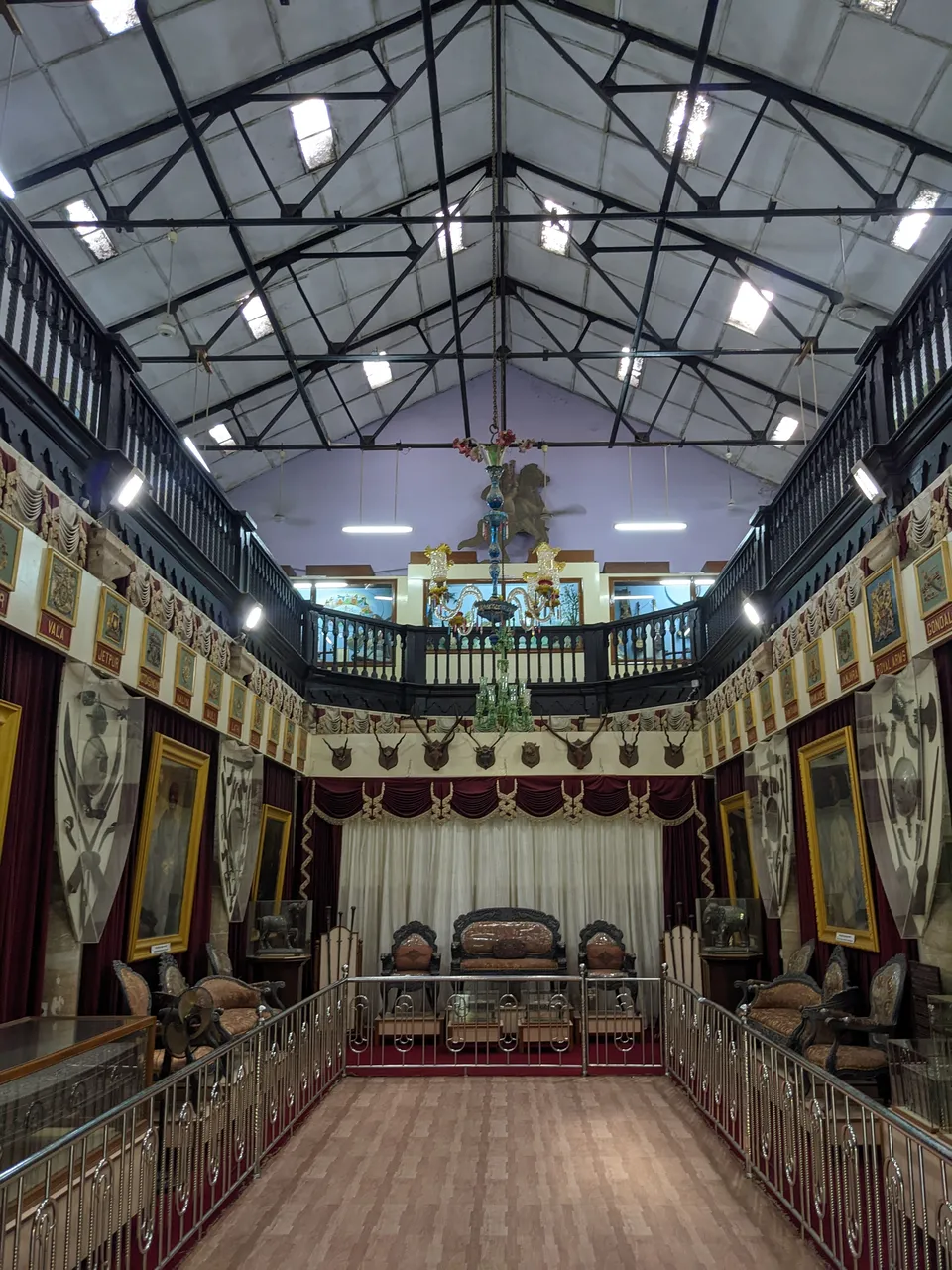
- Mahatma Gandhi Museum The Mahatma Gandhi Museum in Rajkot, Gujarat, stands as a monumental tribute to the life and teachings of Mohandas Karamchand Gandhi, fondly known as the…
- Rajkot, often celebrated as the "City of Princes," is a vibrant and culturally rich city nestled in the heart of Gujarat, India.
Neighborhoods
Where to wander, by quarter — each with its own rhythm.
Old City / Lohana Para
A lattice of 12-foot lanes where motorbikes fold their mirrors to pass. Gathiya steam clouds the air at Labela, tailors sit cross-legged on raised wooden platforms stitching kurtas in saffron and peacock blue, and the 1907 BAPS Swaminarayan Mandir releases bell clangs that ricochet off balconies painted the color of pistachio gelato. Come at 8 a.m. for fafda straight from the kadai; leave at 8 p.m. with your fingertips smelling of warm besan and antique brass.Jubilee Garden Heritage Quarter
Colonial Rajkot compressed into four city blocks. The Watson Museum guards a 14th-century Jain bronze so smooth it looks wet; outside, banyan roots strangle a 1935 bandstand. Lang Library smells of camphor and brittle newspaper—ask politely and the caretaker will show you a first edition of Gandhi’s Gujarati translation of the Gita. Evening brings families to the gardens for chutney-and-chevdo picnics under lamp-posts that flicker like tired fireflies.Race Course Ground & Tower
The city’s open-air living room. Joggers at dawn, aunties power-walking in neon saris by dusk. Street vendors roll out pav bhaji tandoors on bicycle wheels; the 60-meter watchtower charges ₹20 for a view that stretches from textile mills to flamingo-dotted Lalpari. When floodlights click on for district-level cricket, the whole ground smells of buttered corn and cheap victory.Kalavad Road Strip
Rajkot’s answer to a boulevard: six lanes of impatient hatchbacks, malls with valet parking, and cafés serving espresso strong enough to make an auto-driver blink. College kids debate exam syllabi over ₹40 filter coffee; Jain sweet shops next door sell almond-pista sukhdi that shatters like toffee glass. After 10 p.m. the neon signs reflect off windshields so brightly you could read the stock-market tickers in the shine.Lalpari Lake Fringe
Where the city exhales. Winter mornings start with pelicans banking over water the color of beaten steel; the zoo’s lion groans at 7:15 sharp, a living alarm clock. Local photographers balance telephoto lenses on rental tripods while chai-wallahs pour tea into tiny cups that stain the mud brown. Stay past sunset and you’ll hear migratory cranes before you see them—wingbeats like someone shaking out heavy silk.Aji Dam Garden Belt
Eight kilometers out, the air cools two degrees and smells of wet mud instead of diesel. Families rent pedal boats shaped like swans, kids taunt crocodiles dozing behind low wire, and the evening light turns the reservoir mercury-silver. Weekends mean dhokla picnics under neem trees; weekdays you get shepherds grazing goats among marigold beds planted by the municipality to keep the dam pretty for postcards.
Plan your trip
Before you go
- Getting There
- Fly into Rajkot International Airport, Hirasar (HSR), 30 km east of downtown—daily links to Mumbai, Delhi, Bengaluru and tri-weekly to Goa (Mopa). The old Rajkot airport is cargo-only since 2023. Highway NH 8B plugs the city into the Ahmedabad–Mumbai corridor; Rajkot Junction is the principal railhead with overnight trains to Mumbai (Saurashtra Mail) and Delhi (Rajkot–Delhi Sarai Rohilla Express).
- Getting Around
- No metro or tram. Rajkot Rajpath Ltd runs 19 BRTS corridors plus regular city buses; buy tickets in the ‘RRL Saarthi’ app with live tracking. Cycle-track network: 22.9 km, but coverage is patchy—stick to the old-city grid (Kaba Gandhi no Delo to Jubilee Garden) for walkable sightseeing. No tourist travel card exists; single bus rides ₹10–25.
- Climate & Best Time
- Winter (Nov–Feb) 9–28 °C—peak birdwatching at Lalpari Lake, comfortable park hours. Summer (Mar–May) 19–44 °C; April already hit 41.7 °C in 2026, so museums and 7 p.m. light shows are your allies. Monsoon (Jun–Sep) 22–37 °C with July dumping ~214 mm; expect flooded minor roads. Visit window: October to early March, ideally sunrise or sunset to dodge midday steeliness.
- Language & Currency
- Gujarati first, but Hindi works almost everywhere; English survives in hotels and the bigger museums. Currency is Indian Rupee (₹); small vendors prefer cash or UPI—foreign visitors can load the zero-fee ‘UPI One World’ wallet for QR-code payments.
- Safety
- Traffic is the real hazard—use app cabs after dark, especially for the 30 km ride from Hirasar airport. Emergency numbers: police 100, unified helpline 112 (since July 2025), tourist helpline 1363. Women travellers should share live location on late auto rides; violent crime is low, but road confidence is essential.
Where Gandhi Learned to Resist
Trading-post to cricket-mad capital in 200 years
- 1610
Nawab gifts the village
Mughal governor Nawab Mehdi Khwaja hands the small village of Rajkot to Thakur Sahib Vibhoji Ajoji Jadeja for helping crush a rebellion. The grant is written on parchment that still smells of horse-sweat and gunpowder. A mud-fort goes up beside the Aji river, the first stone structure in what had been only reed huts and banyan shade.
- c. 1720
Jadeja fort rises
Thakur Ranmalji builds a proper stone fort with 6 m thick walls wide enough for two horsemen to ride abreast. Artisans from Sindh carve a three-storey palace inside; teak beams come floating down the Bhadar river after monsoon. The town’s first bazaar—eight cloth stalls and a betel-leaf shop—opens just outside the fort gate.
- 1805
British Resident moves in
East India Company posts a Resident to Rajkot, turning the sleepy court into a strategic listening-post between Gaekwad Baroda and Jadeja Kathiawar. The Resident’s flag—a Union Jack sewn by local tailors—flies from a 12 m bamboo pole above the old fort. Overnight, English replaces Persian in official seals.
- 1820
Alfred High School opens
Colonial administrators open Kathiawar High School—later Alfred High—in a single-storey stone block with lime-plaster walls so thick classrooms stay cool at noon. Its clock, imported from Birmingham, strikes every quarter hour; farmers three miles away set their day by it. The first class has 27 boys, two of them future diwans.
- 1869
Mohandas Gandhi born in Porbandar
The boy who will make Rajkot famous arrives 90 km away, but his father Karamchand becomes Rajkot’s diwan in 1876. Seven-year-old Mohandas will spend his most impressionable years here, copying Latin verbs under the same clock that once timed cavalry drills.
- 1885
Railway steams in
First train hisses into Rajkot junction at 11:03 a.m. on 5 May, pulling three coaches and a mail van. The station is built in pink Gondal stone; its platform roof leaks so badly passengers huddle under umbrellas sold by enterprising hawkers. Cotton bales now reach Bombay in 36 hours instead of eight days by bullock cart.
Show the full timeline (19 moments)
- 1891
Teenage Gandhi leaves
After passing his matriculation exam in the very classroom where he once carved initials on a wooden desk, 18-year-old Mohandas boards a steamer from Bombay to London. Friends throw peanuts on the platform; his mother weeps behind a veil. He carries a tin trunk made in Rajkot bazaar and a head full of local grievances.
- 1912
Watson Museum opens
Political Agent Colonel Watson bequeaths his collection—74 bronze Jain tirthankars, 200 silver coins, a 3 m-long cannon from Mughal siege—housed in a new Indo-Saracenic hall facing Jubilee Gardens. Schoolchildren get half-day holidays to see “curiosities from 600 years”; the smell of naphtha lamps lingers for decades.
- 1937
Gandhi’s Rajkot Satyagraha
Returning as world-famous Mahatma, Gandhi leads a 5,000-strong protest against the Thakore’s autocratic rule, camping under a mango tree now marked by a brass plaque. When the Thakore reneges on promised reforms, Gandhi fasts for three days in Dharmendra Road bungalow; the city’s mills shut in solidarity. The settlement becomes a template for future civil-disobedience campaigns.
- 15 Aug 1947
Rajkot joins India
At 11 p.m. the Jadeja flag is lowered for the last time; the tricolour rises to the crackle of radio broadcasts from Delhi. Firecrackers bought from the same bazaar where Gandhi once purchased law books explode over the fort walls. The Thakore retains his palace but loses his courts; English signboards are painted over in Gujarati overnight.
- 1948
State merges into Saurashtra
Rajkot becomes interim capital of the new Saurashtra union, cobbled together from 220 princely states. Bureaucrats work under ceiling fans in corrugated-roof sheds; files travel by bicycle between ministries. The city’s population doubles in twelve months as clerks, tailors and tea-vendors pour in.
- 1950
Alfred High renamed Gandhi Smriti
The school that once caned the future Mahatma for poor handwriting becomes India’s first museum dedicated to his childhood. Classrooms display his 1883 report card—‘Conduct: Good, Arithmetic: Weak’. Old boys arrive in dhotis to show grandchildren the window seat where Mohandas day-dreamed.
- 1956
Rajkot becomes district HQ
Bombay State re-organisation places Rajkot at the centre of a 11,000 km² district. The collectorate moves into the former British Residency; peons still wear khaki shorts tailored in 1934. City engineers widen Karanpara Road, cutting down banyan trees older than the telegraph office.
- 1988
Cheteshwar Pujara born local
In the maternity ward less than a kilometer from Gandhi’s old school, a boy is born who will grow up batting on the Race Course Ground outfield. His father, a railway cashier, buys him a size-3 bat from the same bazaar where independence pamphlets were once cyclostyled.
- 26 Jan 2001
Earthquake flattens old city
At 8:46 a.m. a 7.7 magnitude quake buckles the 180-year-old fort walls; the Watson Museum loses its central dome. Seventy-three people die in Lohana Para lanes narrower than a bullock cart. Tents replace tile-roof homes for months; the smell of wet lime-plaster hangs like fog.
- 2004
Rotary Dolls Museum opens
A warehouse on Yagnik Road turns into a colour-burst of 1,600 dolls from 102 countries—Maori haka dancers next to Kutchi bride puppets. Children press noses against glass, the first global gallery the city has ever hosted. Entry is ₹10; the ticket itself is a paper doll you can dress.
- 2013
Saurashtra cricket wins Ranji
Led by local boys Pujara and Jadeja, Saurashtra lifts the Ranji Trophy at the Madhavrao Scindia Ground. Fireworks arc over the Aji river; sweet shops give away free jalebis shaped like bats. For one night, Rajkot forgets land deals and traffic jams and remembers what it feels like to host champions.
- 2017
Metro bid fails, BRTS arrives
The city’s dream of a metro collapses when the centre rejects funding; instead, orange-and-green buses start gliding down 10 km of dedicated corridor from Gondal to Green Chowk. Commuters complain about waiting 11 minutes at noon, but students love the free Wi-Fi that actually loads.
- 2022
New airport terminal opens
A 23,000 m² glass terminal replaces the 1935 RAF hut where passengers once queued under ceiling fans. The first flight lands at 5:12 a.m.; the smell of jet fuel mingles with wet kesar-mango crates being loaded into cargo holds. Direct flights to Dubai mean diamond merchants can breakfast at home and dine in Deira.
Who lived here
-
Leader of Indian independence movement · 1869–1948
Mahatma Gandhi
Studied and lived here 1876–1891; led 1939 Rajkot Satyagraha
He learnt his first lessons in civil disobedience in these school corridors, later returning to confront the same princely court his father once served. Today the classroom clock still stops at 5:17 p.m.—the moment he was thrown out for refusing to apologize.
-
Indian Test cricketer · born 1988
Cheteshwar Pujara
Born and raised in Rajkot; plays for Saurashtra
He still trains on the same dusty SCA nets where his father bowled endless left-arm throw-downs. Locals claim the square boundary is shorter on the side he aimed for as a boy—explaining those marathon innings that never seem to end.
-
Indian all-rounder cricketer · born 1988
Ravindra Jadeja
Saurashtra captain, based in Rajkot
His horse-riding celebrations began at the Race Course Ground next to the cricket stadium—he'd gallop there after practice. Sword-twirling at the wicket is just the public version of a Rajkot habit.
-
Bhakti poet-saint · c. 1414–1480
Narsinh Mehta
Associated with Saurashtra region; Gandhi adopted his hymn
He wandered these Kathiawar hills singing "Vaishnava Jana To," the tune Gandhi later hummed in prison. Every Navratri, garba circles still open with the same verse—poet and politician sharing one beat.
Where to Eat
Where locals actually book dinner — not the tourist menus.
Insider tips
Small things that change how the city treats you.
Dry State Rules
Gujarat bans alcohol — don’t expect hotel bars or liquor stores. Foreigners can’t buy legally either, so plan for zero nightlife beyond late-night ice cream and street snacks.Sunday Fafda Ritual
Join locals at Labela Gathiya House for fafda-jalebi before 9 a.m. on Sundays. Queues vanish after that, and the chickpea strips lose their just-fried snap.Winter Bird Window
Migratory pelicans and flamingos hit Lalpari and Randarda lakes only from October to February. Arrive by 7 a.m. when light is soft and crowds nil.Airport Shift
Scheduled flights land at Hirasar, 30 km east. Pre-paid taxis are the only reliable exit; ignore touts still pointing toward the shuttered old city airfield.Undhiyu Season
The mixed-vegetable winter dish appears only November–February. Miss it and you’ll wait a year—restaurants swap to lighter curries the day the season ends.Late Dinner Code
Locals eat after 8:30 p.m.; restaurants stay empty before then. Show up early and you’ll get reheated lunch trays—wait for the turnover at 9.
Gallery
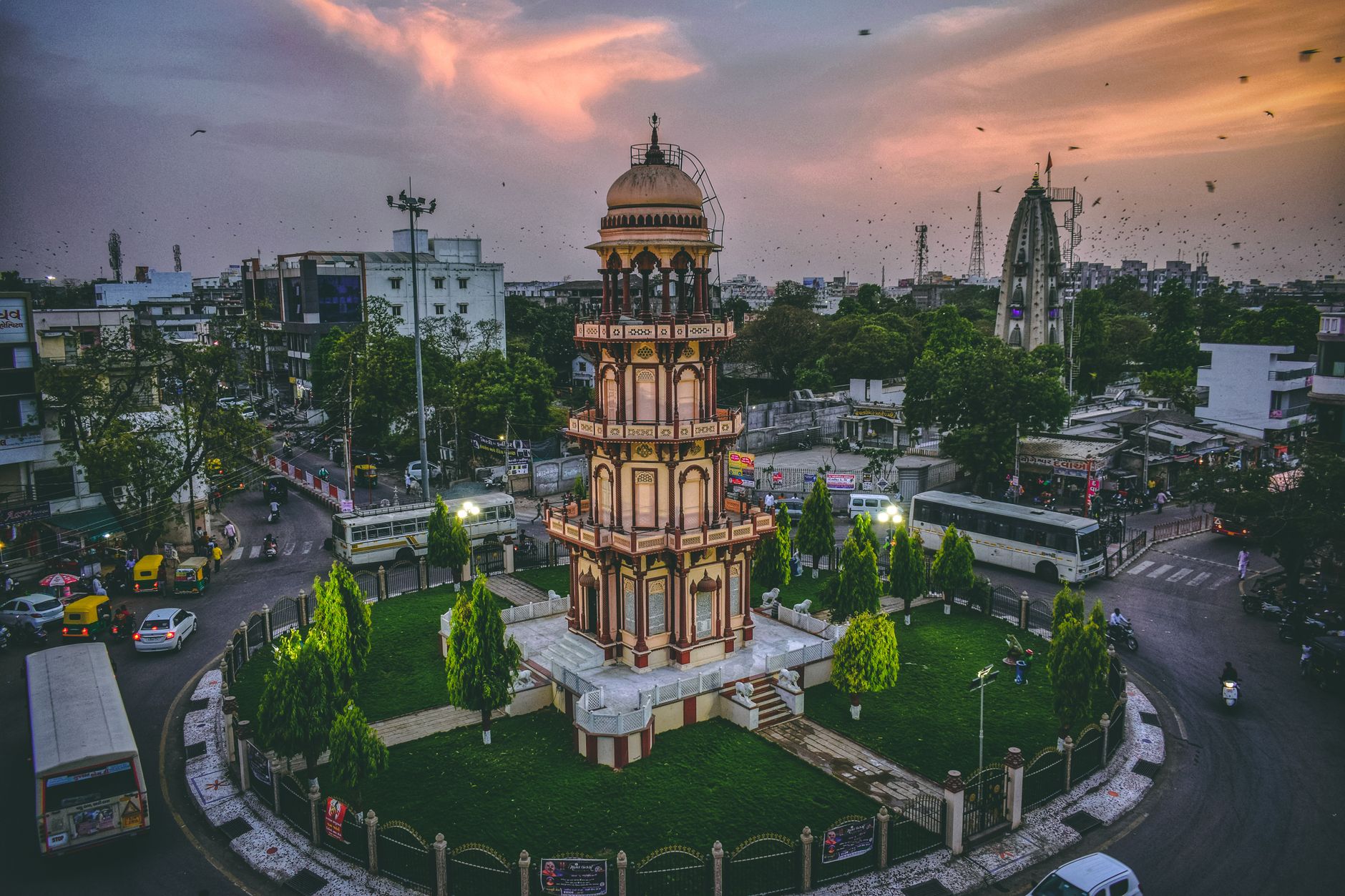
The city, as it actually looks.



Frequently asked
Is Rajkot worth visiting?
Yes, if you want Gandhi’s childhood world in vivid detail—his old schoolroom, family house, and the exact desk he carved initials into are all here. Add world-class bird lakes, a vegetarian food culture that runs like clockwork, and the loudest Navratri garba in Gujarat, and the city punches far above its size.
How many days should I spend in Rajkot?
Two full days covers Gandhi sites, the Watson Museum, Rotary Dolls Museum, and a lake sunrise. Add a third if you’ll day-trip to Gondal’s palace or Khambhalida’s 4th-century Buddhist caves. Stay longer only during Navratri when nightly garba turns the city into a nine-night dance floor.
How do I get from Rajkot International Airport to the city?
Pre-paid taxi is the only dependable option—30 km, 45 minutes, ₹700–800. No app cabs queue yet, and public buses run only when they fill, so budget travelers should team up to split the cab.
Is Rajkot safe for solo female travellers?
Yes—street crime is low and evening crowds around Race Course Ground include plenty of women jogging alone. Dress conservatively in the old city bazaars and use Uber/Ola after 10 p.m.; autos quote inflated flat rates once restaurants empty out.
What does a meal cost in Rajkot?
A heap of gathiya and chutney costs ₹40 at Labela; a full Gujarati thali runs ₹180–220 at The Grand Thakar. Even upscale vegetarian restaurants rarely cross ₹500 per head, and tapri chai is still ₹12.
Can I visit the cricket stadium?
The SCA Stadium opens for domestic and Test matches—check the BCCI calendar. On non-match days you can peer through the gates but there’s no public museum or tour; security sends casual visitors away.
When is the best weather?
October to February: 9 °C dawns, 28 °C afternoons, clear skies for lake birds and rooftop kites on 14 January. March turns hot; April–June hits 44 °C and parks empty by 10 a.m.
Pick up where you left off
Saved and recently read places — kept on this device only.
Photo credits (13)
- Abhishek Navlakha — Pexels License (https://www.pexels.com/license/) — Source: https://www.pexels.com/photo/30588229/
- Rajkot - Aji River Overview — Trinidade — CC BY-SA 4.0 (https://creativecommons.org/licenses/by-sa/4.0/) — Source: https://commons.wikimedia.org/wiki/File:Rajkot_-_Aji_River_Overview.jpg
- Mukund patel — Pexels License (https://www.pexels.com/license/) — Source: https://www.pexels.com/photo/2409361/
- Giri Elisaphotography — Pexels License (https://www.pexels.com/license/) — Source: https://www.pexels.com/photo/6212251/
- Underbridge Circle Rajkot — Apoorvjani — CC BY 3.0 (https://creativecommons.org/licenses/by/3.0/) — Source: https://commons.wikimedia.org/wiki/File:Underbridge_Circle_Rajkot.jpg
- Prakash Chavda — Pexels License (https://www.pexels.com/license/) — Source: https://www.pexels.com/photo/7013079/
- Pixel Senses — Pexels License (https://www.pexels.com/license/) — Source: https://www.pexels.com/photo/27376674/
- Hitesh Patel — Pexels License (https://www.pexels.com/license/) — Source: https://www.pexels.com/photo/24771796/
- Purvesh Photography — Pexels License (https://www.pexels.com/license/) — Source: https://www.pexels.com/photo/13972861/
- Balaji Srinivasan — Pexels License (https://www.pexels.com/license/) — Source: https://www.pexels.com/photo/5609201/
- pierre matile — Pexels License (https://www.pexels.com/license/) — Source: https://www.pexels.com/photo/36818424/
- Prakash Chavda — Pexels License (https://www.pexels.com/license/) — Source: https://www.pexels.com/photo/7013085/
- Ranjeet Chauhan — Pexels License (https://www.pexels.com/license/) — Source: https://www.pexels.com/photo/22638480/
Photos may have been resized or cropped.