An introduction.
Researched by the Audiala editorial team from historical records, architectural archives, and local expertise.
AA city that takes its name from a goddess tells you something about what matters here. Belha Devi Temple sits on the banks of the Sai River in Pratapgarh, Uttar Pradesh, India — the reason the town was once called Bela, before district maps and administrative renaming got involved. You come here not for grand architecture but for something stranger: a deity worshipped simultaneously as ancient stone pebbles and a crowned marble bust, two forms of devotion separated by centuries, coexisting in a single silver-plated shrine.
The present temple dates to 1811–1815, which makes it roughly as old as Beethoven's Seventh Symphony. Raja Pratap Bahadur Singh of Awadh commissioned it, though the sacred site beneath is far older — old enough that local tradition ties it to Lord Rama's exile in the Treta Yuga. Whether you find that plausible depends on your relationship with mythology, but the belief runs deep enough to have drawn a visit from Uttar Pradesh's Chief Minister.
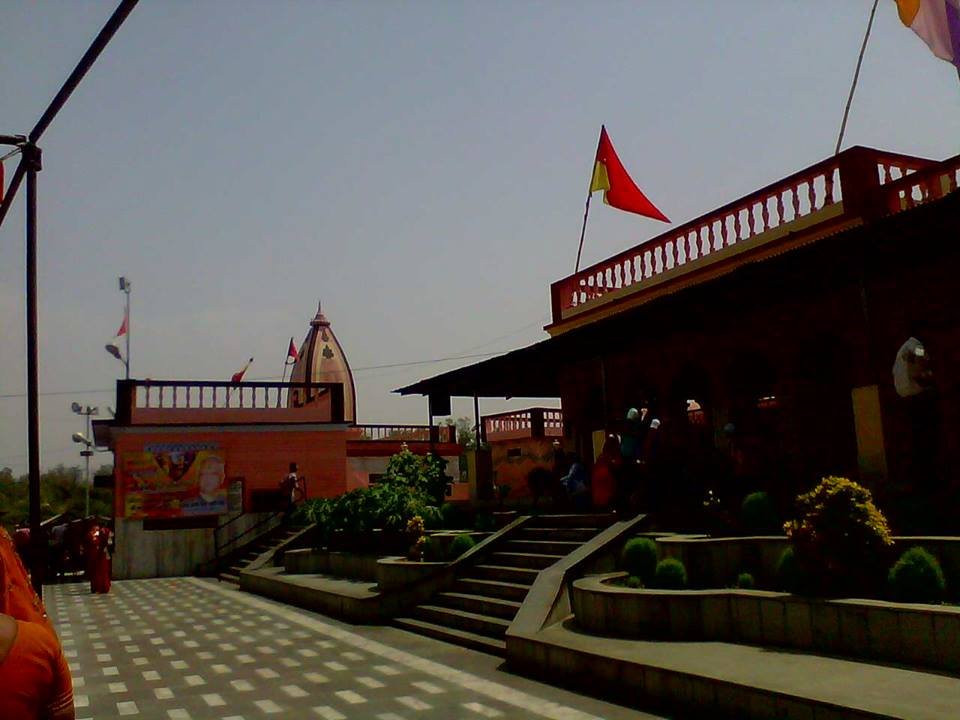
Pratapgarh sits roughly halfway between Allahabad and Ayodhya, and the temple functions as the spiritual anchor of the town. No entrance fee. No elaborate ticketing system. Just a red stone courtyard, brass railings channeling two queues of devotees, and the persistent smell of offered prasad. The nearest railway station is 2 kilometres away — close enough to walk if you're not carrying much.
01 What to see.
The Dual Deity: Pindi Stones and Marble Bust
The Red Stone Courtyard and Brass Railings
The Sai River Banks
02 In pictures.

Plan and listen to Belha Devi Temple with Audiala.
Audio guide in your pocket, itinerary in your browser. Built for the way you actually visit.
03 Visitor logistics.
The practical scaffolding for a good visit — kept short.
Getting There
Pratapgarh Junction railway station sits just 2 km from the temple — close enough to walk if you travel light, or a 5-minute auto-rickshaw ride. The nearest airport is Lucknow, roughly 180 km northwest, connected by road through Sultanpur. Buses and shared autos run frequently from Pratapgarh town center, and the temple's position on the Sai River banks makes it easy to spot once you're close.
Opening Hours
As of 2026, the temple opens at 4:00 AM in summer and 5:00 AM in winter, closing at 10:00 PM and 9:00 PM respectively. Morning aarti begins at 4:30 AM (summer) or 5:30 AM (winter) — arrive early if you want to witness it without crowds. Hours may extend during Navratri and other major festivals, so confirm locally if visiting during peak seasons.
Time Needed
A focused darshan takes 30–45 minutes, including the two-queue system that channels devotees past the dual shrines. If you want to linger on the 75×105-foot red stone courtyard, explore the Sai riverbank, and soak in the atmosphere, budget 1.5 to 2 hours. During Navratri, expect queues that can double your visit time.
Cost & Tickets
Entry is completely free — no ticket, no booking, no reservation needed. Donation boxes are placed throughout the complex, and contributions go toward temple upkeep. You can bring your own packed prasad to offer at the deity's feet; it will be blessed and returned to you.
05 Tips for visitors.
Small things that change the day.
Shoes Off, Heads Covered
Remove footwear before entering the temple complex — shoe racks are available near the entrance. Women are expected to cover their heads, and modest clothing covering shoulders and knees is appropriate for both men and women at this active Shakti shrine.
Catch the Morning Aarti
The pre-dawn aarti at 4:30 AM (summer) is the temple at its most intense — oil lamps flickering against silver-plated walls, the smell of camphor thick in the air. Arrive 15 minutes early to secure a spot near the front of the brass railing corridor.
Photography Inside
Photography of the inner sanctum and the silver-embossed marble bust shrine is generally restricted. The red stone courtyard and the Sai River backdrop, however, make for striking shots — aim for the golden hour light that hits the temple facade in early morning.
Bring Your Own Prasad
Unlike many temples that sell prasad at the gate, Belha Devi's tradition is to bring your own packed offering. Place it at the deity's feet during darshan and it's returned to you blessed. Sweets and fruit are the standard choices — avoid non-vegetarian items entirely.
Navratri Is Peak Season
The nine nights of Navratri (March–April and September–October) draw tens of thousands of devotees to this Shakti shrine. If you prefer a contemplative visit, come on a weekday morning outside festival season — the dual pindi-and-marble worship feels more intimate with fewer people.
Where to Eat
Don't Leave Without Trying
Dining Tips
- check Vegetarian options dominate close to Belha Devi Temple; non-veg dhabas are a short distance away toward the railway station.
- check Temple premises typically have small prasad stalls selling coconut, sweets, and seasonal fruits—these are pilgrimage staples.
- check Pratapgarh main bazaar and Bela Town market (within 1–2 km of the temple) sell aonla products, seasonal snacks, sweets, and street food throughout the day.
- check The area is primarily pilgrimage-oriented, so expect peak crowds during temple hours and festival seasons.
- check Cash is recommended—many local spots don't have digital payment infrastructure.
Restaurant data powered by Google
04 A history of reinvention.
The Goddess Who Named a City
Most temples sit inside cities. Belha Devi did the opposite — the city grew around her. The settlement that became Pratapgarh was originally called Bela, a name borrowed directly from the goddess Belha Devi. When the British reorganised districts and princely states shifted boundaries, the administrative name changed. The goddess kept hers.
What stands today is a two-hundred-year-old structure built over a site whose sacred history stretches back much further. The gap between the building and the belief is where the interesting story lives.
Raja Pratap Bahadur Singh and the Temple He Left Behind
Between 1811 and 1815, Raja Pratap Bahadur Singh of Awadh commissioned the construction of the temple that stands today. The choice of site was not arbitrary — devotees had worshipped the pindi stones here for generations before any formal structure existed. The Raja gave the belief a roof, walls, and a silver-plated vaulted shrine with embossed metalwork that still catches lamplight in the inner sanctum.
He also established a system of hereditary pujaris — priest families granted land and authority to manage the temple in perpetuity. That system outlasted the Raja, outlasted Awadh's merger into British India, and outlasted the princely state's absorption into independent India after 1947. The pujari families still run the temple today, still manage the attached lands, still organise the festival arrangements. Four political systems have come and gone. The priests remain.
What the Raja could not have predicted is the marble bust. At some point — the exact date is unrecorded — someone added an anthropomorphic sculpture to accompany the original pindi stones. The goddess now exists in two forms within the same shrine: the ancient, aniconic stones that predate the building, and the crowned marble figure that gives her a face. The old and the new, side by side, neither replacing the other.
Rama's Footprint in Local Memory
The Shaktipeeth Question
Listen to the full story in the app
The whole Belha Devi Temple,
told well.
Audio guides for 1,100+ cities across 96 countries. History, stories, and local insight — offline ready.

06 Frequently asked.
The questions travellers send us most about Belha Devi Temple.
Is Belha Devi Temple worth visiting?
Yes, and particularly so if you're passing between Allahabad and Ayodhya — the temple is only 2 km from Pratapgarh Junction, adding almost nothing to your route. What makes it genuinely interesting: the goddess is worshipped here in two simultaneous forms, an ancient aniconic stone and a later marble image enshrined behind silver-plated walls, which is unusual even among Shakti temples.
How long do you need at Belha Devi Temple?
30 to 45 minutes covers darshan and a walk through the complex. Festival days — especially Navratri — can stretch that considerably; the red stone forecourt measures 75 × 105 feet and fills fast, and the two queues along the brass railing can back up for an hour or more.
What is the best time to visit Belha Devi Temple?
Navratri, celebrated twice yearly in spring (March–April) and autumn (September–October), draws the largest crowds and most elaborate rituals. For a quieter visit, the 4:30 AM morning aarti in summer (5:30 AM in winter) rewards early risers: the silver shrine catches the brass lamp light, the incense is freshly lit, and the queues are short enough to move without waiting.
Is there an entry fee at Belha Devi Temple?
Entry is free. Donation bowls — called dan pater — are placed in front of each temple structure within the complex, and contributions go toward upkeep.
How do I get to Belha Devi Temple from Lucknow?
Pratapgarh Junction is roughly 180 km from Lucknow — about 2.5 to 3 hours by train — and the temple sits just 2 km from the station, a short autorickshaw ride away. The nearest airport is Lucknow's Chaudhary Charan Singh International, so flying in and taking a train onward is the most practical approach.
What is Belha Devi Temple known for?
Belha Devi is the literal namesake of Pratapgarh — the city was called Bela before it took its current form, and the goddess is the reason. The temple also holds an unusual ritual: offered prasad is placed at the deity's feet and returned to the devotee intact, rather than distributed to the crowd.
When was Belha Devi Temple built?
The present structure was built between 1811 and 1815 by Raja Pratap Bahadur Singh of Awadh — making it just over 200 years old, roughly as old as Beethoven's Seventh Symphony. The sacred site is older still; local tradition holds that Lord Rama worshipped here during his exile, though that is legend rather than documented history.
Can I bring prasad to Belha Devi Temple?
Yes — packed prasad is permitted inside the sanctum. What distinguishes this temple's practice is the return: offered prasad is placed at the deity's feet and then given back to the devotee, not shared with others.
Verified, and shown.
Researched and written by the Audiala editorial team from historical records, architectural archives, and local expertise.
Construction dates (1811–15), architectural layout (forecourt dimensions, brass railing, dual queues), pindi worship, prasad customs, opening hours, patronage and management history
Opening hours, morning aarti times, builder attribution; reign dates for Raja flagged as unreliable due to contradiction with construction dates
Entry fee (free), construction date, city naming origin, management history, simplified hours
Vedic Sai River setting, general temple description
Regional Shaktipeeth claim, Rama vanagaman connection (March 2023)
Lord Rama exile route tradition, local belief and mythological context
Visitor accounts, geographic framing (Allahabad–Ayodhya corridor), Sai River setting
Sai River ambiance, temple setting description
Contemporary political-religious significance of the site in Uttar Pradesh
Last reviewed