Patna.

25° N · 85° E India

The Ganges slips past Patna so quietly that you can hear the slap of wet cloth against stone steps at 5 a.m.—a city of two million people waking up with almost no sound except laundry and temple bells. This is India's forgotten capital: the place that schooled Nalanda's monks, gave Ashoka his remorse, and still serves the best smoky litti from a cart that has no name. Patna doesn't shout; it accumulates—Mauryan brick, Mughal glazed tile, colonial brick, Bihari ambition—until you realize the river has been watching the whole performance for 2,500 years and hasn't once repeated itself.

Listen to audio guide — 47 min Open the map
Patna, India
Patna · India
15
attractions
2–3 days
days suggested
November–February
best season
EN · EN
narration

01 An introduction

synthesized from 240+ sources ·

PThe Ganges slips past Patna so quietly that you can hear the slap of wet cloth against stone steps at 5 a.m.—a city of two million people waking up with almost no sound except laundry and temple bells. This is India's forgotten capital: the place that schooled Nalanda's monks, gave Ashoka his remorse, and still serves the best smoky litti from a cart that has no name. Patna doesn't shout; it accumulates—Mauryan brick, Mughal glazed tile, colonial brick, Bihari ambition—until you realize the river has been watching the whole performance for 2,500 years and hasn't once repeated itself.

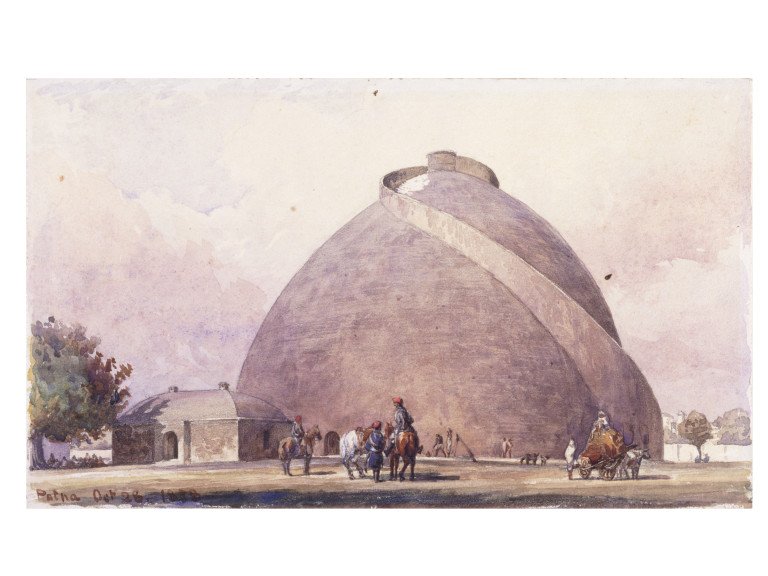
Walk the old city at dawn and you’ll pass three centuries before breakfast. First, the 1786 Golghar, its honey-combed granary dome turning gold in the sun—built after the 1770 famine to store 137,000 tons of rice, now climbed by schoolchildren for the view. Five minutes south, Padri Ki Haveli (1772) still smells of beeswax and the Marathi Mass that Thomas Noel celebrated while Napoleon raged in Europe; the chapel’s brick is so soft you can flake it with a fingernail. Cross Ashok Rajpath and you’re in Patna Sahib, where the tenth Sikh guru was born in 1666; the sanctum’s 18-karat gold plates were paid for by a nineteenth-century Afghan king who never set foot in India. The same lane sells tea boiled with cardamom in clay cups that cost more than the tea itself—an economics lesson you can drink.

By dusk the city changes its skin. The riverfront promenade from Sabhyata Dwar to Gandhi Ghat becomes a slow-moving carnival: engineering students debating politics over peanut chaat, families hiring pedal boats shaped like swans, couples photographing themselves against a 40-meter sandstone arch meant to celebrate ‘Bihari civilization.’ Inside the Bihar Museum, a 2,300-year-old Didarganj Yakshi holds her fly-whisk like she’s just stepped out of a nightclub; downstairs, children build Mauryan stupas from magnetic blocks. Patna doesn’t preserve history—it keeps retouching the lipstick and inviting you to the next performance. Accept, and the city will whisper back: everything you touch was once the future.

Family Friendly Budget Friendly Photography Hotspot

02 Why Patna.

What makes this place worth slowing down for.

Birthplace of the Last Sikh Guru

Takht Sri Harmandir Ji Patna Sahib crowns the old city—marble, gold, and the echo of kirtan where Guru Gobind Singh was born in 1666. Pilgrims still bathe in the same step-well; the museum keeps his tiny cradle and a sword nibbled by time.

Two Museums, Two Millennia

Bihar Museum’s 2026 galleries let you walk under a 2300-year-old Mauryan lion capital in the same hour you watch kids animate didarganj-yakshi on a touch wall. Cross the lake to the reopened Patna Museum (est. 1917) for the Buddha’s ashes locked in a 1917 art-nouveau glass case—one city, two ways of remembering.

A Skyline of Granaries and Gates

Climb the 145 spiral steps of 1786 Golghar for 360° Ganga views, then drive the new 7 km riverfront road to Sabhyata Dwar, a 32 m pink-sandstone gate carved with Ashokan edicts—colonial utility meets 21st-century civic pride in one sunset frame.


03 Places to Visit.

Not every monument, just the ones we'd walk you past ourselves.

Editor's pick
01 · Place

Buddha Smriti Park

Nestled in the vibrant city of Patna, Bihar, Buddha Smriti Park stands as a profound testament to the enduring legacy of Lord Buddha, blending rich historical…

Bihar Museum
02 Place

Bihar Museum

The Bihar Museum in Patna, India, is a beacon of cultural preservation and a testament to the region's rich historical tapestry.

03 Place

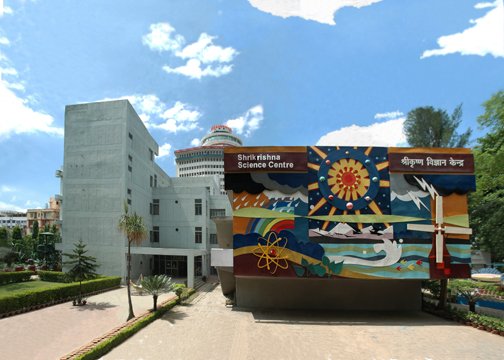
Shrikrishna Science Centre

Discover the Shrikrishna Science Centre in Patna, a premier science museum established in 1978 and named after Dr.

Patna Museum
04 Place

Patna Museum

200 million-year-old fossilized tree, Mauryan-era sculptures, and two new immersive galleries — Patna's 'Jadu Ghar' costs just ₹15 to enter.

Golghar
05 Place

Golghar

Located at the heart of Patna, Bihar, Golghar stands as an enduring symbol of 18th-century colonial engineering, cultural heritage, and resilience.

Kumhrar
06 Place

Kumhrar

Kumhrar, situated in the eastern part of modern Patna, Bihar, stands as an archaeological and historical gem atop the remains of ancient Pataliputra — one of…

07 Place

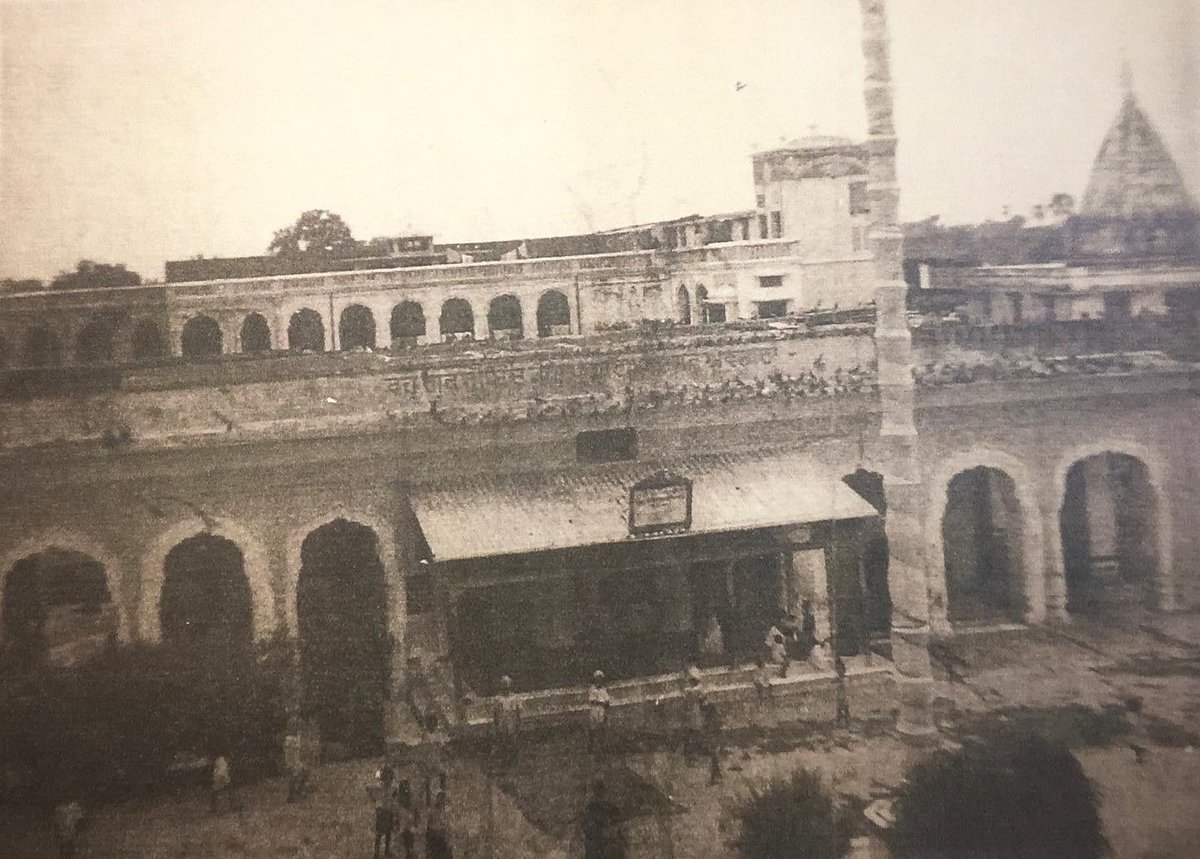
Padri Ki Haveli

Embark on a journey through history as we explore Padri Ki Haveli, the oldest church in Bihar, India.

All 14 places in Patna

04 Neighborhoods.

Where to wander, by quarter — each with its own rhythm.

01

Patna City / Chowk

The living, breathing heart of pre-Mughal Patna—narrow lanes where scooter horns echo off 17th-century mosque walls. Come hungry: kachori-ghugni at Nandu Ji’s (leaf bowls, 30-second queue), khaja from sweet-stacks that still stamp ‘Silao’ on every box, and the spiritual twin punch of Takht Sri Harmandir Sahib and Chhoti Patan Devi, 300 m apart yet centuries apart in mood.

02

Gandhi Maidan & Fraser Road

Colonial grid meets Bihari bazaar. The Secretariat’s 1917 Indo-Saracenic dome looms over street barbers and balloon sellers; turn a corner and you’re in the old-book stalls of Khuda Bakhsh Library, breathing in 400-year-old Persian manuscripts that smell of attar and mildew. Evening brings peanut-roasters, impromptu cricket matches, and the city’s only revolving restaurant 73 m above sea level—order the sattu cooler and watch the Ganges bend like a question mark.

03

Boring Road & Patliputra Colony

Patna’s answer to Brooklyn: cafés with Edison bulbs, open-mic poetry on Wednesdays, and baristas who can narrate the entire Mauryan empire while foaming oat milk. The real action is after 8 p.m.—families arguing over Champaran mutton versus vegan bao, college kids swapping Nietzsche quotes over filter coffee, and dessert counters stacking chandrakala next to red-velvet cupcakes.

04

Digha–JP Ganga Path

Seven kilometers of riverfront engineered for 2026 sunsets. Cycle tracks glow orange, food trucks serve litti sliders, and the Ganga Aarti at Digha Ghat now rivals Varanasi’s—except you can actually find a place to sit. Come post-monsoon when the water laps against the new stone steps and the city feels like it’s testing a new identity every night.

05

Kankarbagh

A grid of middle-class lanes that hides Patna’s loudest food secrets: Champaran meat cauldrons bubbling since 1987, rooftop micro-brew coffee (still no alcohol—this is Bihar), and sweet shops that invent a new pistachio-ka-khaja every winter festival. If you want to see how Patna unwinds, join the 10 p.m. scooter parade heading for hot malpua.

Historical Timeline

Three Cities, One Riverbank: Pataliputra to Patna

From Mauryan megacity to Sikh birthplace, Bihar's capital keeps reinventing itself

Ancient Pataliputra
c. 600 BCE

Mud-Brick Village Takes Root

On the southern bank of the Son-Ganga confluence, fisher-folk and iron-smiths lay out oval huts of wattle-and-daub. The rivers bring copper ore, Himalayan timber, and gossip from Varanasi. Archaeologists will later call it the earliest 'Patna layer', carbon-dated to 600 BCE.

c. 490 BCE

Ajatashatru Fortifies Pataligrama

Magadha's king drives wooden piles into the riverbank and raises a mud fort ringed by a crocodile moat. He needs a forward post against the Vajji confederacy to the north; instead he births a capital. Brick by brick, Pataligrama becomes Pataliputra, the city of son-of-the-pipa-fruit.

321 BCE

Chandragupta Crowns Himself

A 25-year-old adventurer who once slept in a cow-shed re-enters Pataliputra through the northern gate, elephants smashing the last Nanda guards. That afternoon he issues the first Mauryan coin: a silver 32-ratti punch-mark stamped with the pipal tree—an omen of the empire that will stretch to the Hindu Kush.

273 BCE

Ashoka's Palace Burns for Victory

Ashoka watches the 80-pillared hall go up in scented sal-wood, each pillar planed to a palm's-width and polished until it mirrors torch-light. It is here he will convene the Third Buddhist Council and dispatch monks to Sri Lanka. The hall's rubble will be rediscovered 2,200 years later beside a railway track.

185 BCE

Shunga Coup, Greek Torches

General Pushyamitra assassinates the last Maurya during a cavalry review, then races to the palace to seize the treasury. Weeks later Indo-Greek horsemen breach the timber gates, burn granaries, and melt the bronze city bells. Pataliputra's population halves overnight; the megapolis begins its long slide.

320 CE

Gupta Renaissance Ignites

Samudragupta enters the old Mauryan capital and re-roofs the 80-pillared hall with teak. Sanskrit syllables replace Prakrit on the coin dies; Aryabhata will soon walk these verandas calculating pi to four decimals. Pataliputra is once again the brain of an empire, now called the 'Golden Age'.

637 CE

Xuanzang Finds Ghost Streets

The Chinese monk counts 'barely a thousand households'. Peacocks nest in the abandoned palace drains; monks still chant in a single brick vihara. He notes that the river has shifted, leaving the once-great port high and dry. The name Pataliputra lingers as a memory rather than a place.

Afghan-Mughal Patna
1541 CE

Sher Shah Refounds Patna

The Afghan warlord camps on the Ganga island and orders a new walled town with five gates, minting silver rupees stamped 'Patna Sharif'. Caravans carrying saltpetre, silk and opium roll in. The name 'Pataliputra' is finally retired; locals now speak of 'Patna'.

1620 CE

East India Factory Opens

Thatched godowns rise beside the river for 400 tons of Patna saltpetre, the gunpowder ingredient Europe craves. English factors dine on river fish while recording monsoon highs in leather ledgers. The Union Jack first flutters where Ashoka's standards once stood.

22 Dec 1666

Guru Gobind Singh Born

At dawn in a brick courtyard off Ashok Rajpath, the infant who will forge the Khalsa draws his first breath. The lullabies are Braj laced with Magahi; the river air smells of marigold and sandal. Today that house is Takht Sri Patna Sahib, still echoing with kirtan.

Early British Patna
6 Oct 1763

Patna Massacre

Nawab Mir Qasim's matchlock men herd 45 British clerks and 200 sepoys into a dungeon beside the Ganga, slit throats, and dump bodies into the current. The brown river runs red for a tide. The massacre hastens the Battle of Buxar and the East India Company's legal takeover two years later.

1786 CE

Golghar Granary Rises

Captain John Garstin climbs his 145-step spiral to seal the 140,000-ton beehive, built against the next famine. From the summit you can count the city's 200,000 clay roofs and 47 mosque domes. The whitewashed dome still dominates Patna's skyline, now ringed by flyovers instead of rice barges.

1858 CE

Patna Kalam Blossoms

In a lane off present-day Dak Bungalow Road, Muslim painters blend Mughal miniatures with Company water-colours. Their forte: bazaar scenes—paan-sellers, courtesans, even a European smoking a hookah. The works travel to Calcutta's new art colleges, giving India its first 'provincial' painting school.

Modern Capital
22 Mar 1912

Bihar Secedes, Patna Re-Crowned

At 2 p.m. on the steps of the new Secretariat, Viceroy Hardinge proclaims Patna capital of the province carved from Bengal. Students unfurl the Tiranga for the first time; the city suddenly needs courts, colleges, and museums. Overnight, the commercial town becomes a political nerve-centre again.

3 Apr 1917

Patna Museum Opens

Inside a Mughal-Saracenic palace, glass cases welcome the 200-million-year-old Didymograptus fossil and a 2nd-century Buddha in bhumi-sparsha mudra. Schoolboys queue for half-anna tickets to see the yakshi torso that once adorned a Mauryan pillar. The museum becomes the city's memory-keeper.

15 Jan 1934

Earthquake Cracks the Secretariat

At 2:13 p.m. the ground convulses; the 150-ft clock tower shears off its top 20 ft, bricks raining onto typewriters. Gandhi arrives six weeks later, touring relief camps in Muzaffarpur. The original Patna Sahib gurdwawa collapses; its 1950s replacement will be marble and mirrored glass.

11 Aug 1942

Students Shot at Secretariat

Seven teenagers fall to police rifles while trying to hoist the Congress tricolor atop the colonial dome. Blood stains the marble steps; the martyrs' photographs sell in bazaars for one paisa. The incident fuels Quit India and later earns its own granite memorial at Gandhi Maidan.

1950s

Super-30 Seed Sown

In a modest lane near the Patna railway over-bridge, a boy named Anand Kumar sells papad to buy math books. Decades later he will convert the same courtyard into a coaching crucible that sends 30 under-privileged kids to IIT each year, turning Patna into a coaching legend.

May 1982

Mahatma Gandhi Setu Links North

Prime Minister Indira Gandhi cuts the ribbon on 5.75 km of pre-stressed concrete, then India's longest river bridge. North-Bihar lorries no longer queue for ferries; Patna's commuters feel the first taste of rush-hour gridlock. The bridge becomes the city's economic lifeline and favourite suicide point.

27 May 2010

Buddha Smriti Park Opens

On the site of the colonial jail where freedom-fighters were once locked, the Dalai Lama plants two saplings from Bodh Gaya's bodhi tree. A 200-ft stupa rises, housing relics gifted by Sri Lanka. Evening walkers smell jasmine where prisoners once heard keys rattle.

2015 CE

Bihar Museum Rewrites the Story

A copper-clad entrance hall welcomes visitors into 24 galleries where Mauryan sculpture meets interactive LED walls. The Didymograptus fossil moves from the 1917 building, now rebranded 'historic wing'. Overnight Patna owns India's most future-forward state museum.

Sep 2019

City Drowns in Record Rain

177 mm in 48 hours—Patna's drains, designed for 50 mm, give up. Water enters IGIMS ICU, strands IAS officers in their driveways, and spawns memes of a crocodile on Bailey Road. The flood becomes a case study in UN urban-risk reports and a rallying cry for the upcoming Metro.

Aug 2025

Centenary Patna Museum Reborn

After a decade-long retrofit, the 1917 galleries reopen with humidity-controlled glass and QR-coded labels. Schoolgirls on Augmented-Reality tablets watch Ashoka's pillar reassembled in 3-D. The old 'Jadu Ghar' becomes a classroom for a city still learning how to display its own layered past.

Present Day

06 Who lived here.

The people who shaped the city — and were shaped by it.

10th Sikh Guru 1666–1708

Guru Gobind Singh

Born in Patna Sahib

His first cries echoed in a modest brick house that is now one of Sikhism’s five takhts. Return at dawn and you’ll hear the same shabad kirtan that once lulled the infant Gobind Rai.

Mauryan Emperor c. 304–232 BCE

Ashoka

Ruled from Pataliputra (modern-day Patna)

He dictated the Kalinga Edict here after a change of heart; today, the polished sandstone fragments at Kumhrar are the nearest he planted for peace.

Urdu Poet 1846–1927

Shad Azimabadi

Born, lived and died in Patna

His ghazals still float over evening chai near Patna College; locals claim the city’s lilt sneaks into every misra he wrote.

Contemporary Artist born 1964

Subodh Gupta

Studied at College of Arts & Crafts, Patna

From stainless-steel tiffin carriers to towering Ganga thalis, his global installations carry the shine of Patna’s roadside utensils he once washed in hostel sinks.

Mathematician & Educator born 1973

Anand Kumar

Founded Super 30 in Patna

Every year 30 kids from Patna’s back lanes crack IIT under the same ceiling fan where Anand figured out calculus on a cracked blackboard.

Film Actor 1986–2020

Sushant Singh Rajput

Born and schooled in Patna

He mapped constellations from the roof of his Rajendra Nagar house before Bollywood ever called; the planetarium still keeps his donated telescope pointed at Orion.

08 Where to Eat.

Where locals actually book dinner — not the tourist menus.

Cake Cafe Tales Cake Cafe Tales
Cafe €€

Cake Cafe Tales

5 View
Tealogy Café, Boring Road, Patna Tealogy Café, Boring Road, Patna
Cafe €€

Tealogy Café, Boring Road, Patna

4.9 View
Magnet Club & Restro Magnet Club & Restro
Local favorite €€

Magnet Club & Restro

4.9 View
Winni Cakes & More Winni Cakes & More
Quick bite €€

Winni Cakes & More

5 View
A. K. Abhishek.jhula (Proprietor) A. K. Abhishek.jhula (Proprietor)
Quick bite €€

A. K. Abhishek.jhula (Proprietor)

5 View
Mata Trending Mata Trending
Quick bite €€

Mata Trending

5 View

09 Insider tips.

Small things that change how the city treats you.

Best Season Window

Come mid-November to February when temperatures hover around 22 °C and morning river mist makes the Ganga shimmer. March already hits 32 °C; April can touch 38 °C and drain you before lunch.

Metro & Traffic Hack

Only three metro stations are open—Bhootnath, Zero Mile, New ISBT. If your hotel is west of Gandhi Maidan, skip the hype and pre-book an Uber; the ride from airport to city centre is 15–20 min at dawn, 40 min after 9 a.m.

Old-City Circuit

Start at Takht Sri Patna Sahib at sunrise, then walk the 1 km loop past Chhoti Patan Devi, Mangal Talab and Qila House—you’ll cover Sikh, Hindu, Mughal and colonial layers before the lanes clog with scooters.

Cash & UPI Mix

Small temples, street chai and rickshaws still prefer ₹10–₹50 notes. Keep ₹500 in change; for everything else, UPI QR codes work even at the zoo ticket window.

Station Safety

Patna Junction has active pick-pocket teams. Keep your bag forward, ignore the ‘official porter’ without a badge, and use the prepaid auto booth 50 m outside the main gate.

12 Frequently Asked

Is Patna worth visiting for non-Sikh travellers?

Yes. Beyond the Sikh takht, the new Bihar Museum rivals Delhi’s best, Kumhrar lets you walk on Mauryan pillars, and the riverfront at Gandhi Ghat is one of the quieter Ganga aartis in India.

How many days should I spend in Patna?

Two full days cover the headline sights—Day 1: Bihar Museum, Patna Museum, Golghar sunset. Day 2: Takht Sri Patna Sahib, Kumhrar, Buddha Smriti Park and a riverfront evening. Add a third day if you want the Maner Sharif half-day trip.

Can I use Delhi Metro card in Patna?

No. The Patna Metro smart card is separate and only useful on the three-station stretch between Bhootnath and New ISBT. Buy a single-use token or scan the QR at the gate.

Is Patna safe for solo female travellers?

Moderately safe by day in central districts like Frazer Road, Dak Bungalow and the museum belt. After dark, pre-book rides and avoid poorly lit lanes in Patna City; use the women’s helpline 9304264570 if needed.

What does a vegetarian thali cost in Patna?

A hearty thali in a clean local restaurant runs ₹120–₹180. At the upscale Pind Revolving Restaurant on Biscomaun Bhawan’s 18th floor, expect ₹450 plus taxes for a similar spread with city views.

Ready to book?

13Before you go

Practical Information

Flight

Getting There

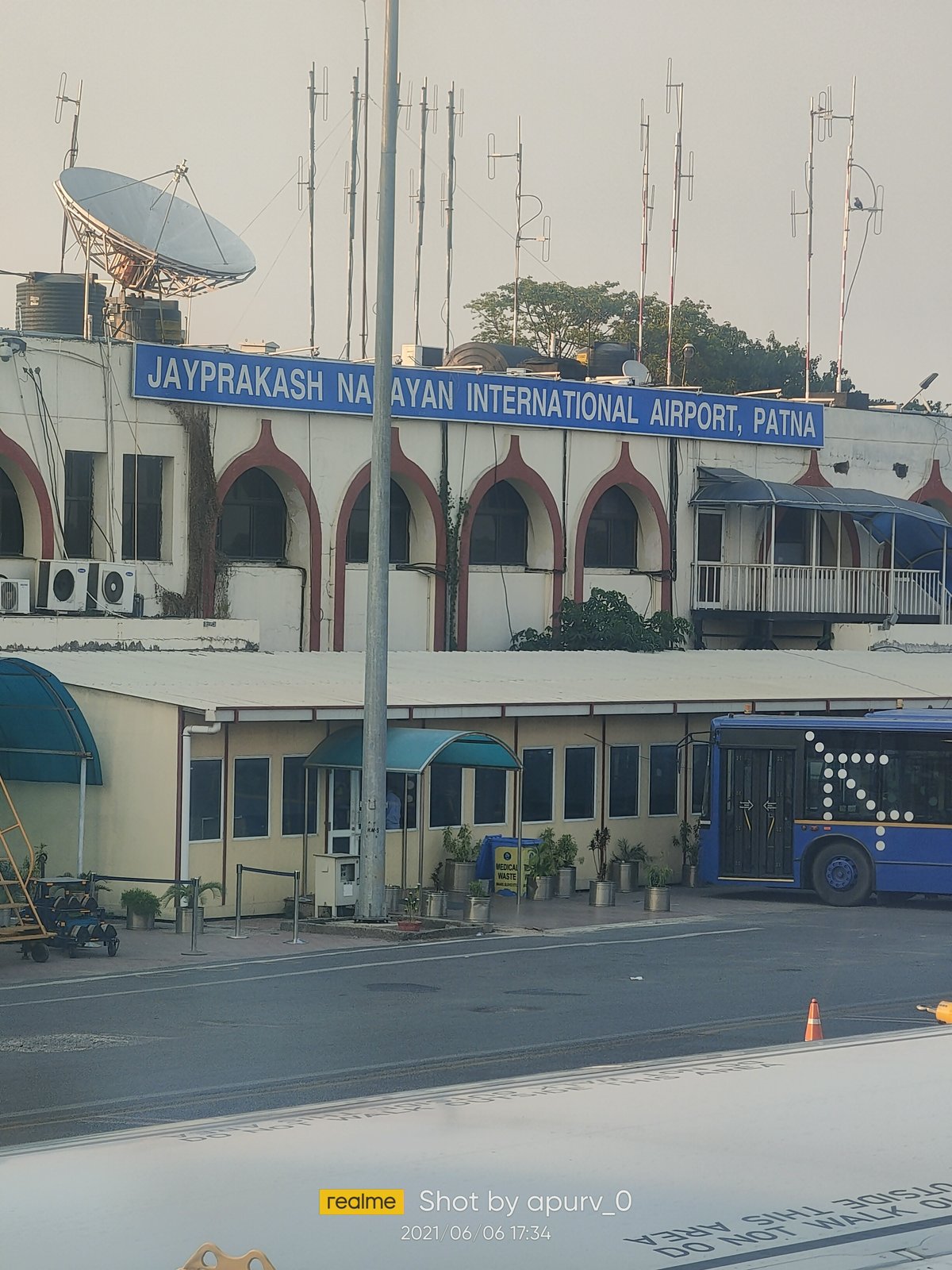
Jay Prakash Narayan International Airport (PAT) sits inside city limits—20 min to Patna Junction. Direct 2026 summer schedule: 43 daily flights, busiest Delhi, new Navi Mumbai route. Rail: Patna Junction, Rajendra Nagar Terminal, Danapur. NH 19 (old NH 2) and NH 31 feed long-distance buses.

Directions transit

Getting Around

Patna Metro: only Blue Line priority corridor open—3 stations (Bhootnath, Zero Mile, New ISBT) since Oct 2025; smart-card ₹50 deposit. BSRTC runs 140 city buses from Gandhi Maidan (routes 444/888/222). No tourist pass; autos & app cabs dominate, fares ₹20–₹30/km. Cycling infrastructure minimal—footpaths uneven, no public bike share yet.

Thermostat

Climate & Best Time

Winter (Nov–Feb): 11–26 °C, dry, best window. Spring (Mar): 18–32 °C, warming. Summer (Apr–May): 23–38 °C, loo winds. Monsoon (Jun–Sep): 26–33 °C, 250–320 mm monthly, streets flood. Post-monsoon (Oct): 21–30 °C, clearing skies. Aim for November–early March; April heat can hit 42 °C.

Shield

Safety

Keep bags zipped at Patna Junction—March 2026 saw repeat pick-pocket arrests. Old-city lanes around Patna Sahib are safe by day, thinly lit after 9 pm; pre-book your return ride. Police Control Room: 0612-2201977; Women Helpline: 9304264570.

Take Patna with you

47 minutes of Patna,
downloaded once.

14 places, one continuous walking route. Free with your first city.

Get this guide on the app Open in browser

All Places to Visit.

14 places to discover

Place

Buddha Smriti Park

Bihar Museum
Place

Bihar Museum

Place

Shrikrishna Science Centre

Patna Museum
Place

Patna Museum

Golghar
Place

Golghar

Kumhrar
Place

Kumhrar

Place

Padri Ki Haveli

Place

Pathar Ki Masjid

Statue of Mahatma Gandhi
Place

Statue of Mahatma Gandhi

Place

Raj Bhavan

Place

Gandhi Maidan

Maurya Lok
Place

Maurya Lok

Patna Secretariat
Place

Patna Secretariat

Sabhyata Dwar
Place

Sabhyata Dwar