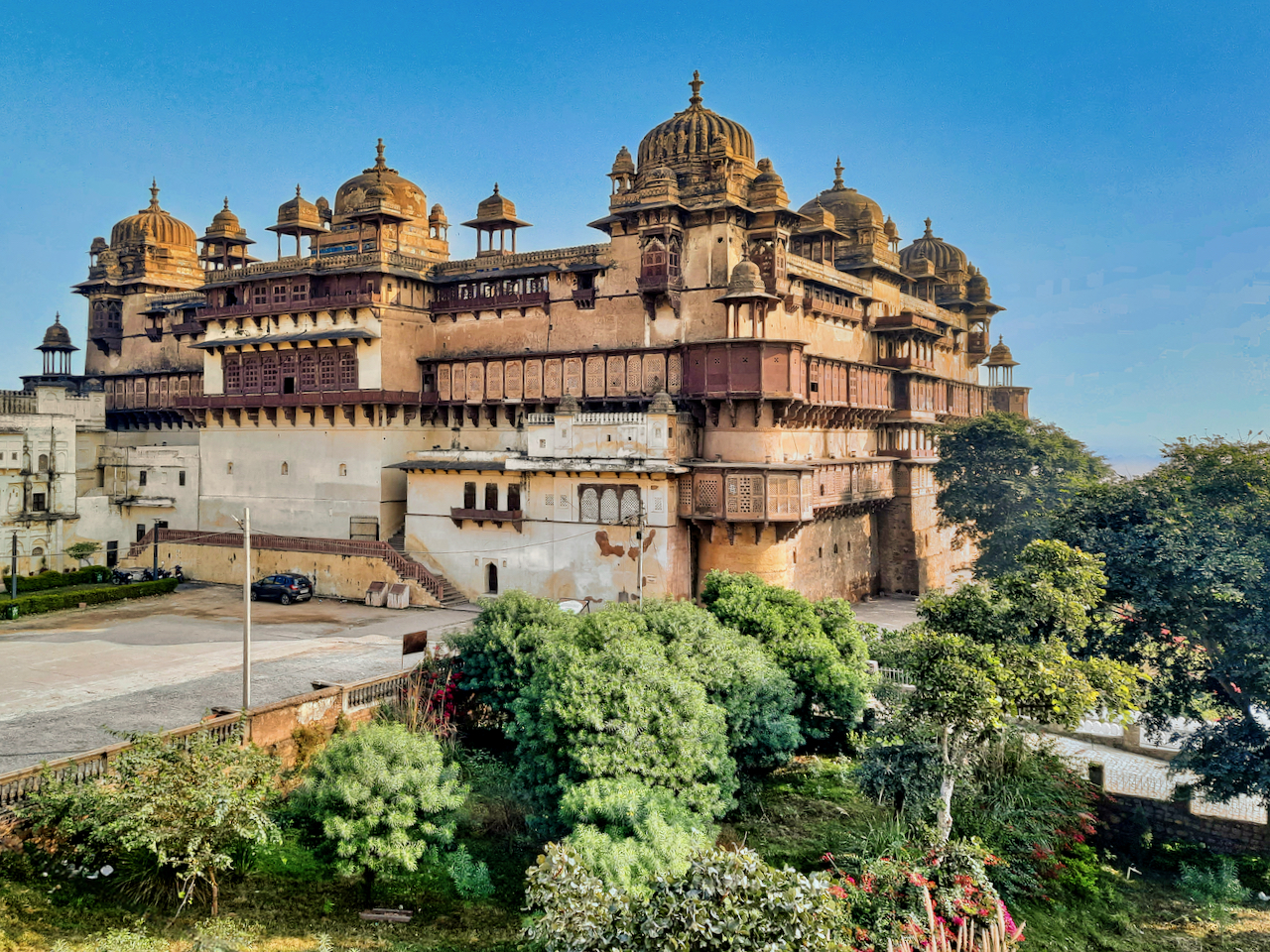
Plan and listen to Chaturbhuj Temple, Orchha with Audiala.
Audio guide in your pocket, itinerary in your browser. Built for the way you actually visit.
Introduction
Chaturbhuj Temple, situated in the historic town of Orchha, Madhya Pradesh, stands as an enduring symbol of spiritual devotion and architectural ingenuity. Built in the late 16th century by the Bundela dynasty, this temple is uniquely dedicated to Lord Vishnu in his four-armed form, known as "Chaturbhuj." Its blend of Rajput and Mughal architectural styles, coupled with a storied history tied to local legends about Lord Rama, makes Chaturbhuj Temple a centerpiece of Orchha’s rich heritage and a must-visit for travelers, history enthusiasts, and spiritual seekers alike.
This comprehensive guide details all essential visitor information—visiting hours, ticketing policies, accessibility, nearby attractions, and practical travel tips—ensuring you make the most of your visit to one of India’s most remarkable temples.
For in-depth insights, see Temples of India, Visit Places India, and Gosahin.
History & Origins
Built between 1558 and 1573 CE by Raja Madhukar Shah for his wife, Rani Ganesh Kuwari, Chaturbhuj Temple’s history is steeped in legend. The queen, a devotee of Lord Rama, brought an idol of Rama from Ayodhya with the intent to enshrine it here. However, according to local lore, the idol became immovable in the palace, leading to the establishment of the Ram Raja Temple nearby. As a result, Chaturbhuj Temple was consecrated to Lord Vishnu in his four-armed form, with "Chaturbhuj" literally meaning "four arms."
The temple’s construction marked a period of cultural flourishing in Bundelkhand, with the Bundela rulers patronizing grand Hindu architecture that harmonized Rajput and Mughal influences. Its cruciform layout and imposing shikharas (spires) are testament to the dynasty’s artistic ambition.
Architectural Features
Chaturbhuj Temple is celebrated for its striking architectural synthesis:
- Platform & Approach: The temple is constructed atop a 4.5-meter-high stone platform, accessed via a steep flight of 67 steps, symbolizing spiritual ascent (templesofindia.org).
- Layout & Design: Its cruciform, basilica-like plan combines elements of temple, fort, and palace architecture, rising to approximately 105 meters and making it one of India’s tallest temples.
- Ornamentation: The exterior is adorned with lotus motifs, petaled moldings, painted floral patterns, and intricately carved false balconies.
- Interior: The sanctum remains unadorned, enhancing the solemnity, while the high ceiling and chhatris allow natural light to stream in.
- Shikharas & Spires: The central shikhara is flanked by four pine-cone-shaped subsidiary towers, dominating Orchha’s skyline.
- Materials: Built mainly from sandstone and brick, the temple’s robust lower levels support lighter upper tiers, showcasing advanced medieval engineering.
- Orientation: The temple faces east, aligned with the Ram Raja Temple, reflecting meticulous urban planning (itimaker.com).
Religious Significance & Rituals
Chaturbhuj Temple is a revered shrine for followers of Lord Vishnu. Although the original idol of Lord Rama was never installed here, the temple remains a significant site for daily prayers, offerings of flowers and incense, and seasonal festivals. Major Hindu events such as Ram Navami and Diwali are observed with special processions, music, and community gatherings, further enriching its spiritual ambiance.
Visiting Hours & Ticket Information
- Visiting Hours: Generally open daily from 6:00 AM to 6:00 PM. Some sources report hours from 9:00 AM to 5:00 PM, or split timings (5:00 AM to 12:00 PM, 4:00 PM to 9:00 PM). Confirm locally, especially during festivals (Visit Places India, TravelSetu).
- Tickets: Entry is free for Indian citizens. A nominal fee (approx. INR 50) may apply to foreign tourists or if visiting as part of the Orchha Fort Complex.
- Photography: Allowed throughout the premises; rooftop areas offer panoramic views ideal for photography. Be respectful of worshippers and observe any restrictions inside the sanctum.
- Guided Tours: Available at the entrance; guides provide valuable context on the temple's history and art (itimaker.com).
How to Reach Chaturbhuj Temple
- By Air: The nearest airport is Gwalior Airport (120 km away). Taxis and buses connect Gwalior to Orchha (TripXL).
- By Train: Jhansi Junction is the nearest major railway station (16 km). From Jhansi, taxis, auto-rickshaws, and buses are readily available.
- By Road: Orchha is accessible from Jhansi, Gwalior, and other regional centers by bus or private vehicle.
Accessibility & Facilities
- Physical Accessibility: The temple’s steep steps and elevated platform make access challenging for visitors with mobility impairments; there are no ramps or elevators (Visit Places India).
- Footwear: Must be removed before entering the sanctum; storage facilities are provided.
- Restrooms: Basic public toilets are available near the complex.
- Shops & Eateries: Surrounding the temple, local shops offer snacks, water, and souvenirs.
- Safety: The rooftop ascent is steep and narrow—exercise caution and wear sturdy shoes, especially during monsoon or after dark (Rishikesh Day Tour).
Major Nearby Attractions
Ram Raja Temple
Adjacent to Chaturbhuj, this is the only temple where Lord Rama is worshipped as a king, complete with royal honors and daily salutes (gosahin.com).
Orchha Fort Complex
Home to Jahangir Mahal, Raja Mahal, and Sheesh Mahal, the fort complex features Indo-Islamic architecture, murals, and panoramic views (holidify.com).
Chhatris (Cenotaphs)
Located along the Betwa River, these 14 cenotaphs memorialize Orchha’s rulers and are especially beautiful at sunset.
Lakshminarayan Temple
Famed for its murals and blend of temple and fort architecture, this temple sits atop a hill with sweeping views (holidify.com).
Phool Bagh
A historic royal garden complex, ideal for tranquil walks.
Sunder Mahal, Rani Mahal, and Betwa River Activities
Explore lesser-known palaces, boat or raft on the Betwa River, or enjoy riverside picnics and birdwatching (holidify.com).
Festivals & Cultural Experiences
- Karthik Purnima: November festival with temple illuminations and processions (gosahin.com).
- Orchha Dussehra & Ram Navami: Major celebrations centered at Ram Raja and Chaturbhuj Temples, featuring folk performances (adventurebackpack.com).
- Orchha Music & Food Festivals: Enjoy performances and local cuisine during these annual events (adventurebackpack.com).
Practical Tips for Visitors
- Best Time to Visit: October–March (pleasant weather); July–September (scenic monsoon, but occasional heavy rains); avoid peak summer heat.
- Duration: Allocate 45–90 minutes for the temple; 1–2 days for all major Orchha attractions (TripXL).
- Dress Code: Modest attire; cover shoulders and knees.
- Hydration & Sun Protection: Carry water, hats, and sunscreen.
- Budget: Expect ₹2,500–₹6,000 per person for a 2–3 day trip, including accommodation and meals (TripXL).
- Language: Hindi is widely spoken; English is understood at tourist sites.
Frequently Asked Questions (FAQs)
Q1: What are Chaturbhuj Temple’s visiting hours?
A1: Generally 6:00 AM to 6:00 PM; confirm locally, as timings may vary.
Q2: Is there an entry fee?
A2: Free for Indian citizens; nominal fee for foreign tourists or with Orchha Fort Complex ticket.
Q3: Is the temple accessible for people with mobility issues?
A3: Access is difficult due to steep steps and lack of ramps.
Q4: Are guides available?
A4: Yes, local guides can be hired at the entrance.
Q5: Which are the top nearby attractions?
A5: Ram Raja Temple, Orchha Fort Complex, Chhatris, Lakshminarayan Temple.
Q6: What’s the best time to visit Orchha?
A6: October–March for pleasant weather and major festivals.
Listen to the full story in the app
The whole Chaturbhuj Temple, Orchha,
told well.
Audio guides for 1,100+ cities across 96 countries. History, stories, and local insight — offline ready.

Verified, and shown.
Researched and written by the Audiala editorial team from historical records, architectural archives, and local expertise.
Last reviewed
Researched from Wikidata, Wikipedia & official sources · fact-checked · How we make our guides →