Plan and listen to Tughlaqabad Fort with Audiala.
Audio guide in your pocket, itinerary in your browser. Built for the way you actually visit.
Introduction
Tughlaqabad Fort, perched atop the rugged Aravalli hills in South Delhi, stands as a monumental symbol of India's medieval heritage and the architectural prowess of the Tughlaq dynasty. Built between 1321 and 1325 CE by Sultan Ghiyas-ud-din Tughlaq, the fort was conceived as both a formidable defensive structure against Mongol invasions and the nucleus of a new imperial city. Spanning approximately 6.5 square kilometers, its massive stone ramparts, imposing bastions, and complex urban layout showcase the military priorities and advanced urban planning of 14th-century India (thegrandvikalp.com; tourmyindia.com).
Beyond its physical grandeur, Tughlaqabad Fort is enveloped in legend, most famously the curse of Sufi saint Hazrat Nizamuddin Auliya, whose words are believed to have doomed the fort to ruin. Today, the fort’s haunting ruins, panoramic views, and rich historical narrative make it a must-visit for history lovers and travelers in Delhi. This comprehensive guide provides all the essential information for visitors—including history, visiting hours, ticketing, accessibility, conservation challenges, nearby attractions, and practical tips—ensuring a rewarding and well-prepared exploration.

History and Origins
Tughlaqabad Fort was constructed by Ghiyas-ud-din Tughlaq, the founder of the Tughlaq dynasty, with the ambitious goal of establishing a new capital fortified against Mongol threats. The site was chosen for its strategic vantage atop the Aravalli hills and encircled by dense forests, enhancing its defensibility (thegrandvikalp.com).
The fort’s design reflects advanced urban planning, featuring:
- Massive stone walls up to 15 meters high
- A triangular layout spanning 6.5 sq km
- Outwardly sloping ramparts and a moat (in parts)
- Numerous gates—originally 52, with 13 surviving today
- Residential quarters, palaces, markets, and stepwells (baolis), with the East Baoli being a notable surviving example (tourmyindia.com)
The fort was intended not just as a stronghold, but as a thriving city with sophisticated water management, including several rainwater tanks and stepwells to address the region’s arid conditions.
Architectural Features and Notable Structures
Tughlaqabad Fort stands as a testament to the austere yet formidable Tughlaq architectural style:
- Fortification Walls & Bastions: The fort’s sloping rubble masonry walls and circular bastions provided robust defense against invaders.
- Gates: Of the original 52 gates, 13 remain, each with unique defensive features.
- Citadel: The highest point housed the royal palace and administrative buildings.
- Mosques & Religious Structures: Several small mosques and prayer halls reflect Indo-Islamic influence.
- Stepwells (Baolis): Ingenious water reservoirs, with two surviving today, including the accessible East Baoli.
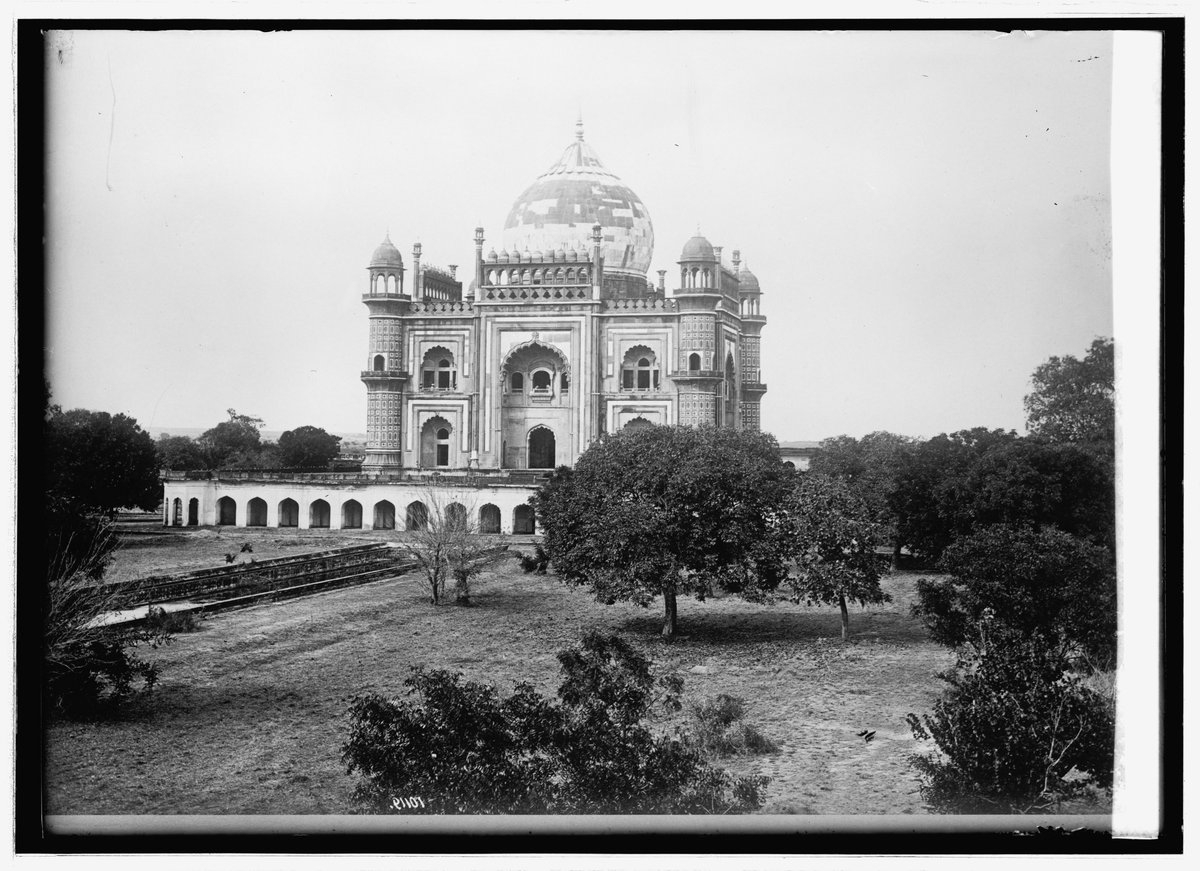
- Tomb of Ghiyas-ud-din Tughlaq: Located just outside the main fort, the mausoleum is an early example of Indo-Islamic funerary architecture and is connected to the fort by a causeway (tourmyindia.com).
The Legend of the Cursed Fort
The most enduring tale associated with Tughlaqabad is the curse of Hazrat Nizamuddin Auliya. When Sultan Ghiyas-ud-din diverted laborers from the saint’s stepwell project to expedite fort construction, the saint allegedly proclaimed, "Ya rahe ujjar, ya base gujjar" ("May it remain uninhabited, or be occupied only by shepherds"). Ghiyas-ud-din’s mysterious death in a collapsing pavilion soon after the fort’s completion fueled the legend that the site was doomed (homegrown.co.in; triphippies.com).
The aura of the curse, combined with the fort’s dramatic ruins, contributes to its reputation as one of Delhi’s most atmospheric and mysterious sites.
Decline and Abandonment
Despite its imposing design, Tughlaqabad Fort was abandoned within a few decades due to several factors:
- Water Scarcity: The rocky terrain limited the effectiveness of water management systems.
- Political Shifts: Ghiyas-ud-din’s successor, Muhammad bin Tughlaq, moved the capital to Daulatabad, leading to rapid depopulation (traveltriangle.com).
- Superstitious Fear: The legend of the curse discouraged continued habitation.
By the mid-14th century, Tughlaqabad had become a ghost city, its walls left to the encroaching wilderness.
Visiting Information: Hours, Tickets, and Accessibility
Visiting Hours:
- Open daily from 9:00 AM to 5:00 PM (tourmyindia.com).
Ticket Prices:
- Entry fees typically range from INR 20–25 for Indian nationals and INR 100–300 for foreign tourists, depending on the latest ASI guidelines (tourtravelworld.com; japjitravel.com).
- Children under 15 often enter free.
Accessibility:
- The terrain is rugged and uneven, with many steps and slopes.
- Wheelchair access is limited; those with mobility challenges should plan accordingly.
How to Reach:
- The nearest metro station is Tughlaqabad Metro Station (Violet Line), about 2–3 km from the fort (vardhmanvacations.com).
- Taxis, auto-rickshaws, and buses are readily available.
Best Time to Visit:
- October to March offers the most pleasant weather. Early mornings and late afternoons provide comfortable temperatures and optimal lighting for photography.
Duration:
- Allow 1–2 hours for a thorough visit.
Conservation Challenges
Tughlaqabad Fort faces significant conservation challenges:
- Structural Deterioration: Centuries of weathering, pollution, and unchecked vegetation have led to widespread stone loss and collapse (academia.edu).
- Encroachment: Informal settlements and unauthorized construction threaten the fort’s integrity.
- Vandalism: Graffiti, stone removal, and lack of security contribute to ongoing deterioration.
- Limited Restoration: The Archaeological Survey of India (ASI) and National Culture Fund (NCF) have initiated repairs and documentation, but efforts are hampered by limited resources (NCF).
Heritage experts advocate for increased community engagement, rescue archaeology, and sustainable tourism initiatives to secure the fort’s future (academia.edu).
Guided Tours and Photography
- Guided Tours: Local guides are available at the entrance and provide insightful historical context and stories about the fort. Official ASI-guided tours are not currently offered, but private operators and NGOs occasionally organize heritage walks.
- Photography: The fort’s elevated bastions, ruined gateways, and panoramic views of the Delhi skyline offer excellent photographic opportunities, especially during sunrise and sunset.
- Special Events: Occasionally, cultural programs or heritage walks are held—check local listings or online resources for upcoming events.
Nearby Attractions
Expand your exploration with these notable nearby sites (tourtravelworld.com; taxiyatri.com):
- Ghiyas-ud-din Tughlaq’s Tomb: An architectural gem just outside the fort.
- Qutub Minar: UNESCO World Heritage Site, 8 km away.
- Humayun’s Tomb: A masterpiece of Mughal architecture, 12 km away.
- Lotus Temple: Iconic Baháʼí House of Worship, 10 km away.
- Red Fort: Symbolic Mughal fort, 18 km from Tughlaqabad.
- Sunder Nursery: Heritage park and gardens.
- Asola Bhatti Wildlife Sanctuary: Semi-arid forest and birdwatching, 6.2 km away.
- Majnu ka Tilla: Vibrant Tibetan enclave.
Practical Tips for Visitors
- Wear comfortable shoes—terrain is uneven and rocky.
- Carry water and sun protection—amenities inside the fort are limited.
- Respect the monument—no littering or defacement.
- Early morning or late afternoon visits are best for comfort and photography.
- Cash for Tickets: Carry cash, as digital payments may not always be accepted.
- Dining and Accommodation: Few options near the fort; plan meals in nearby hubs like Kalkaji or Nehru Place (tourtravelworld.com).
Frequently Asked Questions (FAQs)
Q: What are the visiting hours of Tughlaqabad Fort?
A: The fort is open daily from 9:00 AM to 5:00 PM.
Q: How much are the tickets for Tughlaqabad Fort?
A: Entry fees typically range from INR 20–25 for Indians and INR 100–300 for foreigners; children under 15 often enter free.
Q: Is the fort accessible for wheelchair users?
A: The fort’s uneven terrain presents challenges for wheelchair users; accessibility is limited.
Q: Are guided tours available?
A: Local guides can be hired at the entrance; official ASI tours are not offered currently.
Q: What are the best nearby attractions?
A: Ghiyas-ud-din Tughlaq’s Tomb, Qutub Minar, Humayun’s Tomb, Lotus Temple, and Red Fort are all within accessible distance.
Q: When is the best time to visit?
A: October to March offers the most pleasant climate for visiting Tughlaqabad Fort.
Listen to the full story in the app
The whole Tughlaqabad Fort,
told well.
Listen to sourced travel stories with local history and practical context — ready offline.
Verified, and shown.
Researched and written by the Audiala editorial team from historical records, architectural archives, and local expertise.
Built from cited sources · see the method · How we make our guides →