Plan and listen to Tomb Of Isa Khan with Audiala.
Audio guide in your pocket, itinerary in your browser. Built for the way you actually visit.
Introduction
Humayun's Tomb, situated in the bustling heart of New Delhi, India, is an architectural gem that marks the dawn of Mughal architectural innovation in the Indian subcontinent. Commissioned in 1569-70 by Empress Bega Begum, the widow of Humayun, this monument is not just a tomb but a testament to the grandeur and cultural synthesis of the Mughal era (UNESCO). Designed by Persian architect Mirak Mirza Ghiyas, Humayun's Tomb is the first garden-tomb in India, setting a precedent for future Mughal architecture, including the iconic Taj Mahal (Archnet). The tomb's striking use of red sandstone and white marble, combined with Persian elements like the charbagh (four-part) garden layout, exemplifies the Mughal Empire's architectural brilliance and cultural amalgamation. This guide aims to provide comprehensive information about visiting Humayun's Tomb, including its history, architectural significance, visitor tips, and nearby attractions, ensuring a fulfilling and enriching experience for every traveler.
History of Humayun's Tomb
The Genesis of Humayun's Tomb
Commissioned by Humayun's widow, Empress Bega Begum (also known as Haji Begum), in 1569-70, the tomb was designed by the Persian architect Mirak Mirza Ghiyas. This architectural marvel was the first garden-tomb on the Indian subcontinent and set a precedent for subsequent Mughal architecture, including the iconic Taj Mahal (UNESCO).
Architectural Significance
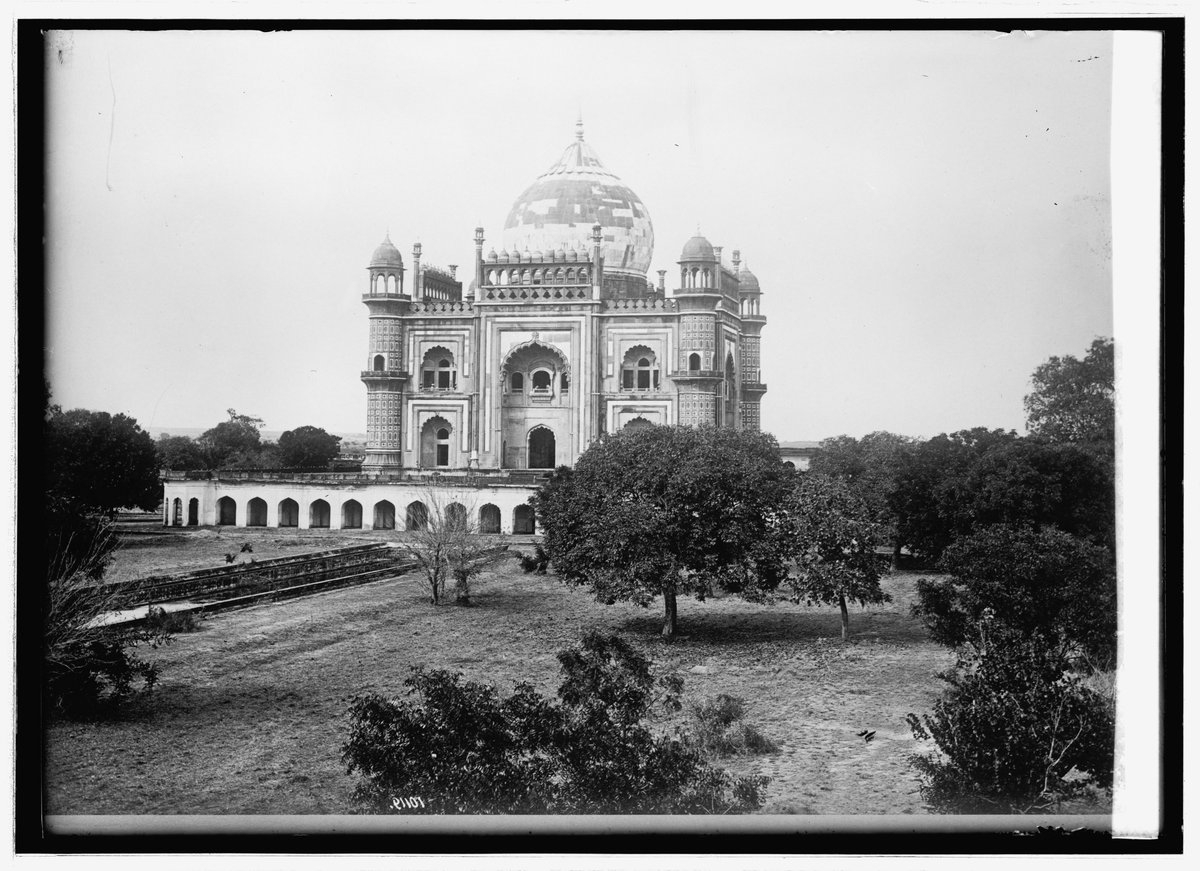
The tomb is an exemplary representation of Mughal architecture, characterized by its grand scale, symmetry, and the use of red sandstone and white marble. The structure stands on a high, wide, terraced platform with a central dome that rises to a height of 42.5 meters. The use of Persian architectural elements, such as the double dome and the charbagh (four-part) garden layout, reflects the cultural amalgamation that the Mughal Empire represented (Archnet).
The Charbagh Garden
The charbagh garden, a Persian-style quadrilateral garden divided by walkways or flowing water into four smaller parts, is a significant feature of Humayun's Tomb. This garden layout symbolizes the Islamic concept of paradise and was the first of its kind in the Indian subcontinent. The garden is divided into 36 squares by a grid of water channels and pathways, creating a serene and harmonious environment that complements the tomb's grandeur (ASI).
Historical Context and Construction
The construction of Humayun's Tomb was a monumental task that took approximately eight years to complete. The tomb was built at a cost of 1.5 million rupees, a considerable sum at the time, funded entirely by Empress Bega Begum. The choice of location, on the banks of the Yamuna River, was strategic, as it was close to the Nizamuddin Dargah, a revered Sufi shrine, which added to the tomb's spiritual significance (India Today).
Influence on Later Mughal Architecture
Humayun's Tomb set a new architectural trend that influenced the construction of later Mughal monuments. The use of red sandstone and white marble, the charbagh garden layout, and the grand scale of the tomb became defining features of Mughal architecture. The tomb's design elements can be seen in later structures such as the Taj Mahal, which was built by Humayun's great-grandson, Shah Jahan, in memory of his wife Mumtaz Mahal (Smithsonian Magazine).
Restoration and Preservation
Over the centuries, Humayun's Tomb underwent several phases of restoration and preservation. During the British colonial period, the garden was altered to resemble English-style lawns, deviating from its original charbagh layout. However, significant restoration efforts were undertaken in the 20th and 21st centuries to restore the tomb and its gardens to their original glory. The Aga Khan Trust for Culture, in collaboration with the Archaeological Survey of India, played a crucial role in these restoration efforts, ensuring the preservation of this UNESCO World Heritage Site (Aga Khan Development Network).
The Tomb Complex
Associated Structures
The Humayun's Tomb complex includes several other significant structures. These include the tombs of Humayun's wives and other Mughal royals, the Barber's Tomb, and the Isa Khan Niyazi Tomb, which predates Humayun's Tomb and is an excellent example of Lodi-era architecture. The complex also houses the Afsarwala Tomb and Mosque, the Bu Halima Garden and Tomb, and the Arab Serai, which was built to house the craftsmen who worked on the tomb (Delhi Tourism).
Cultural and Historical Impact
Humayun's Tomb holds immense cultural and historical significance. It represents the zenith of Mughal architectural innovation and the synthesis of Persian and Indian architectural styles. The tomb is also a symbol of the Mughal Empire's grandeur and the cultural renaissance that it brought to India. As a UNESCO World Heritage Site, Humayun's Tomb attracts thousands of visitors annually, contributing to the cultural tourism of New Delhi and serving as a testament to India's rich historical heritage (UNESCO).
Recent Developments
In recent years, Humayun's Tomb has seen several initiatives aimed at enhancing the visitor experience and preserving the site's historical integrity. These include the introduction of guided tours, the installation of informative plaques, and the development of visitor facilities. Additionally, the site has been the focus of various cultural events and exhibitions, further cementing its status as a cultural and historical landmark (The Hindu).
Visitor Information
Visiting Hours
Humayun's Tomb is open to visitors from sunrise to sunset, every day of the week. It is advisable to visit early in the morning or late in the afternoon to avoid the crowds and enjoy the serene ambiance of the site.
Ticket Prices
The entrance fee for Humayun's Tomb is INR 30 for Indian citizens and INR 500 for foreign nationals. Children under the age of 15 can enter for free. Tickets can be purchased at the entrance or online through the official website.
Travel Tips
- Best Time to Visit: The best time to visit Humayun's Tomb is during the cooler months from October to March.
- Getting There: The tomb is easily accessible by metro, with the nearest station being JLN Stadium on the Violet Line. Alternatively, you can take a taxi or an auto-rickshaw.
- What to Wear: Wear comfortable walking shoes and carry a hat or umbrella for sun protection.
- Photography: Photography is allowed, but the use of tripods is restricted.
Accessibility
Humayun's Tomb is partially accessible to visitors with disabilities. Ramps and pathways have been installed to facilitate movement, but some areas may still be challenging to navigate.
Guided Tours
Guided tours are available at Humayun's Tomb and can be booked at the entrance. These tours provide in-depth insights into the history and architecture of the site.
Photographic Spots
Some of the best photographic spots at Humayun's Tomb include the central dome, the charbagh gardens, and the Isa Khan Niyazi Tomb. Early morning and late afternoon provide the best lighting for photography.
Nearby Attractions
While visiting Humayun's Tomb, you can also explore other historical sites in New Delhi such as:
- India Gate: A war memorial dedicated to Indian soldiers.
- Qutub Minar: The tallest brick minaret in the world.
- Red Fort: A UNESCO World Heritage Site and a symbol of India's rich history.
- Lotus Temple: A Bahá'í House of Worship known for its distinctive lotus-shaped architecture.
FAQ Section
What are the visiting hours for Humayun's Tomb?
Humayun's Tomb is open from sunrise to sunset, every day of the week.
How much do tickets cost for Humayun's Tomb?
The entrance fee is INR 30 for Indian citizens and INR 500 for foreign nationals. Children under 15 enter for free.
Is there any special discount for group bookings or students?
Yes, special discounts are available for group bookings and students. It is advisable to check the official website for more details.
Are guided tours available?
Yes, guided tours are available and can be booked at the entrance.
Tickets & tours.
These are guided options from our partners — same price as booking direct.
Prices are indicative — final pricing and availability are confirmed at checkout. Audiala may earn a commission from bookings made through these links.
Listen to the full story in the app
The whole Tomb Of Isa Khan,
told well.
Listen to sourced travel stories with local history and practical context — ready offline.

Verified, and shown.
Researched and written by the Audiala editorial team from historical records, architectural archives, and local expertise.
Humayun's Tomb
Humayun's Tomb
(2019, July 22). Humayun's Tomb: Delhi's Mughal Architecture Heritage
Humayun's Tomb
(2019, September 26). Humayun's Tomb gets a facelift
Built from cited sources · see the method · How we make our guides →