
An introduction.
Researched by the Audiala editorial team from historical records, architectural archives, and local expertise.
AA palace called the "Palace of Colors" that has no color left — that's the paradox waiting for you inside the Rang Mahal at the Red Fort in New Delhi, India. Shah Jahan's artisans covered its ceilings in silver and gold, painted its walls in pigments so vivid the building earned its name, and channeled river water through its marble floors to cool the air. Today you'll find bare stone, stripped surfaces, and silence where there was once the sound of running water — and that absence is precisely why this place deserves your attention.
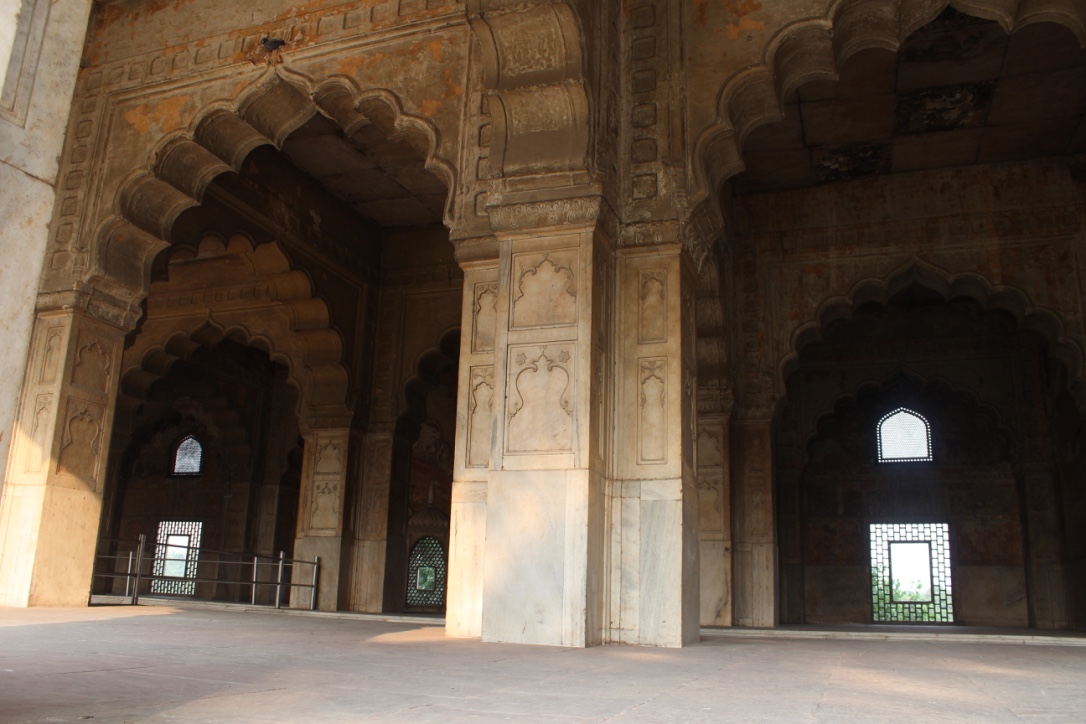
What you see now is a skeleton. The Rang Mahal stands in the southeastern quadrant of the Red Fort complex, a long pavilion of cusped arches and white marble that opens onto empty courtyards. Visitors peer through iron grilles at a floor carved with shallow channels — the remnants of the Nahr-i-Bihisht, the "Stream of Paradise" — and most walk on within minutes. The light inside is flat and grey. No gilding catches it. No mosaics fracture it into color.
But that emptiness tells a story more dramatic than any intact palace could. The Rang Mahal was the innermost sanctum of the Mughal zenana, a fortress within a fortress where royal women wielded political influence, managed enormous personal fortunes, and lived in a seclusion so total that even the Emperor's closest advisors never saw the interior. After the 1857 Rebellion, British forces converted this private world into a military mess hall, stripping the walls and ceilings to suit their purposes. The colors didn't fade. Someone removed them.
To visit the Rang Mahal is to stand in the gap between what was and what remains. Walk here from the Diwan-I-Am — the Hall of Public Audience — and you cross the same threshold that once separated the Emperor's public life from his most private one. The distance is about 200 meters. In Shah Jahan's time, it was the distance between two different worlds.
01 What to see.
The Nahr-i-Bihisht and the Lotus Basin
The Shish Mahal Compartments
A Walk Through the Zenana: From Diwan-i-Am to the River's Edge
02 In pictures.




Videos
Watch & Explore Rang Mahal (Red Fort)
Delhi Red Fort Complete Detailed Tour With Guide || दिल्ली का लाल किला
TOP 10 Attractions and Places to Visit in Delhi, India | Travel Video | Travel guide | SKY Travel
Plan and listen to Rang Mahal (Red Fort) with Audiala.
Audio guide in your pocket, itinerary in your browser. Built for the way you actually visit.
03 Visitor logistics.
The practical scaffolding for a good visit — kept short.
Getting There
Take the Delhi Metro Violet Line to Lal Qila (Red Fort) Station — it's a 5-minute walk from there to the Lahori Gate entrance. Driving is technically possible but practically miserable; Old Delhi traffic around Chandni Chowk can turn a 3-km trip into a 40-minute ordeal. Ride-sharing apps or an auto-rickshaw from central New Delhi will run you ₹100–200 and save considerable grief.
Opening Hours
As of 2026, the Red Fort complex opens at sunrise and closes at 9:00 PM, though the Rang Mahal's exterior details are best appreciated in daylight — aim to arrive before 4:00 PM. The entire complex is closed on Mondays. Verify with the ASI website before visiting, as national holidays and security events occasionally alter schedules.
Time Needed
If you're walking the main axis from the Diwan-i-Am to the Rang Mahal and back, 40 minutes covers it. To properly explore the full Red Fort complex — including the Diwan-i-Khas, museums, and gardens — budget 2 to 3 hours. The Rang Mahal itself is viewed from outside, so you won't spend long at the structure alone.
Tickets
As of 2026, entry to the Red Fort (which includes the Rang Mahal) costs ₹35 for Indian nationals and ₹500 for foreign visitors. Children under 15 enter free. Book online through the ASI portal to skip the ticket-counter queue, which can stretch 20+ minutes on weekends.
Accessibility
The main paved thoroughfare from Lahori Gate to the central pavilions is wheelchair-passable, but the Rang Mahal area has raised stone thresholds and uneven gravel paths with no ramps or elevators. Visitors with mobility challenges can still view the structure's exterior from the main walkway. Expect no tactile or audio accommodations at the site itself.
05 Tips for visitors.
Small things that change the day.
Ignore the Touts
Scammers near the entrance will tell you the fort is "closed today" and steer you toward a shop or travel agency. Walk past them to the official ticket counter — if the gates are open, the fort is open.
Photography Rules
Personal photography is fine throughout the complex, but tripods, gimbals, and professional gear require written ASI permission. Drones are strictly prohibited — no exceptions, no workarounds.
Eat in Chandni Chowk
Skip the sparse cafes inside the fort. Walk 10 minutes to Natraj Dahi Bhalla Corner for yogurt-drenched dumplings (under ₹100), or hit Paranthe Wali Gali for stuffed deep-fried flatbreads. For a splurge, Lakhori at Haveli Dharampura serves refined Mughlai cuisine in a restored mansion.
Visit October to February
Delhi summers push past 45°C, and the Red Fort's stone courtyards offer zero shade. The October–February window gives you bearable temperatures and softer light that makes the remaining pietra dura inlay work actually glow.
Manage Your Expectations
Guidebooks show close-up photos of the Rang Mahal's marble interiors, but visitors can't enter — you'll view it from behind barriers. Knowing this in advance lets you appreciate the exterior craftsmanship rather than feeling cheated by the cordons.
Combine with Diwan-i-Am
The natural walking route leads from the Lahori Gate through the Diwan-i-Am before reaching the Rang Mahal. Follow this sequence rather than doubling back — it mirrors the progression Mughal courtiers themselves would have taken from public to private quarters.
04 A history of reinvention.
A Fortress Within a Fortress, Still Guarding Its Secrets
The Rang Mahal has been a container for power — visible and invisible — since Mughal laborers and artisans completed it in 1648. Its function has shifted from imperial residence to colonial mess hall to national monument, but one thing has endured across nearly four centuries: the building still separates an inner world from an outer one. Visitors today cannot enter. They look through barriers at an interior they can sense but not reach, replicating, in miniature, the experience of almost everyone who ever stood outside it.
That continuity of exclusion is the Rang Mahal's defining feature. In the 1640s, the zenana's walls kept the royal women invisible to the court. After 1857, British military regulations restricted access to officers. Today, the Archaeological Survey of India maintains the barriers. The reasons change. The effect doesn't. You look in. You don't go in.
The Emperor's Private World and the General Who Destroyed It
Most visitors assume the Rang Mahal was a pleasure palace — a place of entertainment, dance, and indulgence. The name encourages it. "Palace of Colors" sounds like a party. Guidebooks sometimes reinforce this, describing it as a space for the Emperor's leisure. The classic film Mughal-e-Azam cemented the image further, projecting its famous Shish Mahal dance sequence onto the public memory of this building.
But the reality doesn't match. The Rang Mahal was the operational center of the zenana, where women like Jahanara Begum — Shah Jahan's eldest daughter and one of the wealthiest individuals in the 17th-century world — managed trade networks, patronized poets, and brokered political alliances. Jahanara personally controlled an annual income estimated at several million rupees, larger than the treasuries of some European kingdoms. For her, the Rang Mahal wasn't a gilded cage. It was a command center hidden behind marble screens.
The turning point came not with a Mughal but with a British officer. After Indian soldiers and civilians rose against the East India Company in 1857, British forces seized the Red Fort and converted the Rang Mahal into a mess hall for their garrison. They stripped the silver ceiling. They tore out the inlay work. They drained the Nahr-i-Bihisht. General John Nicholson, who died during the siege of Delhi that same year, became a symbol of the violent recapture — but the anonymous soldiers who gutted the interior did damage that outlasted any battle.
Knowing this changes what you see. Those bare walls aren't the result of time or weather. They are the result of deliberate removal. The Rang Mahal doesn't look old. It looks emptied.
What the British Took
What Endures Despite Everything
Listen to the full story in the app
The whole Rang Mahal (Red Fort),
told well.
Audio guides for 1,100+ cities across 96 countries. History, stories, and local insight — offline ready.

06 Frequently asked.
The questions travellers send us most about Rang Mahal (Red Fort).
Is Rang Mahal at the Red Fort worth visiting?
Yes, but adjust your expectations — you're visiting a skeleton, not a palace. The original gold-leaf ceilings, mirror-encrusted walls, and flowing perfumed water channels are gone, stripped by Nadir Shah's 1739 invasion and then by British soldiers who turned it into a mess hall after 1857. What remains is the marble geometry and the Nahr-i-Bihisht water channel, which still tells the story of Mughal engineering genius if you know what you're looking at.
Can you go inside the Rang Mahal at the Red Fort?
No, you can't enter the interior. The Rang Mahal is cordoned off, and visitors view it from exterior walkways and openings. Guidebooks sometimes show interior photos that set the wrong expectation — plan to admire the structure from outside and focus on the marble water channels and carved stone details visible from the perimeter.
How long do you need at the Red Fort to see Rang Mahal?
About 40 minutes if you're only hitting the main axis from the Diwan-I-Am to the Rang Mahal. If you want to explore the full Red Fort complex — museums, gardens, Diwan-i-Khas — budget two to three hours. Early morning on a weekday gives you the quietest experience and the best light on the marble.
How do I get to Rang Mahal from New Delhi?
Take the Delhi Metro Violet Line to Lal Qila (Red Fort) Station, then walk to the Lahori Gate entrance. The ride from central New Delhi takes roughly 20–30 minutes depending on your starting point. Skip driving — parking near Old Delhi is a headache, and a rickshaw from Chandni Chowk metro station works just as well.
What is the best time to visit Rang Mahal at the Red Fort?
October through February, early morning. Delhi's summer heat can exceed 45°C, which makes wandering open courtyards miserable. Winter mornings offer cool air and low-angle light that picks up the carved details in the marble — exactly the conditions that reward careful looking.
What is the entry fee for Rang Mahal at the Red Fort?
There's no separate ticket for the Rang Mahal — it's covered by the general Red Fort admission of ₹35 for Indian nationals and ₹500 for foreign visitors. Children under 15 enter free. Book online through the ASI portal to skip the ticket-counter queue.
What should I not miss at Rang Mahal in the Red Fort?
The Nahr-i-Bihisht — the shallow marble water channel running through the center of the palace. Most visitors walk right over it without realizing it was a sophisticated cooling system that drew water from the Yamuna River and lowered the interior temperature by several degrees. Look at the edges of the channel: centuries of water flow have worn the stone smooth. Stand at the eastern side and face where the Yamuna once flowed — that's the angle the palace was designed to capture river breezes from.
Is the Red Fort closed on Mondays?
Yes, the entire Red Fort complex, including the Rang Mahal, is closed on Mondays. The fort is otherwise open from sunrise to 9:00 PM, though daylight hours are best for appreciating the architectural details. Confirm current hours on the ASI website before your visit, as policies occasionally shift.
Verified, and shown.
Researched and written by the Audiala editorial team from historical records, architectural archives, and local expertise.
Official UNESCO listing confirming heritage status, construction dates (1639–1648), and cultural significance of the Red Fort complex.
UNESCO decision document detailing the fort's role in Indian independence ceremonies and post-1857 British military conversion.
General historical overview including construction dates, architectural features, British occupation, and the Nahr-i-Bihisht water channel.
Official ASI page with operating hours, ticket prices, and visitor regulations for the Red Fort complex.
High-resolution imagery and heritage conservation context from INTACH Delhi Chapter.
Cultural context linking the Rang Mahal's Shish Mahal to the 1960 film Mughal-e-Azam and its place in Indian popular imagination.
Profile of historian Rana Safvi and her oral history documentation of the Red Fort's stories.
Visitor logistics including ticket prices, online booking advice, and security screening details.
Architectural details including dimensions (153 by 69 feet), materials, and the role of architect Ustad Ahmad Lahori.
Educational overview of construction history and attribution to architect Ustad Ahmad Lahori.
Visitor reviews confirming restricted interior access and common visitor expectations versus reality.
Accessibility information and general visitor guidance.
Seasonal visiting recommendations and Monday closure confirmation.
Transport options, parking advice, and local bus route information.
Observation about the intentional asymmetry in the Red Fort's layout.
Construction completion date (1648) and general historical context.
Last reviewed
Researched from Wikidata, Wikipedia & official sources · fact-checked · How we make our guides →


