Introduction
The line most people remember at Diwan-I-Khas in New Delhi, India may not have been written by the poet they think it was. That alone tells you why this marble pavilion is worth your time: it looks like a frozen jewel box, but it holds arguments about power, plunder, memory, and who gets to write paradise into stone. Visit for the beauty, yes, but also for the aftershock of empire still hanging in the air.
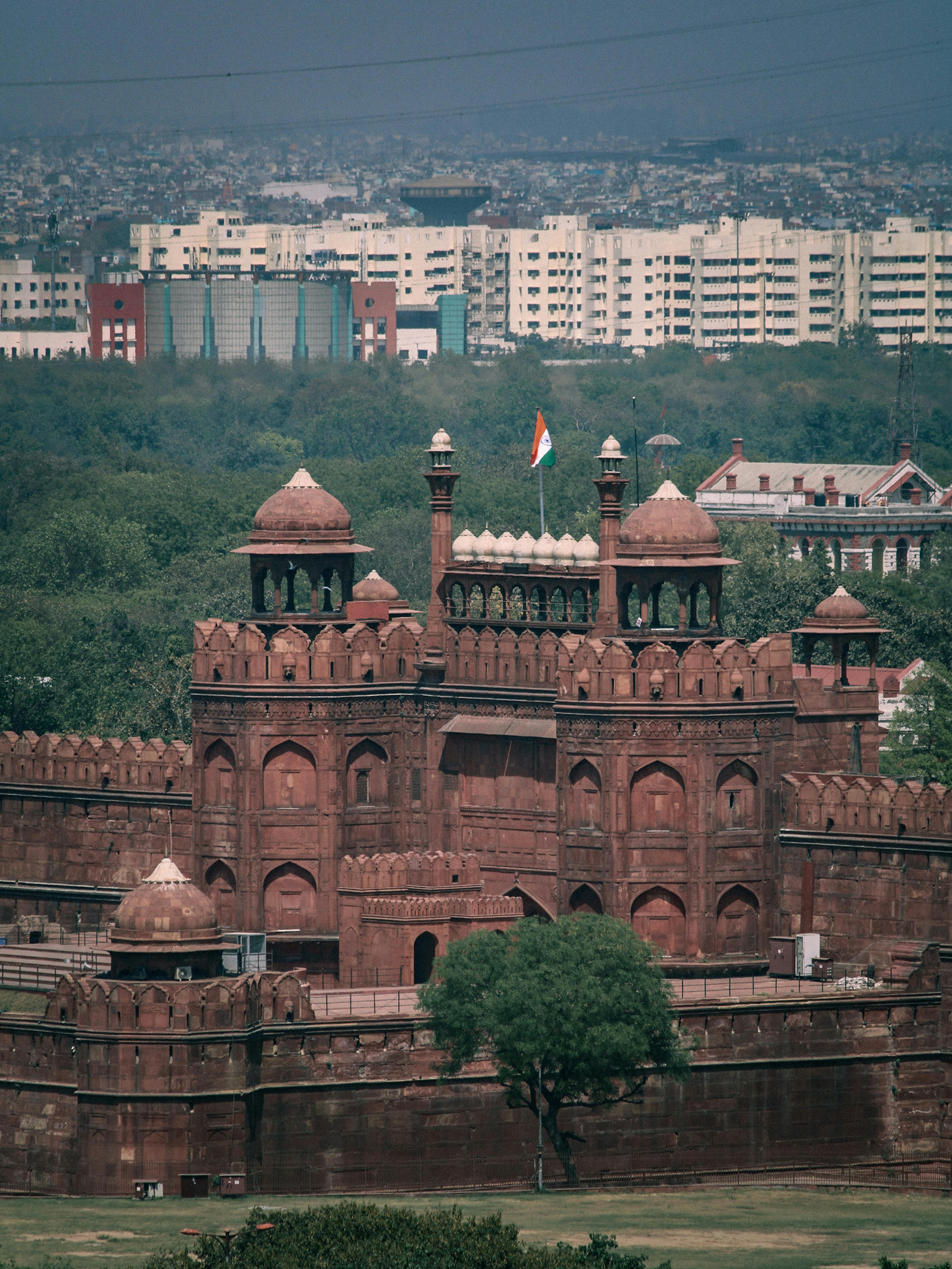
Shah Jahan built Diwan-I-Khas as the Red Fort's hall of private audience, a place where imperial business took place under a ceiling once covered in silver and gold. Light still skims across the white marble. Footsteps still echo. But the room makes sense only when you imagine what has vanished: the Peacock Throne, the running water of the Nahr-i-Bihisht, and the courtly theater that made an emperor seem larger than life.
Records show the hall belonged to the first great phase of the Red Fort, completed in 1648, when Shah Jahan shifted his capital to Shahjahanabad and remade Delhi in polished sandstone and marble. If you've already seen Diwan-I-Am, this is the more intimate counterpart, where the emperor met nobles and envoys away from the wider public gaze.
The room survives in a damaged state, and that damage matters. Nadir Shah's men carried off the Peacock Throne in 1739; British forces stripped and demolished large parts of the palace complex after 1857; the water no longer runs. What remains is enough. More than enough, really.
What to See
The Marble Hall Where Empire Once Sat
The first surprise is the scale of the room's absence. Shah Jahan built this white-marble pavilion between 1638 and 1648 for private audiences, yet what stays with you now is the empty center where the Peacock Throne once stood, under a ceiling that glittered with silver and gold before Nadir Shah carried the throne off in 1739 and British forces stripped more of the hall after 1857. Look up, not straight ahead: the arches still hold Amir Khusrow's famous line about paradise on earth, and the morning light catches the marble so hard that every footstep seems to ring a little longer than it should.


The Stream of Paradise Under Your Feet
Most visitors stare at the arches and miss the narrow channel running through the middle. That is the Nahr-i-Bihisht, the Stream of Paradise, a watercourse that once linked this hall to the emperor's private apartments and turned stone into theatre: cool air, reflected light, the murmur of water, all of it designed by Ustad Ahmad Lahori with the same appetite for spectacle he brought to the Taj Mahal. Find a slight diagonal view toward Rang Mahal (Red Fort) and the nearby palace zone, and the building stops looking like a ruin and starts reading as what it was meant to be, a lived court staged with breeze, shade, textiles, and rank.
Read It as a Palace Sequence
Don't treat Diwan-i-Khas as a single stop. Walk here from Diwan-I-Am, then continue north toward the hammam and the Moti Masjid, because that short stretch shows how Mughal power tightened from public performance to private command, and how colonial violence still shapes what you see by leaving the hall bare and exposed. Early in the day the marble throws back a pale, dry light; by late morning the courtyards fill with chatter and heat, and you may want to escape afterward into Daryaganj for a different kind of Delhi memory, one built from streets rather than emperors.

Visitor Logistics
Getting There
Diwan-i-Khas sits inside Lal Qila, the Red Fort complex, and the cleanest approach is the Violet Line metro to Lal Quila station. Use Gate 4 for Lahori Gate and expect a 2-5 minute walk; from Chandni Chowk on the Yellow Line, count on 10-15 minutes on foot or a short rickshaw ride through Old Delhi traffic that moves like a stubborn parade.
Opening Hours
As of 2026, Red Fort now reports opening all 7 days, including Monday, after an ASI order issued in February 2026. Daytime hours still vary by source between 9:30 AM-4:30 PM and 9:30 AM-6:00 PM, so plan to arrive by 9:30-10:30 AM and do not bank on entry much after 4:00 PM; special closures can still hit, especially around Independence Day.
Time Needed
Give Diwan-i-Khas 45-60 minutes if you head in with purpose through Lahori Gate, Chhatta Chowk, Naubat Khana and Diwan-I-Am. A balanced Red Fort visit takes 1.5-2 hours, and 2-3 hours makes sense if you also want the museums, the nearby palaces, and a slow look at Rang Mahal (Red Fort).
Accessibility
The main fort complex is broadly wheelchair-friendly at the entrance level, with ramps, accessible toilets, and reports of accessible parking near the Delhi Gate side. The catch is distance and surface: once you move deeper into the complex, uneven stone and long exposed walks make the site harder than it first looks, especially in Delhi heat that hits like a hair dryer aimed at your face.
Tickets
As of 2026, commonly reported Red Fort entry prices are ₹35 for Indian, SAARC and BIMSTEC visitors, ₹550 for foreign visitors, and free for children under 15; museum combo tickets run higher. Book online through the ASI e-ticket system or ONDC-linked channels to skip the ticket counter, though security lines still move at their own pace.
Tips for Visitors
Photo Rules
Handheld photography is generally allowed, which matters because the marble pavilion catches a soft side light that makes the empty throne space feel even more haunted. Tripods, light stands and other rigs need permission from ASI, and drones are a bad idea at a high-security site like Lal Qila.
Old Delhi Guard
Use the metro, keep your phone and wallet in front pockets, and agree any rickshaw fare before you sit down. Old Delhi still runs on commission traps and creative detours; if a driver offers to show you a special shop first, decline and keep moving.
Beat The Heat
Morning wins. Reach between 9:30 and 10:30 AM, before the stone courts start throwing heat back at you and before the queues thicken with school groups and late arrivals.
Eat Nearby
Skip random tourist menus near the gate and walk with intent: Natraj Dahi Bhalla Corner in Chandni Chowk is a budget stop, Karim's near Jama Masjid covers the classic mid-range Mughlai table, and Haveli Dharampura works if you want a splurge in restored Old Delhi surroundings. If you want a calmer reset after the fort, Daryaganj makes a good next move.
Travel Light
Recent visitor reports mention a cloakroom near the entrance, sometimes around ₹20 per bag, but treat the price and availability as same-day information rather than gospel. Bring the smallest bag you can; security checks are slow enough without hauling half your hotel room through them.
Pair It Well
Diwan-i-Khas makes more sense when you see it as one room in a bruised imperial sequence, not as a standalone pretty pavilion. Pair it with Diwan-I-Am inside the fort, then step back into the market roar of Chandni Chowk or continue toward Jama Masjid; the contrast is the point.
Historical Context
Where Paradise Broke in Public
Diwan-I-Khas began as a machine for turning rule into spectacle. Records show Shah Jahan ordered the Red Fort after moving his capital from Agra in 1638, and the fort rose between 1639 and 1648 under the direction usually credited to Ustad Ahmad Lahori. The marble hall stood within a larger palace sequence fed by the Nahr-i-Bihisht, the "Stream of Paradise," so water, stone, and ceremony worked together to make sovereignty feel ordained.
That illusion did not last. The hall watched Mughal grandeur peak, thin out, and then crack open under invasion and colonial violence. By the time you stand here today, you are looking at a survivor, not a pristine relic.
Bahadur Shah Zafar's Last Performance
In May 1857, Diwan-I-Khas became the stage for one of the most desperate acts in South Asian history. Bahadur Shah Zafar II, the last Mughal emperor, was about 82 years old, more poet than ruler by then, living on ceremony, pension, and memory while real power sat elsewhere.
When rebel sepoys reached Delhi, his name suddenly mattered again. What was at stake for Zafar was personal before it was imperial: his family, his fragile court, and the last thread of dignity left to a dynasty that had ruled for more than three centuries. Secondary accounts and ASI-derived descriptions indicate that he held court here during the uprising, and 12 May 1857 stands as the best-supported turning point, when a ceremonial monarch was pushed into the role of sovereign leader once more.
The change lasted months, not years. British forces crushed the revolt, dismantled much of the palace city around him, and ended Mughal rule for good. That is why the hall feels haunted rather than merely elegant: Zafar did not lose an empire in the abstract. He lost his final chance to remain more than a symbol.
The Throne That Left a Hole
According to court tradition and later descriptions, Diwan-I-Khas housed the Peacock Throne, the Takht-e-Taawus, a seat so loaded with jewels that it blurred into mythology. Bernier places it here, while other accounts complicate where it stood during specific ceremonies, so scholars still argue over its exact use. Records do show what happened next: Nadir Shah captured Delhi in 1739 and carried the throne away to Persia, turning this hall from a theater of abundance into a monument to theft.
A Court Built Around Water
Most visitors look up at the marble arches and miss the channel beneath. That dry trace marks the Nahr-i-Bihisht, which once ran through the palace apartments and helped tie Diwan-I-Khas to nearby spaces such as Rang Mahal (Red Fort). Records show Shah Jahan's builders used water here as politics made visible: paradise was not just described, it was staged, flowing past the emperor's seat like a private river.
Listen to the full story in the app
Your Personal Curator, in Your Pocket.
Audio guides for 1,100+ cities across 96 countries. History, stories, and local insight — offline ready.
Audiala App
Available on iOS & Android
Join 50k+ Curators
Frequently Asked
Is Diwan-I-Khas worth visiting? add
Yes, especially if you care about how power performs itself in stone. The hall looks almost painfully bare now, which is exactly the point: Shah Jahan built it as a white-marble theater for the Peacock Throne, Nadir Shah carried that throne away in 1739, and the British stripped much of what remained after 1857. Stand there a minute and the emptiness starts doing the work.
How long do you need at Diwan-I-Khas? add
Give Diwan-I-Khas 45 to 60 minutes if you want a focused look, and 1.5 to 2 hours if you want to see it properly within the Red Fort palace zone. The hall itself is not huge, about 90 by 67 feet, roughly the footprint of a small city townhouse, but its meaning depends on what sits around it. Pair it with Diwan-I-Am and Rang Mahal (Red Fort) or you miss the courtly sequence Shah Jahan intended.
How do I get to Diwan-I-Khas from New Delhi? add
The easiest route is the Violet Line to Lal Qila metro station, then a short 2 to 5 minute walk to the Red Fort entrance. Chandni Chowk on the Yellow Line also works, but that approach usually means a 10 to 15 minute walk or a rickshaw ride through Old Delhi traffic. Use the metro if you value your patience.
What is the best time to visit Diwan-I-Khas? add
Go in the morning, ideally between October and March, when the marble catches softer light and Delhi is less punishing. In April and May, the exposed courts feel like a griddle by late morning, so arriving around 9:30 to 10:30 AM is the smart move. Weekday mornings also give you a better chance of hearing your own footsteps instead of everyone else's.
Can you visit Diwan-I-Khas for free? add
Usually no, because Diwan-I-Khas sits inside the ticketed Red Fort complex. Current visitor guidance points to Red Fort entry at about ₹35 for Indian, SAARC, and BIMSTEC visitors, ₹550 for foreign visitors, and free entry for children under 15; occasional ASI free-entry days happen, but you should not count on one unless it is announced. Online booking helps you skip the ticket counter, not security.
What should I not miss at Diwan-I-Khas? add
Look up at the famous paradise inscription, then look down at the dry channel of the Nahr-i-Bihisht, the Stream of Paradise. Most visitors notice the marble first, but the watercourse is the real clue because it shows the hall as part of a larger river-cooled palace machine rather than a pretty pavilion. Also pay attention to what is missing: the Peacock Throne, the silver and gold ceiling, the enclosing arcades, all gone.
Is Diwan-I-Khas open on Mondays? add
Yes, current reporting says the Red Fort is now open all seven days, including Monday, after an ASI order issued in February 2026. Daytime closing times still vary across visitor sources, though, with 4:30 PM looking like the safest practical cutoff for a Diwan-I-Khas visit. Check same-day hours if you are going near a public holiday or around Independence Day security restrictions.
Sources
-
verified
Archaeological Survey of India
Official background on the Red Fort complex, including the 1639 to 1648 construction period, the palace-water layout, and the Diwan-i-Khas within Shah Jahan's private palace zone.
-
verified
UNESCO World Heritage Centre
Official World Heritage listing used for the Red Fort's historical importance, architectural framing, and continuing national symbolism.
-
verified
UNESCO Nomination / Evaluation Document
Background document supporting the fort's World Heritage inscription and the broader palace-city context around Diwan-i-Khas.
-
verified
Scroll.in
Used for the contested authorship of the famous paradise inscription often linked to the hall.
-
verified
Rana Safvi
Used for court-history interpretation, the hall's later Mughal afterlife, and the argument that Diwan-i-Khas matters as a witness to imperial decline.
-
verified
Oxford University Press Blog
Used for Nadir Shah's 1739 sack of Delhi and the removal of the Peacock Throne from the Diwan-i-Khas.
-
verified
Encyclopaedia Britannica
Used for Bahadur Shah Zafar's role in 1857 and the hall's association with the last Mughal court.
-
verified
Indian Express
Used for the post-1857 destruction inside the Red Fort and the shift from Mughal palace to colonial military occupation and later national symbol.
-
verified
Wikipedia
Used for hall dimensions, layout, decorative features, the later wooden ceiling, and basic orientation within the Red Fort complex.
-
verified
Lonely Planet
Used for seasonal visiting advice, crowd timing, and practical context for seeing Diwan-i-Khas inside the Red Fort.
-
verified
Lonely Planet Points of Interest
Used for current visitor experience notes and the possibility that the hall is viewed from the front rather than entered.
-
verified
India Culture Portal
Used for the Nahr-i-Bihisht and the private-palace layout that connects Diwan-i-Khas to surrounding pavilions.
-
verified
Business Standard
Used for the February 2026 update that Red Fort is now open all seven days, including Monday.
-
verified
The Economic Times
Secondary confirmation of the February 2026 Monday-opening change at Red Fort.
-
verified
Tourismo Guides
Used for current visitor timing estimates, ticket prices, walking access from metro, and general logistics for Red Fort entry.
-
verified
Delhi Tourism
Used for museum timings that support 4:30 PM as a practical latest time for a Diwan-i-Khas visit.
-
verified
Press Information Bureau
Official source for online ASI ticketing through ONDC and the fact that online purchase mainly removes the ticket-counter queue.
-
verified
Delhi Metro route guide
Used for Lal Qila metro access and gate information near Red Fort.
-
verified
Wikipedia
Used to confirm Lal Qila metro as the closest station to the Red Fort complex.
-
verified
Ease India Trip
Used for the alternative Chandni Chowk approach and approximate walking time to the fort.
Last reviewed: