
An introduction.
Researched by the Audiala editorial team from historical records, architectural archives, and local expertise.
TThe largest mass religious conversion in recorded history happened not in a cathedral or a temple but on an open field in Nagpur, India — and Deekshabhoomi now marks that ground with the world's largest hollow stupa, a dome of Dholpur sandstone and marble rising 120 feet above the spot where half a million people changed their faith in a single afternoon. This is not a ruin to admire from a distance. It is a place where history still happens every October, when thousands more follow the same path.
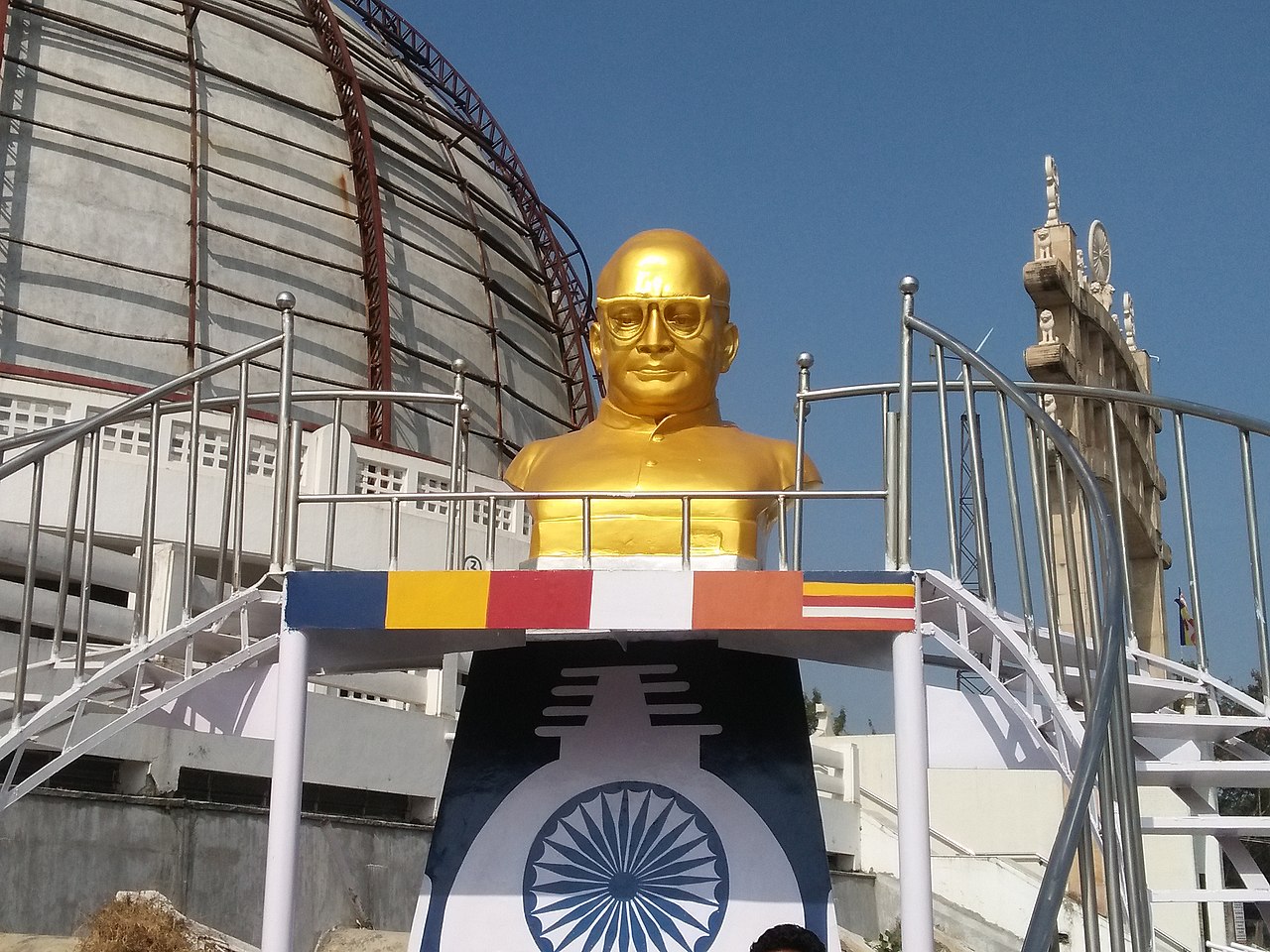
Walk through the gates and the scale hits you before the symbolism does. The stupa's base stretches 350 feet across — wider than a football pitch — and its white dome dominates the Ramdaspeth skyline like a second moon that decided to stay. Inside, the hollow interior amplifies every footstep into something resembling a heartbeat, a trick of acoustics that feels entirely deliberate.
What draws people here isn't architecture alone. Deekshabhoomi is the site where Dr. B.R. Ambedkar, the principal architect of India's Constitution, led between 400,000 and 600,000 followers in embracing Buddhism on October 14, 1956. For Dalits — communities that the Hindu caste system had pressed to the margins for centuries — this ground represents a before and an after. That weight is palpable. You feel it in the silence of visitors standing before the central Buddha statue, and in the roar of the crowds that fill this space each autumn.
The stupa itself is modern, inaugurated in 2001, but the emotional charge of the place predates every brick. Come for the architecture if you like. Stay because you'll realize you're standing at one of the few spots on earth where a building exists not to commemorate power, but to commemorate the refusal of it.
01 What to see.
The Great Stupa
The Interior Hall and Thai Buddha
A Slow Walk: Garden, Gateways, and the Golden Hour
02 In pictures.




Videos
Watch & Explore Deekshabhoomi
A Documentary Film on “Deekshabhoomi" in Hindi
Deekshabhoomi Nagpur l Deekshabhoomi Nagpur History l NAGPUR
Nagpur City || Orange City Of India || Maharashtra || Debdut YouTube
Plan and listen to Deekshabhoomi with Audiala.
Audio guide in your pocket, itinerary in your browser. Built for the way you actually visit.
03 Visitor logistics.
The practical scaffolding for a good visit — kept short.
Getting There
The fastest route is Nagpur Metro's Aqua Line to LAD Square station — the stupa is barely 130 meters from the exit, a two-minute walk. Auto-rickshaws from Nagpur Junction railway station take about 20 minutes and cost ₹100–150. If you're driving, look for the dedicated Diksha Bhoomi Parking area just off the main approach road in Abhyankar Nagar.
Opening Hours
As of 2026, Deekshabhoomi is open daily from 7:00 AM to 8:00 PM with no scheduled closure days. During Dhamma Chakra Pravartan Din in October and Mahaparinirwan Din on December 6, expect extended hours but enormous crowds — sometimes over a million pilgrims. Arrive before 8:00 AM on regular days for near-solitude inside the stupa.
Time Needed
A focused visit to the main stupa takes 30–45 minutes. To absorb the Dr. Babasaheb Ambedkar Smarak Museum, sit under the Bodhi tree, and read the 22 Vows inscriptions, budget 1.5 to 2 hours. The site rewards slowness — the interior acoustics of the stupa alone deserve ten unhurried minutes.
Cost
Entry is completely free, as of 2026. No tickets, no booking, no skip-the-line passes — you walk in. The museum inside the complex is also free, which makes this one of India's most significant monuments you can visit without spending a single rupee.
Accessibility
The complex sits on largely flat, paved ground, and the main stupa area is wheelchair accessible. Guided tour operators confirm wheelchair access throughout the primary route. The sandstone and marble surfaces can get hot underfoot in summer — relevant since you'll remove shoes before entering the stupa.
05 Tips for visitors.
Small things that change the day.
Remove Shoes, Cover Up
Shoes come off before entering the stupa — carry a bag to hold them, as there's no formal storage. Dress modestly with shoulders and knees covered; this is an active place of worship where people meditate and chant daily, not a museum exhibit.
No Photos Inside
Photography is strictly prohibited inside the main stupa hall, near the central Buddha statue. You can photograph the exterior and gardens freely, but put your phone away once you cross the threshold — volunteers will remind you if you forget.
Skip Unofficial Guides
Unauthorized "guides" sometimes approach visitors near the entrance offering history tours for a fee. The site's own signage and museum exhibits tell the story far more accurately. Politely decline and spend that money on Tarri Poha instead.
Eat Tarri Poha Nearby
Nagpur's signature breakfast — spicy flattened rice topped with a fiery chickpea curry — is sold at budget stalls near the gate for ₹20–40. For a proper sit-down meal, head to Naivedyam in nearby Ramdaspeth for excellent vegetarian thalis at mid-range prices.
Come at Dawn
Early morning light turns the Dholpur sandstone a warm amber, and the 120-foot stupa — roughly as tall as a twelve-story building — catches the sun before the grounds fill up. By 10:00 AM the Nagpur heat becomes punishing, especially between March and June.
Pair with Ambazari Lake
Ambazari Lake and Garden sits just a short auto-rickshaw ride away, making a natural afternoon pairing. The contrast between the stupa's monumental stillness and the lake's green sprawl gives your day a satisfying arc.
04 A history of reinvention.
A Man Who Refused to Die in Chains
Bhimrao Ramji Ambedkar was born in 1891 into the Mahar caste, classified as "untouchable" under Hinduism's rigid hierarchy. He grew up barred from sharing water sources with upper-caste children, forced to sit outside his classroom on a gunny sack, and denied access to the school well. That he became one of the most educated men in India — earning doctorates from Columbia University and the London School of Economics — is remarkable. That he then wrote the constitution of the nation that had humiliated him is something closer to extraordinary.
But Ambedkar understood that legal equality on paper does not erase social contempt. The caste system's consequences remain alive in Indian society today — in marriage patterns, in employment discrimination, in the daily texture of millions of lives. His answer was not only political. It was spiritual. And it led him, at the age of 65 and in failing health, to an open field in Nagpur.
October 14, 1956: The Day Half a Million People Walked Away
Ambedkar had made his intention public twenty-one years earlier. At the Yeola Conference in 1935, he declared: "I will not die a Hindu." The words were a grenade thrown into Indian public life. For two decades, leaders of every major religion courted him — Sikhs, Muslims, Christians — knowing that wherever Ambedkar went, millions would follow. He chose Buddhism, a faith born in India but nearly extinct there, because he saw in it a rejection of caste and a path to self-respect rooted in Indian soil.
He chose Nagpur deliberately. According to Ambedkar's own writings, he identified the city as the historical homeland of the Nag people, whom he believed were early and fervent supporters of Buddhism. On that October morning, a Burmese monk named Mahasthavir Chandramani administered the Three Jewels and Five Precepts to Ambedkar. Then Ambedkar turned and administered them to the crowd — somewhere between 400,000 and 600,000 people standing on the open ground that is now Deekshabhoomi. Records confirm it as the largest peaceful mass conversion in modern history.
The turning point was also a finish line. Ambedkar's health had been deteriorating for years — diabetes, failing eyesight, exhaustion from decades of political combat. He died less than two months later, on December 6, 1956. The conversion was his final major act, a wager that spiritual liberation could accomplish what constitutional law alone could not. Whether that wager paid off remains the central question of his legacy.
Early Life and the Architecture of Refusal
Legacy in Stone and in Practice
Listen to the full story in the app
The whole Deekshabhoomi,
told well.
Audio guides for 1,100+ cities across 96 countries. History, stories, and local insight — offline ready.

06 Frequently asked.
The questions travellers send us most about Deekshabhoomi.
Is Deekshabhoomi worth visiting?
Yes, and not only for its architecture. The stupa—120 feet tall with a base diameter wider than a football pitch—is the largest hollow stupa on Earth, built from Dholpur sandstone that glows amber at sunset. But what makes it worth your time is the weight of what happened here: on October 14, 1956, Dr. B.R. Ambedkar and roughly half a million followers converted to Buddhism in a single day, the largest mass religious conversion in modern history. The interior's acoustics alone are extraordinary, with a reverberation time of nearly 10 seconds in an empty hall—step inside and your own breathing sounds like it belongs to the building.
Can you visit Deekshabhoomi for free?
Completely free, every day. There's no entry fee, no ticket booth, and no online booking required. You walk in, remove your shoes at the stupa entrance, and that's it.
How long do you need at Deekshabhoomi?
Budget 90 minutes to two hours if you want to do it properly. A quick circuit of the main stupa takes 30 to 45 minutes, but the Dr. Babasaheb Ambedkar Smarak Museum and the quiet grounds around the Bodhi Tree deserve unhurried attention. If you're there on a weekday morning, the near-silence inside the dome is the whole point—rushing defeats it.
How do I get to Deekshabhoomi from Nagpur?
The Nagpur Metro's Aqua Line drops you about 130 meters from the entrance at LAD Square station—roughly a two-minute walk. Auto-rickshaws from Nagpur Railway Station cost very little and take around 15 minutes depending on traffic. A designated parking area sits near the complex if you're driving.
What is the best time to visit Deekshabhoomi?
Early morning on a weekday between November and February gives you the quietest, coolest experience—Nagpur's summers push past 45°C. If you want spectacle instead of solitude, come during Dhamma Chakra Pravartan Din in October, when hundreds of thousands of pilgrims fill the grounds for the anniversary of the 1956 conversion. The atmosphere shifts from contemplative sanctuary to something closer to a vast, emotionally charged gathering that has continued every year since Ambedkar's time.
What should I not miss at Deekshabhoomi?
Don't walk past the central Buddha statue without knowing its story—Thai students at Nagpur University donated it, a quiet thread connecting India's Neo-Buddhist movement to Southeast Asia. The four monumental gateways carry carved Ashok Chakras, elephants, lions, and horses drawn from ancient Buddhist iconography. And look for the copy of the Indian Constitution housed inside the monument, a detail most visitors miss entirely. For photography, the best angle is from the garden perimeter at dusk, when the sandstone catches the last light.
What are the rules for visiting Deekshabhoomi?
Dress modestly—cover your shoulders and knees, and leave the shorts at the hotel. Shoes come off before you enter the stupa. Photography is allowed on the grounds and exterior, but strictly prohibited inside the main hall. Keep your voice low inside; this is an active place of worship and meditation, not a museum. Avoid unauthorized guides who may approach you at the gate—the on-site signage and museum exhibits tell the story well enough.
Why is Deekshabhoomi important in Indian history?
On October 14, 1956, Dr. B.R. Ambedkar—the principal architect of India's Constitution—led approximately 500,000 Dalits in converting to Buddhism, rejecting the caste hierarchy that had defined their lives. He had declared in 1935 that he would not die a Hindu; the Nagpur conversion was his final major act before his death on December 6, 1956, less than two months later. The site remains a living center of that movement: every year, thousands still take the 22 vows of Buddhism here, making Deekshabhoomi not a monument to something finished but a place where history continues to happen.
Verified, and shown.
Researched and written by the Audiala editorial team from historical records, architectural archives, and local expertise.
Core historical facts including conversion date, construction timeline, architectural details, key figures, and inauguration by President K.R. Narayanan.
Official memorial site providing history of the conversion, role of Mahasthavir Chandramani, and post-1956 evolution of the site.
Visitor information including opening hours (7 AM–8 PM), free entry policy, and general site description.
Architectural details including dimensions (120 ft tall, 350 ft base diameter), materials (Dholpur sandstone, marble, granite), and Central Block Locking System.
Construction timeline, mention of the Indian Constitution copy housed on-site, and confirmation of key dates.
Visitor FAQs including dress code and photography rules.
Nearest metro station (LAD Square, ~0.13 km) and Aqua Line connectivity details.
Acoustic properties of the stupa hall including reverberation time data (5.6–9.7 seconds).
Peer-reviewed acoustic analysis confirming the stupa's distinctive reverberation characteristics.
Visitor experience details, time estimates, and on-the-ground practical tips.
Coverage of annual pilgrimage events and infrastructure upgrades for crowd management.
Architectural style details, gateway carvings, and material descriptions.
Local cultural context and significance of the site within Nagpur's identity.
Photography tips and visitor etiquette guidance.
Wheelchair accessibility information and guided tour availability.
Last reviewed
Researched from Wikidata, Wikipedia & official sources · fact-checked · How we make our guides →

