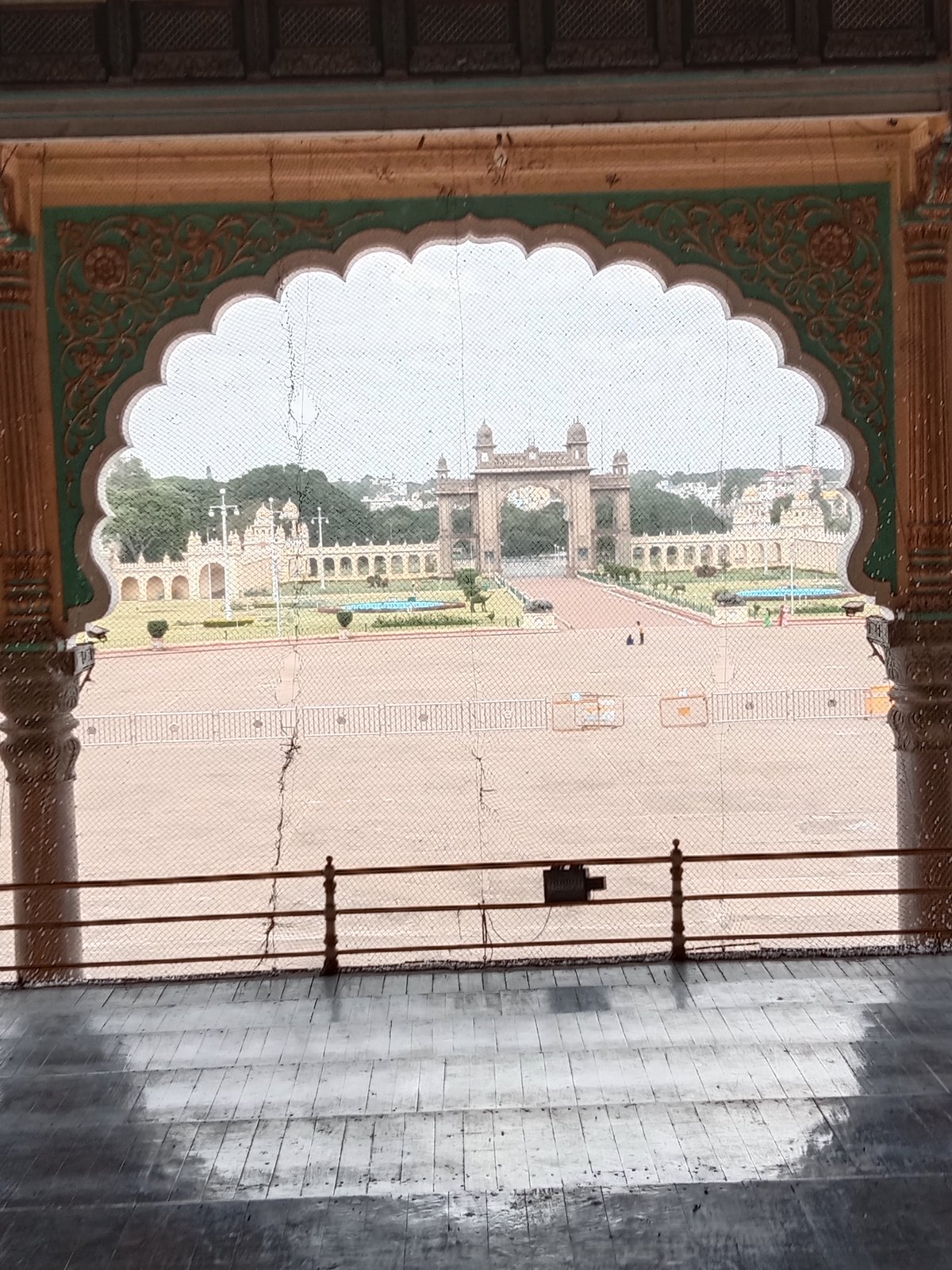
Lalitha Mahal Palace, Mysore
Lalitha Mahal Palace stands at the foothills of Mysore’s Chamundi Hills and is a landmark of the city’s royal heritage. It is the second-largest palace in Mysore and is known for its white façade, grand central dome and terraced gardens. The palace is now a heritage hotel, offering visitors a glimpse of the Wodeyar dynasty’s royal lifestyle.
For visitor information and bookings, see the official Lalitha Mahal Palace website and the India Tourism Development Corporation (ITDC) site.
History and architecture
Origins and construction
Maharaja Krishnaraja Wodeyar IV commissioned Lalitha Mahal Palace in 1921 as a royal guesthouse, especially for the Viceroy of India and other eminent visitors. British architect E.W. Fritchley led its design and construction. The palace was completed in 1931 at a cost of about 1.3 million rupees, becoming a symbol of Mysore’s modernity and cosmopolitan outlook during the colonial era. Its central dome was inspired by London’s St. Paul’s Cathedral (TravelSetu, MysoreCityTour).
The palace exemplifies the Indo-Saracenic style, combining European Renaissance, Italian palazzo, English manor, neoclassical and Mughal influences. Its architectural features include a white façade with twin Ionic columns, a projecting portico, symmetrical wings, ornamental domes, balustrades and intricate cornices.
The interiors include Italian marble staircases, Belgian crystal chandeliers, Persian carpets and stained glass. Grand halls, ballrooms and period suites reflect the palace’s royal luxury (Incredible India).
Heritage hotel and conservation
After India’s independence, the palace became a luxury heritage hotel in 1974, managed by the ITDC. It has 54 suites and rooms, period décor, fine dining and wellness amenities (Jungle Lodges).
Lalitha Mahal is protected by the Karnataka State Archaeology Department and ASI. Conservation work includes structural reinforcement, façade cleaning and roof repairs, alongside the palace’s adaptive reuse as a heritage hotel. INTACH contributes through heritage walks and educational outreach (Secret Attractions).
3D scanning and virtual tours support remote access and provide references for restoration. Urbanization, environmental factors and funding shortages remain challenges; sustainable tourism, community involvement and technology-driven solutions are among the efforts supporting the palace’s preservation.
What to see
- Grand entrance and guardhouse An ornate entryway that sets the royal ambiance.
- Durbar Hall A central hall with crystal chandeliers, marble floors and royal portraits.
- Banquet hall and ballroom Now a restaurant, with glass domes and period décor.
- Viceroy Suite A suite accessible by marble staircase or elevator.
- Gardens and lawns Manicured grounds for photography and strolls.
- Sports facilities A 9-hole golf course, tennis courts, swimming pool and billiards room.
Practical visiting information
Hours and tickets
- Visiting hours 9:00/9:30 AM to 5:00/6:00 PM daily, including public holidays. Hours may vary by source or season.
- Entry fees Indian nationals, INR 25–50; foreign nationals, INR 200–300; children under 12, free in most cases.
- Tickets Available at the palace entrance or through official or authorized online platforms.
- Guided tours Available on-site or by advance booking. Tours can be arranged at the hotel reception, where visitors can inquire about schedules.
- Virtual tours 3D digital experiences are available for remote visitors.
Facilities and access
- Ramps and assistance are available for differently-abled visitors. Ramps and elevators are also available, though some areas may have limited access.
- Visitor parking and restrooms are available on-site.
- Some outlets offer local crafts and memorabilia.
- Photography is allowed in most public areas. Flash and tripod use are restricted in heritage rooms, and some rooms may have other photography restrictions.
Tips for visitors
- Visiting early can help avoid crowds, especially on weekends and during festivals.
- Advance booking is recommended, particularly during the Mysore Dasara festival and peak tourist season.
- Wear comfortable shoes for exploring the palace and grounds.
- Modest attire is appreciated, especially when visiting nearby temples.
- October–February is the best season for pleasant temperatures; summers can be hot and monsoons are rainy.
- Food, drinks and pets are not permitted inside the palace.
- Suggested items to carry include water, sunscreen, a hat, a camera and light clothing.
- Mysore is described as tourist-friendly; follow standard safety practices.
- Respect restricted areas, avoid littering, avoid plastics and use designated bins. Supporting local artisans by buying authentic Mysore crafts from certified outlets also helps support heritage conservation.
Contact: +91 821 252 6100 / +91 821 247 0333 (MysoreTourPackage)
Nearby places
- Mysore Palace (Amba Vilas Palace) The city’s most famous royal residence.
- Chamundi Hills and Chamundeshwari Temple A place of spiritual significance with panoramic views.
- Brindavan Gardens Known for musical fountains and landscaped grounds.
- Mysore Zoo One of India’s oldest and best-maintained zoos.
- Melody World Wax Museum and Sand Sculpture Museum Cultural attractions.
Frequently asked questions
What are Lalitha Mahal’s visiting hours?
Generally, 9:00/9:30 AM to 5:00/6:00 PM daily, including public holidays.
How much are Lalitha Mahal tickets?
Indian nationals pay INR 25–50 and foreign nationals INR 200–300. Admission is free for children under 12 in most cases.
Can I stay overnight at Lalitha Mahal?
Yes. The palace operates as a heritage hotel.
Are guided tours available?
Yes. Ask at the hotel reception about schedules or arrange a tour in advance.
Is Lalitha Mahal wheelchair accessible?
Ramps and elevators are available, though some areas may be less accessible.
Can I take photographs inside?
Photography is allowed in most public areas, but flash and tripods are restricted in heritage areas.