Historical Background
Ancient and Medieval Periods
Dharmabad, located in the Nanded district of Maharashtra, boasts a rich historical tapestry dating back to ancient times. The region was a significant site for various dynasties, including the Satavahanas and the Vakatakas, who contributed immensely to its cultural landscape. The Chalukyas and the Rashtrakutas further enhanced the town’s architectural heritage with their magnificent structures (audiala.com).
Influence of the Marathas
Under the Maratha Empire led by Chhatrapati Shivaji Maharaj, Dharmabad gained strategic importance. The Marathas established forts and administrative centers, leaving a lasting impact on the town’s socio-political structure (audiala.com).
Colonial Era
During British rule, Dharmabad saw the introduction of modern infrastructure and educational institutions. The town also played an active role in India’s independence movement, demonstrating its spirit of resilience (audiala.com).
Development of Dharmabad Railway Station
Establishment and Growth
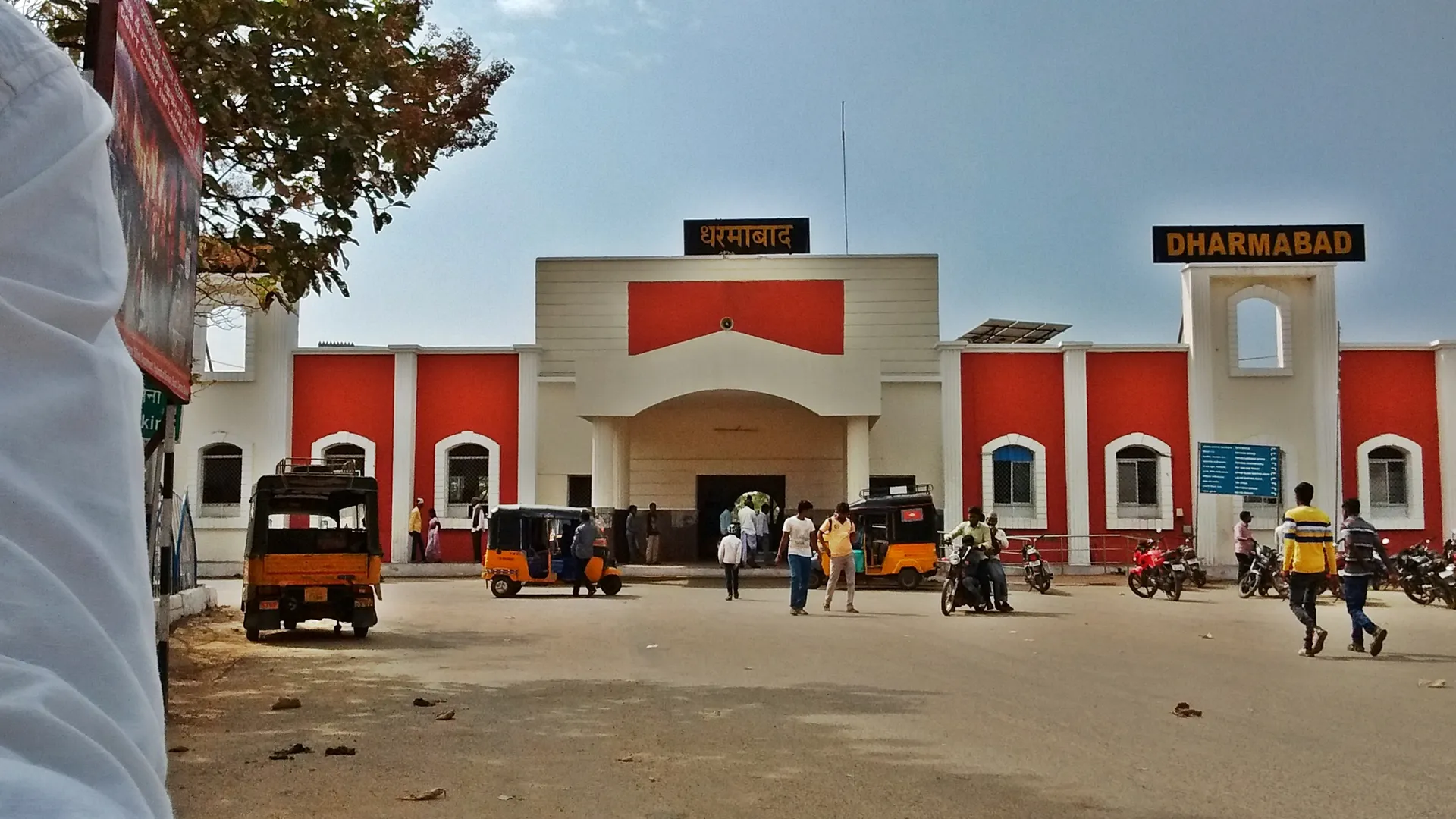
Dharmabad Railway Station, with the station code DAB, is a crucial part of the Hyderabad railway division of South Central Railway. It is one of the biggest revenue-generating stations for the South Central Railway, highlighting its importance in the region's transportation network (Wikipedia).
Connectivity
The station is well-connected to major cities such as Mumbai, Hyderabad, Nizamabad, and Secunderabad. Important trains like the Devgiri Express, Ajanta Express, and Marathwada Express pass through Dharmabad, making it a vital hub for travelers. The Marathwada Express, also known as the High Court Express, connects the Nanded District with the Aurangabad High Court (Wikipedia).
Visitor Information
Visiting Hours
Dharmabad Railway Station operates 24 hours a day, making it convenient for travelers arriving at any time.
Tickets
Tickets for trains passing through Dharmabad Railway Station can be purchased at the station or online via the IRCTC website. Prices vary depending on the train and class of service.
Transportation and Accessibility
Dharmabad is well-connected by train, with several important trains passing through its station. The nearest airport is Nanded Airport, approximately 70 kilometers away. State-run and private buses also operate on this route, making it accessible by road (travopo.com). Special accommodations are available for visitors with disabilities, ensuring a comfortable journey.
Cultural and Economic Significance
Religious Importance
Dharmabad is home to the revered Renuka Devi Temple, attracting thousands of devotees annually. This temple is one of the Shakti Peethas, making it a focal point for Hindu pilgrims (audiala.com). Additionally, the Sri Gnana Saraswathi Devasthanam, dedicated to the goddess Saraswathi, is another significant religious site in Dharmabad. The temple is particularly busy during the festival of Vasant Panchami (audiala.com).
Architectural Heritage
The town's architectural heritage is a testament to its historical significance. Structures from various dynasties, including the Chalukyas and Rashtrakutas, can be found here. The influence of the Marathas is also evident in the forts and administrative centers established during their rule (audiala.com).
Visitor Tips
Best Time to Visit
The best time to visit Dharmabad is from October to March when the weather is pleasant. This period also coincides with several festivals, providing visitors with an opportunity to experience the local culture (audiala.com).
Accommodation
While Dharmabad may not have a wide range of accommodation options, nearby areas like Nanded and Bodhan provide more choices for travelers. These areas offer budget hotels and guesthouses, ensuring a comfortable stay (travopo.com).
Nearby Attractions
Nanded
A historic city known for its religious significance and beautiful temples, Nanded is a must-visit for those exploring the region. The city is home to the famous Nanded Fort, which dates back to the 12th century (travopo.com).
Basar
A serene village famous for the Gnana Saraswati Temple and its tranquil surroundings, Basar is another nearby destination worth visiting. The temple is dedicated to the goddess of knowledge and wisdom, attracting devotees from all over the region (travopo.com).
Bodhan
Known for its historical sites such as the Bodhan Fort and the Bodhan Jama Masjid, Bodhan is around 30 kilometers away from Dharmabad. It offers budget accommodation options and is a great place to explore the region's history (travopo.com).
Frequently Asked Questions (FAQ)
Q: What are the visiting hours for Dharmabad Railway Station?
A: Dharmabad Railway Station operates 24 hours a day.
Q: How do I buy tickets for Dharmabad Railway Station?
A: Tickets can be purchased at the station or online via the IRCTC website.
Q: What are some nearby attractions to Dharmabad Railway Station?
A: Nearby attractions include Nanded, Basar, and Bodhan.