Place
Ludhiana
India Updated Apr 2026
The first thing that hits you in Ludhiana is the smell of diesel and sugar—truck exhaust from the Asia’s largest hosiery market mixing with jaggery being stirred in open-air halwa shops. This is Punjab’s industrial engine room, a city that stitches one in every three Indian sweaters and still finds time to fry the best Amritsari kulchas you’ll ever taste. Forget postcard monuments; Ludhiana rewards visitors who chase the roar of generators, the clatter of shuttle looms, and the sudden quiet of a gurudwara where deer graze beside a sacred tank.
 Photo: Dhally Romy / Pexels
- Attractions
- 15
- Audio
- 1 h 2 min
- Trip length
- 1–2 days
- Best season
- November–March
Why Ludhiana
Built from cited sources · see the method · How we make our guides →
Ludhiana grew up along the Grand Trunk Road, its name a relic of the 15th-century Lodhi Sultans who built a mud-brick fort now eroding into the Sutlej River. The British added a neo-Gothic clock tower in 1906, but the real architecture is functional: 40,000 knitting units, cycle-part foundries, and wholesale cloth mansions that glow neon after dark. Inside the old walled city, 3-meter-wide lanes still echo with the same word—“balle!”—whether a tractor engine catches or a wedding brass band turns the corner.
What saves the place from mere commerce is an obstinate agrarian soul. At Punjab Agricultural University, scientists curate a seed bank of lost wheat varieties while students perform bhangra on the same lawns where farmers inspect zero-till drills during February’s Kisan Mela. A 20-minute auto ride can take you from a air-conditioned mall selling Zara to a mud-walled museum replica where a 1940s radio still plays K.L. Saigal. That friction—between futures market cotton futures and folk songs about mustard blossoms—is the real attraction.
Punjab's Rural Soul, Preserved in Brick
Inside PAU’s Rural Heritage Museum, full-size mud houses, working water mills and 19th-century farm tools are laid out like a ghost village—Asia’s largest open-air slice of agrarian Punjab. Walk through in winter morning light and you can smell the mustard-oil lamps that once burned in these kitchens.The Hosiery Capital That Dresses India
Ludhiana knits 70 % of the country’s winterwear; Chaura Bazaar is the factory outlet. Bolt-lengths of cable-knit sweaters sell for ₹400 a piece, straight from the looms that hum behind unmarked doors.A Fort Older Than the Taj
Lodhi Fort’s 15th-century Afghan walls pre-date Babur’s arrival by three decades. Climb the riverbank bastion at sunset and the Sutlej glints like polished brass below crumbling brick wider than a London bus is long.Where Gurbani Becomes Cinema
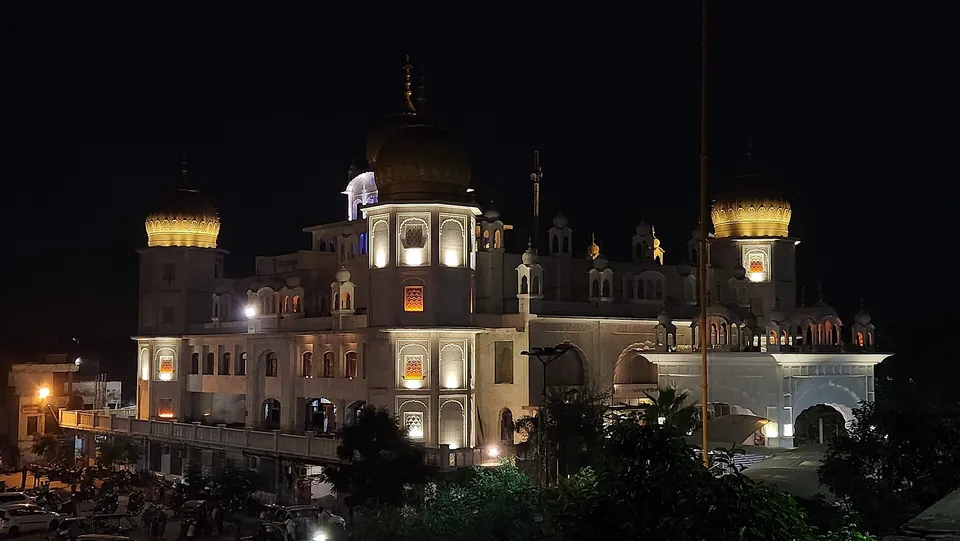
Gurudwara Dukh Niwaran Sahib projects hymn lyrics in Punjabi and English on 6 m screens while ragis chant—India’s first hi-tech Gurbani experience. Even non-believers find themselves humming along inside the echoing marble hall.
Places to Visit
Not every monument, just the ones we'd walk you past ourselves.
- Phillaur Fort The Maharaja Ranjit Singh Fort, also known as the Ludhiana Fort or Phillaur Fort, is a remarkable historical and cultural landmark situated in Ludhiana, Punjab.
- Jamia Masjid, Nathowal Jamia Masjid Nathowal, located in the vibrant village of Nathowal near Ludhiana in Punjab, India, is much more than a religious structure; it is a profound…
- Dayanand Medical College & Hospital Dayanand Medical College & Hospital (DMCH) in Ludhiana, Punjab, stands as a beacon of medical education and healthcare excellence in North India.
- Guru Angad Dev Veterinary and Animal Sciences University Nestled in the heart of Ludhiana, Punjab, Guru Angad Dev Veterinary and Animal Sciences University (GADVASU) stands as a beacon of excellence in veterinary…
- Panjeta Nestled in the heart of Punjab’s Ludhiana district, Panjeta offers a rich tapestry of cultural heritage, rural traditions, and access to some of the region’s…
- Punjab Agricultural University Discover the rich cultural and agricultural heritage of Punjab at the PAU Museum in Ludhiana, India.
Neighborhoods
Where to wander, by quarter — each with its own rhythm.
Chaura Bazaar & Ghanta Ghar
The city’s throbbing commercial heart smells of roasted chickpeas and new denim. Under the 1906 clock tower, 19th-century arched shopfronts sell everything from phulkari dupattas to spare tractor pistons. Food carts roll in after 7 pm—try the Hoshiarpuria tikki or Panna Singh’s pakoras while wholesalers argue over yarn prices in dialects that span Kashmir to Kanpur.PAU Campus
More than a university, it’s a living museum of Punjab’s rural soul. The Rural Heritage Museum rebuilds entire village compounds—mud house, hand pump, courtyard cot—using original tools. On weekends, students rehearse gidda on the cricket outfield; in October, 200,000 farmers arrive for Kisan Mela to inspect drones that spray wheat fields.Civil Lines
Tree-lined refuge laid out by the Raj for senior officers, now colonized by Ludhiana’s knitwear millionaires. Mansions hide behind 3-meter walls; cafés like Belfrance serve single-origin espresso to teenagers who’ve never driven a tractor. The Rose Garden (1,600 varieties) hosts February’s flower festival where prize blooms are guarded by policemen to prevent competitive sabotage.Model Town & Rakh Bagh
A 1930s British park anchors this middle-class quarter. Morning walkers circle the lake while a miniature steam train—commissioned in 1952—still hauls kids for ₹20 a ride. Evening brings samosa stalls and yoga clubs; the adjacent deer park behind Gurudwara Dukh Niwaran lets you feed blackbucks after listening to Gurbani projected in LED on marble walls.Focal Point Industrial Area
Not pretty, but essential: 12 square kilometers of humming factories that export $4 billion of sweaters annually. Visitors with procurement passes can watch computerized flat-knitting machines churn out a cashmere-blend cardigan in 18 minutes. Street dhabas here serve the city’s most authentic butter chicken at 5 am for night-shift workers.Pakhowal Road & Omaxe Mall Strip
Ludhiana’s aspirational nightlife corridor. The Beer Cafe pours pints under purple LED; next door, Kultura cafe mimics Santorini blue domes for Instagram reels. Weekends mean parking-lot impromptu bhangra to car stereos loud enough to drown out the generator thump from wedding banquets across the road.
Plan your trip
Before you go
- Getting There
- Fly into Chandigarh (IXC) 100 km south; Amritsar (ATQ) 140 km northwest is the second choice. Ludhiana Junction (LDH) is a major rail stop on the Delhi–Amritsar line—Shatabdi covers the 310 km from New Delhi in 3 h 15 min. National Highway 44 (old GT Road) slices straight through town.
- Getting Around
- No metro yet. City buses (CTU local) cost ₹10–20 but run when they feel like it. Yellow-top auto-rickshaws charge ₹30 for the first 2 km, then ₹12/km; insist on the meter or bargain hard. Ola & Uber operate—expect surge pricing after 8 pm.
- Climate & Best Time
- November to March is prime: 8–22 °C, foggy dawns, perfect for sweater shopping. April–June hits 44 °C and the air smells of diesel dye. July–September brings sticky monsoon highs around 34 °C. Rose Garden peaks February–March; hosiery factories run year-round.
- Opening Hours Pattern
- Museums and fort open 9 am–5 pm, closed Mondays. Chaura Bazaar starts at 10 am but the best fabric stalls don’t lift their shutters until 11 am and stay open till 8 pm. Street-food vendors on Sarabha Nagar Road fire up around 7 pm and run past midnight.
- Cash & Cards
- Cards accepted at Pavilion Mall and mid-range hotels; everywhere else prefers cash. ATMs plentiful on Ferozepur Road. Budget ₹600 for a full day of sights plus ₹250 for a butter-chicken lunch at Baba Chicken.
From Lodhi Outpost to Industrial Powerhouse
Where revolutionaries dreamed and machines now hum
- 1481
Lodhi Fort Rises
Sikandar Lodhi builds a mud fort on the Sutlej's banks, founding 'Lodhi-ana'—the Lodhi's town. The structure commands river trade routes between Delhi and Lahore. Nothing remains of the original fort today, but its name stuck to the city like a birthmark.
- 1805
British Cantonment Established
The East India Company raises a military cantonment here, recognizing Ludhiana's strategic position on the Grand Trunk Road. British surveyors map the old bazaar streets, noting 'considerable trade in shawls and country cloth.' The cantonment's grid pattern still underlies modern Civil Lines.
- 1835
American Presbyterian Mission Arrives
Reverend John Newton opens Punjab's first Christian mission station, complete with a printing press that will produce Gurmukhi Bibles and early Punjabi newspapers. The mission school teaches English to the sons of traders, creating Ludhiana's first bilingual generation. The press still operates on College Road, its cast-iron gears silent on Sundays.
- 1846
Treaty of Lahore Aftermath
Following the British victory in the First Anglo-Sikh War, Ludhiana becomes headquarters of the occupied territory between the Sutlej and Ravi rivers. The cantonment swells with troops; bazaar prices double overnight. Local Jain merchants pivot from shawls to military tents, establishing the city's first large-scale supply contracts.
- 1857
Mutiny Panic in Cantonment
News of Meerut's uprising reaches Ludhiana on a blazing May afternoon. British women and children crowd into the fort while Sikh chiefs pledge loyalty to the Company. The rebellion never reaches here, but the panic permanently shifts the European settlement south of the nullah, creating the divide between 'old city' and 'civil lines' that persists.
- 1875
First Woolen Mill Opens
The Ludhiana Woolen Mills begins production on Gill Road, importing carding machines from Manchester. Local farmers discover they can sell sheep fleece for cash instead of bartering it for salt. The mill's 120-foot brick chimney becomes the city's first industrial landmark, visible from ten miles away across the wheat fields.
Show the full timeline (18 moments)
- 1896
Kartar Singh Sarabha Born
In Sarabha village, a Jat farmer's son enters the world. Nineteen years later he will sail to San Francisco, join the Ghadar Party, and return to India with a pistol and a death sentence. The boy who learned Punjabi under the village peepal tree will inspire Bhagat Singh before dancing at the end of a British rope.
- 1907
Sukhdev Thapar Born
Born in the narrow lanes of Naughara, near the old clock tower. His mother sells her gold bangles to send him to National College, where he stages plays about Shivaji. The boy who played marbles on these streets will become the revolutionary who refuses to beg for mercy before the Lahore gallows in 1931.
- 1911
Clock Tower Completed
The Gothic clock tower rises 70 feet above Chaura Bazaar, paid for by public subscription and designed by a Bombay architect who'd never seen Ludhiana's dust storms. Its four-faced clock strikes the hour for the first time on Christmas morning. The tower still keeps time, though the mechanism now runs on Chinese batteries.
- 1921
Sahir Ludhianvi Born
Abdul Hayee enters the world in a red-brick haveli near Arya Samaj Road. His father, a wealthy landowner, will disown him for writing poetry. The boy takes the city's name as his own, becoming the poet who will write 'Jinhe naaz hai Hind par wo kahan hain' and make Ludhiana synonymous with Urdu verse.
- 1935
Dharmendra Born in Sahnewal
Dharam Singh Deol takes his first breath in a brick farmhouse outside the village. The boy who herds buffalo through monsoon fields will become Bollywood's 'He-Man,' but locals remember him cycling 20 miles to watch films at Ludhiana's Regal Cinema. He still speaks Malwai Punjabi in interviews, the accent unchanged by 300 films.
- August 1947
Partition Violence Spares City
While Amritsar burns 90 miles west, Ludhiana receives 200,000 Muslim refugees heading to Pakistan and an equal number of Hindus arriving from Rawalpindi. The military escorts caravans through the city overnight; residents leave candles in windows to guide the refugees. Remarkably, the old city records only three riot deaths—a statistic that still puzzles historians.
- 1963
Punjab Agricultural University Founded
Prime Minister Nehru inaugurates PAU on 1,500 acres of former grazing land. The campus brings IIT engineers and Punjabi farmers together, creating India's first agricultural revolution. Within five years, Ludhiana district's wheat yields double. The university's red-brick buildings become the new city's intellectual center, replacing the cantonment as the power address.
- 1975
Hosiery Boom Begins
A Surat trader named Gulzarilal orders 500 woolen cardigans from a Ludhiana workshop. Within months, 200 small factories convert from bicycle parts to knitting machines. The clatter of looms replaces the thump of wheat mills. By 1980, Ludhiana produces 80% of India's winterwear, and 'Made in Ludhiana' labels appear in Moscow markets.
- 1983
World Cup Victory Includes Ludhiana's Son
Yashpal Sharma, born on the muddy pitches behind Guru Nanak Stadium, scores 89 against West Indies at Lord's. His mother listens on a crackling transistor in their Pakhowal road home. When India wins, the city celebrates by distributing free lassi from steel drums. The next day, 5,000 boys queue outside the stadium for cricket trials.
- 1999
First IT Park Opens
The government declares Ludhiana a 'metro' city, opening 50 acres for software parks. Local industrialists scoff—'Computers can't knit sweaters.' But engineering colleges start producing 2,000 computer engineers annually. By 2005, the city that built India's bicycles is also debugging code for Seattle startups, proving Ludhiana reinvents itself every generation.
- 2011
Metro Rail Project Approved
The state cabinet clears a 29-km light rail network to connect the industrial suburbs with the old city. Land prices triple overnight along the proposed route. Five years later, the project remains on paper while traffic crawls through Chaura Bazaar. The lesson: Ludhiana moves goods faster than it moves people.
- 2023
Diljit Dosanjh Sells Out Coachella
The boy who learned bhangra steps at Ludhiana's Sutlej Club becomes the first Punjabi singer at America's most famous music festival. His set opens with 'Proper Patola' as the Colorado Desert sunset turns orange. Back home, his old school screens the livestream in the auditorium where he once failed math. The city finally forgives him for dropping out.
Who lived here
-
Urdu poet & Bollywood lyricist · 1921–1980
Sahir Ludhianvi
Born here, took the city’s name as his pen name
He grew up in a red-brick haveli near Chaura Bazaar, scribbling verses that later became the soul of ‘Pyaasa’. Today the lanes outside his childhood home still echo with the click of sewing machines—proof that Ludhiana’s rhythm once shaped India’s most aching film songs.
-
Founder of Airtel · born 1957
Sunil Mittal
Born here
He started with a bicycle parts business on the GT Road before pivoting to telecom. Walk the same stretch today and you’ll see his pastel-hued corporate ads looming over the very cycle factories that taught him supply-chain ruthlessness.
-
Ghadar revolutionary · 1896–1915
Kartar Singh Sarabha
Native of Sarabha village, Ludhiana district
He left for California at 16, printed seditious papers in San Francisco, then returned to fight the Raj—hanged at 19. The village bus stop now bears his statue; local boys pose beside it posting Instagram stories about ‘freedom’ without knowing he did the same, only with a printing press and a death sentence.
-
Bollywood actor · born 1935
Dharmendra
Born in Sahnewal, Ludhiana district
The ‘He-Man’ spent his first 19 years amid mustard fields before boarding a train to Bombay. Drop into a Pakhowal-road dhaba and the old-timers still argue over which of his 1960s films was shot in the nearby sugar-mill.
-
Co-founder of Ola Cabs & Ola Electric · born 1985
Bhavish Aggarwal
Born here
He coded his first ride-algorithm in a Ludhiana bedroom overlooking a hosiery workshop. Now the city’s traffic is thick with the same Ola scooters whose software was dreamt up while winter fog muffled the power-loom clatter outside.
-
Punjabi folk singer · 1947–2011
Kuldeep Manak
Born here
His nasal twang defined the ‘kali’ ballad tradition—songs about doomed lovers and rebellious landlords. Auto-rickshaw drivers still blast ‘Tere Tilley Ton’ on broken speakers, the gravelly voice threading through a city now better known for export invoices than epic poetry.
Where to Eat
Where locals actually book dinner — not the tourist menus.
Insider tips
Small things that change how the city treats you.
Order half portions
Punjabi servings are built for sharing. Ask for a ‘half’ at dhabas—you’ll still leave stuffed and save 30-40 %.Beat the heat
April-June hits 44 °C. Start outdoor sights at 7 am, retreat to PAU’s air-conditioned museums by 11 am.Rose timing
Nehru Rose Garden peaks February–March. Show up at 8 am for dewy blooms and soft light; the fountain switches on at 9.Cash in the bazaar
Chaura Bazaar stalls rarely accept cards. Withdraw ₹500 notes beforehand; ATMs inside the market run dry on Sundays.Monday closures
War Museum, Rural Heritage Museum and Chhatbir Zoo all shut on Monday—plan Phillaur Fort or gurudwaras instead.Cover your head
Carry a bandanna; all gurudwaras require it. Forgot? Free scarves sit in wicker baskets at every entrance.
Gallery
The city, as it actually looks.


Frequently asked
Is Ludhiana worth visiting for tourists?
Yes, if you want authentic Punjabi urban life rather than polished sights. Come for the food, living agrarian museums and wholesale-bazaar energy—skip if you need palaces or hill views.
How many days should I spend in Ludhiana?
One full day covers the city’s highlights (forts, bazaars, PAU museums). Add a second day for Chhatbir Zoo or day-trips to Phillaur Fort and Jagroan gurudwara.
What is the best way to reach Ludhiana?
Ludhiana Junction is on the Delhi-Amritsar line with 4-hour Shatabdis. Fly into Chandigarh (100 km, 2 hrs by cab) for better domestic connections than the small local airport.
Is Ludhiana safe for solo female travellers?
Generally yes in malls, campus areas and main bazaars until 9 pm. Auto-rickshaws after dark—use Ola with shared trip details; street harassment increases near bus stands.
Which local food is unique to Ludhiana?
Hoshiarpuria Tikki (spiced potato patty) and King Chaap (soya chaap) started here. Pair them with a glass of Rohit Burger’s neon-pink masala coke—Rs 30, only in Chaura Bazaar.
Can I visit Phillaur Fort independently?
Yes, but carry ID; it’s now a police training academy. Civilians enter 10 am–4 pm; some inner courtyards stay off-limits and photography of cadets is prohibited.
All Places to Visit.
6 places to discover
Pick up where you left off
Saved and recently read places — kept on this device only.
Photo credits (10)
- Dhally Romy — Pexels License (https://www.pexels.com/license/) — Source: https://www.pexels.com/photo/13194739/
- Dukhniwaran Sahib — Benison — CC BY-SA 4.0 (https://creativecommons.org/licenses/by-sa/4.0/) — Source: https://commons.wikimedia.org/wiki/File:Dukhniwaran_Sahib.jpg
- Ludhiana - zoo-tiger safari 3 — Tanta.dpk — CC BY-SA 4.0 (https://creativecommons.org/licenses/by-sa/4.0/) — Source: https://commons.wikimedia.org/wiki/File:Ludhiana_-_zoo-tiger_safari_3.jpg
- Doraha at Rakh Bagh Ludhiana — Kathuriarector — CC BY-SA 4.0 (https://creativecommons.org/licenses/by-sa/4.0/) — Source: https://commons.wikimedia.org/wiki/File:Doraha_at_Rakh_Bagh_Ludhiana.jpg
- Ludhiana skyline — Benison P Baby — CC BY-SA 4.0 (https://creativecommons.org/licenses/by-sa/4.0/) — Source: https://commons.wikimedia.org/wiki/File:Ludhiana_skyline.jpg
- Gol Bagh Ludhiana — Kathuriarector — CC BY-SA 4.0 (https://creativecommons.org/licenses/by-sa/4.0/) — Source: https://commons.wikimedia.org/wiki/File:Gol_Bagh_Ludhiana.jpg
- Harkishan Lall (2nd left), Sahir Ludhianvi-MS Randhawa-Shiv Kumar-Ludhiana — Amarjit Chandan — CC BY 4.0 (https://creativecommons.org/licenses/by/4.0/) — Source: https://commons.wikimedia.org/wiki/File:Harkishan_Lall_(2nd_left),_Sahir_Ludhianvi-MS_Randhawa-Shiv_Kumar-Ludhiana.jpg
- Punjabi Bhawam, Ludhiana4 — Geet Arts — CC BY-SA 4.0 (https://creativecommons.org/licenses/by-sa/4.0/) — Source: https://commons.wikimedia.org/wiki/File:Punjabi_Bhawam,_Ludhiana4.jpg
- Punjabi Bhawan, Ludhiana — Geet Arts — CC BY-SA 4.0 (https://creativecommons.org/licenses/by-sa/4.0/) — Source: https://commons.wikimedia.org/wiki/File:Punjabi_Bhawan,_Ludhiana.jpg
- Punjabi Bhawan, Ludhiana1 — Geet Arts — CC BY-SA 4.0 (https://creativecommons.org/licenses/by-sa/4.0/) — Source: https://commons.wikimedia.org/wiki/File:Punjabi_Bhawan,_Ludhiana1.jpg
Photos may have been resized or cropped.