Plan and listen to Shaheed Minar with Audiala.
Audio guide in your pocket, itinerary in your browser. Built for the way you actually visit.
Introduction
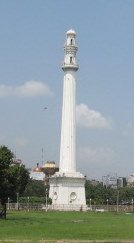
Shaheed Minar, a towering landmark in the heart of Kolkata, stands as a vivid testament to the city’s layered history and evolving identity. Originally constructed in 1828 as the Ochterlony Monument to celebrate British military victories, this structure seamlessly bridges Kolkata's colonial past and its vibrant post-independence character. Its unique blend of Egyptian, Syrian, and Turkish architectural influences, along with its role as a hub for public gatherings and civic life, makes Shaheed Minar an essential destination for history enthusiasts, architecture lovers, and cultural travelers alike (Kolkata Tourism; Kolkata Heritage).
This guide provides all the essential information you need to plan your visit—including historical context, architectural highlights, ticketing policies, visiting hours, accessibility details, and travel tips—so you can make the most of your experience at one of Kolkata’s iconic monuments (Treebo Blog; Kevin Standage Photography).

Origins and Construction
Shaheed Minar was originally built as the Ochterlony Monument in 1828 by the British East India Company to commemorate Major-General Sir David Ochterlony’s victory in the Anglo-Nepalese War (1814–1816) and the defense of Delhi against the Marathas. The monument's architect, J.P. Parker, designed it to stand prominently in the Maidan, Kolkata’s central urban park, ensuring high visibility and symbolic prominence (Kolkata Tourism; Kolkata Heritage).
Architectural Features and Influences
Rising to 48 meters (157 feet), Shaheed Minar is a remarkable example of architectural eclecticism:
- Base: Egyptian-inspired, built of white marble and covering approximately 1,500 square feet.
- Column: Fluted and vertical, reflecting Syrian influences.
- Dome: Turkish-style, crowning the structure (Kevin Standage Photography; Indian Holiday).
A spiral staircase (about 218–223 steps) once led to the top viewing gallery, offering panoramic city vistas. Access to this gallery has been restricted in recent years for safety reasons (The History Hub).
Transformation into a National Memorial
Following India’s independence, the monument’s symbolism shifted dramatically. In 1969, it was renamed “Shaheed Minar” (“Martyrs’ Tower”) to honor those who sacrificed their lives for Indian freedom. The renaming, led by then Chief Minister Ajoy Mukherjee, repositioned the monument from a colonial symbol to a national memorial, and its base now features plaques dedicated to Indian martyrs (The Times of India).
Role in Political and Social Movements
Shaheed Minar Maidan, the open grounds around the monument, has long served as a stage for Kolkata’s political and social life. Throughout the 20th and 21st centuries, it has hosted significant rallies, protests, and cultural events. The site was pivotal during the Quit India Movement and remains a focal point for civic gatherings and public discourse (The Hindu).
Restoration and Preservation Efforts
Decades of weathering led to several restoration initiatives spearheaded by the Archaeological Survey of India (ASI) and the West Bengal government. Notable work in 2011 included repairing stonework, reinforcing staircases, and improving lighting to enhance nighttime visibility (The Telegraph India). These efforts aim to preserve the monument’s structural integrity and historical character for future generations.
Civic and Cultural Importance
Shaheed Minar is deeply woven into Kolkata’s urban fabric:
- Civic Engagement: The Maidan around the monument is a hub for democratic expression, hosting rallies, protests, and commemorations.
- Cultural Events: The site is frequently illuminated and decorated during national holidays and festivals, drawing crowds for cultural programs (Treebo Blog).
- Urban Landmark: Its silhouette is instantly recognizable and features in postcards, guidebooks, and tourism campaigns.
Visitor Information: Hours, Tickets, and Accessibility
Visiting Hours
- General Hours: 10:00 AM to 5:00 PM, daily. Some sources mention opening as early as 9:00 AM; check locally for the latest updates (yometro.com).
- Special Events: Hours may vary during public holidays or major rallies.
Entry Fees
- Grounds: No entry fee; visitors can explore the monument’s exterior and surrounding Maidan free of charge (yometro.com).
- Tower Access: Climbing the tower and accessing the viewing gallery is restricted for safety reasons. Special permission from Kolkata Police is required and is generally granted only on rare occasions or special events (kolkatatrips.com).
Accessibility
- Grounds: Wheelchair accessible, though surfaces can be uneven.
- Tower Interior: Not currently accessible to the general public.
- Restrooms: Available nearby; cleanliness can vary.
- Food & Shade: Local vendors and limited shaded areas are present.
How to Reach Shaheed Minar
- Location: Dharmtalla, Dufferin Road, Kolkata, West Bengal 700069, facing the northeast Maidan (kolkatatrips.com).
- Metro: Esplanade station is a short walk away.
- Bus: Numerous city buses stop at Dharmtalla/Esplanade.
- Taxi/Auto: Readily available citywide.
- Private Vehicles: Limited parking; advised to use public transport during busy periods (triphobo.com).
Nearby Attractions
Take advantage of Shaheed Minar’s central location to explore:
- Victoria Memorial Guide
- Indian Museum
- Howrah Bridge Visitor Information
- St. Paul’s Cathedral
- Eden Gardens cricket stadium
- The historic Maidan (triphobo.com)
Travel Tips
- Best Time to Visit: October to March for pleasant weather.
- Peak Hours: Early morning or late afternoon for fewer crowds and better lighting.
- Clothing: Comfortable, modest attire and walking shoes.
- Photography: Allowed on the grounds; ask locally if climbing the tower is permitted.
- Event Days: Check ahead for rallies or public events which may limit access.
- Safety: Area is generally safe with a visible police presence.
Frequently Asked Questions (FAQ)
Q: What are the Shaheed Minar visiting hours?
A: Generally open from 10:00 AM to 5:00 PM daily.
Q: Is there an entry fee?
A: No, entry to the grounds is free.
Q: Can I climb to the top?
A: Only with prior police permission, typically granted for special occasions.
Q: Are guided tours available?
A: Many local operators include Shaheed Minar in broader Kolkata heritage tours.
Q: What transport options are available?
A: Metro (Esplanade), buses, taxis, and auto-rickshaws provide easy access.
Q: Is the area wheelchair accessible?
A: The grounds are accessible, but interior access is limited.
Listen to the full story in the app
The whole Shaheed Minar,
told well.
Audio guides for 1,100+ cities across 96 countries. History, stories, and local insight — offline ready.
Verified, and shown.
Researched and written by the Audiala editorial team from historical records, architectural archives, and local expertise.
Researched from Wikidata, Wikipedia & official sources · fact-checked · How we make our guides →