Historical Background
Construction and Design
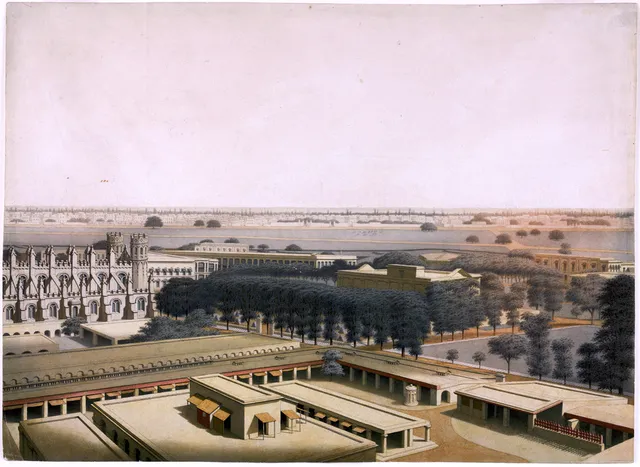
Raj Bhavan’s foundation was laid in 1799, with completion in 1803. Designed by Captain Charles Wyatt and modeled after Kedleston Hall, it reflects neoclassical and Georgian influences. The structure includes a central core with four radiating wings, distinctive balconies, and a three-storey layout, covering over 7,800 square meters within a 27-acre estate (Wikipedia). The estate features sweeping lawns, formal gardens, and Kolkata’s first elevator, the “Bird Cage Lift.”
Colonial Importance
As the epicenter of British colonial authority in eastern India, Raj Bhavan was the official residence for 23 Governors-General and Viceroys. Its halls hosted critical decisions and grand ceremonies, with rooms such as the Marble Hall, Throne Room, Banquet Hall, and Prince of Wales Suite symbolizing British power and prestige (Indianetzone; GetBengal).
Transition After Independence
Post-1947, Raj Bhavan became the residence of West Bengal’s Governor. Its ceremonial spaces, including the Throne Room, were repurposed for state functions. The estate retained its architectural character while adapting to new roles in democratic governance, with the Indian tricolour now flying above its façade (Indiaprofile).
Heritage Conservation and Modernization
Ongoing conservation efforts, led by the West Bengal Heritage Commission and Public Works Department, have prioritized traditional restoration methods, such as lime plaster for exteriors. Modern amenities, including rainwater harvesting and herbal gardens, have been introduced to blend heritage with sustainability (GetBengal).
From Colonial Seat to “People’s Raj Bhavan”
A major milestone was the symbolic handover of Raj Bhavan’s key to the people, marking its transformation into the “People’s Raj Bhavan.” This initiative, championed by Governor C. V. Ananda Bose and President Droupadi Murmu, opened the estate for public heritage tours, promoting inclusivity and democratized access (GetBengal).
Art, Artifacts, and Symbolic Spaces
Raj Bhavan houses a vast collection of art and historical artifacts, including paintings of Rabindranath Tagore, British dignitaries, and restored period furniture. The Throne Room, recently named in honor of Sardar Vallabhbhai Patel, is a statement of unity—recognizing Patel’s role in integrating India’s princely states (Edunovations). Traditional Bengali art forms like Kantha stitch paintings, Dokra art, and Baluchari silk further enrich the interiors (GetBengal).
Visitor Information
Visiting Hours
- General Public Raj Bhavan is open for heritage tours from 10:00 AM to 5:00 PM, Tuesday through Sunday.
- Note Hours may vary due to official events; always check the latest updates on the official website or West Bengal Tourism portal.
Ticketing and Booking
- Advance Booking Required Tickets for guided tours can be booked online or at designated counters.
- Pricing Fees are nominal (typically ₹50–₹100), with concessions for students and senior citizens.
- Identification Carry valid government-issued ID for access.
Accessibility
- Wheelchair Access Ramps and elevators, including the historic Bird Cage Lift, are available.
- Special Needs Communicate any requirements during booking to ensure a comfortable visit.
Photography Policies
- Permitted Photography is allowed in gardens and select exterior areas.
- Restricted Interior photography may be limited; flash and professional equipment are generally prohibited.
- Guidelines Follow instructions from staff and observe signage.
Guided Tours
- Availability Expert-led heritage tours provide insights into Raj Bhavan’s history, architecture, and collections.
- Booking Must be reserved in advance via official channels.
Travel Tips
- Use public transport or app-based taxis to avoid parking hassles.
- The nearest metro station is Esplanade (10-minute walk).
- Wear comfortable shoes for walking the extensive grounds.
- Carry water, especially during warmer months.
- Be prepared for security checks; large bags may not be permitted.
Nearby Attractions
Raj Bhavan’s central location allows easy access to several Kolkata historical sites:
- Victoria Memorial Iconic marble monument and museum.
- Writers’ Building Former East India Company headquarters.
- Calcutta Town Hall Historical museum and event venue.
- Calcutta High Court India’s oldest high court.
- St. John’s Church and Eden Gardens Both within walking distance.
Combine your visit with these sites for a full day’s exploration of colonial and cultural Kolkata (The Helpful Stranger).
Frequently Asked Questions (FAQ)
What are Raj Bhavan Kolkata’s visiting hours?
10:00 AM to 5:00 PM, Tuesday through Sunday. Always check for updates before visiting.
Is prior booking required?
Yes. Advance booking is mandatory for all visitors.
Are guided tours available?
Yes, by prior reservation through official channels.
Is photography allowed?
Permitted in designated areas; restrictions apply indoors.
Is Raj Bhavan accessible for differently-abled visitors?
Yes, with ramps and elevators available.
What are nearby attractions?
Victoria Memorial, Writers’ Building, Calcutta Town Hall, and more.
Can I visit Raj Bhavan without prior permission?
No. Entry is strictly by prior booking and approval.
How do I apply for entry?
Apply via the Governor’s Secretariat or official website, submitting ID and intended date of visit.