Plan and listen to Jorasanko Thakur Bari with Audiala.
Audio guide in your pocket, itinerary in your browser. Built for the way you actually visit.
Introduction
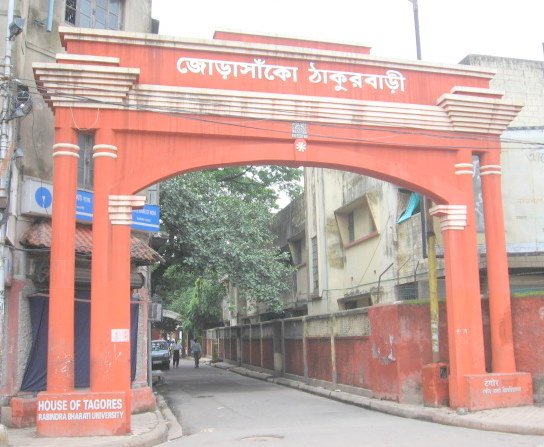
Jorasanko Thakur Bari, popularly known as Tagore's House, stands as one of Kolkata's most cherished historical landmarks. Nestled in the Jorasanko neighborhood, this ancestral home of the illustrious Tagore family is a treasure trove of history, culture, and art. Built in the 18th century by Prince Dwarkanath Tagore, the mansion gained worldwide recognition as the birthplace of Rabindranath Tagore, the first non-European Nobel laureate in Literature (Nobel Prize). The mansion played a pivotal role during the Bengal Renaissance, serving as a hub for intellectual and cultural activities, attracting luminaries like Ishwar Chandra Vidyasagar and Swami Vivekananda. Today, Jorasanko Thakur Bari has been transformed into a museum and research center, preserving the legacy of the Tagore family and offering visitors a glimpse into the rich heritage of Bengal (West Bengal Tourism). This guide provides detailed information on the history, architectural significance, cultural impact, visiting hours, ticket prices, and travel tips to ensure an enriching and unforgettable experience for visitors.

History of Jorasanko Thakur Bari
Early Beginnings
Built in the 18th century by Prince Dwarkanath Tagore, Jorasanko Thakur Bari initially served as the family residence and a hub for intellectual and cultural activities. Located in the Jorasanko neighborhood of Kolkata, India, the house played a significant role in the cultural landscape of the time.
Rabindranath Tagore's Birth and Early Life
Rabindranath Tagore, born on May 7, 1861, in this house, is the most illustrious member of the Tagore family. As a polymath, he made significant contributions to literature, music, and art, becoming the first non-European to win the Nobel Prize in Literature in 1913. His early years in Jorasanko Thakur Bari were marked by a rich cultural environment that profoundly influenced his creative pursuits.
The Bengal Renaissance
Jorasanko Thakur Bari played a pivotal role during the Bengal Renaissance, attracting luminaries such as Ishwar Chandra Vidyasagar, Michael Madhusudan Dutt, and Swami Vivekananda. The house became a melting pot of ideas, hosting numerous literary salons, musical performances, and intellectual discussions.
Transformation into a Museum
After Rabindranath Tagore's death in 1941, the house fell into disrepair. Recognizing its historical significance, the Government of West Bengal converted the house into a museum and research center in 1961. The Rabindra Bharati Museum now houses a vast collection of Tagore's manuscripts, paintings, and personal belongings.
Architectural Significance
The architecture of Jorasanko Thakur Bari is a blend of traditional Bengali and colonial styles. Notable architectural elements include ornate wooden balconies, a grand central hall, and beautifully landscaped gardens, reflecting the Tagore family's eclectic tastes.
Cultural and Educational Impact
Jorasanko Thakur Bari continues to be a center of cultural and educational activities. The Rabindra Bharati University, established in 1962, operates from the premises, offering courses in fine arts, humanities, and social sciences. The house also hosts the annual Rabindra Jayanti celebrations, commemorating Tagore's birth anniversary.
Visitor Information
Visiting Hours and Tickets
Jorasanko Thakur Bari is open to visitors from 10:30 AM to 5:00 PM on all days except Mondays. Entry tickets cost INR 10 for Indian citizens and INR 50 for foreign nationals. For more updated information, please check the official website of Rabindra Bharati Museum.
Guided Tours and Special Events
Guided tours are available, providing insightful information about the life and works of Rabindranath Tagore. The house also hosts special events, including cultural performances and seminars.
Travel Tips and Nearby Attractions
Jorasanko Thakur Bari is easily accessible via public transport. Nearby attractions include the Marble Palace and the Indian Museum, making it a perfect addition to a day of exploring Kolkata's historical sites.
Preservation Efforts
Preserving Jorasanko Thakur Bari has been challenging due to its age and Kolkata's tropical climate. Restoration projects include repairing wooden structures, restoring original paintwork, and upgrading museum facilities.
Visitor Experience
The museum offers guided tours, interactive exhibits, and audio-visual presentations, making the visit engaging and informative. The serene ambiance and historical significance make Jorasanko Thakur Bari a must-visit for anyone interested in Bengali culture and heritage.
FAQ
Q: What are the visiting hours for Jorasanko Thakur Bari? A: The house is open from 10:30 AM to 5:00 PM, except on Mondays.
Q: How much do tickets cost? A: Tickets cost INR 10 for Indian citizens and INR 50 for foreign nationals.
Q: Is there a guided tour available? A: Yes, guided tours are available and highly recommended.
Q: Are there any nearby attractions? A: Yes, nearby attractions include the Marble Palace and the Indian Museum.
Listen to the full story in the app
The whole Jorasanko Thakur Bari,
told well.
Audio guides for 1,100+ cities across 96 countries. History, stories, and local insight — offline ready.
Verified, and shown.
Researched and written by the Audiala editorial team from historical records, architectural archives, and local expertise.
(1913). Rabindranath Tagore - Biographical
Jorasanko Thakurbari
Official Website
Researched from Wikidata, Wikipedia & official sources · fact-checked · How we make our guides →