An introduction.
Researched by the Audiala editorial team from historical records, architectural archives, and local expertise.
AA Nobel Prize in physics began in rooms that looked more like a stubborn local laboratory than the center of the universe. The Indian Association for the Cultivation of Science in Kolkata, India, rewards a visit because it lets you stand where Indian science claimed its own voice, then changed how the world understands light. This is not a monument polished for tourists. It is a place with chalk dust in its memory.
Records show that Dr. Mahendralal Sircar founded IACS on 29 July 1876 with an ambition rare for colonial Calcutta: an institution for science that was, in the official phrasing later preserved by the Department of Science and Technology, "solely native and purely national." That phrase still has heat in it. You feel the argument behind the building before you admire anything about it.
Most visitors come to Kolkata for temples, markets, river ghats, or perhaps the theatrical scale of Science City. IACS asks for a different kind of attention. Come here for the intellectual drama, for the link to C. V. Raman's experiments, and for the quiet thrill of seeing where curiosity beat money, empire, and low expectations.
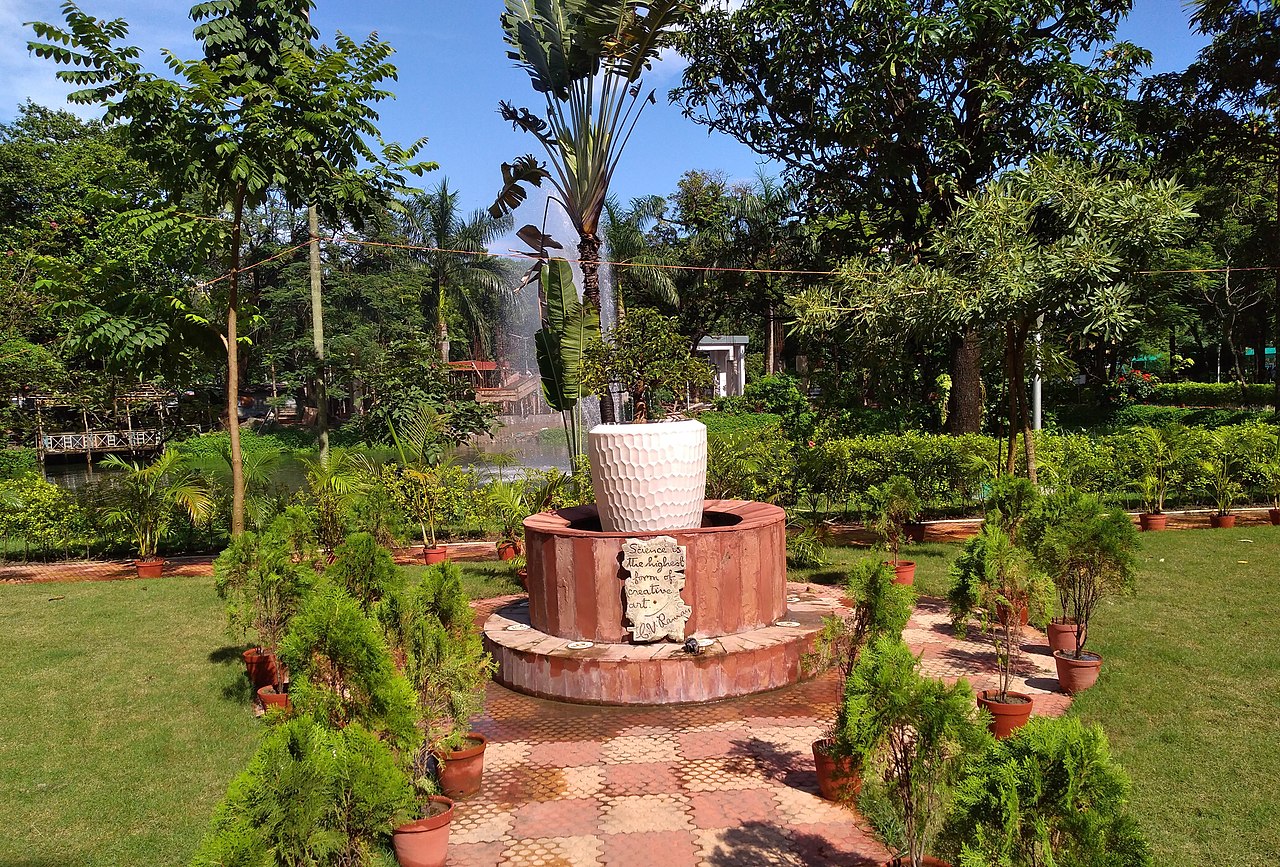
The present campus on Raja S. C. Mullick Road in Jadavpur feels workmanlike rather than ceremonial. That's part of its appeal. Instead of marble self-importance, you get the atmosphere of a place that still believes discovery matters more than display.
15 BEST THINGS TO DO in Kolkata India in 2025 🇮🇳
Nomac Guides01 What to see.
The Jadavpur Campus Entrance
The surprise at IACS comes first at the gate on 2A and 2B Raja S. C. Mullick Road: one of the most consequential addresses in Indian science looks almost restrained, more working laboratory than monument. Stand there a minute. The air carries exhaust, damp leaves, and that faint metallic smell Kolkata gets before rain, and the buildings behind the boundary walls start to read differently when you remember that the institution began on 29 July 1876 as Mahendralal Sircar's Indian-run answer to colonial science, funded by public support rather than imperial favor.
Look for the details that admit its real character: notice boards, research departments, students moving with purpose, the quiet refusal to become a museum piece. That's the point. IACS still lives, and that living continuity matters more than any grand facade, because C. V. Raman's legacy makes more sense when you see science here as daily labor rather than polished memory.
Raman's Shadow in the Corridors
What you are really visiting is a place where light changed history. Raman carried out the work here that led to the Raman Effect, published in 1928 and honored with the Nobel Prize two years later, and once that date clicks into place the ordinary corridor, stairwell, and lab frontage acquire a charge that expensive heritage lighting could never fake.
Don't expect theatrical display. Expect something better: filtered afternoon light on institutional walls, the dry smell of paper and dust near offices, a campus that asks you to supply imagination and then rewards you for it, much as Science City explains science outwardly while IACS keeps the texture of science at work.
A Kolkata Science Trail
IACS works best as part of a larger day spent following Kolkata's intellectual appetite rather than chasing postcard beauty. Start here in Jadavpur, then pair it with the public-facing exhibits at Science City or the quieter scholarly mood of the Ramakrishna Mission Institute Of Culture; the distance between them is measured in a few city miles, about the length of a long evening tram ride, but the shift in tone tells you more about Kolkata than another colonial facade ever could.
This route has one advantage over the standard heritage circuit: it shows a city that argues, studies, tests, and remembers. Kolkata doesn't just preserve ideas here. It keeps using them.
02 In pictures.



Watch & Explore Indian Association for the Cultivation of Science.
Plan and listen to Indian Association For The Cultivation Of Science with Audiala.
Audio guide in your pocket, itinerary in your browser. Built for the way you actually visit.
03 Visitor logistics.
The practical scaffolding for a good visit — kept short.
Getting There
IACS stands at 2A and 2B Raja S. C. Mullick Road in Jadavpur, South Kolkata. From Jadavpur railway station, take an auto or taxi for about 5 to 10 minutes, or walk roughly 15 to 20 minutes; from Howrah Station or Sealdah, a cab usually takes 35 to 60 minutes depending on traffic, and the airport run often lands in the 45 to 75 minute range.
Opening Hours
As of 2026, IACS does not publish regular public sightseeing hours or a museum-style visitor schedule on its official site. Treat it as a working research campus, not a walk-in monument, and confirm access in advance with the institute; it follows an institute holiday calendar and closes on national holidays.
Time Needed
Give yourself 15 to 20 minutes if you only want to see the campus exterior and stand where Raman worked in spirit, if not in the old Bowbazar rooms. A pre-arranged visit or event can take 45 to 90 minutes, and a science-themed half day works better if you pair it with Science City.
Cost & Tickets
As of 2026, the official IACS site does not list any public entry ticket, guided-visit fee, or audio guide for casual visitors. What it does publish is institutional hall booking information, which tells you something useful: access beyond ordinary drop-ins usually runs on prior approval rather than on-ticket entry.
04 Tips for visitors.
Small things that change the day.
Ask First
Email or call before you go. IACS is an active research institute, and a site like this can look open from the road while remaining closed to casual visitors once you reach the gate.
Carry ID
Bring a government photo ID. IACS states that external users for approved bookings must carry valid identification, so having one ready saves an awkward stall at the entrance.
Choose Weekdays
Weekday mornings give you the best shot at getting a clear answer from staff and avoiding the heavy afternoon drag on Raja S. C. Mullick Road. Skip national holidays and institute closure days; the holiday calendar matters here more than tourist season.
Shoot Sparingly
Take exterior photos only unless staff say otherwise. Laboratories, academic buildings, and event spaces inside a live research campus often come with tighter rules than a heritage site does.
Eat Afterward
Plan lunch around Jadavpur's 8B bus stand area rather than inside campus. The neighborhood feeds students and faculty for a living, which usually means faster, cheaper, and better meals than you'd expect from a science stop.
Pair It Well
IACS works best for travelers who care about scientific history, especially Raman's Kolkata years. If you want a more public-facing science stop the same day, continue to Science City; the contrast is the point.
Where to Eat
Don't Leave Without Trying
Radioactive Sandwich Revolution, Jadavpur
quick biteOrder: Their signature sandwiches are the real draw here — inventive, fresh, and made with care. The high review count and 4.9 rating tell you this is where the Jadavpur crowd actually goes.
This is a proper local favorite with serious footfall, not a tourist trap. Located right on campus, it's where students and faculty actually eat, making it the most authentic quick-bite experience near IACS.
Mamar Dokan
local favoriteOrder: Stick to the Bengali staples — the food here is no-frills, honest home cooking. This is where locals eat breakfast and lunch, not a destination menu.
Mamar Dokan is the kind of place that opens before dawn and closes when the campus empties. It's pure neighborhood eating, beloved by regulars who value authenticity over ambiance.
Doklam Indo-Chinese Restaurant & Takeaway
local favoriteOrder: Their Indo-Chinese repertoire is solid — chowmein, momos, and fried rice done properly. The 137 reviews suggest consistent execution.
Doklam fills the gap between quick bites and sit-down meals. It's reliable, affordable, and the kind of place where you can grab takeaway or settle in for a casual dinner with friends.
Tasty Momo Corner
quick biteOrder: Momos — that's the whole point. Fresh, steamed, and straightforward. The perfect quick bite literally on IACS's doorstep.
Located right at IACS itself, this is the most convenient option if you're on campus. Perfect for a quick lunch or snack without leaving the premises.
Dining Tips
- check The Jadavpur area around IACS clusters restaurants along Raja Subodh Chandra Mallick Road and near the university gates — most are walking distance.
- check Early opening hours (4:30 AM at Mamar Dokan) reflect the student and working crowd; breakfast and lunch are the main meal times here.
- check Cash is practical in this neighborhood; not all places may have card facilities.
- check Student-friendly pricing dominates the area — expect to eat well for ₹300–₹500 per person at casual spots.
Restaurant data powered by Google
05 A history of reinvention.
The Man Who Made Light Speak
C. V. Raman gives IACS its sharpest historical pulse, but the story starts earlier with the institution that made his work possible. Records show that Mahendralal Sircar founded the association in 1876 so Indians could study science on their own terms in colonial Calcutta. Raman entered that inheritance decades later and turned it into something explosive.
By the early 20th century, Raman lived a split life: government officer by day, experimental physicist by obsession. At IACS, that private hunger found a home. The building mattered because it offered what British India often withheld from Indian scientists: room to test an idea until it either failed or changed the world.
Raman's Turning Point
Raman's stake was personal as much as scientific. He already held a respectable post in the Finance Department, the sort of career that promised security, status, and a predictable future. IACS gave him the opposite: late hours, improvised apparatus, and the chance to follow a question about light scattering that refused to leave him alone.
Records from the institution and later scientific histories connect IACS directly to the experiments that culminated in the discovery announced in 1928 and now known as the Raman Effect. That was the turning point. A local laboratory in Calcutta stopped looking provincial and started looking like the place where physics had just learned a new language.
When Raman received the Nobel Prize in 1930, the honor traveled far beyond one man. It proved that internationally recognized science could emerge from an Indian institution built by Indian ambition, not imperial permission. The walls did not change. Their meaning did.
Early Life & Vision
Legacy & Influence
Listen to the full story in the app
The whole Indian Association For The Cultivation Of Science,
told well.
Audio guides for 1,100+ cities across 96 countries. History, stories, and local insight — offline ready.

06 Frequently asked.
The questions travellers send us most about Indian Association For The Cultivation Of Science.
Is Indian Association For The Cultivation Of Science worth visiting?
Yes, if you care about the history of science in India. IACS matters because Mahendralal Sircar founded it on 29 July 1876 as an Indian-led scientific institution, and C. V. Raman's Nobel-winning research is tied to this place. Go for intellectual weight, not for a polished museum-style visit.
How long do you need at Indian Association For The Cultivation Of Science?
If access is possible, 30 to 60 minutes is usually enough for a focused visit. This is a working research institute in Jadavpur, not a large heritage complex, so most visitors come to understand its history, its role in Indian science, and its connection to Raman rather than to spend half a day wandering galleries.
How do I get to Indian Association For The Cultivation Of Science from Kolkata?
Head to Jadavpur, in south Kolkata, where the institute stands at 2A and 2B Raja S. C. Mullick Road. From central Kolkata, a taxi or app cab usually makes the most sense; if you are already exploring the city's science-facing side, you could pair the trip with Science City, though the two are in different parts of town.
What is the best time to visit Indian Association For The Cultivation Of Science?
A weekday morning or early afternoon gives you the best chance of finding the campus active and reachable. Check access in advance, because IACS functions as a live research institution, and that fact shapes the visit more than weather does.
Can you visit Indian Association For The Cultivation Of Science for free?
You should not assume standard tourist entry, paid or free. IACS is a research institute rather than a regular ticketed attraction, so public visits may depend on permission, events, or institutional rules in place when you go.
What should I not miss at Indian Association For The Cultivation Of Science?
Do not miss the founding story. Mahendralal Sircar built IACS in colonial Calcutta as a "solely native and purely national" scientific institution, and that phrase changes the way the place reads: less campus, more declaration. If you can access historical material on site, look for anything tied to C. V. Raman and the institute's move from Bowbazar to Jadavpur.
Verified, and shown.
Researched and written by the Audiala editorial team from historical records, architectural archives, and local expertise.
Checked to confirm that IACS does not appear as a World Heritage Site or Tentative List property in the reviewed results.
Used for the Bengali rendering of the institution's name.
Provided the current campus address at 2A and 2B Raja S. C. Mullick Road, Jadavpur, Kolkata 700032.
Confirmed the official institutional identity and current campus details.
Listed the current director, Prof. Kalobaran Maiti.
Used for the founding date of 29 July 1876, Mahendralal Sircar's role, and the institution's founding vision.
Provided early history, trustees and patrons, lecturers, and background on the institute's beginnings in Bowbazar before the move to Jadavpur.
Confirmed the founding date, Mahendralal Sircar's role, and the description of IACS as a "solely native and purely national" institution.
Used as an additional institutional source confirming the 29 July 1876 founding date.
Researched from Wikidata, Wikipedia & official sources · fact-checked · How we make our guides →