Plan and listen to Howrah Bridge with Audiala.
Audio guide in your pocket, itinerary in your browser. Built for the way you actually visit.
Introduction
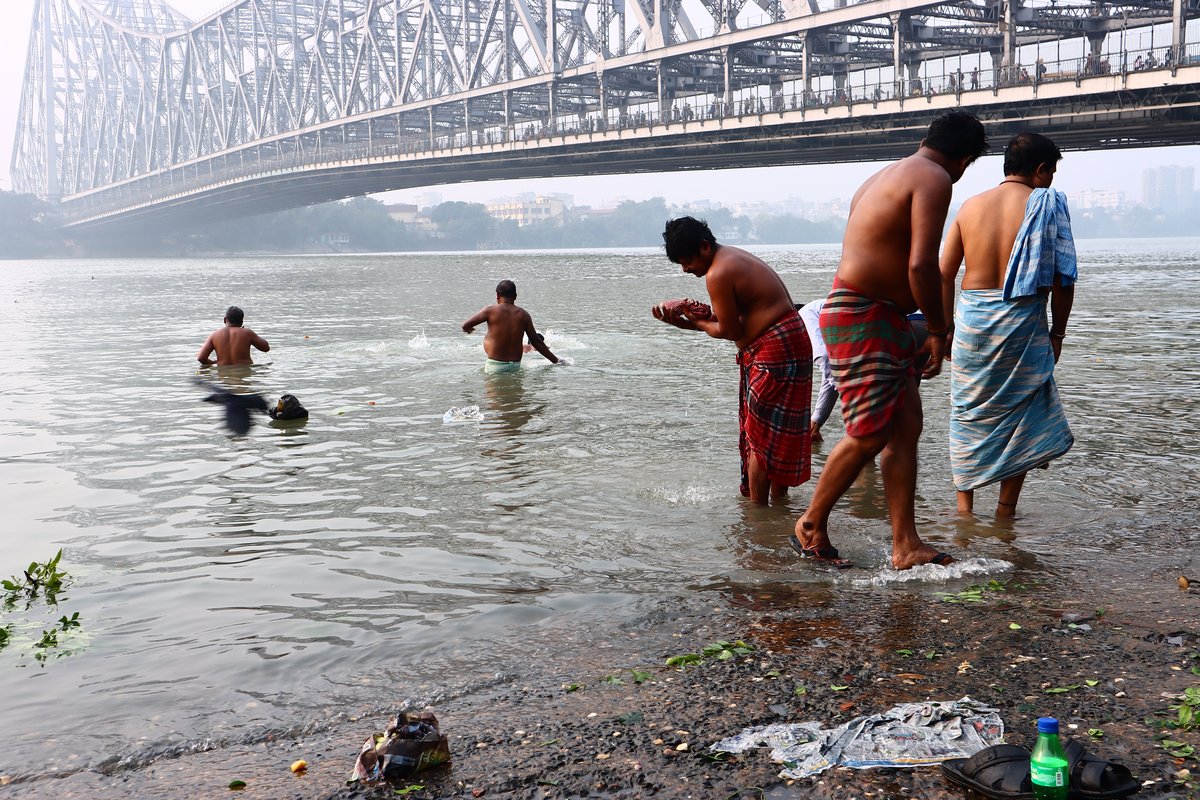
Howrah Bridge, also known as Rabindra Setu, is an iconic landmark in Kolkata, India, symbolizing the city's rich history and industrial prowess. This engineering marvel spans the Hooghly River, connecting the bustling metropolis of Kolkata with the industrial town of Howrah. Its significance extends beyond its structural brilliance; Howrah Bridge is a cultural and economic lifeline for the region. The bridge's history dates back to the early 19th century when the British colonial administration recognized the need for a permanent structure to facilitate the growing traffic between Kolkata and Howrah. The current cantilever bridge, designed by the British engineering firm M/s Rendel, Palmer and Tritton and constructed by Braithwaite, Burn & Jessop, opened to the public in 1943. Its strategic importance during World War II and its role in Kolkata's post-independence economic development underscore its multifaceted significance (Howrah Bridge History). This comprehensive guide delves into the history, cultural significance, visitor information, and travel tips for exploring this monumental structure, making it an essential read for anyone planning to visit Howrah Bridge (Tata Steel Contribution).

History of Howrah Bridge
Early Conception and Planning
The idea of constructing a bridge over the Hooghly River dates back to the early 19th century. The British colonial administration recognized the need for a permanent structure to connect Kolkata (then Calcutta) with Howrah. The first proposal was made in 1862, but it wasn't until 1871 that the initial pontoon bridge, known as the "Old Howrah Bridge," was constructed. This floating bridge was a temporary solution and could not withstand the increasing traffic and the river's strong currents.
The Need for a Permanent Structure
By the early 20th century, the limitations of the pontoon bridge became evident. The growing population and industrial activities in Kolkata and Howrah necessitated a more robust solution. In 1906, the Port Commissioners of Calcutta initiated a project to build a new bridge. However, the project faced numerous delays due to World War I and financial constraints.
Design and Construction
In 1921, the New Howrah Bridge Act was passed, and the project gained momentum. The bridge's design was entrusted to the renowned British engineering firm, M/s Rendel, Palmer and Tritton. The final design was a cantilever bridge, chosen for its ability to span large distances without the need for piers in the water, which would obstruct river traffic.
Construction began in 1936, with the Braithwaite, Burn & Jessop Construction Company undertaking the massive task. The bridge was built using high-tensile steel, most of which was supplied by Tata Steel. Approximately 26,500 tons of steel were used in the construction. The bridge was completed in 1942 and opened to the public on February 3, 1943. It was initially named the New Howrah Bridge but was later renamed Rabindra Setu in honor of the famous Bengali poet Rabindranath Tagore.
Engineering Marvel
Howrah Bridge is an engineering marvel of its time. It is one of the longest cantilever bridges in the world, with a total length of 705 meters (2,313 feet) and a central span of 457 meters (1,500 feet). The bridge does not have any nuts or bolts; instead, it is held together by rivets, a testament to the precision and skill of the engineers and workers involved in its construction.
Role During World War II
The construction of Howrah Bridge coincided with World War II, and the bridge played a crucial role during this period. It was a vital link for the transportation of troops, military equipment, and supplies. Despite the heavy traffic and strategic importance, the bridge remained unscathed during the war, a remarkable feat considering the extensive bombing campaigns in the region.
Post-Independence Era
After India gained independence in 1947, Howrah Bridge continued to be a critical infrastructure asset. It facilitated the movement of goods and people between Kolkata and Howrah, contributing significantly to the region's economic growth. The bridge also became a symbol of Kolkata's resilience and industrial prowess.
Visitor Information
Howrah Bridge Visiting Hours
Howrah Bridge is open to the public 24 hours a day, seven days a week. There are no specific visiting hours, making it accessible to both early risers and night owls.
Howrah Bridge Tickets
There is no entry fee to visit Howrah Bridge. It is free for pedestrians and vehicles, making it an easily accessible landmark for all.
Travel Tips
- Best Time to Visit - The best time to visit Howrah Bridge is during the early morning or late evening when the traffic is relatively lighter, and you can enjoy the view of the river and the city skyline.
- Photography - Photography is allowed, but be mindful of the heavy traffic and take necessary precautions.
- Public Transport - The bridge is well-connected by public transport, including buses, trams, and the Kolkata Metro. The Howrah Railway Station is also nearby, making it convenient for travelers.
Nearby Attractions
- Howrah Railway Station - One of the busiest railway stations in India and an architectural marvel in its own right.
- Eden Gardens - A historic cricket stadium located a short distance away from the bridge.
- Marble Palace - A stunning 19th-century mansion filled with art and antiques.
- Indian Museum - The largest and oldest museum in India, offering a glimpse into the country's rich history and culture.
Accessibility
Howrah Bridge is accessible to pedestrians and vehicles, including cars, buses, and bicycles. There are pedestrian walkways on either side of the bridge, making it easy for people to cross on foot.
Maintenance and Upgrades
Over the decades, Howrah Bridge has undergone several maintenance and upgrade projects to ensure its structural integrity and accommodate the increasing traffic. In the 1960s, the bridge was reinforced to handle the growing number of vehicles. In recent years, the Kolkata Port Trust, which manages the bridge, has implemented advanced monitoring systems to detect and address any structural issues promptly.
Cultural Significance
Howrah Bridge is not just an engineering landmark; it is also a cultural icon. It has been featured in numerous films, books, and artworks, symbolizing the spirit of Kolkata. The bridge is a daily sight for millions of commuters and holds a special place in the hearts of the city's residents.
Modern-Day Relevance
Today, Howrah Bridge remains one of the busiest bridges in the world, with an estimated 100,000 vehicles and over 150,000 pedestrians crossing it daily. It continues to be a vital link between Kolkata and Howrah, supporting the region's economic activities and serving as a testament to the engineering prowess of its creators.
Frequently Asked Questions (FAQ)
What are the visiting hours for Howrah Bridge?
Howrah Bridge is open 24 hours a day, seven days a week.
Is there an entry fee for Howrah Bridge?
No, there is no entry fee to visit Howrah Bridge.
What is the best time to visit Howrah Bridge?
The best time to visit is during the early morning or late evening when the traffic is lighter.
Can I take photographs on Howrah Bridge?
Yes, photography is allowed, but be mindful of the traffic.
Discover More
For more such informative articles, follow us on social media, download our mobile app Audiala, and check out our other posts on Kolkata's historical sites.
Tickets & tours.
These are guided options from our partners — same price as booking direct.
Prices are indicative — final pricing and availability are confirmed at checkout. Audiala may earn a commission from bookings made through these links.
Listen to the full story in the app
The whole Howrah Bridge,
told well.
Audio guides for 1,100+ cities across 96 countries. History, stories, and local insight — offline ready.
Verified, and shown.
Researched and written by the Audiala editorial team from historical records, architectural archives, and local expertise.
Researched from Wikidata, Wikipedia & official sources · fact-checked · How we make our guides →