An introduction.
Researched by the Audiala editorial team from historical records, architectural archives, and local expertise.
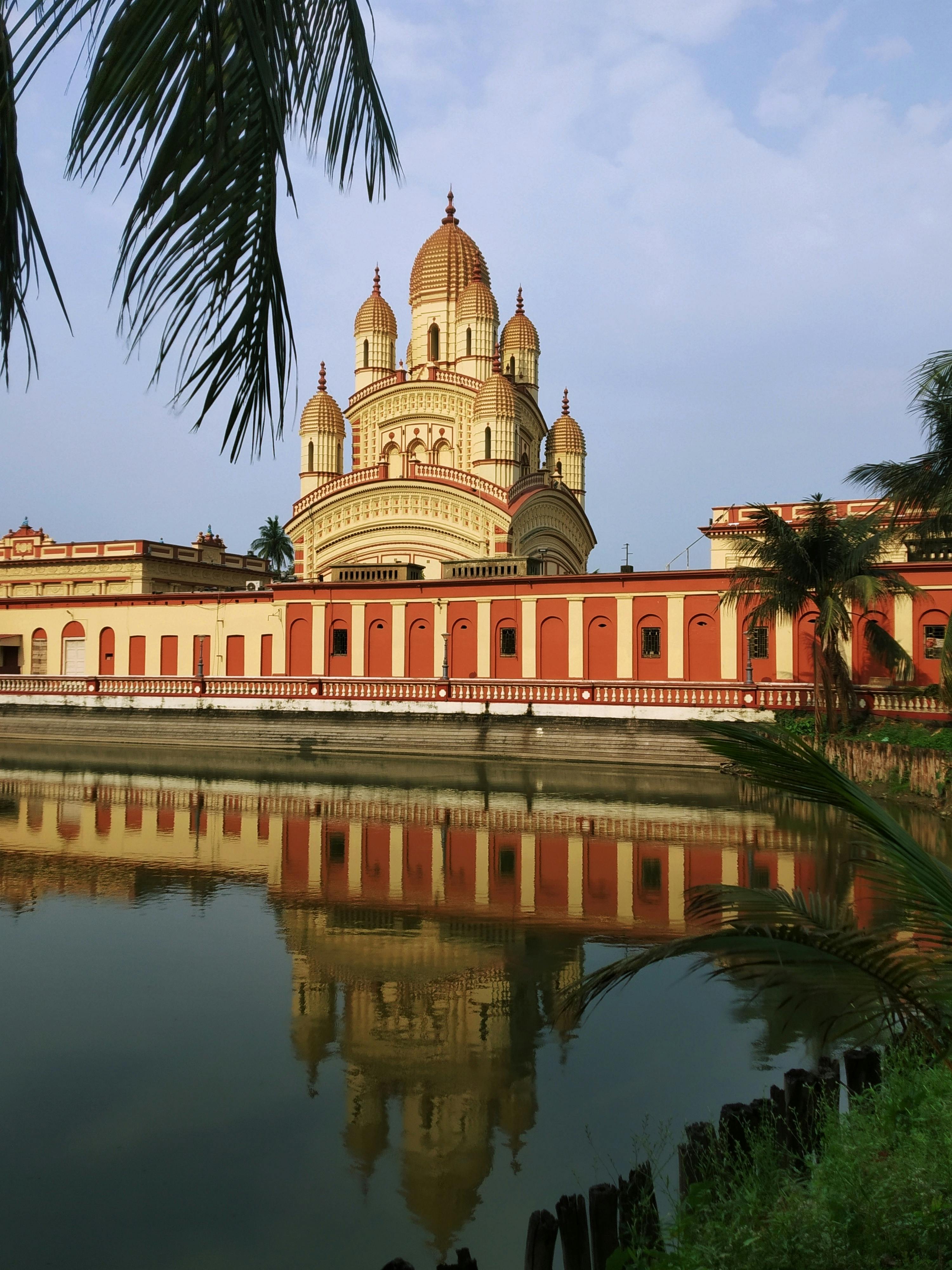
TThe most radical act of defiance in nineteenth-century Kolkata wasn't a protest march or a pamphlet — it was a woman from a fishing community building a temple so grand that Brahmin priests couldn't ignore it. Dakshineswar Kali Temple rises over 30 meters above the eastern bank of the Hooghly River in northern Kolkata, India, a nine-spired monument to one woman's refusal to accept the boundaries her society drew around her. It remains one of the most visited pilgrimage sites in the country, drawing millions each year who come for the goddess but stay for the strange, electric energy of a place where social revolution and spiritual devotion became the same thing.
The temple complex sprawls across a riverfront plot that Tantric practitioners consider sacred for its shape — it resembles a tortoise when seen from above, a form associated with the worship of Shakti. Twelve identical Shiva temples line the ghats like sentries. Behind them, the main Kali temple dominates the skyline, its three storeys of ornate Bengal architecture taller than a ten-storey building. Inside, the deity Bhavatarini — a form of Kali — stands on a supine Shiva, both figures resting on a silver lotus with a thousand petals.
But Dakshineswar's pull goes beyond architecture. This is where Sri Ramakrishna Paramahamsa lived and practiced for nearly three decades, and where his radical experiments in interfaith worship laid the groundwork for the Ramakrishna Mission Institute of Culture that still operates across Kolkata. The temple carries the weight of that legacy in its stones — and in the crowds who press through its gates before dawn, trailing marigold petals and sandalwood smoke.
Visiting means confronting a collision of the sacred and the political that feels as charged today as it did in 1855. The incense is thick, the marble is cool underfoot, and the river beyond the ghats moves with the same indifference it always has. What changed was who got to stand here.
01 What to see.
The Main Kali Temple and Bhavatarini
The Twelve Shiva Temples Along the Ghats
The Panchavati, the Kuthi Bari, and a Walking Route Most Skip
02 In pictures.


Plan and listen to Dakshineswar Kali Temple with Audiala.
Audio guide in your pocket, itinerary in your browser. Built for the way you actually visit.
Tickets & tours.
These are guided options from our partners — same price as booking direct.
Prices are indicative — final pricing and availability are confirmed at checkout. Audiala may earn a commission from bookings made through these links.
03 Visitor logistics.
The practical scaffolding for a good visit — kept short.
Getting There
The Kolkata Metro Blue Line drops you at Dakshineswar station, roughly 500 meters from the temple gate — a 10-minute walk now made easier by a modern skywalk. Local suburban trains from Sealdah and Howrah also stop at Dakshineswar Railway Station. Uber and Ola work fine from central Kolkata; expect 45–90 minutes depending on traffic, with paid parking available inside the complex.
Opening Hours
As of 2025, the temple opens in two sessions: 6:00 AM–12:30 PM and 3:00 PM–8:30 PM (extending to 9:00 PM in some seasons). The afternoon closure from 12:30 to 3:00 PM is strict — don't arrive at 1 PM expecting to wait inside. Festival days like Kali Puja bring enormous crowds that can effectively block access for hours.
Time Needed
A focused visit — main sanctum, quick look at the ghats — takes 1 to 1.5 hours if queues cooperate. To properly explore the 12 Shiva temples lining the riverbank, the Radha-Kanta shrine, and the Kuthi Bari where Ramakrishna lived, budget 2 to 3 hours. Weekday mornings reward you with shorter lines and more breathing room.
Accessibility
The temple grounds are paved and wheelchair-accessible, but the main sanctum involves stairs and narrow passages that block wheelchair entry. Stone floors become scorching in summer heat — socks help if you have sensitive feet, since shoes must come off. The new skywalk from the metro station is flat and manageable for mobility aids.
Cost & Tickets
Entry is completely free — no tickets, no online booking, no VIP passes. The only cost is a nominal cloakroom fee of ₹3–20 per item if you store bags near the entrance. Anyone offering a paid "fast-track darshan" is running a scam.
04 Tips for visitors.
Small things that change the day.
Dress Modestly, Pack Light
Cover shoulders and knees — this is enforced, not suggested. Mobile phones, cameras, and bags face restrictions inside the sanctum, so carry as little as possible and use the cloakroom near the gate.
No Photos Inside
Photography is strictly prohibited inside the main temple sanctum. Drones require special permits you won't get. The exterior architecture and the row of Shiva temples along the Hooghly are fair game and, honestly, more photogenic.
Ignore the Touts
Anyone approaching you outside the gate offering "VIP entry" or "special blessings" for a fee is a tout. Darshan is free. Inside, some aggressive priests demand donations for blessings — a firm "no" and forward motion is all you need.
Arrive at Dawn
The 6:00 AM opening is your golden window — shorter queues, cooler stone floors, and morning light hitting the nine spires from across the Hooghly. By 9:00 AM on weekends, the queue can stretch for over an hour.
Eat Hing-er Kochuri
The small stalls clustered near the temple gate sell hing-er kochuri — deep-fried lentil bread spiced with asafoetida — alongside hot jalebis and milky chai, all for under ₹50. This is the local breakfast of choice; skip anything marketed specifically at tourists.
Pair with Ramakrishna Mission
The Ramakrishna Mission Institute of Culture in Gol Park directly continues the story that began here in 1856. Visiting both in one day gives you the full arc from Ramakrishna's raw spiritual experiments to the global movement they became.
Where to Eat
Don't Leave Without Trying
Sri Guru Hotel & Restaurant
local favoriteOrder: Bengali thali with fresh katla fish, dal, and rice—the kind of home-style lunch pilgrims and locals rely on. Arrive early for the best catch of the day.
This is where real Dakshineswar eaters go. No tourist frills, just honest Bengali cooking at prices that won't hurt your wallet. The highest-rated option in the area for a reason.
Dakshineswar Food Plaza
quick biteOrder: Hing-er kochuri (radhaballabi) with channa dal—grab it hot in the morning before it sells out. Pair with doi bora and rosogulla for the full temple experience.
Part of the temple's 'Khau Galli' food street scene, this plaza captures authentic Dakshineswar breakfast culture. The kochuri here is the real deal—spiced, crispy, and gone by 11 AM.
Debalay Guest House | Dakshineswar Kali Temple, Kolkata
local favoriteOrder: Bengali thali and simple rice dishes. The 24-hour availability makes it a lifesaver for pilgrims arriving at odd hours or staying overnight near the temple.
The most convenient option if you're staying in the temple precinct or need a meal outside standard hours. High review count reflects its role as a reliable, always-open neighborhood anchor.
SANTOSH STORES
marketOrder: Temple-area snacks and quick bites—this is the heart of the informal food market right at the ghat. Perfect for grabbing something light between temple visits.
Located directly at the Temple Ganga Ghat, this is as close as you get to the temple's authentic food pulse. It's where vendors sell fresh sweets and hot snacks to pilgrims.
Dining Tips
- check Arrive early for hing-er kochuri—it's typically sold out by 11:00 AM, especially at temple stalls.
- check Expect communal, rustic seating near the temple, not fine-dining ambiance. Shared benches are standard.
- check The Ganga Ghat area can be slippery or crowded, especially during monsoon season—use caution when walking near the riverfront.
- check Stick to established food stalls and vendors; avoid aggressive puja (worship) item sellers who may also peddle unnecessary goods.
- check Budget-friendly meals like Bengali thali typically cost around ₹140 and are highly cost-effective for pilgrims.
Restaurant data powered by Google
05 The Fisherwoman Who Built a Cathedral
Rani Rashmoni was born in 1793 into the Kaivarta community — fisherfolk, in the eyes of Bengal's caste hierarchy. She married into wealth, outlived her husband, and spent the rest of her life spending his fortune in ways that made the colonial and Brahminical establishments deeply uncomfortable. She blocked the Hooghly River with iron chains to force the British East India Company to abolish taxes on poor fishermen. She funded schools and roads. And then she did something no one expected.
According to tradition, in 1847 Rashmoni was preparing for a pilgrimage to Varanasi when she experienced a vision of Goddess Kali, who instructed her to build a temple on the banks of the Ganges instead. Whether divine command or shrewd calculation, the result was the same: she purchased a 20-acre plot from an Englishman named John Hastie, a site that included a Muslim burial ground, and began constructing what would become one of Bengal's most important temples. Workers labored for eight years. The cost, adjusted for today's currency, ran into the tens of millions.
The Day 100,000 Brahmins Had No Choice
Rani Rashmoni faced a problem that money alone couldn't solve. By 1855, the temple complex was complete — nine spires, twelve Shiva shrines, a Radha-Krishna temple, all of it gleaming on the riverbank. But the Brahmin orthodoxy of Kolkata refused to recognize it. A temple built by a Kaivarta woman was, in their view, ritually impure. No respected priest would serve there. Without consecration, the entire project was an expensive ruin.
Rashmoni's response was tactical brilliance. She invited over 100,000 Brahmins to the consecration ceremony on 31 May 1855, offering lavish hospitality and gifts. By attending, they implicitly legitimized the temple. Refusing en masse would have been a public scandal. The idols were installed, the rituals performed, and Dakshineswar became — in a single afternoon — an established place of worship that the orthodoxy could no longer dismiss. Rashmoni had spent eight years and a fortune to reach this moment. She would die just six years later, on 19 February 1861, one day after signing the deed of endowment that secured the temple's future.
The priest she couldn't find among the establishment came from an unlikely source. In 1856, a young man named Gadadhar Chattopadhyay took over the duties after his brother Ramkumar died. The world would come to know him as Sri Ramakrishna Paramahamsa — and his presence would transform Dakshineswar from a regional temple into a global spiritual landmark.
A Rebel in Silk and Iron Chains
Ramakrishna and the Afterlife of a Vision
Listen to the full story in the app
The whole Dakshineswar Kali Temple,
told well.
Audio guides for 1,100+ cities across 96 countries. History, stories, and local insight — offline ready.
06 Frequently asked.
The questions travellers send us most about Dakshineswar Kali Temple.
Is Dakshineswar Kali Temple worth visiting?
Yes, and not just for religious reasons — it's one of the most architecturally striking temple complexes in Bengal and the site where Sri Ramakrishna Paramahamsa lived and practiced for decades. The nine-spired main temple rising over 30 meters above the Hooghly River, the row of twelve identical Shiva shrines along the waterfront, and the quiet Panchavati garden planted by Ramakrishna himself make it rewarding even for non-devotees. Be prepared for crowds, aggressive touts, and a chaotic atmosphere — this is a living pilgrimage site, not a museum.
Can you visit Dakshineswar Kali Temple for free?
Entry is completely free, and there are no VIP tickets or skip-the-line passes available. Anyone offering you "fast-track darshan" for money is a tout — ignore them firmly. The only costs you might incur are nominal cloakroom fees (around ₹3–20 per item) for storing bags and phones, since personal items are restricted inside the main sanctum.
How do I get to Dakshineswar Kali Temple from Kolkata?
The Kolkata Metro Blue Line runs directly to Dakshineswar Metro Station, which sits about a 10-minute walk from the temple entrance via the new Skywalk. Local suburban trains from Sealdah and Howrah also stop at Dakshineswar Railway Station. Uber and Ola work throughout the city, and paid parking is available inside the temple complex if you're driving.
What is the best time to visit Dakshineswar Kali Temple?
Early morning on a weekday between October and March gives you the shortest queues and the most comfortable weather. The temple opens at 6:00 AM, and the first hour or two are the calmest — by mid-morning the crowds thicken considerably. Sunset from the riverbank ghats is the best moment for photography, with the nine spires silhouetted against the Hooghly, but expect the evening session (3:00 PM–8:30 PM) to be packed.
How long do you need at Dakshineswar Kali Temple?
A focused visit takes 1 to 1.5 hours if queues are short, but allow 2 to 3 hours to see everything properly. Beyond the main Kali shrine, the twelve Shiva temples, the Radha-Kanta temple, the Panchavati garden, and the Kuthi Bari — Ramakrishna's former residence with its worn stone steps — all deserve time. The riverfront ghats are worth lingering at, especially if you need a break from the noise of the main courtyard.
What should I not miss at Dakshineswar Kali Temple?
Most visitors rush straight to the main Kali sanctum and skip the Panchavati garden — the quietest, most meditative spot in the entire complex, where Ramakrishna planted five sacred trees. The twelve Shiva temples along the riverbank, built in the aat-chala style, are architecturally beautiful and far less crowded. Look for the deep grooves worn into the stone threshold of the Kuthi Bari by over 150 years of pilgrim footsteps — a small, moving detail that most people walk right over.
What are the opening hours of Dakshineswar Kali Temple?
The temple operates in two sessions: morning from 6:00 AM to 12:30 PM, and evening from 3:00 PM to 8:30 or 9:00 PM depending on the season. It closes during the afternoon break, so don't arrive between 12:30 PM and 3:00 PM expecting entry. Festival days like Kali Puja may alter access due to extreme crowds.
Who built Dakshineswar Kali Temple and why?
Rani Rashmoni, a wealthy Bengali philanthropist from the Kaivarta fisherfolk community, commissioned the temple in 1847 after — according to tradition — a dream vision of Goddess Kali told her to build a temple instead of making a pilgrimage to Varanasi. Construction took eight years, with workers completing the complex for its consecration on 31 May 1855. The project was as much a social act as a spiritual one: Rashmoni, a lower-caste woman, forced Brahminical orthodoxy to accept the temple's legitimacy by inviting over 100,000 Brahmins to the inauguration.
Verified, and shown.
Researched and written by the Audiala editorial team from historical records, architectural archives, and local expertise.
Core historical dates including construction (1847), consecration (31 May 1855), Ramakrishna's priesthood (1856), and Rani Rashmoni's death (19 February 1861). Architectural details and land history.
Confirmed founding dates, consecration, and Ramakrishna's connection to the temple.
Official temple history and construction timeline.
Architectural details including the Nava-ratna style, the Bhavatarini deity on the silver lotus, and the Muslim burial ground syncretic history.
Visitor practical info, opening hours, architectural style details, and the tortoise-shaped land significance.
Opening hours, visit duration estimates, dress code, and photography restrictions.
Visitor reviews providing sensory details, accessibility notes, and practical warnings about touts.
Local food recommendations (Hing-er Kochuri) and atmospheric details of visiting during monsoon.
Detailed architectural analysis including materials, style influences, and structural layout.
Biographical context on Rani Rashmoni's social defiance and the political dimensions of the temple's founding.
Confirmed free entry policy and absence of online booking.
Transport options including metro, train, and road access.
Additional confirmation of opening hours and seasonal variations.
Local perspectives on tout harassment and commercialization concerns at Kolkata temples.
Researched from Wikidata, Wikipedia & official sources · fact-checked · How we make our guides →