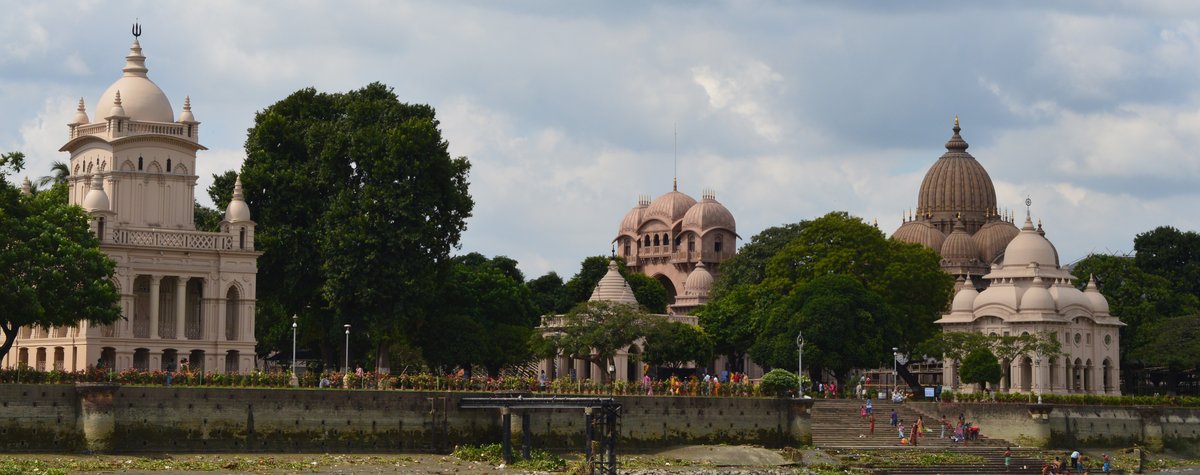
Plan and listen to Chinese Kali Mandir with Audiala.
Audio guide in your pocket, itinerary in your browser. Built for the way you actually visit.
Introduction
In the heart of Tangra—Kolkata’s bustling Chinatown—the Chinese Kali Mandir stands as a powerful symbol of cultural integration and spiritual harmony. This unique temple beautifully merges Bengali Hindu traditions with Chinese customs, reflecting over two centuries of Chinese-Indian coexistence in the city. Visitors to this remarkable site experience not only a place of worship but also a living testament to Kolkata’s multicultural legacy, where rituals, cuisine, and architecture seamlessly blend across communities (South Asia Monitor; India Currents).
Origins and Historical Evolution
Early Chinese Settlement in Kolkata
Chinese migration to Kolkata began in the late 1700s, with settlers arriving as sailors, tanners, carpenters, and traders. By the 20th century, Tangra evolved into a vibrant enclave, home to thousands of Hakka Chinese who established businesses, tanneries, and restaurants, shaping the area’s unique identity (South Asia Monitor).
The Founding Legend
The temple’s origin is rooted in a local legend: a gravely ill Chinese boy, thought beyond cure, was brought to two sacred stones worshipped by Bengali Hindus as manifestations of Goddess Kali. After earnest prayers from both communities, the boy miraculously recovered. This event fostered unity, leading to the creation of a shrine that commemorated their shared faith (India Currents; Atlas Obscura).
Construction and Growth
Formalized as a temple in 1998 through joint Chinese and Bengali donations, the Chinese Kali Mandir preserves its original granite stones and sacred tree within its sanctum. Over time, it has grown to include idols of Goddess Kali and Lord Shiva, encapsulating the evolution of syncretic worship (South Asia Monitor).
Cross-Cultural Rituals and Offerings
Harmonious Fusion of Traditions
The temple’s daily rituals are a harmonious blend of Hindu and Chinese practices. Bengali priests perform aartis with Sanskrit chants, while Chinese devotees light tall candles, burn handmade paper (to ward off evil spirits), and offer incense in the Chinese tradition. These practices are unique in Kolkata and highlight the temple’s role as a cultural bridge (India Currents; Atlas Obscura).
Unique Prasad: A Culinary Window into Integration
Unlike most Hindu temples, the prasad at Chinese Kali Mandir is distinctly Chinese—vegetarian noodles, chop suey, momos, and sticky rice are prepared by Chinese volunteers and distributed to all. This culinary integration is a symbol of the temple’s intercultural ethos (Curly Tales; Adotrip).
Community Participation and Social Impact
Ongoing Community Involvement
Despite a shrinking local Chinese population (now around 2,000), the community remains deeply involved in temple operations and festivals. The temple committee, often led by Chinese-Indian elders, manages daily activities and festival preparations (Atlas Obscura).
Collaborative Spirit
The temple thrives on collaboration—Bengali and Chinese devotees contribute financially and physically, attend rituals, and jointly organize major festivals like Kali Puja and Diwali. These events are marked by communal decorations, shared offerings, and cultural programs, reinforcing social bonds (India Currents).
Resilience and Preservation
Overcoming Adversity
The Chinese community faced adversity during the 1962 Sino-Indian War, with many interned or forced to leave India. Nevertheless, the temple endures as a symbol of perseverance and cross-cultural harmony (Atlas Obscura).
Sustaining Heritage
With younger generations migrating abroad, the temple has become a touchstone for cultural memory. Elder community members and heritage enthusiasts are working to document traditions and seek official heritage recognition (South Asia Monitor; Light Up Temples).
Visiting Hours, Entry, and Tips
- Visiting Hours:
- Morning: 5:00 AM – 2:00 PM
- Evening: 5:00 PM – 10:30 PM
(kolkatatourism.in)
- Entry Fee: None; the temple is open to all.
- Best Times: Major festivals (Kali Puja in Oct/Nov, Chinese New Year in Jan/Feb) offer the most vibrant experiences. Weekdays are quieter for reflective visits.
- Travel Tips:
- Arrive early to avoid crowds, especially during festivals.
- Modest dress and shoe removal are required.
- Photography is allowed with discretion, except near the idols.
- Cash is useful for offerings and local purchases.
Architectural Features
Fusion of Styles
The temple’s modest façade is adorned with red pillars and lanterns, dragon motifs, and Chinese calligraphy, blending seamlessly with Hindu iconography and Bengali temple structure. Inside, Goddess Kali and Lord Shiva are flanked by offerings and decorations that reflect both traditions (Travel + Leisure Asia; Hindu Blog).
Maintenance and Challenges
The temple is maintained by volunteers, with cleaning and repairs ramping up before major festivals. However, the lack of official heritage status and urban encroachment pose challenges to its preservation (Light Up Temples).
Accessibility and Nearby Attractions
- Location: Matheswartala Road, Tangra, Kolkata.
- Transport:
- ~16 km from Netaji Subhas Chandra Bose International Airport (taxi/bus)
- ~5 km from Sealdah Railway Station
- Near Sealdah Metro Station (Savaari.com)
- Facilities: Basic restrooms, stalls for offerings, and easy access to Tangra’s famous Chinese restaurants.
- Nearby Attractions: Explore Chinatown’s eateries, Tiretta Bazaar street markets, Sea Ip and Toong On churches, and iconic Kolkata sites like Howrah Bridge and Victoria Memorial.
Frequently Asked Questions (FAQ)
Q: What are the visiting hours of the Chinese Kali Mandir?
A: 5:00 AM–2:00 PM and 5:00 PM–10:30 PM, every day.
Q: Is there an entry fee?
A: No, the temple is free for all visitors.
Q: Are guided tours available?
A: Not officially, but local guides and heritage walks often include the temple.
Q: Is it wheelchair accessible?
A: The temple is at street level, but narrow lanes and festival crowds may present challenges.
Q: What is special about the prasad?
A: Vegetarian Chinese dishes, such as noodles and momos, are served as prasad, reflecting the temple’s unique cultural blend.
Listen to the full story in the app
The whole Chinese Kali Mandir,
told well.
Audio guides for 1,100+ cities across 96 countries. History, stories, and local insight — offline ready.

Verified, and shown.
Researched and written by the Audiala editorial team from historical records, architectural archives, and local expertise.
Researched from Wikidata, Wikipedia & official sources · fact-checked · How we make our guides →