An introduction.
Researched by the Audiala editorial team from historical records, architectural archives, and local expertise.
AA woman grinds grain, a barber bends over a client, a blacksmith leans into his forge, and none of them are alive. That eerie trick is the point of Siddhagiri Gramjivan Museum in Kolhapur, India: you come here to walk through a full-scale memory of village life, spread across about 7 acres, or roughly five football fields. Visit because this place does something rare. It turns rural labor, ritual, grief, and gossip into a physical world you can enter rather than a paragraph you skim.
Most museums put objects in cases and ask you to imagine the people around them. Siddhagiri does the opposite. More than 300 sculptures arranged in around 80 scenes build a whole social order in front of you, from the village well to the grocer's stall, from ploughing fields to funeral rites.
The setting matters. The museum sits inside the wider Siddhagiri Math complex, where devotion, reform, and rural memory fold into one another, and that gives the place more weight than a theme park version of the past ever could.
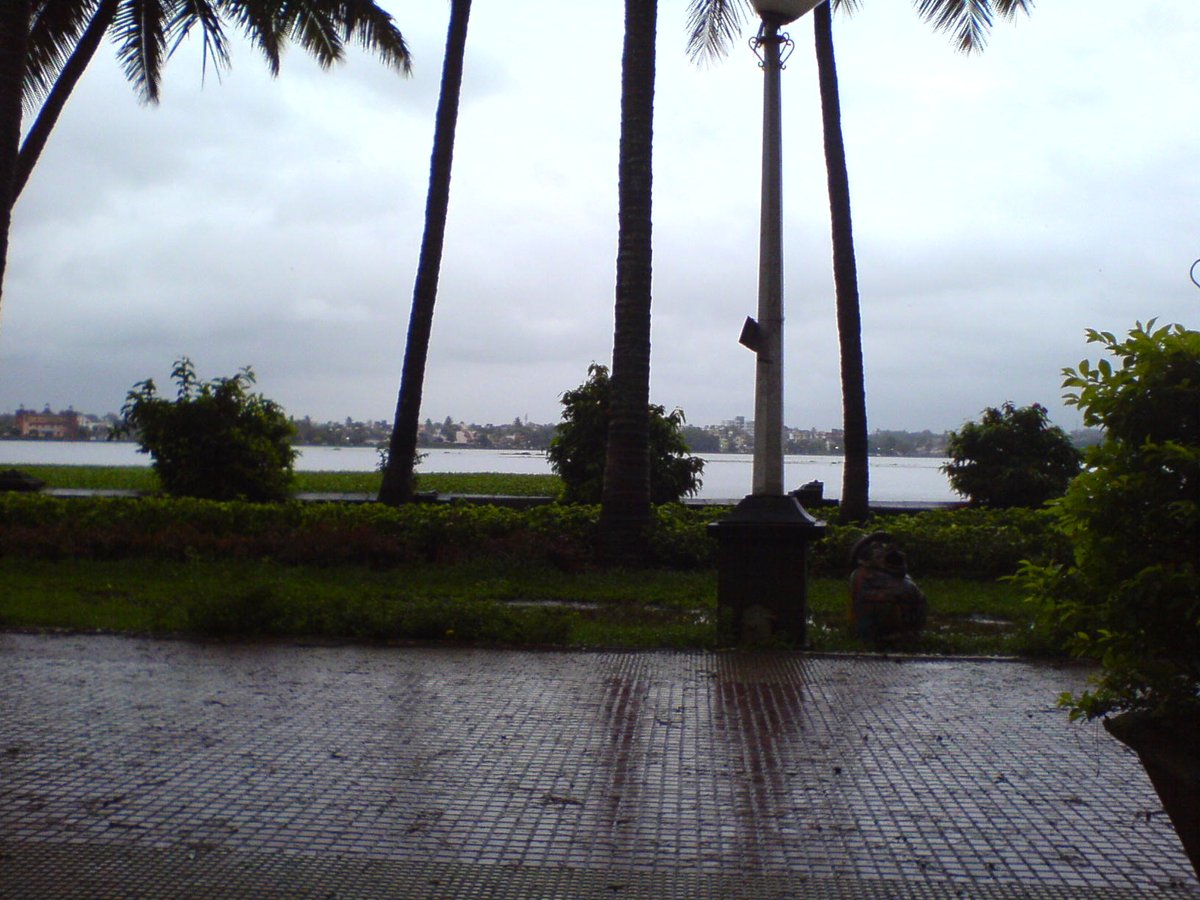
If you've already walked the promenade at Rankala Lake, come here next. Kolhapur is often introduced through palaces, temples, and food; Siddhagiri Gramjivan Museum shows you the people who kept the wider region running while history was busy celebrating kings.
01 What to see.
The Open-Air Village Tableaux
The Temple Precinct, the Shiva Figure, and the Deep Well
The Festival and Ancient India Sections
02 In pictures.

Plan and listen to Siddhagiri Gramjivan Museum with Audiala.
Audio guide in your pocket, itinerary in your browser. Built for the way you actually visit.
03 Visitor logistics.
The practical scaffolding for a good visit — kept short.
Getting There
Siddhagiri Gramjivan Museum sits at Kaneri, about 14 to 16 km north of central Kolhapur, usually a 30 to 40 minute drive depending on traffic. The simplest route is by car or auto-rickshaw via NH 48 and the Kaneri Math approach road; public transport exists from Kolhapur bus stands, but service patterns change, so ask for buses or shared jeeps heading toward Kaneri before you leave the city.
Opening Hours
As of 2026, published hours are inconsistent: some local tourism sources list 9:00 AM to 6:00 PM, while other references disagree on exact closing time. Treat 9:00 AM to late afternoon as the safe planning window, and confirm with Siddhagiri Math before making a special trip, especially on festival days or religious observances.
Time Needed
Give it 90 minutes if you want a brisk circuit of the open-air village scenes. Allow 2 to 3 hours if you plan to linger through the three sections, look closely at the roughly 80 tableaux and 300 figures, and spend time around the temple compound, which spreads across about 7 acres, roughly the size of five football fields.
Accessibility
The museum is an open-air campus with village-style pathways, so expect uneven ground, sun exposure, and a fair amount of walking between scenes. Wheelchair users and visitors with limited mobility should call ahead to ask about the smoothest route, because older temple precincts and outdoor surfaces do not usually behave like a modern indoor museum.
04 Tips for visitors.
Small things that change the day.
Temple Etiquette
This is museum and math, not museum alone. Dress modestly, speak quietly near the Shiva temple, and watch what local visitors do before stepping into sacred areas, especially if shoe removal is expected.
Ask Before Shooting
The life-size rural scenes are deeply photogenic, but temple campuses in India often tighten photography rules without much warning. Ask staff before using flash, filming people at prayer, or launching any drone; assume drones are unwelcome unless you receive explicit permission.
Go Early
Morning light works better here than harsh afternoon sun, because the outdoor sculptures hold texture when shadows are soft. It is easier on your eyes too, and easier on your patience when the stone and concrete start giving back the heat.
Pair It Wisely
Don't squeeze this between errands in central Kolhapur. Pair it with a looser day that includes the Kolhapur old core or an evening stop at Rankala Lake, because the museum sits outside the center and deserves unhurried time.
Read The Scenes
The secret here is scale: around 80 scenes and 300 figures can blur into one long pageant if you rush. Slow down at the blacksmith, the village well, the barber, the grain traders, the mourning rituals; each one is a social document disguised as sculpture.
Verify The Day
Hours and side attractions shift more often here than polished city museums, and visitor posts mention features that may be seasonal or temporary. Confirm the day's schedule before leaving Kolhapur, especially if you are going mainly for the audio-visual program or family rides rather than the Gramjivan displays themselves.
Where to Eat
Don't Leave Without Trying
Hotel Gharacha Darbaar Family restaurant, Main Branch
local favoriteOrder: Order the mutton thali with tambda rassa (spicy red mutton broth) and pandhara rassa (cooling coconut milk curry) — this is the quintessential Kolhapur experience. The combination of both gravies balances heat with richness.
A family-run institution in Shahupuri with consistent 5-star ratings, this is where locals actually eat rather than tourists. The proximity to the railway station makes it accessible after visiting Siddhagiri Museum.
PRIYA VADA SENTAR
quick biteOrder: The vada pav here is the Kolhapuri version — larger and spicier than the Mumbai original, with the potato fritter packed with local chili heat. Pair it with their fresh coconut water or lassi to cool down.
Right at the railway station, this is peak local authenticity. Vada pav is Kolhapur's answer to fast food, and this spot does it right — no frills, just crispy, spiced perfection that fuels the city.
S M Mumbai Vada Center
quick biteOrder: The batata vada (potato fritter) here is crispy-outside, soft-inside perfection. Order it fresh off the pan with a side of green chutney and a cold drink — it's the breakfast of champions in Kolhapur.
Located opposite the Central Bus Stand, this is commuter-tested and local-approved. It's the kind of no-nonsense spot where you grab breakfast standing up and move on, but the quality is undeniable.
Aadarsh Cafe
cafeOrder: Grab a strong Kolhapuri chai (local tea) with a snack — the cafe does simple, honest beverages and light bites. It's the perfect pit stop if you're visiting the museum and want something quick without heavy food.
A neighborhood cafe that serves as a local gathering spot. Open for limited hours (12-4 PM per Google), it's ideal for a light afternoon break between sightseeing and heavier meals.
Dining Tips
- check Kolhapuri food uses lavangi mirchi (local chili variety) and is genuinely hot — always order pandhara rassa alongside tambda rassa to balance the heat.
- check Most traditional thali spots are budget-friendly (₹150–400 per person); expect no-frills, authentic atmosphere over ambiance.
- check Misal is a breakfast/morning dish — plan your timing accordingly if you want to try it at its best.
- check The Siddhagiri Museum is 15 km from the city center; eat at the Kaneri Math guest house for convenience, or drive into Shahupuri for better restaurant selection.
Restaurant data powered by Google
05 A Monastery Decides to Remember the Village
Siddhagiri Gramjivan Museum grows out of a religious institution, not a state archive, and that distinction explains its tone. The Siddhagiri Math grounds carry older claims of sacred continuity around the Moola-Kaadsiddheshwar Shiva temple, but the dates drift wildly from source to source, from the 7th century to roughly 1,200 years ago, so those origins belong in the realm of tradition rather than settled fact.
The museum itself is much clearer in purpose than in exact birthday. Official material ties its creation to the social vision of the Siddhagiri Math leadership and says it was established in 2007, while another commonly cited account says 2006. One year off may sound minor. For a place built to preserve memory, it is a useful reminder that memory always arrives with fingerprints on it.
Adrushya Kadsiddheshwar and the Rural World in Concrete
The central modern figure here is Adrushya Kadsiddheshwar, identified by the official math site as the 49th mathadhipati, who took up the mantle in 1989. According to the institution's own account, he pushed the museum as part of a wider social and health mission, which makes the project feel less like nostalgia and more like argument: village knowledge mattered, village labor had dignity, and neither deserved to vanish under a coat of urban forgetfulness.
That choice shaped the museum's form. Instead of collecting a few tools behind glass, Siddhagiri built entire scenes with life-size figures, letting visitors read posture, gesture, and distance between bodies the way they would in an actual settlement. You don't just learn that a blacksmith worked hard. You see his shoulders do it.
And the method carries a quiet provocation. By staging ordinary people at monumental scale, the museum gives potters, barbers, women at domestic work, singers in bhajan gatherings, and farmers behind ploughs the kind of visual permanence Indian public culture usually reserves for saints, rulers, and warriors.
The Older Temple Story
An Archive of Work, Not Just Worship
Listen to the full story in the app
The whole Siddhagiri Gramjivan Museum,
told well.
Audio guides for 1,100+ cities across 96 countries. History, stories, and local insight — offline ready.

06 Frequently asked.
The questions travellers send us most about Siddhagiri Gramjivan Museum.
Is Siddhagiri Gramjivan Museum worth visiting?
Yes, especially if you want more than another temple stop. The museum spreads rural Maharashtra across about 7 acres, with roughly 80 scenes and around 300 life-size sculptures, so it feels less like a gallery and more like walking through a village paused mid-breath. Families usually get more out of it than hurried checklist travelers.
How long do you need at Siddhagiri Gramjivan Museum?
Plan on 2 to 3 hours. The open-air village scenes, temple precinct, and extra campus attractions can stretch the visit longer if you're reading details and stopping for photos. Rushing it in under an hour misses the point.
What is special about Siddhagiri Gramjivan Museum?
Its real trick is scale. Instead of placing a few objects in glass cases, the museum builds whole episodes of village life with blacksmiths, barbers, weavers, farmers, priests, and ritual scenes, turning social history into something you can almost hear. You leave with a clearer sense of how work, worship, and domestic life once fit together.
Who built Siddhagiri Gramjivan Museum?
The museum is associated with Shri Kshetra Siddhagiri Math and the vision of Adrushya Kadsiddheshwar Swamiji. The official math site says the project was established in 2007, though some secondary sources give 2006, so the exact opening year is not fully settled. The institution, not a single architect with a famous signature, is the story here.
What are the timings of Siddhagiri Gramjivan Museum?
Most tourism sources list 9:00 AM to 6:00 PM. Timings do vary across listings, so check the math or local tourism channels before you go, especially on festival days. That matters more than usual at places tied to an active religious campus.
What can you see at Siddhagiri Gramjivan Museum?
You can see an open-air reconstruction of village life, an indoor section on ancient India, and festival scenes across the campus. Repeatedly mentioned highlights include farming, weaving, blacksmithing, village markets, devotional singing, household medicine, and ritual life, along with the temple complex, a large Nandi, and a 42-foot Shiva image, about as tall as a four-story building.
Is Siddhagiri Gramjivan Museum good for kids?
Yes, it usually works well for children because the storytelling is visual and easy to grasp. Rows of statues doing real work keep younger visitors engaged better than text-heavy museums, and some visitor reports mention family-oriented attractions nearby on the campus. Go earlier in the day if you're visiting with kids; the open areas get hot.
Verified, and shown.
Researched and written by the Audiala editorial team from historical records, architectural archives, and local expertise.
General overview, temple tradition claims, museum themes, and repeated figures for statues and scene count.
Official tourism summary used for scale, scope, and positioning of the museum in Kolhapur.
District tourism page used for visitor timing references and general description.
Entity reference confirming identity and alternate naming.
Traditional historical claims and richer temple architecture details including Hemadpanti-style references.
Secondary history page used for older-origin claims about the math.
Secondary travel-history piece used for age claims and museum scale references.
Visitor timing references and repeated claims about temple features such as the Shiva image and well.
Official source for museum sections, campus attractions, and the claim that the museum was established in 2007.
Secondary summary cited in the research notes for the conflicting 2006 inauguration claim.
Official leadership context for the 49th mathadhipati and related institutional history.
Visitor impressions used for recurring details about family appeal, photo opportunities, and mutable campus attractions.
Researched from Wikidata, Wikipedia & official sources · fact-checked · How we make our guides →