Rankala Lake
KolhapurIndia 16° N · 74° E Updated Apr 2026
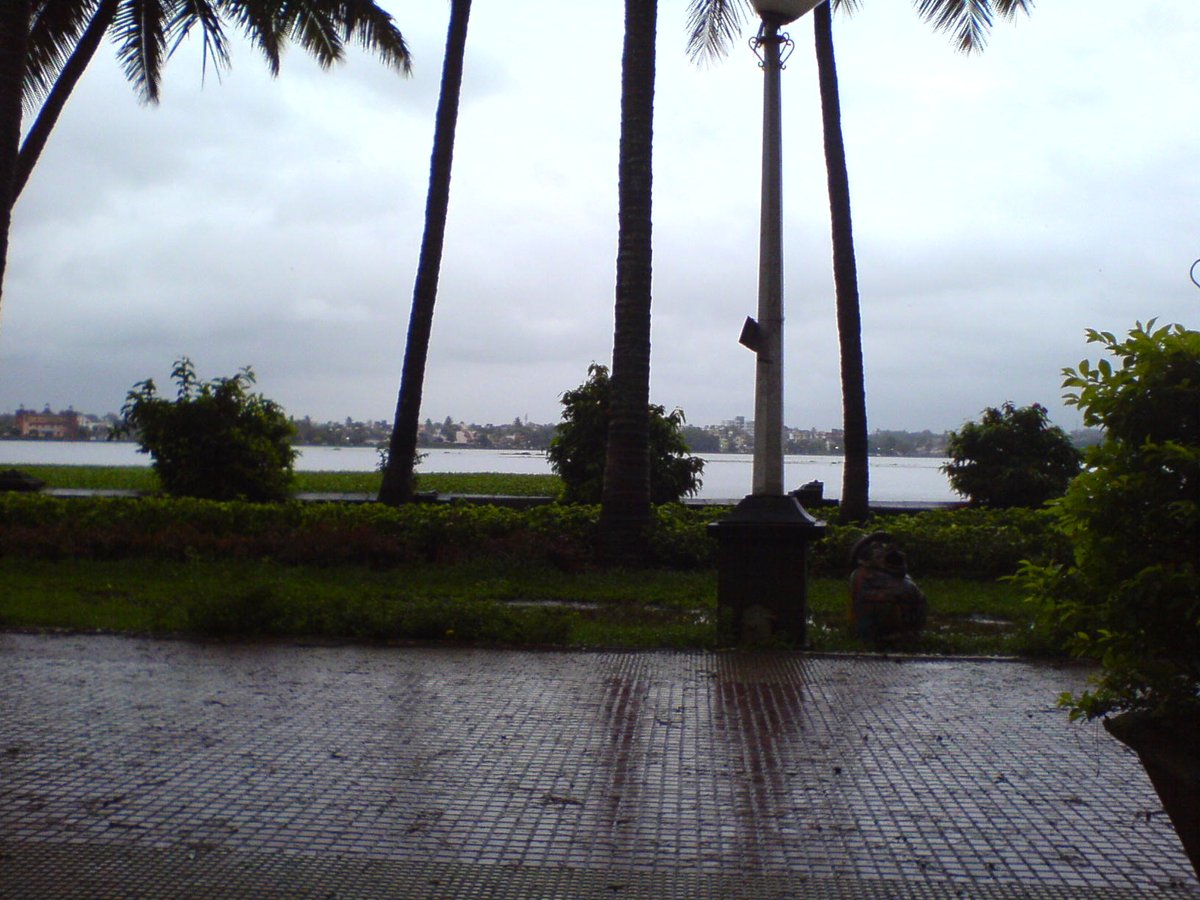
Rankala Lake was born when an ancient basalt quarry collapsed in a 9th-century earthquake. Today it's Kolhapur's beloved Chowpati — loud, fragrant, and unmissable.
- Time needed
- 2-3 hours
- Entry
- Free (boating extra)
- Best season
- October–February
Somewhere beneath the still surface of Rankala Lake, according to local tradition, a golden temple has sat undisturbed for over a thousand years. This lake in Kolhapur, India, was not planned — a 9th-century earthquake collapsed a working basalt quarry, underground springs poured in, and the city acquired a body of water it never asked for but cannot imagine losing. Today Rankala is where Kolhapur goes to think, to walk, to argue over cricket, and to watch the sun drop behind the Sahyadri hills.
The lake sits on the Deccan Plateau at roughly 550 meters above sea level, cradled in black basalt — the same volcanic rock that was quarried here before the earth swallowed the site. The stone is everywhere in Kolhapur. According to Jain tradition, basalt from this very quarry built the Mahalakshmi Temple, the city's most revered shrine.
What you see today owes much to one man's vision. In the early 1900s, Maharaja Shahu Chhatrapati — Kolhapur's reformist king — turned the reservoir into a public promenade. He commissioned the broad Rajghat steps down to the water, laid out the Padmaraje Garden, and constructed the Chaupati walkway that still defines the lake's western edge. The Shalini Palace, built in the 1930s for a princess of the royal family, anchors one corner like a period at the end of a sentence.
By dusk, the promenade fills. Peanut sellers set up along the Chaupati, families spread across the stone steps, and the light turns the water the color of weak tea. Kolhapur is a city of strong opinions — about wrestling, about food, about politics — and Rankala is where those opinions get aired.
What to see
-
Rajghat & the Rankala Tower
Before the 9th century, this was a black basalt quarry. Workers cut stone here to build Kolhapur's Mahalakshmi Temple, excavating deeper into the Deccan Trap bedrock until — around 800 CE — earthquakes cracked open underground springs and drowned the pit. Every step on Rajghat's worn stairs is a step across a 1,200-year-old work site.
The tower at the ghat's edge offers the lake's best composition: Shalini Palace's domes floating on the water, the Ambai Swimming Tank anchoring the middle distance. Come at sunset, when the basalt shifts from flat black to warm copper and the palace reflection sharpens against darkening water.
Beneath that surface, according to local tradition, lies the golden Rankabhairav Temple — the shrine that gave the lake its name. No excavation has confirmed it, but the Sandhya Math, a meditation hall that emerges from the water between January and April as levels drop, proves that buildings do vanish here. The lake swallows what it wants.
-
Shalini Palace
Maharaja Shahu of Kolhapur built this palace in 1931 for his daughter, Princess Shalini Raje, on the lake's northern shore. The Indo-Saracenic design — pointed arches, ornamental balconies, onion domes — borrows from Mughal geometry and British colonial grandeur in roughly equal measure. It looks like something that should exist in Rajasthan, not southern Maharashtra.
Today it operates as a heritage hotel, the only star-rated palace property in the state. Non-guests can visit between 10am and 6pm for ₹10 — less than a cup of chai at the Chaupati. The interior hosts occasional music concerts and art exhibitions, but the building's real trick is its relationship with the lake: walk around to the waterside on a still morning and the palace appears to float, its reflection so sharp that photographs look inverted.
-
The Lakeside Circuit: Chaupati to Padmaraje Garden
Start at the Chaupati after 6pm, when food vendors fire up their stoves and the smell of tamarind and mustard oil thickens the air. This is Kolhapur's communal living room — families and solo walkers circling the lake with plates of bhel puri and misal pav, the latter built on sprouted moth beans in a red-hot gravy that only Kolhapuri cooking manages. Budget ₹100–150 for a full street-food dinner.
Walk north along the shore toward Padmaraje Garden, where jasmine and cut grass replace frying oil — entry is ₹5, open 6am to 9pm. Pause at the Nandi Temple on the way: the sacred bull idol here is unusually large even by Indian standards, and most lake visitors walk right past it. Incense smoke, marigold garlands, the dull ring of a brass bell — this is the oldest layer of Rankala, the devotional life that preceded the promenades and the palace by centuries.
Plan your visit
- Getting There
- Auto-rickshaws from Kolhapur Bus Stand or Mahalakshmi Temple cost ₹20–60 and take under ten minutes. The lake sits roughly 1.5 km southwest of Ambabai Temple — walkable if you don't mind the heat, but rickshaws are cheap enough to not bother. Avoid driving on weekends: parking along the lake fills fast and traffic backs up along the promenade.
- Opening Hours
- Rankala is an open public lakefront with no gates or tickets — you can walk the promenade any hour, any day. As of 2026, the street food stalls and boating operate primarily in the evening from around 5 to 9 PM. Early mornings (6–8 AM) are the domain of joggers and walkers; the Chowpati atmosphere doesn't kick in until dusk.
- Time Needed
- A sunset stroll with street food takes about 1 to 1.5 hours. If you want the full circuit — walking the perimeter, a boat ride, visiting Sandhya Math, and grazing your way through the Chowpati strip — budget 2.5 to 3 hours. Morning walkers typically finish a lap in 30 to 45 minutes.
- Cost
- Entry to the lake and promenade is free — no tickets, no booking. Boating and horse rides are separately priced through municipal operators; expect modest fees though exact 2026 rates aren't posted online. Street food runs ₹20–80 per item, so an evening of eating rarely tops ₹200 per person.
Photo Gallery

History
The Quarry That Became a Commons
Before it was a lake, this was a wound in the earth — a black basalt quarry feeding Kolhapur's appetite for temples and fortifications. Workers cut deeper into the Deccan Trap rock for centuries. Then, around the 9th century CE, the ground shifted. An earthquake cracked the basalt open, underground springs surged through the fissures, and the quarry became a lake. The digging stopped. The gathering began.
What makes Rankala unusual is not how it formed but what persisted after. For over a millennium, through the rise and fall of dynasties, through colonial rule and independence, the lake's edge has served the same purpose: a place where the city meets itself. The names of the rulers changed. The evening walk did not.
The turning point
The King Who Built a Living Room for a City
Maharaja Shahu Chhatrapati inherited the throne of Kolhapur in 1894 at the age of twenty. He was already unusual — a lower-caste king in a system designed to prevent exactly that, elevated through adoption into the royal family. His reign became a sustained argument against orthodoxy: he opened schools for untouchable communities, challenged Brahmin monopolies on religious rites, and fought legal battles that reached the British Privy Council. But Shahu understood that reforms written on paper needed physical spaces where they could be lived.
In the early 1900s, he turned his attention to Rankala. The lake had served as Kolhapur's water reservoir for decades, functional but neglected. Shahu commissioned the Rajghat — broad stone steps descending to the waterline where anyone, regardless of caste, could sit. He built the Chaupati promenade along the western bank and laid out the Padmaraje Garden. He erected the Rankala Tower to house the sluice gate mechanism, giving the structure an ornamental face that disguised its engineering purpose.
The turning point was not any single construction but the principle behind all of them: public space, open to everyone. In a society where water access was often determined by caste, Shahu's promenade was a quiet revolution. A century later, the Chaupati still fills every evening — peanut sellers, families, couples, retirees — and nobody thinks twice about who sits next to whom. That was the point.
What Changed
What Endured
Tips for visitors
Eat at the Chowpati
The lakeside strip transforms into a street-food fair every evening. Ragada Pattis and Kolhapuri Bhel — spicier than the Mumbai versions — are the local staples. Ask around for Rajabhavu Bhel, a stall Kolhapuris name-drop the way Mumbaikars talk about Elco Pani Puri.Come at Dusk
Guidebooks call Rankala peaceful, but evenings are gloriously loud — balloon sellers, families, couples, food smoke drifting across the water. Arrive by 5:30 PM to catch the sunset light on the lake, then stay for the Chowpati atmosphere that locals describe as a nightly festival.Monsoon Spectacle
Between July and September, the ancient Sandhya Math pavilion — a Hemadpanthi stone mandap sitting at the lake's edge — gets partially or fully submerged as water levels rise. Locals watch for it as an informal marker of a good monsoon. The embankment path can get slippery, so stick to paved sections.Pair with Ambabai Temple
The local ritual is Ambabai Temple first, Rankala stroll after — it's how Kolhapuris welcome every guest to the city. The temple is barely 1.5 km east, and doing both in sequence gives you the canonical Kolhapur experience in a single evening.Photography Freedom
No restrictions at the lake itself — shoot freely. If you visit the adjacent Rankabhairav Temple, ask before photographing inside the sanctum. Drone pilots need a DGCA permit; the lake sits in a dense urban zone, so don't fly without one.Skip Weekend Parking
Weekend traffic around the lake is genuinely bad — locals say so themselves. Take an auto-rickshaw from anywhere in the city for under ₹60 and save yourself the circling. Weekday evenings still have the Chowpati energy with half the crowd.
Frequently asked
Is Rankala Lake worth visiting?
Yes — but come at sunset, not midday. Rankala transforms each evening into what locals call "Kolhapurchi Chowpati," a lakeside food fair with bhelpuri stalls, boat rides, and half the city out for a stroll. The lake itself sits in a 1,200-year-old basalt quarry with a submerged temple beneath the surface, which gives it a depth most Indian city lakes don't have.
How long do you need at Rankala Lake?
Plan 1.5 to 2 hours for an evening visit with street food and a walk around the promenade. If you want to add boating, explore the Nandi temple, and wander through Padmaraje Garden, stretch it to 3 hours. A quick morning walk takes 30 to 45 minutes.
How do I get to Rankala Lake from Kolhapur?
An auto-rickshaw from Kolhapur Bus Stand or Mahalakshmi Temple costs ₹20 to ₹60 and takes under 10 minutes. The lake is roughly 500 meters from the Ambabai Temple, so most visitors combine the two. Avoid driving on weekends — parking is a known headache.
What is the best time to visit Rankala Lake?
Evening between 5 and 8 PM, when the food stalls open and the sunset reflects off the water toward Shalini Palace. Season-wise, November through February offers cool weather and migratory birds. If you visit in April or May, the lake sometimes turns red from algae blooms — strange and worth seeing, though the heat is fierce.
Can you visit Rankala Lake for free?
The lake, promenade, and Chaupati food strip are completely free to access, open roughly 9 AM to 9 PM. Padmaraje Garden charges ₹5 entry, and Shalini Palace visits cost ₹10. Boating and horse riding carry separate fees that vary by season.
What should I not miss at Rankala Lake?
The Sandhya Math — a partially submerged stone pavilion visible from Rajghat or by boat, especially in winter when water levels drop. The Nandi temple houses an unusually large sacred bull idol that most visitors walk right past. And eat ragda pattis at the Chaupati strip; the Kolhapuri version runs hotter than what you'll find in Mumbai.
What food is available at Rankala Lake Kolhapur?
The lakeside Chaupati strip serves Kolhapuri bhelpuri, ragda pattis, loni dosa, vada pav, and a local spiced mix called chatka, all for ₹20 to ₹80. Locals swear by the Rajabhavu Bhel stall specifically. For a sit-down meal, nearby options include Misal Station and Hotel Wada for Maharashtrian food, or hunt down a mutton thali — Kolhapur's signature dish — at restaurants a short rickshaw ride away.
Is there a temple inside Rankala Lake?
According to local tradition, the original Rankabhairav Temple — a golden shrine that gave the lake its name — lies submerged beneath the water. The Sandhya Math, an ancient Hemadpanthi-style stone pavilion, is partially visible above the waterline in drier months and disappears entirely during monsoon season. Neither has been archaeologically excavated, so the submerged temple remains somewhere between history and legend.
Sources & attribution 14
- Kolhapur District Government — Ranka Lake — Official district page covering layout, Rajghat, Sandhya Math, Shalini Palace, Nandi temple, Shantakiran studio, and lakeside food stalls
- Incredible India — Rankala Lake — National tourism board entry with Padmaraje Garden details and general visitor information
- Marathi Wikipedia — Rankala Lake — Detailed Marathi-language article covering quarry origins, local nicknames (Kolhapurchi Chowpati, Marine Drive), pollution issues, dead fish incident (2017), evening fair atmosphere, boating history, and village name Nava Budhavar
- Tripoto — Rankala Lake Complete Guide — Seasonal color change (red algae in summer), Padmaraje Garden details, Shalini Palace architecture, and sensory descriptions
- TripAdvisor — Rankala Lake Reviews — Visitor reviews, opening hours (9 AM–9 PM), parking issues, and nearby restaurant listings
- Times of India — Citizens Protest Against Rankala's Poor Upkeep — 2025 black-ribbon protest by morning walkers against Kolhapur Municipal Corporation
- Times of India — State Govt Approves ₹3.6 Crore for Rankala Lake Conservation — 2023 Maharashtra government conservation funding for embankment repair and heritage work
- Wanderlog — Top Things to Do in Kolhapur — Aggregated Google reviews covering visitor timing, auto-rickshaw costs, walking track quality, and food recommendations
- Grokipedia — Rankala Lake — Geological context (Deccan Trap basalt), catchment area (700 hectares), elevation data, Gandharaditya attribution, and Maharaja Shahu Chhatrapati improvements
- Trawell.in — Rankala Lake — Earthquake origin story, submerged golden temple reference, and Rankabhairav Temple naming
- TravelTriangle — Rankala Lake — Quarry history, Maharaja Shahji Chhatrapati attribution for Shalini Palace, and Princess Shalini Raje naming
- Quora — Must-Visit Food Joints in Kolhapur — Local recommendation for Rajabhavu Bhel stall and general Kolhapur food culture
- News18 Marathi — Local reporting on the Ambabai Temple-to-Rankala circuit as canonical Kolhapur visitor experience
- Zee24Taas (YouTube) — News report on broken children's play equipment at lakeside prompting municipal replacement
Built from cited sources · see the method · How we make our guides →
More in Kolhapur.
7 places to discover — a few worth pairing.


Pick up where you left off
Saved and recently read places — kept on this device only.
Photo credits (1)
- Rankala Lake — The original uploader was Harshadgd at English Wikipedia. — CC BY-SA 3.0 (https://creativecommons.org/licenses/by-sa/3.0/) — Source: https://commons.wikimedia.org/wiki/File:Rankala_Lake.jpg
Photos may have been resized or cropped.