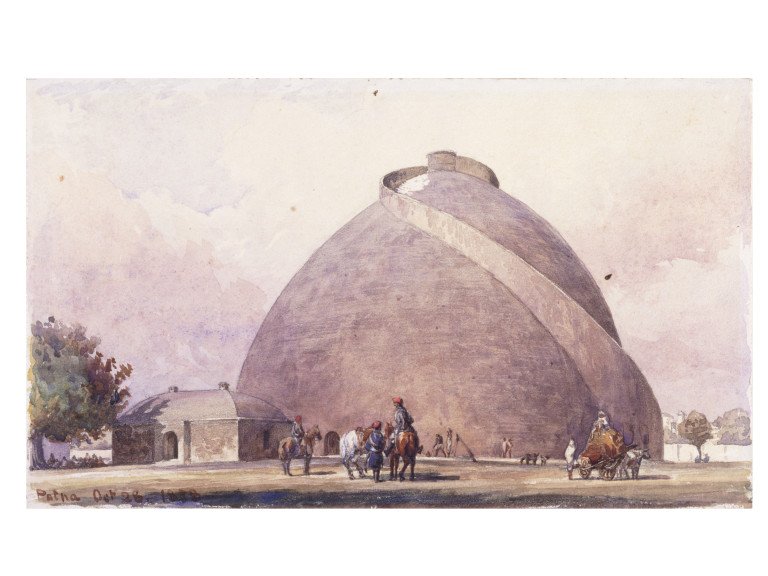
About Kesaria Stupa
Kesaria Stupa is a massive brick structure rising 104 feet (32 meters) above the surrounding plains, with a circumference of over 400 feet (122 meters). Built in multiple phases from the 3rd century BCE through the Gupta period, it is considered the largest excavated stupa in the world. The stupa’s multi-terraced circular design, decorative cell shrines, and association with the Buddha’s final teachings make it a focal point on the Bodh Circuit pilgrimage trail (eastchamparan.nic.in).
Historical Background
Origins and Buddhist Connections
The site of Kesaria is steeped in Buddhist lore. According to tradition and Buddhist canonical texts, this was Kessaputta, where the Buddha—on his last journey—spent a night and delivered the Kalama Sutta, advocating rational inquiry. Here, he is said to have given his alms bowl to the Licchavis of Vaishali, symbolizing renunciation and impermanence (bodhibihar.com). The original stupa was likely constructed in the 3rd century BCE, possibly under the Mauryan Empire.
Ashokan Patronage and Gupta Architecture
Emperor Ashoka, renowned for his pivotal role in spreading Buddhism, is credited with expanding the stupa. The structure’s current form, however, mainly reflects Gupta-era (4th–6th centuries CE) architectural innovation. The stupa features six receding terraces, each adorned with cell shrines and Buddha images in various mudras, set within a robust brick framework (incredibleindia.gov.in).
Rediscovery and Archaeological Significance
Following the decline of Buddhism, the stupa was gradually forgotten and became overgrown, locally known as “Raja Ben ka Deora.” Rediscovered and excavated in the late 20th century by the Archaeological Survey of India (ASI), it was revealed to be taller than even the famed Borobudur in Indonesia. The ASI’s ongoing conservation efforts have restored much of the monument’s grandeur, though areas remain under excavation and restoration (eastchamparan.nic.in).
Visitor Information
Location and How to Reach
- Address Kesariya Road, Tajpur Deur, East Champaran, Bihar 845424
- By Air Jay Prakash Narayan International Airport, Patna (~120 km)
- By Rail Chakia Railway Station (~23 km); Patna Junction for major connections
- By Road Well-connected via state highways and local roads from Patna, Motihari, and Chakia. Taxis and buses are readily available (Native Planet).
Visiting Hours and Entry Fees
- Opening Hours
- Most sources: 7:00 AM to 5:00 PM
- Some sources mention: 5:00 AM to 6:00 PM
- Best to visit during daylight hours for safety and optimal experience (CityBit; Thrillophilia)
- Entry Fee
- Most current sources: Free for all visitors
- Donations welcome for conservation (Kesariadham)
Facilities and Accessibility
- On-Site Amenities
- Basic restrooms and shaded areas
- Limited refreshment options—carry your own water and snacks
- Accessibility
- The monument has uneven pathways and steps, making it challenging for visitors with mobility issues. No dedicated wheelchair ramps are currently available
- Comfortable footwear and sun protection are recommended (Native Planet)
Travel Tips
- Best Season October to March (cool, dry weather)
- Avoid April to June (hot), July to September (monsoon, slippery)
- Dress Code Modest, comfortable clothing
- Sun Protection Hat, sunglasses, sunscreen
- Photography Permitted and encouraged, especially at sunrise/sunset
- Safety Exercise care during monsoons due to slippery terrain (Kesariadham)
Cultural, Religious, and Architectural Significance
Kesaria Stupa is revered as the location of Buddha’s final teachings and a major stop on the Bodh Circuit. Its scale and design exemplify Mahayana Buddhist architecture, and its multi-terraced, cell-shrine layout is unique among Indian stupas. The site has historically attracted pilgrims from across Asia and continues to be a living center of devotion, especially during Buddha Purnima and other Buddhist festivals.
The stupa’s construction reflects centuries of religious patronage, syncretic traditions, and artistic achievement. Inscriptions, sculptures, and relics unearthed at the site confirm its long-standing religious significance and cross-cultural connections—echoes of which are found in the design of Borobudur in Indonesia (academia.edu).
Ongoing conservation by the ASI and involvement of local communities ensure the stupa’s preservation for future generations.
Nearby Attractions
- Vaishali Ancient Buddhist and Jain pilgrimage center, 40 km away
- Nalanda and Rajgir Sites of ancient Buddhist universities and monastic complexes
- Sitamarhi Legendary birthplace of Sita
- Patna State capital, home to several museums and historical landmarks
- Valmiki National Park For nature and wildlife enthusiasts
Frequently Asked Questions (FAQ)
Q1: What are the Kesaria Stupa visiting hours?
A1: Generally open from 7:00 AM to 5:00 PM. Check local sources for seasonal variations.
Q2: Is there an entry fee?
A2: No, entry is free for all visitors. Donations are welcome.
Q3: Are guided tours available?
A3: No official tours, but local guides can be hired at the entrance.
Q4: Is the site wheelchair accessible?
A4: Accessibility is limited due to uneven pathways and steps.
Q5: What is the best time to visit?
A5: October to March, when the weather is cool and dry.