Place
Kazipet
India Updated Apr 2026
The first thing you’ll notice in Kazipet is the deep, resonant clang of steel being shunted on rails, a sound that has defined this place for over a century. This is not a city of postcard monuments, but a living junction—one of South Central India’s vital railway hearts—where the scent of coal dust and simmering chai hangs in the air. To visit Kazipet, India, is to understand the tri-city soul of Warangal: it’s the gritty, humming gateway to the serene, UNESCO-listed wonders of the Kakatiya dynasty that lie just beyond its station walls.
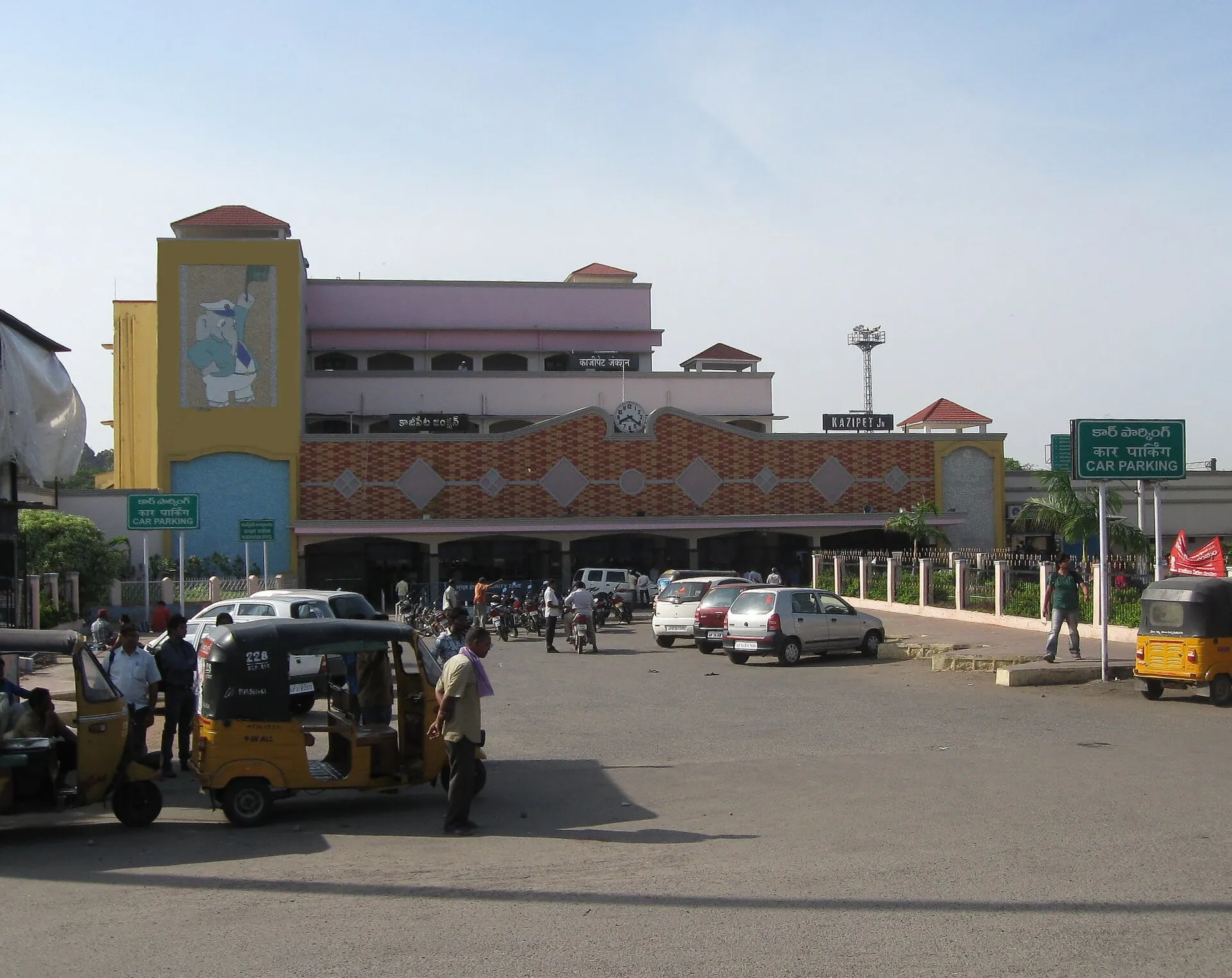 Photo: Nikhilb239 · CC BY-SA 3.0
- Attractions
- 5
- Audio
- 18 min
- Trip length
- 2 days
- Best season
- Winter (November-February)
Why Kazipet
Built from cited sources · see the method · How we make our guides →
Kazipet’s identity is inextricably linked to its railway junction, a sprawling network of tracks where long-distance expresses from Delhi and Chennai sigh to a halt. Yet, step away from the platform cacophony and you’ll find layers that most transit hubs lack. Follow the scent of jasmine and sandalwood uphill to the Bhadrakali Temple, where the fierce goddess gazes over a placid lake that turns molten gold at sunset. Or seek out the quiet, rhythmic chants at the local Mettu Gutta temple, a hillock sanctuary where the city’s noise fades to a distant murmur. This is a place of profound contrasts: the secular, mechanical pulse of the railways coexists with deep spiritual currents, from ancient Hindu sites to the revered Kazipet Dargah, a Sufi shrine that adds a quiet layer of mysticism to the urban fabric.
Think of Kazipet as your base camp for exploration. Its genius lies in its connectivity. From here, you can launch into the core of Telangana’s heritage within minutes: the awe-inspiring, geometrically perfect Thousand Pillar Temple in Hanamkonda, the colossal ruined gateways of Warangal Fort, and the exquisite dance of carved nymphs on the walls of the Ramappa Temple, a 70-kilometer journey to a UNESCO site that rewards every bump in the road. In Kazipet, you sleep to the lullaby of train whistles, ready to wake and decipher the stone scriptures of an empire that once ruled from these very lands.
The Junction's Pulse
Kazipet Junction is the city's beating heart, a historic railway hub where the rhythm of arriving and departing trains has defined the local tempo for over a century. The air hums with announcements and the scent of chai, a constant reminder that this is a place of movement and connection.A Sufi & Shiva Tapestry
The city's spiritual character is woven from distinct threads: the serene, local Mettu Gutta Sri Ramalingeshwara Temple offers quiet hilltop views, while the Kazipet Dargah connects you to the Sufi legacy of Syed Shah Afzal Biabani, a layer of history often missed in the broader Warangal narrative.Gateway to Kakatiya Glory
Kazipet is your practical basecamp for exploring the Kakatiya dynasty's UNESCO-listed wonders. From here, the Thousand Pillar Temple and the iconic Warangal Fort toranas are a short ride away, with the sculptural masterpiece of Ramappa Temple a compelling day trip.Sunrise at Bhadrakali
Just a few kilometers from the station, Bhadrakali Lake is a mirror for the sky at dawn, with the ancient hilltop temple casting a long shadow. It’s the closest place to feel the region’s deep history before the city fully wakes.
Places to Visit
Not every monument, just the ones we'd walk you past ourselves.
- Bhadrakali Temple Nestled in the heart of Kazipet, Telangana, the Bhadrakali Temple is a remarkable testament to India's rich cultural and spiritual heritage.
- Warangal Zoo Kakatiya Zoological Park, situated in the vibrant town of Kazipet, India, is a sanctuary for wildlife enthusiasts and nature lovers alike.
- Kazipet Swetharkamoola Ganapathi Temple Nestled in the vibrant town of Kazipet within the Warangal district of Telangana, the Kazipet Swetharkamoola Ganapathi Temple stands as a unique spiritual…
Neighborhoods
Where to wander, by quarter — each with its own rhythm.
Kazipet Junction & Station Area
This is the city's throbbing core, a landscape defined by steel, steam, and constant motion. The station itself, a major junction since the early 20th century, is a spectacle of Indian travel—vendors call out, families bundle onto sleeper cars, and the air vibrates with departure announcements. Just outside, the streets are a dense ecosystem of lodges, Irani cafes with strong, sweet tea, and practical shops catering to travelers. It’s less a neighborhood to sightsee and more one to feel the relentless, productive energy of a working railway town.Bhadrakali Temple & Lake Precinct
Perched on a hillock between Kazipet and Warangal, this area offers a complete sensory shift. The approach is lined with stalls selling bright marigold garlands and miniature terracotta horses as offerings. At dawn, the still waters of Bhadrakali Lake perfectly mirror the temple's red and white *gopuram*, while evenings see the stone warmed by the last light and filled with the low hum of prayers. It’s a place of quiet contemplation and stunning vistas, where the urban sprawl below seems to dissolve into the horizon.Mettu Gutta (Sri Ramalingeshwara Temple Area)
A more local and intimate counterpoint to the major temples, this hillock neighborhood around the Ramalingeshwara Temple is where Kazipet residents come for evening walks and quiet devotion. The climb is gentle, rewarded by breezes and a panoramic, slightly hazy view of the tri-city. The temple itself is simpler, its white walls glowing in the late afternoon sun. You come here not for architectural grandeur, but for the feeling of community and the simple pleasure of watching kites circle above the rooftops.Dargah Area (Syed Shah Afzal Biabani Shrine)
This neighborhood holds Kazipet’s Sufi heart. The atmosphere here is distinct—softer, infused with the scent of roses and incense rather than engine oil. The dargah is a place of peaceful convergence, where the city’s Muslim community and spiritual seekers gather. The narrow lanes surrounding it feel removed from the railway’s haste, lined with small shops selling prayer beads and embroidered cloth. It’s a essential visit to understand the layered spiritual fabric that weaves through Kazipet’s otherwise pragmatic identity.
Plan your trip
Before you go
- Getting There
- The primary air gateway is Rajiv Gandhi International Airport (HYD) in Hyderabad, 150 km away. Kazipet Junction railway station is the major rail hub, connecting directly to Hyderabad, Chennai, and Delhi. National Highway 163 runs through the tri-city, linking it to Hyderabad and Karimnagar.
- Getting Around
- The tri-city is navigated via auto-rickshaws and city buses; there is no metro. For exploring the wider region, hire a car and driver for the day (approx. ₹2500-3500 in 2026) to reach Ramappa Temple. The local tempo is set by the constant flow of people around the railway junction.
- Climate & Best Time
- Summers (Mar-Jun) are hot and dry, with temperatures often exceeding 40°C. The monsoon (Jul-Sep) brings heavy, humid rains. The ideal window is October to February, when days are sunny and warm (20-30°C) and nights are crisp, perfect for temple-hopping.
- Language & Currency
- Telugu is the local language, but Hindi and English are widely understood in the tri-city, especially around the station and tourist sites. The currency is the Indian Rupee (₹). Cash is king for auto-rickshaws and small vendors, though card payments are accepted at larger hotels and restaurants.
Who lived here
-
Sufi Saint · unknown
Syed Shah Afzal Biabani
Dargah located here
His legacy imbues Kazipet with a quiet Sufi spirit often overshadowed by the grand Kakatiya Hindu temples nearby. Today, his dargah offers a contemplative counterpoint to the region's monumental stone, a place where devotion feels personal rather than imperial.
Where to Eat
Where locals actually book dinner — not the tourist menus.
Insider tips
Small things that change how the city treats you.
Use the Junction
Kazipet Junction is your practical gateway. Book trains arriving here to avoid extra travel; the station is a major hub with frequent connections to Hyderabad and beyond.Sunrise at Bhadrakali
The best light for Bhadrakali Temple and its lake is early morning. Arrive before 7 AM to watch the sun wash the hillock temple in gold, before the heat and crowds build.Think Tri-City
Plan your day as Warangal-Hanamkonda-Kazipet. Kazipet is your base; major Kakatiya sights like Thousand Pillar Temple and Warangal Fort are a short taxi ride away.Day Trip for Ramappa
Reserve one full day for Ramappa Temple, 70 km from Warangal. Hire a car for the UNESCO-listed site; the sculpted dancers and floating bricks deserve unhurried photography.Find the Sufi Layer
Seek out the Kazipet Dargah for a quieter spiritual counterpoint to the grand Kakatiya temples. It’s a local character hook many broader guides miss.
Frequently asked
Is Kazipet worth visiting?
Yes, but as a strategic hub. Kazipet itself is a railway junction; its value is as your gateway to the tri-city's Kakatiya marvels like Thousand Pillar Temple and the UNESCO site Ramappa Temple.
How many days should I spend in Kazipet/Warangal?
Two days is ideal. Day one: Kazipet's Bhadrakali Temple and Hanamkonda's Kakatiya sights. Day two: a full day trip to Ramappa Temple. Kazipet's station makes this efficient.
What is the best way to get around Kazipet and Warangal?
Use Kazipet Junction for regional trains. For local sights, hire a taxi or auto-rickshaw; distances between the tri-city attractions are short but walking between them is impractical.
Is Kazipet safe for solo travelers?
Generally yes, especially around major sights and the station. Exercise standard city precautions at night. The area is well-traveled by pilgrims and tourists, fostering a welcoming atmosphere.
What are the must-see attractions near Kazipet?
Bhadrakali Temple and Lake are closest. Then, Thousand Pillar Temple and Warangal Fort in Hanamkonda. The highest-value trip is Ramappa Temple, a 70km journey for UNESCO-level sculpture.
All Places to Visit.
3 places to discover
Pick up where you left off
Saved and recently read places — kept on this device only.
Photo credits (1)
- Main entrance Kazipet — Nikhilb239 — CC BY-SA 3.0 (https://creativecommons.org/licenses/by-sa/3.0/) — Source: https://commons.wikimedia.org/wiki/File:Main_entrance_Kazipet.JPG
Photos may have been resized or cropped.