Destinations India Karunagappalli

Karunagappalli.

9° N · 76° E India

Karunagappalli is a town that smells of wet coir rope and jasmine, where the sound of chisels shaping houseboat hulls echoes across the backwaters. This is not the Kerala of postcards but its working heart, a place where spirituality is measured in mud and devotion finds its form in a temple with no walls. Here in India’s southwestern pocket, the line between sacred and mundane dissolves into the same brackish water that nourishes the mangroves.

Listen to the guide — 47 min Open the map
Karunagappalli, India
Karunagappalli · India
8
attractions
2-3 days
days suggested
November to February (post-monsoon)
best season
EN · EN
narration

01 An introduction

synthesized from 240+ sources ·

KKarunagappalli is a town that smells of wet coir rope and jasmine, where the sound of chisels shaping houseboat hulls echoes across the backwaters. This is not the Kerala of postcards but its working heart, a place where spirituality is measured in mud and devotion finds its form in a temple with no walls. Here in India’s southwestern pocket, the line between sacred and mundane dissolves into the same brackish water that nourishes the mangroves.

The town’s true currency is craft—specifically, the ancient art of building kettuvallam, the elegant, curved houseboats that ply these waters. Walk the yards at Alumkadavu and you’ll hear the syncopated tap-tap of mallets as artisans stitch planks together with coir, a technique unchanged for centuries. The air is thick with the scent of jackwood and coconut husk. This isn’t performance; it’s a living, breathing industry where every boat is a promise of someone’s journey.

Then there’s the spiritual counterpoint, just a few kilometers away at Oachira. The Parabrahma Temple has no idol, no sanctum sanctorum—just 36 acres of open ground where the divine is understood as the sky above and the earth below. It’s a concept so radically simple it disarms. Come during the Oachirakkali festival in mid-June, and that same ground becomes a stage for a spectacular, muddy mock battle, a ritual where men wrestle not for victory but for tradition, their bodies caked in earth as an offering.

Budget Friendly Photography Hotspot

02 Why Karunagappalli.

What makes this place worth slowing down for.

The Birthplace of Houseboats

At Alumkadavu, the air smells of coir rope and curing wood. This is where Kerala's iconic kettuvallam houseboats are still built by hand, their skeletons curving against the sky before they slip into the silent backwaters.

The Temple with No Walls

Oachira Parabrahma Temple is a radical act of faith: a sacred grove with no idol, no roof, and no closed doors. Worship here is directed at the sky and the banyan trees, a belief so vast it needs no architecture to contain it.

The Muddy Mock Battle

If you're here in mid-June, you'll witness Oachirakkali—a ritual where men, bare-chested and smeared with turmeric, stage a fierce, muddy battle in a paddy field. It's less a performance and more a physical prayer for harvest and valor.

The Mangrove Labyrinth

Ayiramthengu is a world of tangled roots and scuttling crabs, accessible by a narrow footbridge. The light here is dappled and green, the silence broken only by kingfisher dives—a stark, beautiful contrast to the open backwaters.


03 Places to Visit.

Not every monument, just the ones we'd walk you past ourselves.

Editor's pick
01 · Place

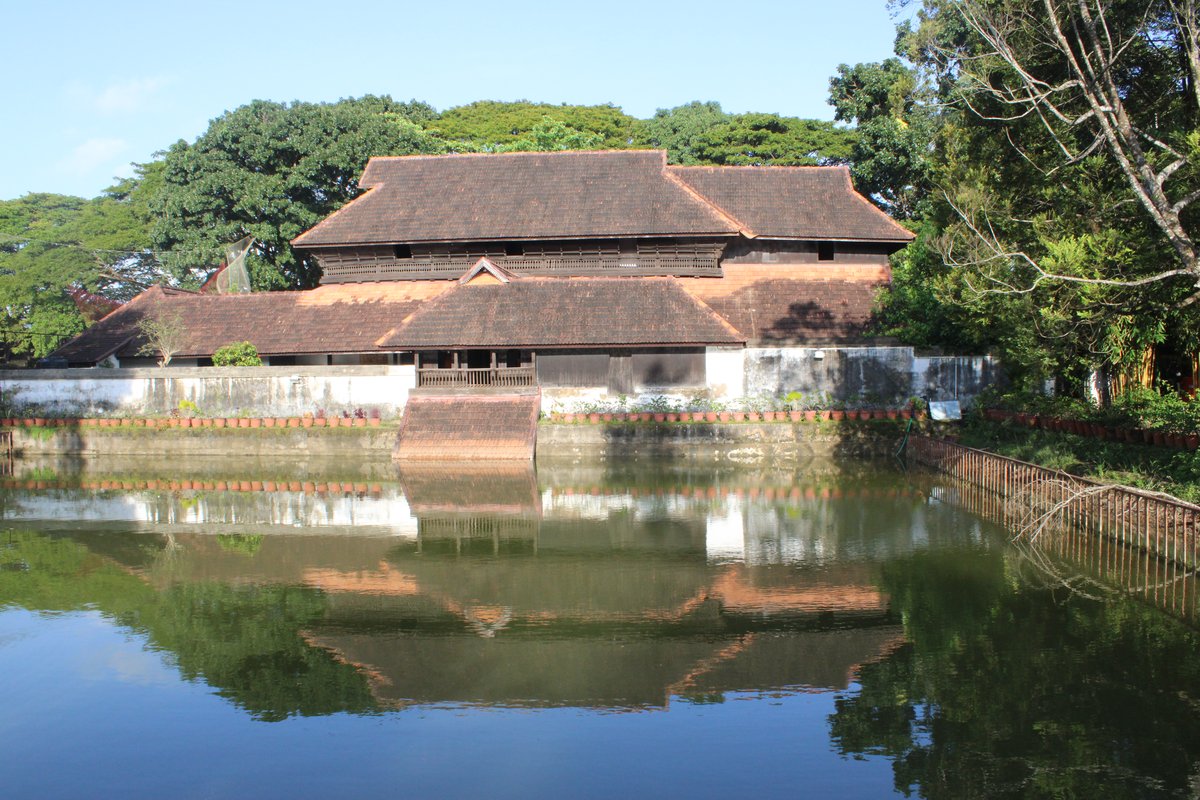
Krishnapuram Palace

Nestled in the serene town of Karunagappalli, Kerala, Krishnapuram Palace stands as a beacon of architectural splendor and historical significance.

Kovilthottam Lighthouse
02 Place

Kovilthottam Lighthouse

Nestled along the picturesque southwestern coast of India, the Kovilthottam Lighthouse in Karunagappalli, Kerala, stands as a beacon of maritime heritage and…

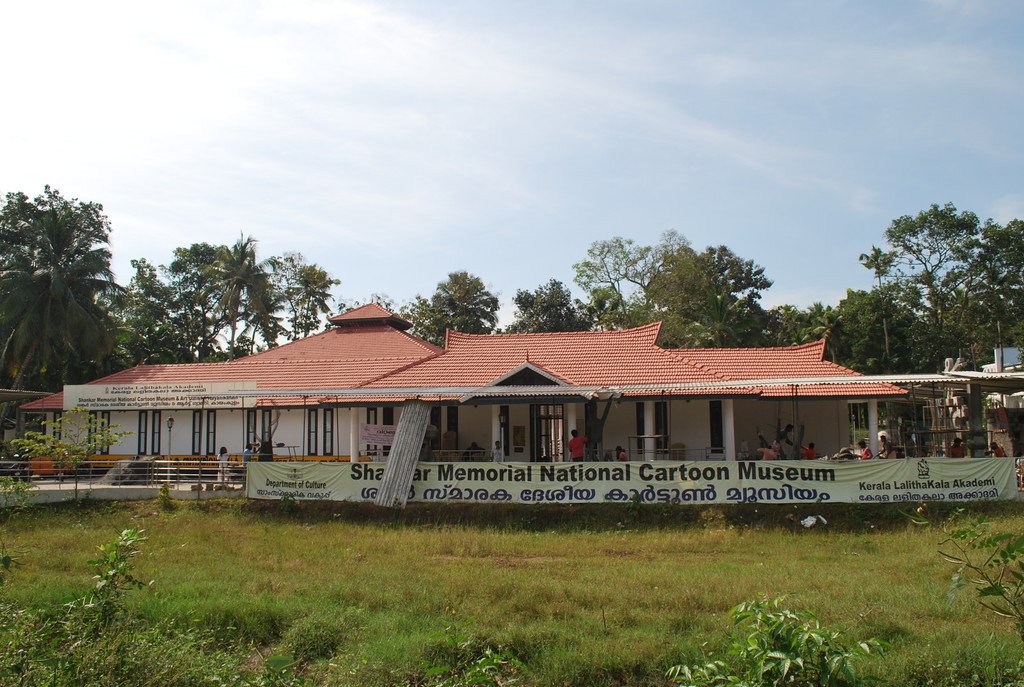
Shankar Memorial National Cartoon Museum & Art Gallery
03 Place

Shankar Memorial National Cartoon Museum & Art Gallery

Welcome to an in-depth exploration of the Shankar Memorial National Cartoon Museum and Art Gallery in Karunagappalli, India.

All 3 places in Karunagappalli

04 Neighborhoods.

Where to wander, by quarter — each with its own rhythm.

01

Alumkadavu

This is the soundscape of Karunagappalli: the rhythmic hammering from open-sided sheds where kettuvallam houseboats are born. Alumkadavu isn’t a curated tourist village but a functioning boatyard, where the air smells of hot coir and seasoned wood. Visitors come to see the craftsmanship firsthand, to arrange a backwater cruise from its source, or simply to watch skeletal hulls slowly take shape against a backdrop of still, green waterways.

02

Oachira

A spiritual district defined by absence. The vast, open grounds of the Parabrahma Temple—with no central shrine—create a unique atmosphere of silent contemplation under a huge banyan tree. The energy shifts dramatically during festivals: in June, the Oachirakkali mock battle turns the earth into a ritual arena, while during Onam, the Kalavela procession features towering, elaborately decorated bull effigies. It’s a place where faith is performed, not just housed.

03

Azheekal / Alappad Peninsula

Where the land frays into the Arabian Sea. This is a working coastline of wide, grey-sand beaches, concrete breakwaters, and the occasional fishing boat pulled ashore. Come for the vast, uninterrupted sunsets and the simple pleasure of a fresh coconut from a stall. The light here has a particular, fading quality, turning the world sepia as the day ends. It’s scenic, but unvarnished and beautifully so.

04

Amritapuri Ashram, Vallikavu

A self-contained universe of devotion and service. The ashram functions as a small, bustling city centered around the teachings of Amma, with a constant flow of international visitors and residents. The atmosphere is one of purposeful calm, punctuated by chanting, community meals, and volunteer work. It’s less a neighborhood to tour than one to experience, whether you stay for a day or a month.

05

Ayiramthengu

A hidden ecological pocket, where a narrow access bridge leads you into a different world. The mangrove forest here is a tangle of aerial roots and soft, peaty silence, broken by the scuttle of crabs and the calls of kingfishers. It’s a place for slow, observant walks, a sharp contrast to the open waters and busy yards elsewhere—a reminder of the delicate ecosystems that underpin this entire waterscape.

06

Kattil Mekkathil Temple Area

A devotional landscape carved by water. The temple itself sits on a small island, accessible only by boat, creating a sense of secluded pilgrimage. The journey there, across a channel that separates the sea from a canal, is as much a part of the experience as the destination. It’s atmospheric and slightly wild, appealing to those drawn to the quieter, more ancient threads of Kerala’s spiritual tapestry.

08 Where to Eat.

Where locals actually book dinner — not the tourist menus.

KERALA VEG CAFE KERALA VEG CAFE
Local favorite €€

KERALA VEG CAFE

5 View
The Alchemist (Tea Shop & Cycle Hub) The Alchemist (Tea Shop & Cycle Hub)
Cafe €€

The Alchemist (Tea Shop & Cycle Hub)

4.9 View
HAP daily HAP daily
Quick bite €€

HAP daily

5 View
Chakkalayil Bakery Chakkalayil Bakery
Quick bite €€

Chakkalayil Bakery

4.8 View
VASUNTE JUICE KADA VASUNTE JUICE KADA
Quick bite €€

VASUNTE JUICE KADA

5 View
Al RABI RESTAURANT Al RABI RESTAURANT
Local favorite €€

Al RABI RESTAURANT

5 View

09 Insider tips.

Small things that change how the city treats you.

Plan for Festivals

If you can, time your visit for the Oachirakkali festival (June 15-16, 2026) to see the muddy mock battle, or the Oachira Kalavela bull processions during Onam. These are the moments when local culture is most vividly on display.

Book Houseboats Early

Alumkadavu is a prime houseboat-building hub. For the best experience, book a backwater cruise directly with a local yard well in advance, especially during peak season (November-February).

Embrace the Mud

The Oachirakkali festival involves a ritual battle in a muddy field. If you attend, wear clothes you don't mind ruining and be prepared for a uniquely visceral, participatory spectacle.

Seek Hidden Mangroves

For a quiet escape, head to the Ayiramthengu mangrove conservation area near Oachira. It's a narrow, ecological walkway perfect for spotting crabs and birdlife away from the main tourist trails.

Ashram Etiquette

If visiting Amritapuri Ashram, dress modestly and observe silence in designated areas. It's a working spiritual community, not just a tourist site—check their website for visiting hours and darshan times.

Visit Azheekal at Sunset

Azheekal Beach is best experienced in the late afternoon for spectacular sunsets. The wide shore and breakwaters create dramatic silhouettes, and local food stalls offer simple, budget-friendly snacks.

12 Frequently asked

Is Karunagappalli worth visiting?

Yes, if you seek authentic Keralan culture beyond the major cities. Its value lies in unique spectacles like the idol-less Oachira Temple and the Oachirakkali mud festival, the working houseboat yards of Alumkadavu, and the serene mangroves and beaches that feel undiscovered.

How many days should I spend in Karunagappalli?

2-3 days is ideal. This allows a day for the backwaters and houseboats at Alumkadavu, a day for Oachira Temple and nearby cultural sights, and a third day for Amritapuri Ashram or a coastal trip to Azheekal Beach.

What is the best way to get around Karunagappalli?

Hire an auto-rickshaw for local trips or a taxi for a full day. Distances between attractions like Alumkadavu, Oachira, and Azheekal are short but not easily walkable. For a more immersive experience, consider renting a scooter if you're confident.

Is Karunagappalli safe for solo travelers?

Yes, it's generally safe. Exercise standard precautions, especially after dark in isolated areas. The presence of Amritapuri Ashram attracts many international solo visitors, contributing to a welcoming and secure atmosphere.

What is the cost of a houseboat ride in Alumkadavu?

A half-day backwater cruise typically costs between ₹3,000 to ₹6,000 INR for a small group, depending on the boat's size and amenities. Prices are lower here than in more commercialized hubs like Alleppey.

Ready to book?

13Before you go

Practical Information

Flight

Getting There

The nearest major airport is Trivandrum International (TRV), about 75km south. Karunagappalli itself has a railway station on the Kollam-Thiruvananthapuram line, connecting it directly to these cities. National Highway 66 (the coastal road) runs right through town.

Directions transit

Getting Around

There's no metro. Local transport is a mix of state-run KSRTC buses, private buses, and auto-rickshaws for short hops. For true exploration, hire a car and driver for the day or negotiate a rate with an auto-rickshaw to visit dispersed sites like Alumkadavu and Oachira.

Thermostat

Climate & Best Time

Temperatures hover between 23°C and NA°C year-round, but the heavy Southwest monsoon (June-September) brings relentless rain. The ideal window is October to March—cooler, drier, and perfect for backwater cruising. Align with Oachirakkali in June if you want the festival mud.

Translate

Language & Currency

Malayalam is the local tongue, though you'll manage with English in tourist spots and at the ashram. The currency is the Indian Rupee (INR). Carry cash for small vendors and rickshaws; cards are accepted at larger hotels and the Amritapuri campus.

Shield

Safety & Sensibility

This is a generally safe, conservative region. At temples and the ashram, dress modestly (covered shoulders and knees). At Azheekal Beach, heed red flag warnings—the surf can be strong. Drink bottled water and embrace the slow, non-urban pace.

Take Karunagappalli with you

47 minutes of Karunagappalli,
downloaded once.

3 places, one continuous walking route. Free with your first city.

Get this guide on the app Open in browser

All Places to Visit.

3 places to discover

Place

Krishnapuram Palace

Kovilthottam Lighthouse
Place

Kovilthottam Lighthouse

Shankar Memorial National Cartoon Museum & Art Gallery
Place

Shankar Memorial National Cartoon Museum & Art Gallery