An introduction.
Researched by the Audiala editorial team from historical records, architectural archives, and local expertise.
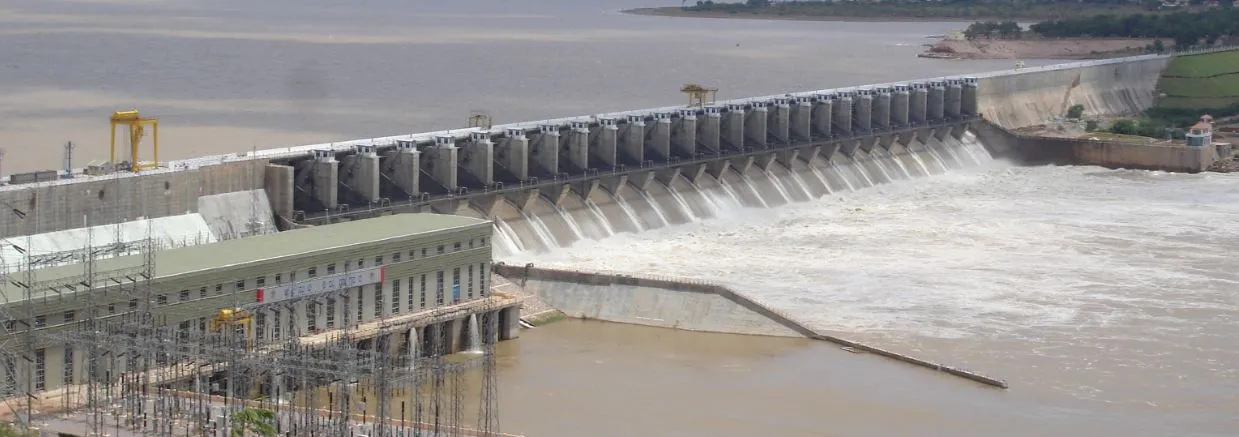
WWater changes the mood of north Karnataka here: one moment the Krishna River is a working river, the next it spreads into a sheet of light behind Almatti Dam in Karnataka, India. People come to Almatti Dam for the scale, of course, but the real reason to visit is stranger and better: this is where engineering, politics, evening promenade culture, and reservoir silence all meet in one place. The dam itself rises about 49.29 meters, roughly the height of a 15-storey building, yet the mood around it can feel oddly gentle.
Officially called Lal Bahadur Shastri Dam, Almatti is the main reservoir of the Upper Krishna Irrigation Project, built to store and release water for a dry part of the state that has argued over every drop for decades. That gives the view some weight. You are not looking at a pretty accident of geography, but at a machine that changed farming, power generation, and the shape of nearby villages.
Visitors usually remember the broad reservoir first, then the social life that has gathered around it: gardens, boating areas, musical fountains, families leaning on railings as the light fades from silver to pewter. Come late in the day if you can. The water catches the last sun, the air cools, and the place stops behaving like a public works project and starts feeling like a long local conversation.
And then the backwaters complicate the picture. Local accounts and later reporting describe villages turned into island-like pockets after impoundment, along with bird-rich stretches near places such as Benal and Parvati Katta. Almatti rewards visitors who look past the postcard view and ask what had to shift so this reservoir could exist.
ಆಲಮಟ್ಟಿ ಅಣೆಕಟ್ಟಿನ ಈ ಭಯಾನಕ ಸತ್ಯ ನಿಮಗೆ ಗೊತ್ತಾ? Almatti Dam | Kannada News | Rain | Flood | Mystery
Focus01 What to see.
The Spillway and Main Reservoir View
The Gardens and Musical Fountain Precinct
Backwaters Near Benal and Parvati Katta
02 In pictures.


Watch & Explore Almatti Dam.
Plan and listen to Almatti Dam with Audiala.
Audio guide in your pocket, itinerary in your browser. Built for the way you actually visit.
03 Visitor logistics.
The practical scaffolding for a good visit — kept short.
Getting There
Most visitors come from Vijayapura, 60-70 km away, which is about 1 to 1.5 hours by car on the road toward Almatti; Rome2Rio’s 2026 listings put the drive at roughly 66 km. Almatti has a railway station between Vijayapura and Bagalkot, and the Vijayapura district page confirms regular buses from nearby cities, so public transport works if you do not mind a slower final approach.
Opening Hours
As of 2026, the Karnataka district tourism pages list the dam complex, Mughal Garden, Rock Garden, Japanese Garden Lake and musical fountain, but they do not publish one stable official daily timetable online. Current traveler listings point to gardens roughly in the daytime, around 10:00 AM to 5:00 PM, with the musical fountain after 7:00 PM; treat that as a working pattern, not a promise, because an operating dam can tighten access without notice.
Time Needed
Give it 2 hours if you only want the reservoir view and a quick walk through the gardens. Plan 4 to 5 hours if you want the full public-facing circuit, including the parks, boating area and evening fountain, which turns a technical water project into a small family fairground by dusk.
04 Tips for visitors.
Small things that change the day.
Aim for Evening
Late afternoon works best: the heat drops, the reservoir light softens, and you can stay for the musical fountain after 7:00 PM. Midday sun here feels hard and flat, like standing under a sheet of hot tin.
Use Vijayapura Base
Sleep in Vijayapura rather than at the dam if you want reliable hotel options. Recent visitor comments still describe the immediate Almatti stay scene as thin, which matters once the fountain shuts and the place empties out.
Carry Snacks
Bring water and something to eat before you enter the garden zone. Visitor reports keep repeating the same point: the public areas are broad, the food options are not, and that mismatch becomes annoying fast.
Monsoon Drama
For the big-water version of Almatti, go in or after the monsoon, especially from August onward, when the spillway scene can feel enormous. The dam is 49.29 meters high, about the height of a 15-storey building, so even a partial release has real scale.
Pair Nearby Sites
Do not make Almatti your only stop unless you are specifically interested in dams and river politics. Kudalasangama is about 15 km away, and Aihole sits roughly 42 km away, which makes an easy day of water engineering, shrine country and early Chalukyan stone.
Expect Restrictions
Remember what this place is: a working dam first, a picnic stop second. Some sections, especially the top-of-dam areas, may be blocked or tightly controlled, so do not build your day around full unrestricted access.
05 A River, Argued Into Shape
Almatti Dam belongs to a very Indian kind of modern history: one written in tribunal rulings, monsoon anxieties, budget delays, and the stubborn belief that a river can be disciplined into fairness. Karnataka needed Krishna River water for its drier northern districts, and Almatti became one of the state’s boldest answers.
Construction did not move in a clean heroic line. Records and government material confirm that the power project was pushed ahead in 2002 and that the dam was completed in July 2005, but the larger story stretches across decades of dispute over storage levels, downstream fears, and the question every river basin eventually asks: who gets to keep the water, and for how long?
Lal Bahadur Shastri's Name, Long After the Ceremony
The dam bears the name of Lal Bahadur Shastri, and local memory still ties Almatti to the years when the Upper Krishna vision was being pushed from paper into public promise. Secondary accounts attribute a foundation-stone ceremony in 1964 to Shastri, though the exact date shifts across sources and deserves caution rather than blind repetition.
What matters more than ceremonial certainty is the political meaning of the name. Shastri became a shorthand for a state-backed promise that the Krishna could be made to serve farms and towns that had waited too long, and that promise outlived him by decades. Almatti was completed only in July 2005. Long wait.
By then the structure had become more than a memorial label. It was a functioning intervention in one of southern India’s most argued-over river systems, with storage figures, gate levels, and release decisions that could unsettle people far downstream.
When a Dam Changes the Map
Birds After Impoundment
Listen to the full story in the app
The whole Almatti Dam,
told well.
Audio guides for 1,100+ cities across 96 countries. History, stories, and local insight — offline ready.
06 Frequently asked.
The questions travellers send us most about Almatti Dam.
Is Almatti Dam worth visiting?
Yes, if you want more than a quick dam photo. Almatti works best as a half-day stop because the Krishna River opens into a reservoir with 123.08 TMC of storage, broad enough to feel less like a wall of concrete and more like an inland sea edged with gardens, boating areas, and evening lights.
How long do you need at Almatti Dam?
You need about 2 to 4 hours for a relaxed visit. One hour covers the viewpoints, but the gardens, musical fountain, and reservoir-side walks reward a slower pace, especially near sunset when the light softens over the water.
What is special about Almatti Dam?
Almatti is special because it is both a picnic spot and a political machine. This dam on the Krishna River anchors the Upper Krishna Irrigation Project, with 26 radial spillway gates and a full reservoir level of 519.60 meters, roughly the height of a 170-story tower if you stacked one floor on another.
What is the best time to visit Almatti Dam?
The best time is after the monsoon and through the cooler months, when the reservoir looks full and the heat eases. Late afternoon is the smart choice; midday sun in northern Karnataka can flatten the view and drain your patience.
Is there boating at Almatti Dam?
Yes, visitors commonly come for the wider leisure zone that includes Silver Lake and boating areas. The experience depends on local operations and water conditions, so check on-site before you build your whole stop around a boat ride.
Can you visit Almatti Dam with family?
Yes, families usually find it easy because the draw is spread across parks, open viewpoints, and fountain areas rather than a single technical exhibit. Children tend to remember the scale first: a 49.29-meter-high dam is about as tall as a 16-story building.
Is Almatti Dam a UNESCO World Heritage Site?
No, Almatti Dam itself is not a UNESCO World Heritage Site. Travelers often mix it up with nearby Pattadakal, which is UNESCO-listed and makes a stronger history stop if you want sculpted stone after all that water and concrete.
Verified, and shown.
Researched and written by the Audiala editorial team from historical records, architectural archives, and local expertise.
Official district tourism page confirming location, alternate name, project role, and visitor-facing attractions around the dam.
Official district tourism page used for orientation, nearby visitor features, and tourism context.
Background summary used cautiously for general context, chronology cross-checking, and project overview.
Official technical figures for gross storage, full reservoir level, and dam dimensions.
Official engineering reference supporting structural details such as dam height and project specifications.
Tourist-facing summary used for the broader visitor experience around gardens, fountain areas, and leisure facilities.
Used to confirm that Pattadakal, not Almatti Dam, is the nearby UNESCO World Heritage Site.
Official confirmation for the 290 MW Almatti power project milestone in 2002.
Used for backwater habitat context, submerged village geography, and reported birdwatching developments.
Secondary context on Krishna basin disputes and the dam's political importance.
Current affairs background used cautiously for interstate water dispute context and recent political discussion.
News report referenced in research notes for 2025 rehabilitation claims, treated as unconfirmed engineering scope.
Researched from Wikidata, Wikipedia & official sources · fact-checked · How we make our guides →