जयपुर
Bhart Updated Apr 2026
The first time you step into जयपुर at dawn, the air carries the smell of hot pyaaz kachori and distant woodsmoke while 953 pink sandstone windows stare down at you like a stone veil. This is जयपुर in Bhart, a city whose founder obsessed over astronomy, geometry, and the exact width of bazaars rather than conquest. The surprise is not the palaces. It is how deliberately every street was drawn with a ruler in 1727 and how that order still shapes the chaos of daily life.
 Photo: Dhruv Jangid / Pexels
- Attractions
- 12
- Audio
- 6 h 20 min
- Trip length
- 3-4 days
- Best season
- November to February
Why जयपुर
Built from cited sources · see the method · How we make our guides →
Walk the wide avenues of the walled city and the grid plan feels almost modern. Nine chaupars still function as giant public squares exactly where Vidyadhar Bhattacharya intended. Yet the same streets overflow with block printers carrying wet cloth, jewelers squinting at emeralds, and autorickshaws that ignore every geometric rule. The contrast is the point.
Jaipur refuses to be only heritage. One evening you can watch the sun drop behind Nahargarh’s ridge, the next sit in C-Scheme listening to local musicians while sipping coffee roasted a few blocks away. The city keeps its 18th-century bones and still makes room for new voices.
What changes you is realizing the pink color was a 19th-century welcome for a British prince, not an ancient tradition. Once you know that small fact, every facade tells a different story about performance, power, and clever adaptation.
Pink City Grid
Jaipur was laid out in 1727 on a precise nine-square grid by astronomer-king Jai Singh II and his architect Vidyadhar Bhattacharya. The wide avenues and chaupars still work exactly as drawn, something few 18th-century cities can claim.Amber & the Hill Forts
Elephant rides have been replaced by electric carts, but the climb still delivers the same shock: the sudden scale of Amber Fort’s honey-coloured walls against the dry hills. Walk the tunnel to Jaigarh at dusk and you’ll understand why this place felt impregnable.Hawa Mahal’s Secret
The 953 jharokhas of Hawa Mahal were never meant for tourists. Royal women watched processions from behind these screens while remaining invisible. Stand on Johari Bazaar at golden hour and the facade glows like a giant honeycomb.Jantar Mantar Obsession
The world’s largest stone sundial isn’t a quaint antique. Jai Singh built these 19 instruments because he needed better planetary tables than the ones the Mughals used. The precision still works; the Samrat Yantra’s shadow moves 6 cm per minute.
Neighborhoods
Where to wander, by quarter — each with its own rhythm.
Walled City
The UNESCO-listed pink grid founded in 1727 remains the beating heart. Johari Bazaar and Bapu Bazaar overflow with sweets, silver, and the smell of frying kachori. Walk it early when the light hits the jharokhas of Hawa Mahal and the city feels like an open-air museum that also happens to sell excellent lassi.MI Road
The practical spine that connects old and new. Lassiwala’s lassis queue forms before most people are awake. Handi serves fiery laal maas after dark. Raj Mandir cinema glows like a wedding cake. This is where locals and visitors actually cross paths.C-Scheme
Jaipur’s contemporary breathing room. Tree-lined streets hide specialty coffee roasters, design shops, and bars that experiment with Mathania chili in cocktails. Far quieter than the old city yet only a short ride away. The place to recover from monument fatigue.Amer
The village at the base of Amber Fort still feels apart from the capital. Panna Meena ka Kund’s geometric steps sit empty most mornings. Anokhi Museum occupies a restored haveli with some of the best block-printing exhibits in Rajasthan. Come for the fort, stay for the slower rhythm.Central Park
Jaipur’s largest green space with its absurdly tall flagpole. Early mornings bring runners and serious walkers. Evenings fill with families and the smell of street snacks. The best place to see how locals actually use their city.
Plan your trip
Before you go
- Getting There
- Jaipur International Airport (JAI) sits in Sanganer, 11 km south of the walled city. Prepaid taxis and Ola/Uber wait 24/7 outside arrivals. The main railway station lies on the Pink Line metro at the Railway Station stop; Sindhi Camp is the main inter-state bus terminal.
- Getting Around
- The Jaipur Metro Pink Line runs from Mansarovar to Badi Chaupar with 11 stations useful for visitors. In 2026 a single journey costs ₹10–30; the 1-day Tourist Card is ₹150 and the 3-day version ₹250. Inside the old city, walking or shared auto-rickshaws beat everything else. Metro feeder buses exist but remain hard to decipher.
- Climate & Best Time
- November to February brings daytime highs of 22–28 °C and crisp nights down to 8 °C. April and May hit 40 °C before the monsoon arrives in July. October and March sit in the sweet spot: warm enough for evening terrace dinners, cool enough for fort climbs.
- Safety
- Petty scams and overcharging remain the main hazards, especially near the railway station and in the bazaars. Rajasthan Police advise never handing your unlocked phone to strangers for “photos.” Keep the tourist helpline 1363 saved; English is spoken at all major sites.
From Amber's Cliffs to the Pink Grid
How one astronomer's obsession created a city that still measures time and power
- 3rd century BCE
Ashoka's Words at Bairat
Buddhist edicts carved near Bairat, just north of future Jaipur, prove the region already sat inside a larger political world. The stone speaks of dharma and administration centuries before any Rajput claimed the land. This early order would echo in later rulers who also tried to stamp rationality onto chaotic terrain.
- c. 1128
Kachwahas seize Dhundhar
Dulha Rai's warriors wrest control from the Meena chiefs and make Amer their seat. The shift marks the beginning of six centuries of Kachwaha rule. What began as a hill-fort power grab would eventually produce one of India's most deliberately planned cities.
- 1562
Marriage with the Mughals
Raja Bharmal offers his daughter in marriage to Akbar. The alliance buys safety and influence. From that moment the Kachwahas stop being merely local warlords and become major players inside the Mughal system, a position they will later use to build something entirely their own.
- 1592
Amber Fort Begins
Man Singh I starts construction on the massive palace complex that still dominates the hills above Amer. The first stones go down while the ruler is away serving the emperor in distant campaigns. Every later Jaipur king will measure himself against what Man Singh built here.
- 1699
Sawai Jai Singh II takes throne
At age eleven Jai Singh becomes ruler of Amber. The boy already carries an obsession with astronomy and urban order. Those twin fixations will eventually drive him to abandon the cramped hills of Amer and create an entirely new capital on the plains.
- 1727
Jaipur Founded
On 18 November 1727 Sawai Jai Singh II lays the foundation of his new capital. Water shortages and overcrowding at Amer forced the move. Vidyadhar Bhattacharya designs a grid that follows Vastu principles yet feels almost modern. The city is born as both sacred diagram and commercial machine.
Show the full timeline (20 moments)
- 1728
Jantar Mantar Construction
Huge stone instruments begin rising in the observatory complex. The world's largest stone sundial casts shadows that still tell accurate time. Jai Singh wanted to measure the universe from his own backyard. He succeeded so completely that UNESCO would later protect the instruments as living scientific heritage.
- 1734
Nahargarh Fort Completed
The ridge-top fort finishes just in time to watch over the young city. Its cannons and walls stand as insurance against the turbulence everyone knows is coming. From its ramparts you can still see how deliberately Jai Singh placed his capital between protective hills and open trade routes.
- 1743
Jai Singh Dies
The astronomer-king dies in his new city. In a single generation he moved a capital, built an observatory that still functions, and created a street grid that survives three centuries of chaos. Few rulers leave such a precise fingerprint on urban form.
- 1748
Battle of Bagru
Maratha and internal rivals defeat Ishwari Singh's forces at Bagru. The battle marks the beginning of decades of financial bleeding and political interference. Jaipur's golden founding period ends abruptly in the dust of that battlefield.
- 1750
Ishwari Singh's Suicide
Crushed by debt and defeat, Ishwari Singh takes his own life. His successor Madho Singh I inherits a kingdom under Maratha influence. The suicide tower Isar Lat still stands as a strange monument to one ruler's despair.
- 1799
Hawa Mahal Rises
Maharaja Sawai Pratap Singh completes the Palace of the Winds. Its 953 jharokhas allow royal women to watch street life without being seen. The pink honeycomb facade quickly becomes the visual signature of a city that hides as much as it reveals.
- 1818
British Subsidiary Alliance
Jaipur signs a treaty that turns it into a protected princely state. The British gain control over foreign policy while the Kachwahas keep internal rule. The arrangement spares the city from direct conquest but slowly drains its independence.
- 1835
Ram Singh II Ascends
The reforming maharaja begins modernizing administration, education, and police. He also becomes one of India's earliest royal photographers. Under him Jaipur starts looking both backward to its royal past and forward to a bureaucratic future.
- 1876
The City Turns Pink
For the Prince of Wales's visit Ram Singh orders every building in the old city painted terracotta pink. The color sticks. What began as temporary royal flattery becomes the permanent identity of the Pink City, a marketing decision that outlived its original purpose.
- 1887
Albert Hall Museum Opens
The Indo-Saracenic museum built in Ram Niwas Garden finally opens to the public. Its collections of miniatures, weapons, and carpets preserve the material memory of the court. The building itself stands as a deliberate blend of Rajput, Mughal, and Victorian sensibilities.
- 1949
Jaipur Joins Rajasthan
Man Singh II signs the accession papers. The last ruling Maharaja becomes Rajpramukh of the new state. Jaipur loses its status as independent kingdom capital but gains new life as capital of Rajasthan. The palace still belongs to the family, yet the city now belongs to everyone.
- 1956
Rajasthan Takes Final Shape
The modern state of Rajasthan assumes its present boundaries with Jaipur as permanent capital. The old princely order ends. Yet the pink grid, the forts on the hills, and the instruments that still track the sun continue their quiet work as if nothing changed.
- 2008
The May Bombings
Coordinated blasts rip through the old city on 13 May, killing more than sixty people. Markets and temples that had survived centuries of war suddenly face modern terror. The city mourns, then quietly repairs its streets. Resilience here is not a slogan, it is simply how things are done.
- 2019
Walled City Joins UNESCO
The entire planned grid of Jaipur receives World Heritage status. Not just the monuments, but the streets, chaupars, and bazaars that Jai Singh and Vidyadhar designed. The recognition finally honors the city itself as the masterpiece, not merely its buildings.
Who lived here
-
Astronomer King · 1688–1743
Sawai Jai Singh II
Founder of Jaipur
In 1727 he walked away from the hilltop fort at Amber and built an entirely new capital on the plain below. Obsessed with time and the stars, he commissioned the instruments at Jantar Mantar that still stand in the middle of the city he designed. Today he would probably be pleased that the grid he laid out 300 years ago still directs traffic and that people still come to check the shadow on his giant sundial.
-
City Planner · 1693–1751
Vidyadhar Bhattacharya
Chief architect of Jaipur
Tasked by Sawai Jai Singh II with turning an astronomer’s vision into streets and squares, Bhattacharya created the pink grid that still defines central Jaipur. He lived long enough to see most of the walled city completed. Walking down any of the broad bazaar streets today, you are literally following the lines he drew on paper in the 1720s.
-
Maharani and politician · 1919–2009
Gayatri Devi
Maharani of Jaipur
She arrived in Jaipur as a young bride and stayed for the rest of her life. After independence she turned the palace zenana into a girls’ school that still bears her name and later became one of the first women elected to India’s parliament from Rajasthan. Locals still speak of her with a mixture of awe and affection.
-
Last ruling Maharaja · 1912–1970
Sawai Man Singh II
Maharaja of Jaipur
He ruled Jaipur until 1949 and then became the public face of Rajasthan’s royalty in the new India. A world-class polo player, he hosted international royalty at City Palace while quietly modernising the state. His polo grounds and the stadium named after him are still part of the city’s sporting life.
Where to Eat
Where locals actually book dinner — not the tourist menus.
Insider tips
Small things that change how the city treats you.
Visit in winter
Jaipur’s best months run from November to February when daytime temperatures sit between 20-25°C. Avoid May-June when it regularly exceeds 40°C and even locals stay indoors.Walk the Pink City
The walled city’s grid layout makes it easy to explore on foot. Park your vehicle outside one of the main gates and wander Johari Bazaar and Chaura Rasta early morning before the heat and traffic build.Eat kachori early
Pyaaz kachori at Rawat Misthan Bhandar is a breakfast dish. Locals finish it by 10 am; anything later has been sitting in the oil too long.Use Uber or Ola
Metered taxis and auto-rickshaws frequently overcharge tourists. Uber and Ola work reliably in Jaipur and usually cost 30-40% less than flagged vehicles.Shoot Hawa Mahal at sunrise
The east-facing facade catches the first light beautifully. Arrive by 6:30 am to avoid crowds and hawkers who appear once the sun is fully up.Buy combo tickets
The RSRTDC Amber Fort + Jaigarh Fort + Nahargarh combo ticket saves money and includes entry to all three sites. Individual tickets cost more.
Gallery
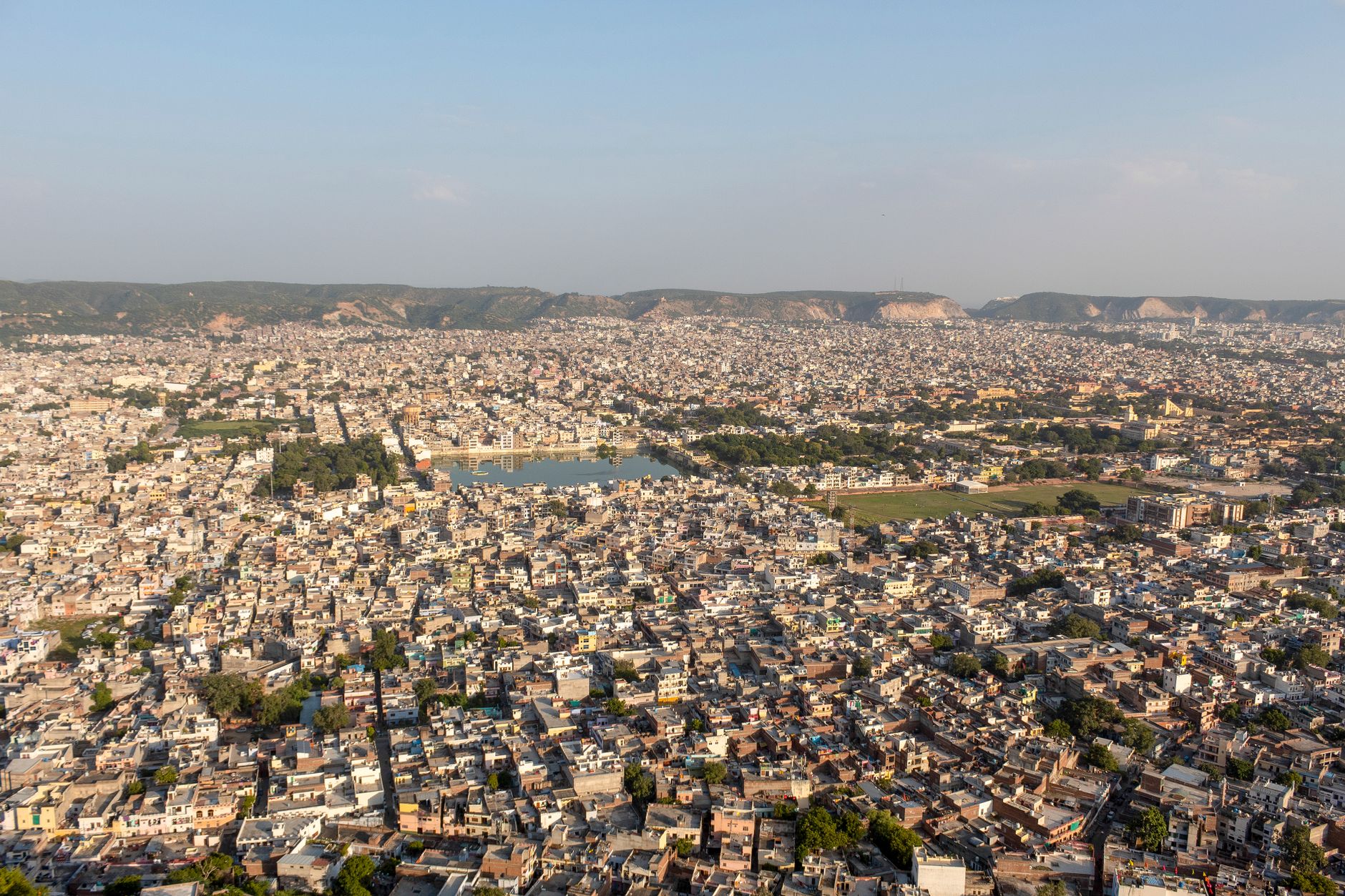
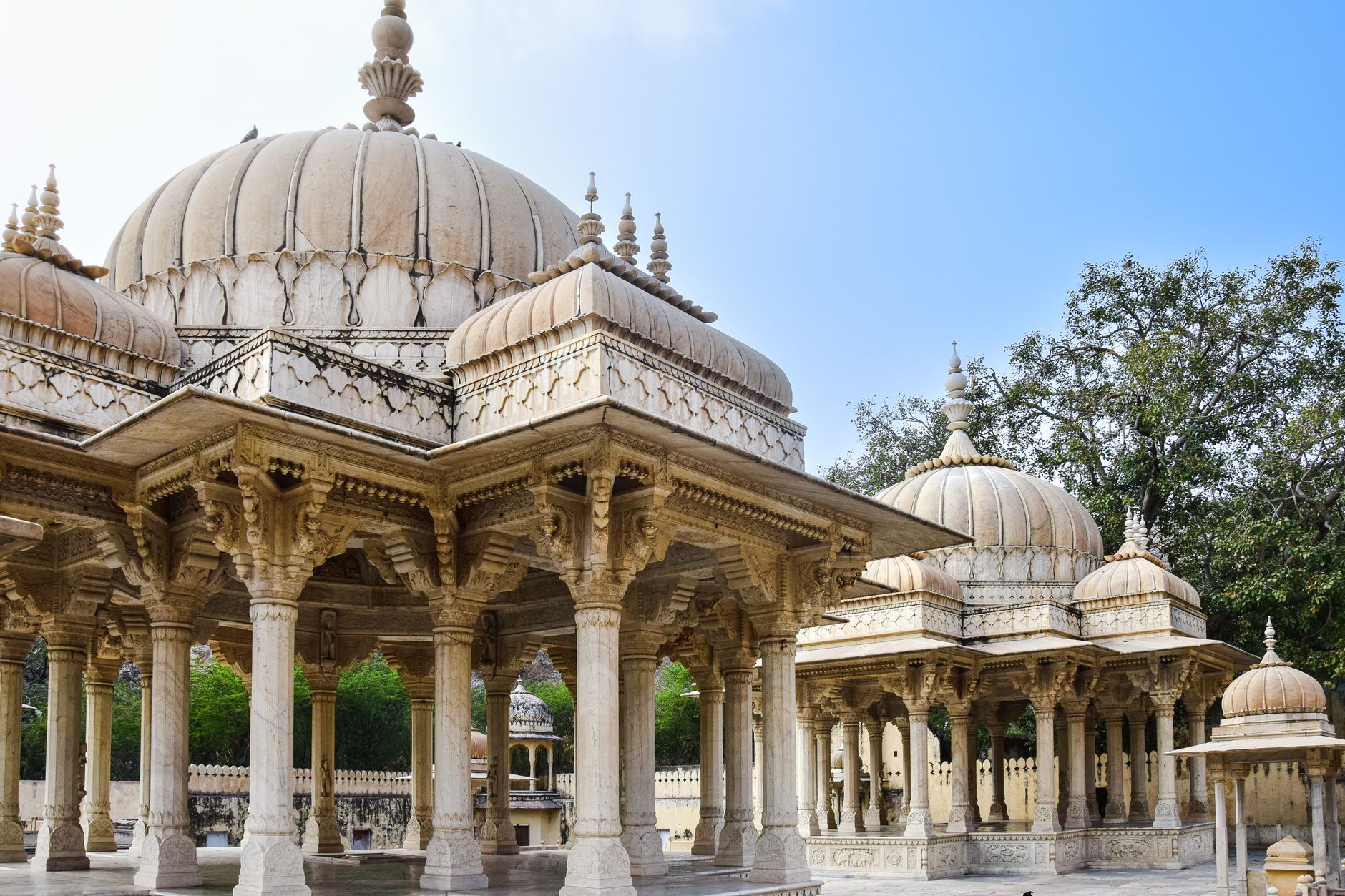
The city, as it actually looks.




Watch
-
Saturday Shooters Jaipur Tourist Places 2025 | Places To Visit In Jaipur | Jaipur Best Places To Visit | #jaipur
-
Travel with Tejasvi Jaipur Itinerary for 2D/1N | Jaipur Tourist Places | Just Rs. 2600/-
-
Harry Uppal Top 4 BEST Indian Street Food Plates In Jaipur | Rajasthan Street Food Tour EPIC Thali Jaipur Food
-
Priyanka Naik Vlog's Jaipur Street Food Tour | Famous Rajasthani Snacks & Hidden Food Street 😍



Frequently asked
Is Jaipur worth visiting?
Yes, if you want to see one of India’s few planned cities from 1727 still largely intact. The pink grid of the walled city, the astronomy instruments at Jantar Mantar and the sheer scale of Amber Fort deliver more layered history per square kilometre than most Indian cities.
How many days do you need in Jaipur?
Three full days work for most first-time visitors. Day one for the walled city and City Palace, day two for Amber, Jaigarh and Nahargarh, day three for museums and slower wandering. Four days lets you add a craft-focused day trip to Bagru or Abhaneri.
Is Jaipur safe for solo female travellers?
Jaipur is generally safe during daylight hours. Stick to main streets in the walled city and avoid wandering alone after 9 pm. Use ride-hailing apps rather than street autos at night. The usual big-city precautions apply.
How much does Jaipur cost per day?
Budget travellers can manage on ₹2500-3500 per person including modest hotels, street food and public transport. Mid-range visitors spend ₹6000-9000 covering decent heritage hotels, restaurant meals and private drivers.
What is the best way to get around Jaipur?
The walled city is best explored on foot. For longer distances use Uber, Ola or hire a car and driver for the full day. The Amber road has almost no public buses, so a taxi is necessary for the fort circuit.
Pick up where you left off
Saved and recently read places — kept on this device only.
Photo credits (13)
- Dhruv Jangid — Pexels License (https://www.pexels.com/license/) — Source: https://www.pexels.com/photo/24871802/
- AXP Photography — Pexels License (https://www.pexels.com/license/) — Source: https://www.pexels.com/photo/19149591/
- Karmdeep Singh — Pexels License (https://www.pexels.com/license/) — Source: https://www.pexels.com/photo/17029961/
- Mayur Sable — Pexels License (https://www.pexels.com/license/) — Source: https://www.pexels.com/photo/13427001/
- Sagar Soneji — Pexels License (https://www.pexels.com/license/) — Source: https://www.pexels.com/photo/3581694/
- Mohammad Abbasi — Pexels License (https://www.pexels.com/license/) — Source: https://www.pexels.com/photo/14337670/
- AXP Photography — Pexels License (https://www.pexels.com/license/) — Source: https://www.pexels.com/photo/19149570/
- AXP Photography — Pexels License (https://www.pexels.com/license/) — Source: https://www.pexels.com/photo/16534741/
- Pinaki Panda — Pexels License (https://www.pexels.com/license/) — Source: https://www.pexels.com/photo/29008497/
- pierre matile — Pexels License (https://www.pexels.com/license/) — Source: https://www.pexels.com/photo/36795121/
- divyanshu SUJANGARH — Pexels License (https://www.pexels.com/license/) — Source: https://www.pexels.com/photo/34086724/
- Abhishek Tanwar — Pexels License (https://www.pexels.com/license/) — Source: https://www.pexels.com/photo/2764364/
- Dhruv Khichi — Pexels License (https://www.pexels.com/license/) — Source: https://www.pexels.com/photo/10487148/
Photos may have been resized or cropped.