Place
India Updated Apr 2026
At 1 a.m. in Indore, India, the jewelry district turns into a kitchen. Gold shutters slam down, ghee griddles slam up, and a banker in a crisp kurta queues beside a teenager on a Royal Enfield for poha topped with sev that crackles like Diwali sparklers. This is the only city where the same lane trades diamonds after lunch and dahi bada after midnight—and nobody thinks it odd.
 Photo: shravan khare / Pexels
Built from cited sources · see the method · How we make our guides →
Indore likes to let visitors underestimate it. On paper it is merely Madhya Pradesh’s biggest city, a plateau crossroads 550 m above sea-level. In practice it is two centuries braided into one grid: Maratha palace courtyards open straight onto Belgian-glass ballrooms; 1832 temple chandeliers reflect in the mirror mosaics of a Jain glass temple built sixty years later; and every evening the Holkar dynasty’s old stable yard fills with smoke from 200 snack stalls that have never bothered to print menus.
The city rewards appetite more than agendas. You can spend a dawn counting sarus cranes on a Ramsar wetland, a noon counting step-well arches in Mandu’s ruins, and a night counting how many khopra patties you can eat before the 2 a.m. curfew bell rings in Sarafa. Indore’s secret is that it never asks you to choose between high culture and high cholesterol—it assumes you want both, served on the same steel plate.
Not every monument, just the ones we'd walk you past ourselves.

Where to wander, by quarter — each with its own rhythm.
Before you go
How a riverside market became the Holkar capital and then a city that invented night-street food
Merchants Achalavarman and Bhrikunthasimha etched their names on a copper plate, endowing oil for a Sun temple at 'Indrapura'. The grant still smolders in the city’s name—Indore—where that ancient lamp was first lit on the Saraswati’s banks.
Nandlal Chaudhary counted out 25,000 silver rupees to appease the Maratha cavalry on the dusty road from Ujjain. The payment bought safety—and coaxed a tiny bazaar into thinking it could become a capital.
Peshwa Baji Rao’s grant made Malhar Rao Holkar the master of 28½ parganas. Overnight, Indore’s grain stores and cotton presses swelled to service a new Maratha army, and the city’s orbit tilted west toward the Holkar star.
Timber and red stone climbed seven storeys above the old bazaar as Malhar Rao began Rajwada Palace. From its wooden balconies you could smell betel stalls and horse sweat—an open declaration that Holkars would rule from Indore, not Maheshwar.
In a lamp-lit room in Chaundi village, the girl who would become Indore’s conscience took her first breath. Decades later she walked these streets at dawn, distributing grain, funding step-wells, and turning the capital into a moral city.
Ahilyabai shifted the royal seal from Maheshwar back to Indore’s growing bazaars. Courts, mints, and monsoon caravans converged on Rajwada, and the city learned to think of itself as more than a garrison.
Scindia’s troops breached the city at dawn, torched Rajwada’s upper floors, and marched out with camels laden with silver. Ash hung in the air for weeks—proof that Holkar glory could still be humbled by Maratha cousins.
Ink on parchment cut the Holkar realm down to a British protectorate. Indore’s cannons were spiked, but its merchants quietly celebrated—now caravans could travel from Bombay to Delhi under one flag.
Sepoys turned on the British Residency; 39 officers and their families fell within the red-baked courtyard. The rebellion flared for a single blood-soaked July night before British columns marched back from Mhow.
The first locomotive hissed onto Indore’s new metre-gauge platform, carrying Manchester cloth and returning with baled cotton. Overnight, the city smelled of coal instead of camel dung, and clocks replaced temple bells for appointments.
Seth Hukumchand Jain opened a temple whose every inch—walls, ceiling, even the soles of your feet—glitters with Belgian glass. Step inside and you see infinity reflected, a merchant’s answer to empire: wealth turned into kaleidoscopic prayer.
The last ruling maharaja entered the world in the gold-fringed birthing room of Lal Bagh. He would grow up to import Bauhaus furniture, drive a Mercedes 540K, and turn Manik Bagh into India’s first modernist palace.
While the empire fretted about salt marches, Yeshwant Rao and Eckart Muthesius sculpted a palace of tubular steel, mirrored bars, and Bakelite telephones. Indore suddenly tasted chrome and gin at sunrise, scandalizing vicereyes.
In a narrow lane near Rajwada, the voice that would become independent India’s lullaby first rang out. The family left for Bombay soon after, but Indore still hums her Marathi bhajan in its Malwi accent.
The Holkar standard was lowered at Lal Bagh Palace at 5:30 p.m., 28 May. Streets that once echoed royal bugles filled with the roar of processions—tricolor replacing saffron silk overnight.
Indore shed its brief title of ‘summer capital’ and merged into the vast new Madhya Pradesh. Bureaucrats packed files, students unpacked university dreams, and the city began to think of itself as the state’s business brain.
Devi Ahilya Vishwavidyalaya enrolled its first 500 students in corrugated-roof classrooms. Overnight, Indore’s youth argued Nietzsche over samosa stalls, and the city’s ambition acquired a campus address.
The red-brick management campus rose on the site of an old cotton field. Villagers selling sugarcane juice outside the gate learned to ask for ‘change’ instead of ‘shillings’ as MBA slang rewrote the local lexicon.
The young poet began reciting couplets at mushairas behind Sarafa’s sweet shops, tasting jalebi between sher’s. ‘Indori’ became his surname and his manifesto: a city that could rhyme rebellion with rabdi.
Prime Minister Manmohan Singh turned a silver spade of Malwa soil to mark the IIT’s foundation. Silicon dreams replaced cotton dust as the city promised its sons they could build algorithms instead of mills.
Municipal trucks blasted Malwi pop while sweeping streets at 4 a.m.; Indore topped the Swachh Survekshan chart for the first time. Shopkeepers boasted that even the monsoon drains smelled faintly of kesar.
At 11:08 a.m. on 31 May, the first six-coach train glided silently from Gandhinagar to Vijay Nagar. Commuters filming on phones caught their reflection in spotless glass—proof the old Maratha capital had learned to move underground.
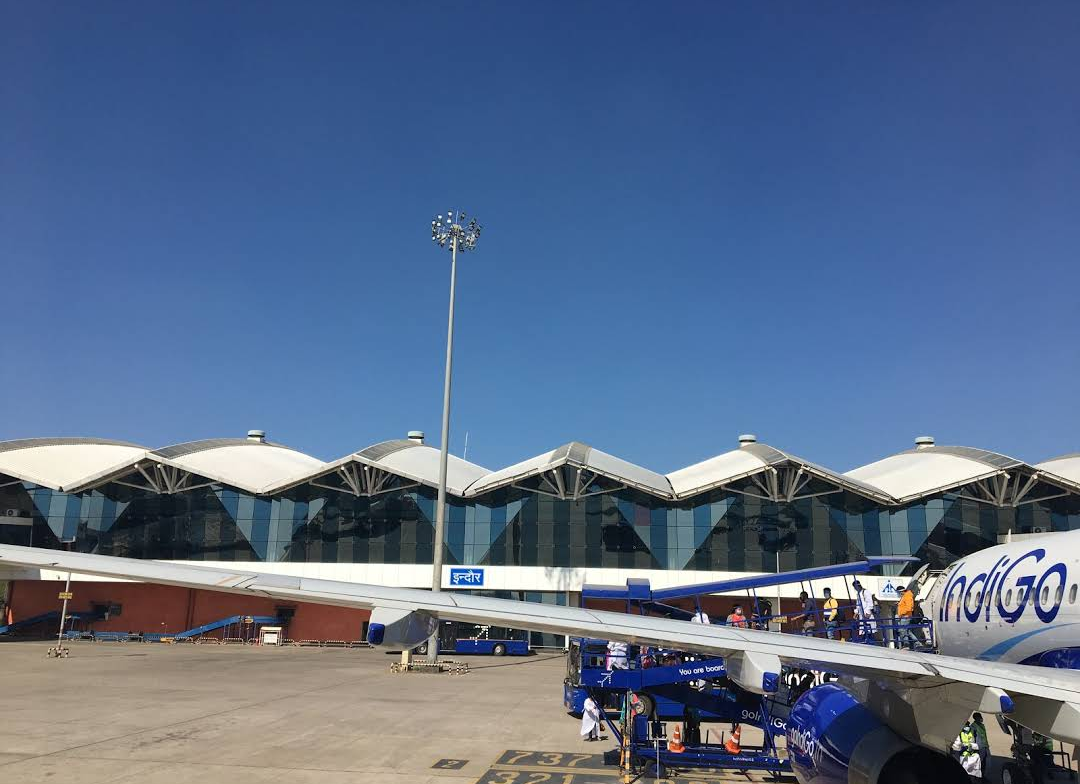
The refurbished Terminal 1 revealed a sandstone façade carved like Rajwada’s balconies, but with Wi-Fi and cold brew. Travelers stepped through security into a corridor echoing the city’s new slogan: ‘Indore, still trading, now flying.’
Playback singer · 1929–2022
Born here
Her first cry echoed through the old Indore hospital that is now a cardiology wing; she’d still recognise the dawn chorus of temple bells mixed with the azan from nearby mosques. Locals say the city’s nasal twang sneaks into her early Marathi bhajans.
Urdu poet · 1950–2020
Born, taught and died here
He borrowed the city’s name for his pen surname, turning Indore into a verb of resistance. Today mushairas are held in the same Rangwada college courtyard where he once bunked class to write couplets on cigarette packs.
Maratha queen · 1725–1795
Ruled from Rajwada
She held court in Indore’s wooden palace before moving upstream to Maheshwar, but left the city its grid of bazaars. Vendors still quote her edict that no trader may cheat a widow—invoked when the scale tips.
Hindustani vocalist · 1912–1974
Born here
Created the Indore gharana, a style so meditative it banned loud tabla accompaniment. Modern classical concerts here still dim the lights exactly as they did for his late-night baithaks on Sarafa rooftops.
Stand-up comedian · born 1987
Raised here
He mined Indore’s paan-stained college canteens for punchlines about small-city dreams. When he jokes about ‘sakht launda’ you’re hearing the hostel lingo of Scheme 54 where he first tried open-mic.
Cricketer · 1914–2005
Born and coached here
Scored India’s first overseas Test century with a bat carved by Indore’s Hussain brothers. Holkar Stadium still keeps his 218 not out scoreboard photo next to the chai tapri outside Gate 3.
Playback singer & philanthropist · born 1992
Born here
She began singing on Sarafa pavements to raise money for heart surgeries, collecting coins in her mother’s dupatta. The same crowd that once tipped her ₹5 for a bhajan now queues for her Bollywood concert tickets.
Where locals actually book dinner — not the tourist menus.
Small things that change how the city treats you.
Yes, if you love street food. Indore turns jewellery bazaars into midnight food streets—a ritual locals treat like nightlife. Add Art-Deco palaces and Asia’s largest glass Jain temple and you get a compact, tasty city break.
Two full days cover Rajwada-Lal Bagh-Sarafa plus Mandu as a day trip. Add a third if you want to bird at Sirpur Wetland or trek Janapav Kuti.
October to March. Winter lets you eat garadu on the street without sweating, and migratory birds arrive at Sirpur Wetland.
Very, for food streets. Sarafa stays crowded until 1 am with families; lone lanes around Rajwada empty out after 11 pm—take an auto instead of walking.
MSRTC and private buses leave Gangawal depot hourly (2.5 h). A round-trip Ola outstation for up to 4 people costs ~₹3,000 including 6 h wait.
Head Sahab Ke Pohe opens 5:30 am in Old Palasia; order standing at the cart, don’t sit inside—the queue moves faster.
Lal Bagh Palace has a portable ramp at the main door; Rajwada’s upper wooden floors are reached only by steep 18th-century stairs—ground-floor courtyard is accessible.
8 places to discover
Saved and recently read places — kept on this device only.
Photos may have been resized or cropped.
