Plan and listen to Khairatabad Mosque with Audiala.
Audio guide in your pocket, itinerary in your browser. Built for the way you actually visit.
Introduction
The Khairatabad Mosque is a distinguished historical and architectural landmark nestled in Hyderabad, India. Built in 1626 CE during the Qutb Shahi dynasty, it stands as a testament to the city's vibrant Islamic heritage and architectural ingenuity. Its enduring presence, active religious life, and strategic urban location make it a must-visit for history enthusiasts, architecture admirers, and travelers seeking to understand Hyderabad’s diverse cultural fabric (Wikiwand; Hyderabad Tourism). This comprehensive guide offers detailed insights into Khairatabad Mosque’s history, architecture, visitor information—including visiting hours and ticket details—and nearby attractions, ensuring you have an enriching and respectful experience.

Origins and Patronage
Commissioned in 1626 CE by Khairunisa Begum, daughter of Sultan Muhammad Qutb Shah, the Khairatabad Mosque is a rare example of female patronage in Deccan history. She dedicated the mosque to her tutor, Akhund Mulla Abul Malik, with construction overseen by her son-in-law, Hussain Shah Wali—also credited with the creation of the iconic Hussain Sagar Lake (Bharatpedia; Islamic Heritage).
Historical and Architectural Context
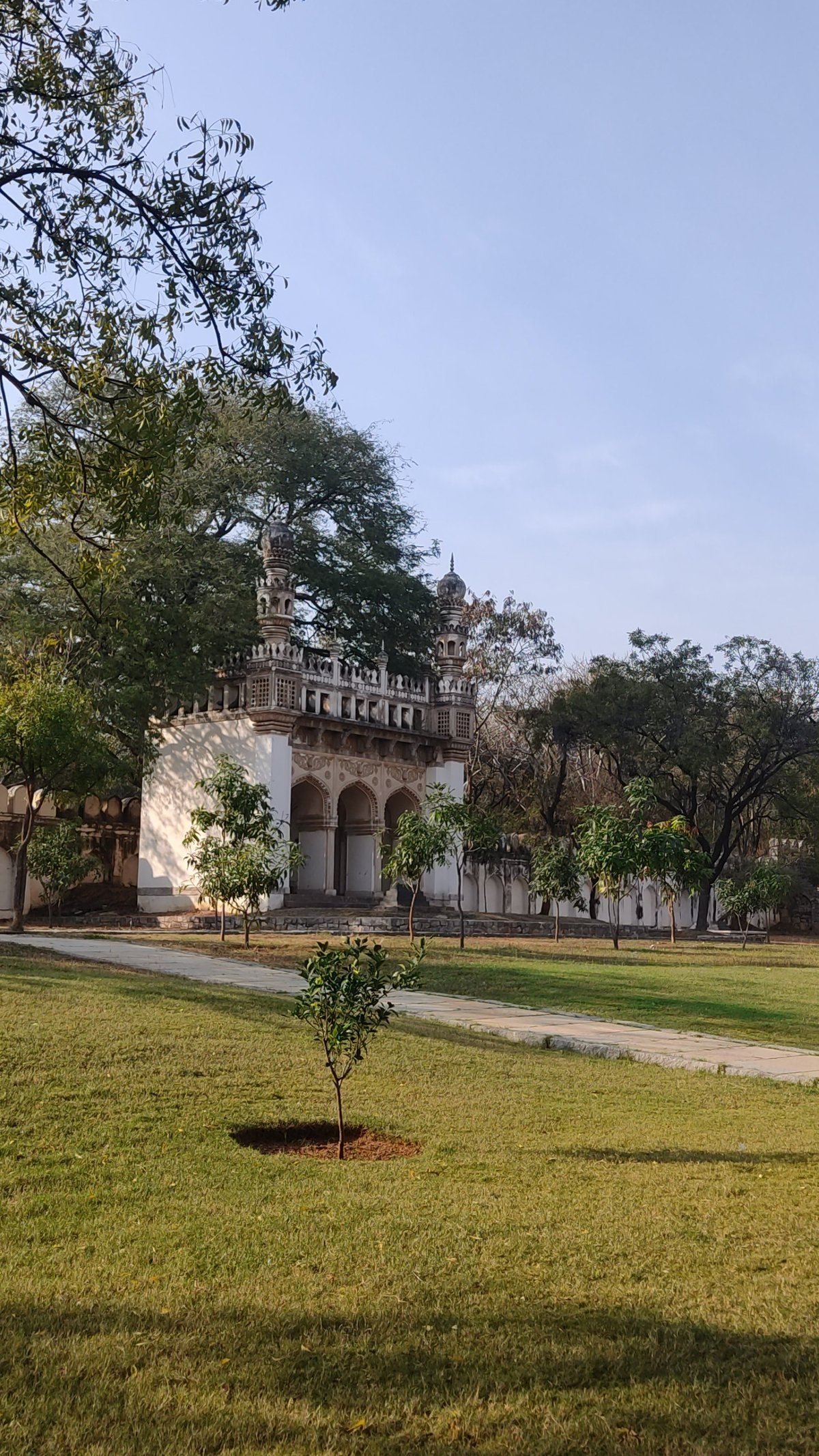
The mosque epitomizes Qutb Shahi architectural excellence, blending Persian, Deccani, and indigenous influences. Its three-arch façade, slender minarets, intricate stucco, and jali latticework are hallmarks of the dynasty’s style (The Hindu). Built on a raised platform for prominence, the mosque features:
- Slender Minarets: Adorned with stucco finials and geometric patterns.
- Stucco Ornamentation: Floral and geometric motifs in fine relief.
- Prayer Hall: Spacious with high ceilings and robust arches.
- Jali Screens: Intricately carved stonework that allows light and ventilation while ensuring privacy.
- Ablution Tank (Wazoo Khana): Originally a deep tank, now modernized for hygiene.
Traditional materials—local granite and limestone mortar—were used for durability and authenticity (The Hindu).
Unique Features: The Empty Tomb
Adjacent to the mosque stands a domed structure intended as the tomb for Akhund Mulla Abul Malik. However, as he died during his pilgrimage to Mecca, his body was never interred there, leaving the tomb empty—a poignant symbol of devotion and the region’s spiritual traditions (Wikiwand).
Restoration and Conservation
After decades without major repairs, the mosque has seen significant restoration led by the Department of Archaeology and Museums. Efforts focus on structural stability, stucco restoration, and climate-adaptive measures like secondary roofing. Importantly, work is conducted with respect for ongoing religious use, highlighting the mosque’s dual role as both a living place of worship and a heritage monument (The Hindu).
Visitor Information
Visiting Hours
- General Hours: Open daily, typically from 7:00 AM to 6:00 PM. During Ramadan, Fridays, or festivals, hours may extend from 5:00 AM to 9:30 PM. Confirm locally for up-to-date timings (yappe.in).
Tickets & Entry
- Entry Fee: Free for all visitors. Donations for upkeep are welcomed but not required.
Accessibility
- The mosque is reachable by road, Hyderabad Metro, and public buses. It sits on a raised platform; while ramps and some accessibility features exist, wheelchair access may be limited—contact mosque management for assistance.
- Ample two-wheeler parking is provided; car parking is available nearby, with early arrival recommended for busy days (yappe.in).
Guided Tours
- No official tours, but local guides can be hired for deeper architectural and historical insights. Religious classes and sermons, especially after Fajr and Isha prayers, are open to visitors.
Photography
- Permitted in the mosque complex, but always seek permission before photographing inside—especially during prayers or religious events.
Religious and Community Significance
Khairatabad Mosque is more than a heritage structure; it remains a vibrant center for Islamic worship, education, and charity. It hosts:
- Five Daily Prayers and large Friday congregations.
- Special Ramadan Activities: Taraweeh prayers, communal iftars, and zakat distributions.
- Major Festivals: Eid al-Fitr, Eid al-Adha, and Milad-un-Nabi with sermons and communal meals.
- Madrasas: Religious and secular education for youth, preserving Islamic scholarship and community values (OMAstrology).
Interfaith Harmony & Cultural Coexistence
Hyderabad’s famed Ganga-Jamuni tehzeeb is reflected in the mosque’s proximity to the Khairatabad Ganesh pandal—home to one of India’s tallest Ganesh idols during Ganesh Chaturthi (Tour Advisor Hub). Mosque and pandal committees coordinate to ensure peaceful coexistence and mutual respect, exemplifying the city’s pluralism (Travel India).
Educational and Social Roles
The mosque runs:
- Madrasas: Offering a blend of religious and secular education.
- Charitable Activities: Zakat, medical camps, and relief efforts.
- Community Events: Lectures, discussions, and outreach.
Nearby Attractions & Travel Tips
Enhance your visit by exploring:
- Hussain Sagar Lake: Boating and city views (Indianetzone).
- Lumbini Park: Multimedia fountain shows.
- Birla Mandir: Panoramic city vistas.
- Charminar, Mecca Masjid, Golconda Fort: Icons of Hyderabad’s heritage.
- Local Eateries: Sample Hyderabadi biryani, haleem, and street food (Travel + Leisure Asia).
Best time to visit: October–March for pleasant weather and festive atmosphere (MakeMyTrip).
Dress Code & Visitor Etiquette
- Dress Modestly: Men—long trousers and sleeved shirts; women—cover head, arms, and legs (scarves recommended).
- Remove shoes before entering prayer halls.
- Maintain silence and respectful demeanor.
- Photography: Seek permission; avoid during prayers.
- Non-Muslims: Welcome, provided they observe etiquette.
Facilities & Amenities
- Parking: Two-wheeler parking onsite, car parking on nearby streets.
- Separate prayer spaces for women.
- Restrooms and ablution areas available.
- Safety: The area is well-populated and secure. Exercise standard urban precautions.
Frequently Asked Questions (FAQs)
Q: What are the visiting hours?
A: Typically 7:00 AM–6:00 PM; Fridays and festivals may extend hours (5:00 AM–9:30 PM).
Q: Is there an entry fee?
A: No, entry is free.
Q: Are guided tours available?
A: No official tours; local guides may be available.
Q: Is the mosque wheelchair accessible?
A: Accessibility is limited due to steps; contact mosque management for support.
Q: Can I take photographs inside the mosque?
A: Permission required; avoid during prayers.
Listen to the full story in the app
The whole Khairatabad Mosque,
told well.
Audio guides for 1,100+ cities across 96 countries. History, stories, and local insight — offline ready.
Verified, and shown.
Researched and written by the Audiala editorial team from historical records, architectural archives, and local expertise.
Researched from Wikidata, Wikipedia & official sources · fact-checked · How we make our guides →