Place
India Updated Apr 2026
The first thing that hits you in Ghaziabad is the smell of moonglets hissing on a cast-iron tawa, sharp with ginger and green chili, drifting past a 1980s metro pillar that still carries hand-painted movie posters for films that left cinemas years ago. This is not the India of palace postcards; it’s an NCR edge-city where sugar-cane trucks from Meerut jostle Delhi-bound software engineers, and a 175-acre riverside forest suddenly appears between concrete distributor roads. Ghaziabad, India, rewards travelers who come curious about how twenty million people actually live, eat, and pray in the capital’s shadow.
 Photo: Satya Nandigam / Pexels
Built from cited sources · see the method · How we make our guides →
Local administrators admit the district has “very few tourist places,” which is precisely why it’s useful. Skip the checklist sightseeing and you’ll ride the 5:00 a.m. metro with office janitors, watch sunrise boating on a former floodplain turned City Forest, then join a queue 40-deep for Saiyya Ji’s puffed puri and potato gravy before most of Delhi has woken up. Temple bells ring out from 18th-century shrines less than 200 m from start-up co-working pods; sugar-mill chimneys built in 1933 now serve as cell-tower skeletons for 5G panels. The whole place runs on productive friction.
Ghaziabad’s real genius is transport. The Red Line terminus at New Bus Adda puts you in central Delhi in 28 minutes, Meerut in 45, and Agra in under two hours on the morning Gatimaan. Stay here, pay half the hotel tariff of Connaught Place, and you can still be photographing the Taj Mahal before the capital’s commuters finish their first coffee. Come evening, ride back for malai chaap skewers, a play at the Indirapuram Habitat Centre, and thandai that tastes of cardamom and industrial ambition. The city won’t flatter you with postcard beauty, but it will hand you the National Capital Region on a disposable steel plate—steaming hot, slightly oily, impossible to forget.
Not every monument, just the ones we'd walk you past ourselves.
Where to wander, by quarter — each with its own rhythm.
Before you go
From Indus outpost to NCR commuter hub, Ghaziabad keeps reinventing itself in the shadow of empires
Potters at Alamgirpur press clay into square dice and humped-bull amulets, turning the easternmost known Harappan kilns 120 km beyond any previous settlement. Their roof tiles, thicker than two fingers, will survive 4,000 monsoons and prove the Indus world stretched further east than anyone imagined.
Legend says the five exiled brothers drain the marshy Hindon floodplain and raise a mud-walled capital. Whether myth or memory, the name Ahar sticks, and locals still point to a low brick mound where Janamejaya supposedly performed his snake sacrifice, inviting every cobra in the Gangetic plain.
A black stallion gallops across the Kot fields, guarded by soldiers whose orders are clear: stop whoever tries to catch it. When no one dares, Emperor Samudragupta claims divine sanction and performs the Ashvamedha sacrifice on the banks of the Hindon, turning a farming village into a stage for imperial theatre.
The Napoleon of India chose the dusty Kot plain for his horse-sacrifice ceremony, etching Ghaziabad’s name into the Allahabad pillar inscription. His gold coins never bore the town’s name, but for one week in 335 CE every priest in North India looked toward this bend in the Hindon.
Central Asian horsemen ride through a moonlit fog, scale the mud-brick walls of Loni, and slaughter every defender. Timur orders the fort razed so thoroughly that travellers three centuries later mistake its bricks for a natural ridge. The stench of smoke drifts west toward Delhi, a warning the capital ignores.
After Nadir Shah’s 1739 massacre, nobleman Ghaziuddin Khan Feroze Jung II leaves the blood-soaked streets of Delhi and pitches 120 canvas tents beside the Grand Trunk Road. He calls the cluster Ghaziuddinnagar, funds a caravanserai with 120 rooms, and dreams of a scholarly oasis. The mud lanes outlive his dynasty.
Eldest son of Hyderabad’s first Nizam, this disgraced general founded Ghaziabad as his personal refuge after failing to seize the Deccan throne. He never returned, but his name still prefixes every railway ticket issued at the city’s station.
Imad-ul-Mulk, Ghaziuddin’s ruthless grandson, invites Emperor Alamgir II to dinner, then has him stabbed in the riverfront palace. The murder shatters what little authority the Mughal crown retains; East India Company clerks in Calcutta note the event and begin drafting plans for direct rule.
Jat king Suraj Mal camps on the Hindon’s left bank, confident his 20,000 troops can outmaneuver Rohilla chief Najib-ud-Daulah. A single musket ball to the eye ends his life and the dream of a Jat buffer state. His death clears the road for British armies marching from Meerut toward Delhi 40 years later.
General Gerard Lake’s artillery unlimbers on the same floodplain where Suraj Mal died. Maratha gunners fight from behind mud embankments but retreat when the British 12-pounders find range. The East India Company annexes Ghaziabad without building a single fort—they simply rename the district collectorate.
Village drums beat from Dadri to Pilkhuwa, calling farmers to drop ploughs and grab matchlocks. Five thousand rebels swarm the railway embankment, burn the telegraph hut, and hurl the Company’s own coal trucks onto the tracks. British dispatches call it ‘a sharp skirmish’; local ballads list 17 hanged martyrs whose names are still recited during village fairs.
The zamindar of Dadri led 400 villagers against the British arsenal, was captured, and danced to the gallows singing of Krishna. Company records label him ‘rebel chieftain’; Ghaziabad schoolchildren memorize his final couplet about freedom smelling of mango blossoms.
Iron rails reach the one-street town, and the station sign—white letters on blue enamel—shortens ‘Ghaziuddinnagar’ to fit the board. Within a year, 40,000 maunds of sugar and raw cotton roll through the platform, pulling the district into Calcutta’s export economy and ending the era of ox-cart caravans forever.
The Ghaziabad Development Authority unveils a master plan: straight boulevards, 22-metre-wide sector roads, and high-rise flats marketed to Delhi clerks priced out of the capital. Bulldozers flatten mustard fields overnight; by 1985, tower blocks cast shadows longer than the old caravanserai ever did.
Born in a railway-colony bungalow near the yard where steam engines still idle at night. She grew up climbing banyan trees on campus, studied at St. Francis Convent, and carried Ghaziabad’s accent—slight, flat vowels—onto the Miss Universe stage in Cyprus. The city still claims her as proof that beauty pageants and small-town roots aren’t mutually exclusive.
The first Delhi Metro train glides across a 1.2-kilometre viaduct, shaving 45 minutes off the commute to Connaught Place. Morning commuters watch the river—once the site of Gupta horse sacrifices and 1857 cannonades—slip beneath silent rubber wheels. The city’s fourth reinvention is complete: bedroom suburb, industrial belt, pilgrimage node, now a rail node in the capital’s circulatory system.
Miss Universe 2000, actor · born 1978
Born here
She spent her first years in a middle-class Ghaziabad lane before moving to Bangalore. Return today and she’d still recognise the morning fog over the Hindon and the queue outside Saiyya Ji’s kachori shop—only the metro pillars would be new.
Where locals actually book dinner — not the tourist menus.
Small things that change how the city treats you.
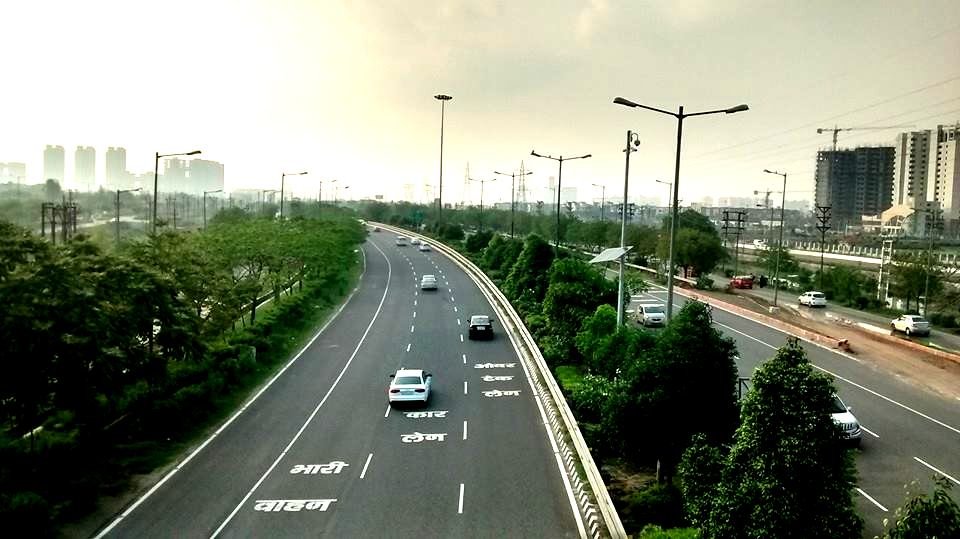
The city, as it actually looks.


Only if you adjust expectations. The district itself admits ‘very few tourist places’—come for Shiva temples during festivals, morning street food around Ghanta Ghar, or use it as a cheap, metro-linked base for Delhi and Meerut day trips.
One full day covers Dudheshwar Nath at dawn, Old Ghaziabad breakfast crawl, City Forest boat ride, and Swarn Jayanti Park sunset. Add a second day only if you want mall-coffee culture in Indirapuram or a side trip to Dadri wetlands.
Airport Express to New Delhi (20 min), transfer to Blue Line, change at Dilshad Garden for Red Line to Vaishali—total 90 min and ₹80. A cab can be faster at 3 am (45 min), but count on 1 h 45 min at rush hour and ₹900-1 200.
Metro and malls feel secure; streets empty after 10 pm. Stick to well-lit sectors like Vaishali or Indirapuram, use app cabs instead of street autos, and avoid Old Ghaziabad lanes during festivals when crowd density spikes.
Moonglet—a thick, moong-dal pancake invented by Old Ghaziabad vendors. You’ll see it nowhere else in NCR. Eat it hot off the tawa near Ghanta Ghar; one plate costs ₹40 and keeps you full till lunch.
Yes. Gatimaan Express departs nearby Ghaziabad station 08:10, reaches Agra 09:50. Return at 17:50, home by 19:30. Book chair-car in advance; fare ₹755 each way.
Saved and recently read places — kept on this device only.
Photos may have been resized or cropped.