Introduction
Faridabad whispers its story through factory hum and temple bells. Just thirty kilometers south of Delhi, this Indian city wears its industrial identity like a workman's coverall, but beneath lies the quiet geometry of a 10th-century sun-water reservoir and the ghost of a Sufi saint's passage. It's a place where the Aravalli hills feel the weight of both ancient stone and modern concrete.
Sheikh Farid, treasurer to Emperor Jahangir, founded the settlement in 1607 as a garrison town. His name stuck, but the city's soul belongs to an older patron: the 13th-century poet-saint Baba Fariduddin Ganjshakar. A small dargah commemorates him, drawing pilgrims who sit on cool marble floors that remember a different kind of devotion.
The real pulse is industrial. Faridabad is Haryana's manufacturing backbone, a city of 1.8 million that makes things. The air carries the scent of machine oil and hot metal. Yet this practical energy finds release each February at Surajkund Lake, where India's largest crafts fair erupts with color and sound, transforming a Tomar-dynasty sun-worship site into a living museum of hands.
Come for the contrast. Stand where a Rajput king built a crescent-shaped reservoir for sun rituals, then look south to the 18th-century palace of Raja Nahar Singh, hanged by the British in 1858. History here isn't preserved behind glass. It's a layer in the sediment, waiting for the right light.
Places to Visit
The Most Interesting Places in Faridabad
Khirki Masjid
The Khirki Masjid, often referred to as the 'Mosque of Windows,' is a fascinating yet lesser-known historical site nestled in the vibrant city of New Delhi,…
Begumpur Mosque
Nestled amidst the narrow lanes of Malviya Nagar in Faridabad, India, the Begumpur Mosque, also known as Begumpur Masjid, stands as an enduring relic of the…
What Makes This City Special
The Crafts Fair That Takes Over a Lake
Every February, the 10th-century Surajkund reservoir transforms into India's largest crafts fair. For two weeks, the amphitheater ruins fill with artisans from across the country, their work illuminated by the same sun the Tomar kings worshipped here a millennium ago.
The Industrial Spine of Delhi
Faridabad is Haryana's largest city and the manufacturing engine of the National Capital Region. Founded in 1607 as a garrison town, its identity is built on industry, not tourism—a working city where history is a layer beneath the present.
Aravalli Foothills & Drying Lakes
The ancient Aravalli hills form the city's western edge, cradling reservoirs like Badkhal Lake. Visit in winter to see what remains of these water bodies, their levels a stark record of groundwater extraction and the region's changing climate.
A Martyr's Palace
Raja Nahar Singh's 18th-century palace in Ballabhgarh is a monument to rebellion. The last ruler of the princely state was hanged by the British in 1858 for his role in the uprising; his restored residence now hosts cultural events under Haryana's watch.
Notable Figures
Sheikh Farid (Mirza Ja'far)
c. 1562–1615 · Mughal Treasurer, City FounderAs treasurer to Emperor Jahangir, he built a walled garrison town here to protect the imperial road to Agra. He'd probably be astonished that his military outpost grew into a sprawling industrial city of nearly two million people. The dust from factories would feel familiar—his soldiers kicked up plenty on this dry plain.
Raja Nahar Singh
1823–1858 · King of Ballabhgarh, RebelThe last king of Ballabhgarh chose the wrong side in the 1857 uprising—or the right one, depending on your perspective. The British hanged him at Chandni Chowk for rebellion. His palace still stands in Ballabhgarh, a monument to a kingdom that vanished overnight. He'd recognize the fort's walls, but not the cricket stadium that now bears his name.
Baba Farid (Sheikh Fariduddin Ganjshakar)
1173–1266 · Sufi Saint and PoetThe great Punjabi Sufi saint only passed through this area centuries before the city existed. His verses spoke of divine love and human frailty. Today, a dargah commemorates his brief passage. He might chuckle that an entire industrial metropolis carries his name—a humble wanderer immortalized in concrete and smoke.
Surajpal (Tomar Rajput King)
10th century CE · Rajput KingA millennium ago, he carved a crescent-shaped reservoir into the Aravalli hills for sun worship. The 'Sun Lake' still holds his name. If he saw it now, surrounded by an amphitheater for craft fairs, he might appreciate the continuity—people still gather at his pool, though for different reasons.
Photo Gallery
Explore Faridabad in Pictures
Two people sit in a colorfully decorated traditional cart in front of rustic mud-walled buildings at a cultural site in Faridabad, India.
Lens Cycle7 · cc by-sa 4.0
This map highlights the location of the Faridabad district within the state of Haryana, India.
HaryanaAmbala.png: User:Joy1963. Original uploader was Joy1963 at en.wikipedia derivative work: Abhijitsathe (talk) · cc by-sa 3.0
A vibrant green electric locomotive of the Indian Railways travels past a station structure in the city of Faridabad, India.
Nikhilb239 · cc by 3.0
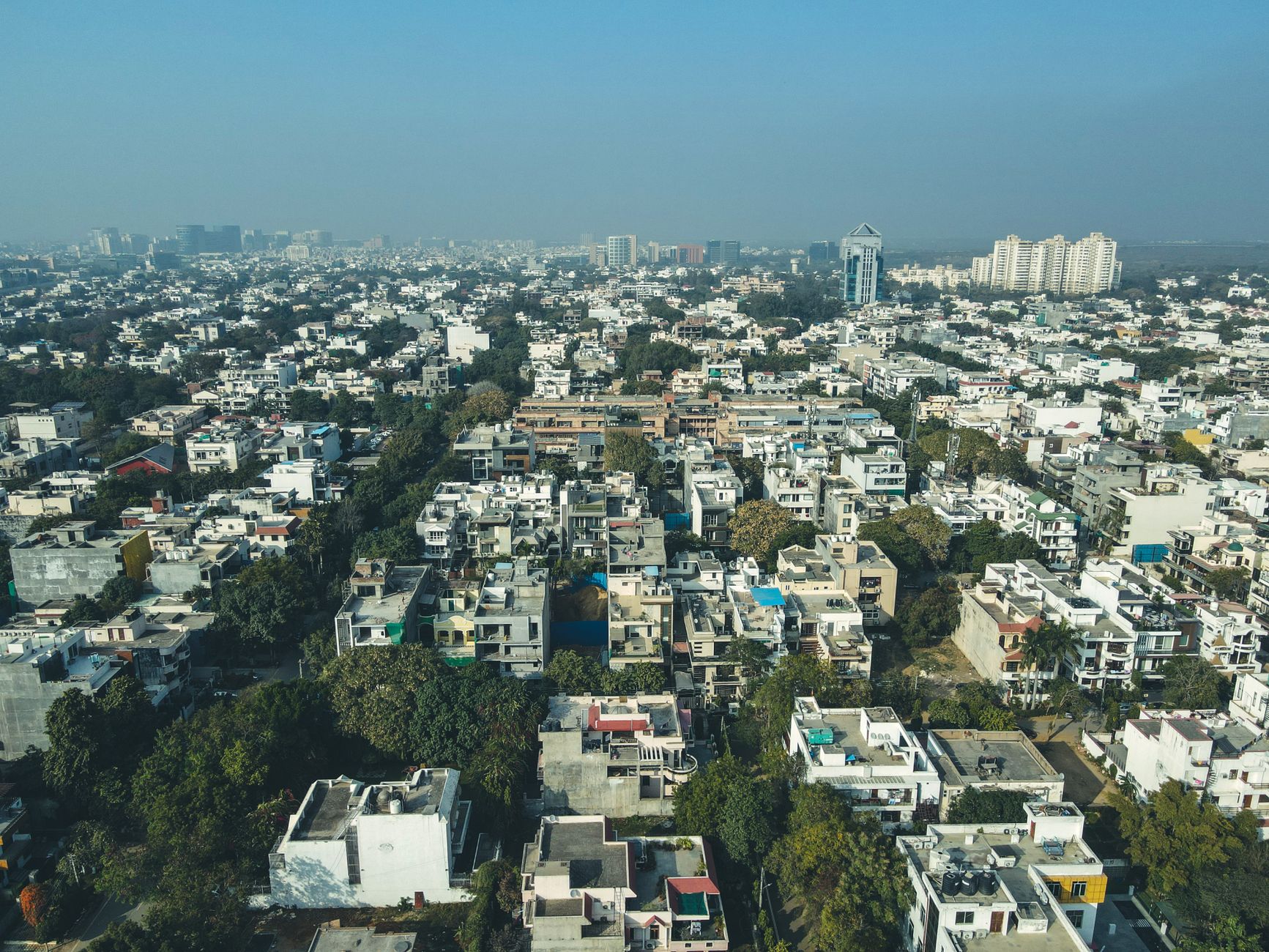
An expansive aerial perspective captures the dense residential layout and urban sprawl of Faridabad, India, on a clear day.
Yogendra Singh on Pexels · Pexels License
A close-up view of a performer's feet adorned with traditional ghungroo bells, captured during a cultural event in Faridabad, India.
Kriti Deep · cc by-sa 2.0
The Institute of Hotel Management in Faridabad, India, showcases a clean, white architectural design accented by traditional decorative umbrellas.
IHM Faridabad · cc by-sa 4.0
Traditional folk musicians perform in vibrant cultural attire at a public event in Faridabad, India.
Kumaramitindia · cc by-sa 4.0
The serene waters of a hidden lake in Faridabad, India, are framed by rugged stone cliffs and natural rock formations.
Sumitgupta02sg · cc by-sa 4.0
An aerial perspective captures the contrast between the dense residential architecture and the surrounding natural landscape in Faridabad, India.
Shantum Singh on Pexels · Pexels License
A scenic view of a multi-lane highway in Faridabad, India, showcasing the city's modern infrastructure with an elevated metro line and green landscaping.
RISHABHNAGPAL20 · cc by-sa 4.0
A delicious serving of traditional Chole Bhature, a classic North Indian comfort food, captured at a local eatery in Faridabad, India.
Shivkumar Birnale · cc by-sa 4.0
Jawaharlal Nehru speaks to a massive gathering of people at a tented camp in Faridabad, India, during the early years of the nation's development.
Unknown authorUnknown author · public domain
Practical Information
Getting There
Indira Gandhi International Airport (DEL) in Delhi is 35 kilometers northwest, about a 90-minute drive with traffic. Faridabad has no major train station of its own—the nearest major rail hubs are New Delhi Railway Station (NDLS) and Hazrat Nizamuddin (NZM). It's connected to Delhi via National Highway 44 (the Delhi-Agra road it was built to protect).
Getting Around
The Delhi Metro's Violet Line reached Faridabad in 2016, with 9 stations serving the city along a 14-kilometer elevated corridor. A ride from Delhi's Kashmere Gate to Faridabad's Escorts Mujesar takes about 75 minutes and costs up to ₹60. Auto-rickshaws and cycle-rickshaws handle last-mile connections; ride-sharing apps operate reliably.
Climate & Best Time
Summers (April–June) are brutally hot, with temperatures regularly hitting 40–45°C. Monsoon rains arrive in July and taper off by September. Visit between October and March, when days are mild (15–25°C) and nights cool. February is peak season because of the Surajkund Mela.
Language & Currency
Hindi is the primary language, with Haryanvi accents coloring local speech. English is widely understood in business and tourist areas. The Indian Rupee (₹) is the currency. ATMs are plentiful, but carry cash for markets and auto-rickshaws.
Safety
Faridabad is generally safe for daytime exploration. Exercise normal urban precautions: keep valuables secure in crowded areas like the Surajkund Mela. Traffic is chaotic—cross roads carefully and negotiate auto-rickshaw fares before getting in.
Where to Eat
Don't Leave Without Trying
The Logan
cafeOrder: The signature coffee blends and freshly baked pastries
A cozy spot with top-notch coffee and a relaxed vibe, perfect for a quiet afternoon in Faridabad.
Mast Banarasi Paan NIT 5 Faridabad
local favoriteOrder: The Banarasi paan, a must-try for its authentic flavors
A beloved local joint for traditional paan, offering a unique taste of Banarasi culture in Faridabad.
Kamakshi Home Bakers
local favoriteOrder: Homemade cakes and fresh pastries
A family-run bakery known for its delicious, home-style baked goods and warm hospitality.
Gulshan Mathi
quick biteOrder: Fresh bread and traditional Indian sweets
A small but beloved bakery offering a variety of fresh breads and sweet treats.
Baithaki - The Midnight cafe
cafeOrder: Late-night coffee and snacks
A late-night haven for coffee lovers and those seeking a cozy spot to unwind after hours.
4 Roots Café
cafeOrder: Healthy smoothies and organic snacks
A trendy café with a focus on healthy, organic food and a relaxed atmosphere.
CAKE UNCLE
local favoriteOrder: Custom cakes and delicious pastries
A go-to spot for birthday cakes and special occasions, known for its delicious and beautifully decorated creations.
U&Me Cafe
cafeOrder: Coffee and light snacks
A charming café with a modern vibe, perfect for a casual meet-up or a quiet coffee break.
Dining Tips
- check Look for Surender Dosa Chole for the unique Faridabad-style dosa chole
- check Sita Ram Diwan Chand is the go-to for authentic chole bhature
- check Sector 15 Market is a great place for a variety of quick bites and sweets
Restaurant data powered by Google
Tips for Visitors
Time Your Mela
Visit in February for the Surajkund Mela, India's largest crafts fair. Book accommodation weeks ahead, as Delhi hotels fill up for the event.
Use Delhi's Metro
Take the Delhi Metro's Violet Line to Badarpur or Escorts Mujesar stations. From there, auto-rickshaws are cheaper and faster than cabs for reaching lakes or forts.
Check Lake Levels
Badkhal Lake often dries up by summer. Call Haryana Tourism's resort before visiting between March and September to confirm there's actually water.
Visit October–March
The Aravalli hills are scorching in summer. Plan your trip between October and March for comfortable walks around Surajkund and the palace grounds.
Carry Small Cash
Street food vendors and auto-rickshaw drivers prefer cash, especially small bills. ATMs are common, but not right at the lakeside or historical sites.
Explore the city with a personal guide in your pocket
Your Personal Curator, in Your Pocket.
Audio guides for 1,100+ cities across 96 countries. History, stories, and local insight — offline ready.
Audiala App
Available on iOS & Android
Join 50k+ Curators
Frequently Asked
Is Faridabad worth visiting? add
Only as a day trip from Delhi. Its value is specific: the ancient Surajkund reservoir, the February crafts fair, and the story of Raja Nahar Singh's rebellion. Don't expect a polished tourist city—this is Haryana's industrial heart with pockets of history.
How many days should I spend in Faridabad? add
One day is enough. Start at Surajkund Lake, check Badkhal if water levels are good, visit Raja Nahar Singh's palace in Ballabhgarh, and be back in Delhi by evening. The only reason to stay longer is the Surajkund Mela in February.
What is the best way to get to Faridabad from Delhi? add
The Delhi Metro's Violet Line is the cheapest and most reliable option. Get off at Badarpur or Escorts Mujesar station, then take an auto-rickshaw to your specific destination. Driving takes about an hour, but NCR traffic is unpredictable.
Is Faridabad safe for tourists? add
Standard Delhi NCR precautions apply. The tourist areas around Surajkund and the palace are generally safe during daylight. As an industrial city, it's busy and functional—keep valuables secure and avoid isolated areas after dark.
Why is the city called Faridabad? add
It's named after the 13th-century Sufi saint Baba Farid (Sheikh Fariduddin Ganjshakar), who passed through this area. The city itself was founded much later, in 1607, by Sheikh Farid, treasurer to Mughal emperor Jahangir, as a garrison town to protect the road to Agra.
What is the Surajkund Mela? add
It's a massive, two-week crafts fair held every February at the ancient Surajkund reservoir. Artisans from across India demonstrate traditional crafts, from pottery to weaving. Think of it as a living museum of Indian handicrafts, with food and performances.
Sources
- verified Faridabad District Official Tourism Page — Primary source for historical details on Surajkund, Badkhal Lake, and Raja Nahar Singh Palace. Provided foundation dates and archaeological context.
- verified Haryana Tourism - Faridabad Destinations — Used for visitor information, seasonal details, and confirming the scale and timing of the Surajkund Mela.
- verified FabHotels Blog - Places to Visit in Faridabad — Supplemented practical details on Baba Farid's Tomb, current state of attractions, and general visitor advice.
Last reviewed: