
An introduction.
Researched by the Audiala editorial team from historical records, architectural archives, and local expertise.
AA red-brick clock tower rises above test plots, palm shade, and the smell of wet soil at Tamil Nadu Agricultural University in Coimbatore, India, which is exactly why you should come. This is not a campus you visit for ceremony. You come for the Botanical Garden, the Insect Museum, and for the odd, moving pleasure of walking through a place where crop science still feels physical.
Most travelers expect a university gate and a few formal buildings. TNAU gives you something better: broad avenues, old research blocks, labeled plants, sudden bird calls, and the sense that Coimbatore learned part of its modern identity here, between lecture halls and seed plots.
Records show the Coimbatore campus took shape between 1906 and 1909 on an estate of roughly 450 to 500 acres, an area larger than 250 football fields laid edge to edge. That scale still matters when you walk it. The place breathes like a park, but it was planned as a machine for teaching, experiment, and harvest.
Come if you like gardens with a backstory, colonial architecture with loose threads, or institutions that changed real lives far beyond their gates. Rice varieties, farm advice, and agricultural training radiated from this campus across South India, which means the visit lands differently once you know what happened here.
01 What to see.
Insect Museum
Botanical Garden and Research Blocks
Red-Brick Heritage Walk
02 In pictures.




Plan and listen to Tamil Nadu Agricultural University with Audiala.
Audio guide in your pocket, itinerary in your browser. Built for the way you actually visit.
03 Visitor logistics.
The practical scaffolding for a good visit — kept short.
Getting There
TNAU sits on Lawley Road and Marudhamalai Road, about 6 km from Coimbatore Junction and Gandhipuram bus stand, and roughly 15 km from Coimbatore International Airport. Official TNAU directions list buses 70, 1A and 1D from Gandhipuram, and 1C from Singanallur and the railway station; for the Botanical Garden, ask for Gate No. 7 or the Botanical Garden stop, while the Insect Museum is easier by auto or cab straight to the Department of Agricultural Entomology inside the large campus.
Opening Hours
As of 2026, hours still shift depending on which page or local listing you trust, so call before you go. The Botanical Garden usually runs on a split day around 8:00 AM to 11:30 AM and 2:00 PM to 4:30 PM, while the Insect Museum often keeps a tighter window, commonly 10:00 AM to noon and 2:30 PM to 4:00 PM, with Sunday and public-holiday closures often reported for the museum; confirm with the garden at 0422-6611230 and the museum at 0422-6611414.
Time Needed
Give the garden 45 to 60 minutes if you want a quick walk under the trees, and 45 to 75 minutes for the Insect Museum. A better visit takes 2.5 to 4 hours total, enough time to cross a campus spread out like a small neighborhood rather than a single monument, pause at the canteen, and still not rush.
Accessibility
The clearest confirmed access detail is at the Insect Museum, where TNAU-linked material says ramp facilities are available. The garden grounds look mostly flat and manageable, with broad paths and seating areas, but this is a large working campus and Coimbatore heat can hit hard by midday, so distance and sun matter as much as steps.
Cost & Tickets
As of 2026, entry prices online still contradict each other. The Botanical Garden definitely uses paid entry, but published rates range from about ₹10 to ₹20 for adults and camera fees vary, while the Insect Museum has a TNAU-linked online booking page showing ₹30 and some recent local reports listing ₹50 for adults; carry cash and treat any price you saw online as provisional until the counter confirms it.
05 Tips for visitors.
Small things that change the day.
Beat Midday
November to February gives you the kindest weather, and mornings feel best when the air still holds a little coolness from the Western Ghats. Aim for the first session, because both the garden and museum often shut in the middle of the day just when the heat turns the paths into a griddle.
Ask First
The Insect Museum is the one place where the answer is usually no: recent visitor reports say photography is prohibited and phones or cameras may need to be deposited. Garden photography is less rigid but still inconsistent, so ask at the ticket counter before you start framing flower beds and cactus silhouettes.
Eat Nearby
Skip the hunt for a grand campus meal and head to RS Puram or Saibaba Colony after your visit. Sree Annapoorna Sree Gowrishankar in RS Puram is the local default for budget vegetarian tiffin and filter coffee, Bizou Cafe & Grill suits a slower mid-range lunch in Saibaba Colony, and Beyond The Stories works if you want a pricier rooftop dinner.
Watch Traffic
The real annoyance here is not scams but roads. Marudhamalai Road clogs easily, festival diversions can reroute traffic without much grace, and evening commercial stretches around Saibaba Colony call for ordinary urban caution, especially after dark.
Pair It Well
TNAU makes more sense when you treat it as Coimbatore's green, brainy side rather than a stand-alone attraction. Combine it with nearby Marudhamalai Temple or a meal on NSR Road, but leave buffer time because the campus is wide and cross-town traffic can eat half an hour as casually as a crow steals a snack.
Carry Cash
Bring cash, a charged phone, and low expectations for polished visitor systems. Timings go stale online, luggage storage does not appear to exist, and the simplest move is still the best one: call ahead, arrive early, and travel light.
04 A history of reinvention.
Where a Farm Became a Brain
Tamil Nadu Agricultural University looks younger than its memory. Records show the university itself dates to June 1, 1971, but the Coimbatore site began earlier as an agricultural college and research estate, with land acquired in 1906 and the formal opening held on July 14, 1909.
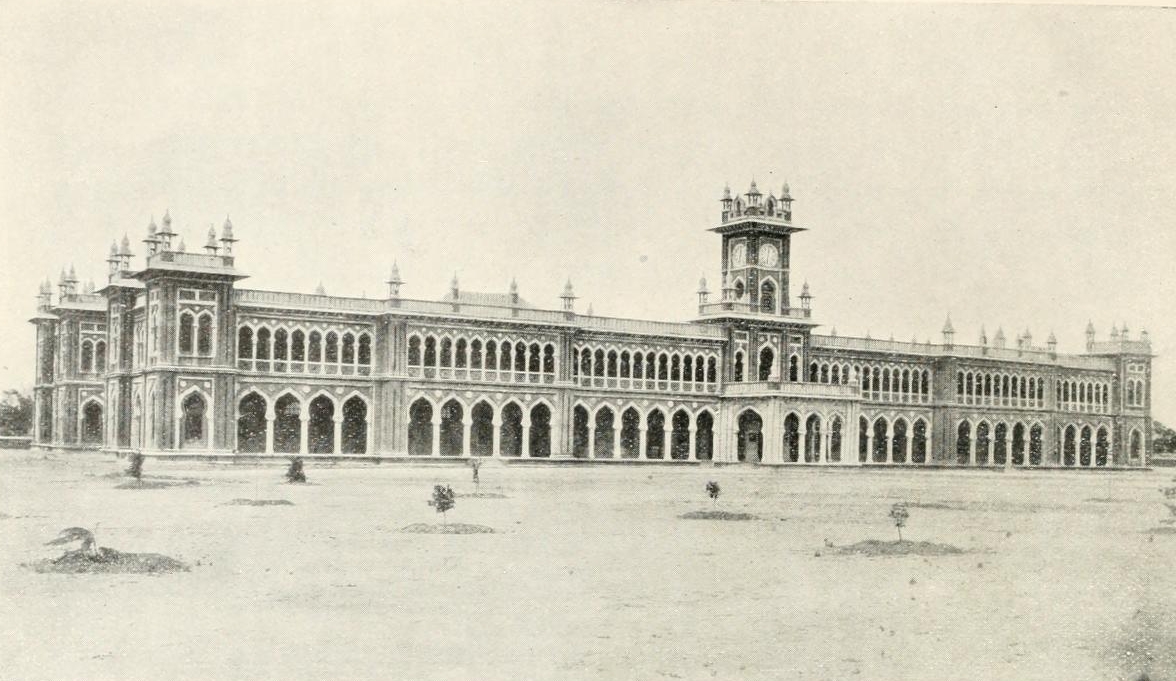
The old campus was never meant to be ornamental. Archival descriptions present an H-shaped, Hindu-Saracenic main block of red brick and cut stone, crowned by a clock tower measured at either 70 or 75 feet, about the height of a six-storey building. Inside, students moved past herbarium rooms, chemical laboratories, entomology spaces, and a museum, while fields outside did the rest of the teaching.
Ramaswamy Sivan and the Moment the Institution Changed Hands
Rao Bahadur M. R. Ramaswamy Sivan carries the most human version of this campus story. Records and later institutional accounts describe a man who began low in the old Saidapet system, moved through Coimbatore's scientific ranks, and in 1926 became the first Indian principal of the Agricultural College and Research Institute.
What was at stake for him was personal as much as professional. If Sivan could lead a British-built agricultural college, Indian scientists would no longer just staff the machinery of empire; they would decide what deserved study, which crops mattered, and who would be trained to advise farmers across the south.
The turning point came with his appointment in 1926. After years when British principals defined the tone and authority of the place, Sivan's rise changed the meaning of the campus itself. The red-brick buildings stayed where they were, the laboratories smelled the same, but the authorship of agricultural knowledge had shifted.
A Campus Planned Like an Instrument
Rice, Breeding, and the Wider Consequence
Listen to the full story in the app
The whole Tamil Nadu Agricultural University,
told well.
Audio guides for 1,100+ cities across 96 countries. History, stories, and local insight — offline ready.

06 Frequently asked.
The questions travellers send us most about Tamil Nadu Agricultural University.
Is Tamil Nadu Agricultural University worth visiting?
Yes, if you like places that still do real work. Most visitors come for the Botanical Garden, the Insect Museum, and the old red-brick college buildings with their clock tower, rather than for the university as a whole. Expect a green campus with research plots, labeled plants, and a quieter, more local feel than a polished tourist site.
How long do you need at Tamil Nadu Agricultural University?
Plan on 2.5 to 4 hours if you want to see the Botanical Garden and the Insect Museum properly. A quick garden walk can take 45 to 60 minutes, while the museum usually needs another 45 to 75 minutes. Add extra time if you want to cross the large campus slowly or stop at the ATIC counter or canteen.
How do I get to Tamil Nadu Agricultural University from Coimbatore?
The easiest way is by auto-rickshaw or cab from central Coimbatore. Official TNAU guidance says buses 70, 1A, and 1D run from Gandhipuram, while bus 1C connects from Singanallur and the railway station; the campus sits about 6 km from Coimbatore Railway Station and about 15 km from the airport. For the Botanical Garden, Gate No. 7 on Marudhamalai Road is the most useful landmark.
What is the best time to visit Tamil Nadu Agricultural University?
November to February is the best time to visit. Coimbatore feels easier on foot then, and February can bring the Covai Flower Show, when the garden fills with floral installations, bonsai displays, and temporary exhibits. On ordinary days outside festival season, the campus feels calmer and more like the working academic park it really is.
Can you visit Tamil Nadu Agricultural University for free?
Usually no, at least not if you are entering the main visitor spots. Recent sources point to paid entry for the Botanical Garden and the Insect Museum, but the exact ticket prices conflict online, so the safest move is to expect a fee and confirm on the day. The museum also offers online booking through its public-facing page.
What should I not miss at Tamil Nadu Agricultural University?
Do not skip the Insect Museum, the Botanical Garden, and the old agricultural college core. The museum has the strangest details on campus: a carved insect tree in the lobby, a butterfly dome, and sectioned termite mounds that make the place feel half science gallery, half cabinet of wonders. Outside, the red-brick heritage buildings and long shaded garden paths explain why this campus matters to Coimbatore far beyond academics.
Verified, and shown.
Researched and written by the Audiala editorial team from historical records, architectural archives, and local expertise.
Official TNAU overview page used for institutional history and founding claims.
Official background page used for university history and milestone context.
Official history page used for chronology, 1971 university date, and South India role.
Official institutional history page used to cross-check early chronology.
Official college history page used for 1906 foundation, 1909 opening, Freeman Building, and other campus milestones.
Archival periodical used for land size, cost, building plan, clock tower, and opening details.
Official milestones page used to compare disputed early dates.
Institutional history used for Saidapet date dispute and Ramaswamy Sivan context.
Journal history used for Saidapet date dispute and institutional memory.
Official archival PDF used for building design, site selection, principals, disputed move date, and campus details.
Used for Charles Alfred Barber background and wider Coimbatore crop-science context.
Local historical article used for early educational history and shift to Coimbatore.
Family recollection used for Rao Bahadur M. R. Ramaswamy Sivan biography and institutional memory.
Official department history used for paddy breeding dates and K. Ramaiah context.
Used for K. Ramaiah legacy and claims about rice variety influence.
Used for paddy breeding station centenary and rice research history.
Centenary souvenir used for disputed move date and estate size details.
Used for commemorative garden details and Gandhi-linked sapling reference.
Official varieties list used for long continuity in breeding work.
Used for paddy breeding centenary context.
Official contact page used for Botanical Garden phone and email details.
TNAU-linked museum page used for visitor details, accessibility, and exhibit overview.
Official department contact page used for museum contact details.
Local visitor guide used for timing, season, and general visiting advice.
Business listing used to compare museum hours and access details.
Local guide used for museum timing and visit duration estimates.
Used for seasonal traffic and access cautions around the campus corridor.
Used for conflicting ticket and parking fee information.
Travel listing used for alternate garden fee and visitor information.
Museum booking page used for online reservation and fee signals.
Museum site used for public-facing visitor and fee information.
Official press note used for ticketing machine reference and visitor infrastructure.
Official event page used for campus distance and reach information.
Official event page used for campus location and route details.
Official press note used for Gate No. 7 and Botanical Garden landmark references.
Official press note used for Gate No. 7 and campus landmark references.
Used for museum layout, exhibits, accessibility, and sectioned termite mound details.
State tourism page used for general garden facilities and public-facing amenities.
Visitor reviews used for timing reality checks, duration, and photography restrictions.
Official page used to confirm canteen and refreshment facilities on campus.
Official page used for entrance counter, seed and product sales, and exposure-visit role.
Used for secondary visitor feedback on museum access and photography.
Used for photography policy signals and older garden visitor notes.
Official department page used for garden acreage, plant families, and flower research collections.
Official department page used for medicinal garden and nursery infrastructure details.
Used for visitor impressions, named sub-areas, and upkeep comments.
Used for visitor mood, photo spots, quiet corners, and maintenance comments.
Official press note used for flower show features and event revival.
Used for 2025 flower show dates and event scale.
Used for flower show atmosphere and visitor-facing displays.
Used for museum opening details, carved insect tree, and exhibit descriptions.
Used for museum significance, national-first claim, and exhibit overview.
Used for museum collection size and visitor features.
Official research page used for museum and crop protection context.
Used for heritage building materials, dimensions, climate-responsive design, and renovation news.
Used for architectural image reference and heritage-core description.
Used for local criticism of upkeep and maintenance issues.
Official page used for school and college visit programs.
Official training listing used for beekeeping and public training references.
Used for apiary visits and bee-related public experiences.
Official press note used for apiary visit and bee-awareness programming.
Official press note used for public bonsai workshop references.
Official contact page used for local shorthand and campus identity context.
Used for Lawley Road naming and local area context.
Used as a location signal for local naming around Agri University and Lawley Road.
Used as a local-reference example for 'near Agri University' shorthand.
Used for local respect and civic perception of TNAU.
Used for flower show revival in 2024.
Official press note used for ceremonial importance and dress-context cues.
Used for recent institutional activity and research-news context.
Used for NSR Road and Saibaba Colony food-neighborhood context.
Used for traffic and road-corridor context near the campus.
Used for neighborhood and civic-life context around Saibaba Colony and Coimbatore.
Used for recent safety concerns in nearby neighborhoods.
Used to balance safety reporting with police response.
Used for local street-safety and nuisance context.
Used for nearby food recommendation and price point.
Used for Saibaba Colony food culture and neighborhood identity.
Used for broader Coimbatore identity and regional context.
Used for broader Coimbatore identity and regional context.
Official press note used for renovation cost, garden acreage, and new garden features.
Used for recent academic unrest and institutional news.
Used to confirm recent academic protest context.
Used for recent research and patent activity.
Used for nearby temple dress-context comparison.
Used for nearby temple clothing norms as local-practice context.
Used for older garden photography and visitor information.
Used to infer research-campus context and drone caution on a working university site.
Used for background on scams involving TNAU's name rather than visitor scams.
Used for nearby café recommendation and price point.
Used to confirm nearby café identity and style.
Used for nearby restaurant recommendation and price point.
Used for nearby dinner recommendation and price point.
Last reviewed
