

Place
India Updated Apr 2026
The first thing that catches you off guard in Coimbatore is the silence inside a working textile mill — 2,000 spindles moving faster than hummingbird wings, yet the air feels library-still. India's "Manchester of the South" hides its engines well; from the street you smell only jasmine from women's hair and diesel from auto-rickshaws, never the hot oil of the looms that earned the city its nickname.
 Photo: Nikhil Shinde / Pexels
Built from cited sources · see the method · How we make our guides →
Drive 30 minutes west and the loom-hum drops away. Suddenly you're climbing hair-pin bends toward the 112-foot steel face of Adiyogi Shiva, the world's largest bust, staring down at you with the calm of someone who already knows how your story ends. Between mill and mountain lies a city that speaks in three registers at once: Kongu Tamil that clips consonants like scissors, the measured English of pump-making engineers, and the silence of yogis who gave up speech for breath.
Coimbatore doesn't announce itself. It lets the details do the talking — how the afternoon light turns the Noyyal River the color of weak filter coffee; how the old clock at Lakshmi Mills still strikes on the hour though production stopped in 1996; how a single street can smell of cardamom, wet paint, and temple camphor within twenty paces. Stay long enough and the city rewires your sense of scale: distances shrink to the length of a shared auto ride, time stretches to accommodate a 2 a.m. dosa, and every conversation ends with someone drawing you a map on the back of a receipt.
Not every monument, just the ones we'd walk you past ourselves.


Where to wander, by quarter — each with its own rhythm.
Before you go
From Karikala's temple to a 112-foot Shiva, Coimbatore rewrote itself every century
The king’s engineers dam the Noyyal River and raise the first stone shrine to Shiva at Perur. Farmers from the Cauvey delta follow, turning forest into betel gardens. The place is called ‘Kovan Puthur’—the new settlement of Kovan.
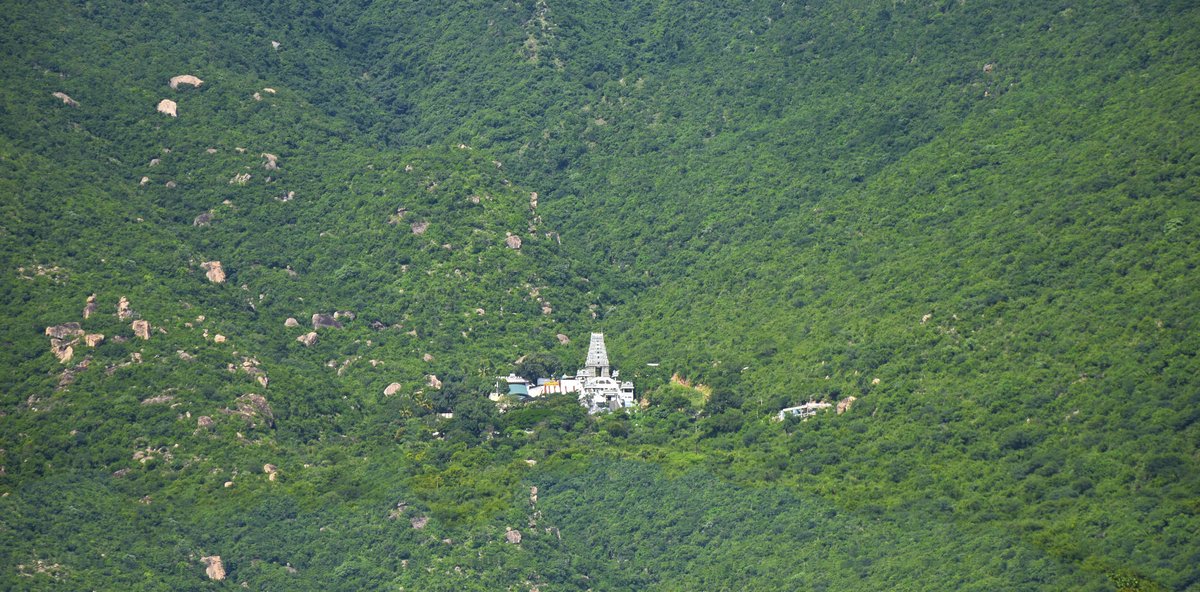
A Murugan sanctum is chipped into the Western-Ghat granite 300 m above the plain. Pilgrims climb 180 steps cut straight into the rock; the breeze carries cardamom from the slopes. The hill’s name, ‘Marudam’, will later christen half the city’s buses.
Sir Robert Stanes imports 25 Lancashire spindles and the city smells of raw cotton for the first time. Within a decade, chimneys outnumber temple gopurams on the skyline. Locals rename the dry riverbank ‘Manchester Nadu’.
On narrow Vaaniar Street, the boy who will present free India’s first budget takes his first breath. He learns arithmetic in Tamil, English and the family’s ledger books. The city still quotes his line: ‘A budget is not merely a collection of figures’.
Capital: ₹5 lakh. Workers: 12,000. The whistle at 5 a.m. becomes the city’s unofficial alarm clock. Mill lands stretch so far that supervisors cycle with lanterns before sunrise.
Samikannu Vincent threads the first reel of a silent French film and Coimbatore learns to sit in the dark together. Ticket: 4 annas. The projector’s carbon arc spits sparks onto the tin roof; nobody minds.
A 30-year-old trader converts a bankrupt rice mill into a sugar-crushing plant. The smell of molasses drifts across the Noyyal. Profits will later fund half the city’s engineering colleges.
In a small house near Town Hall, the boy whose name will carry the city’s initials enters the world. He plays cricket on mill wasteland and listens to loom rhythms that sound like distant rain. Fifty years on he coins ‘core competence’, changing how multitudes think about business.
The Union Jack comes down at 5.47 a.m.; 40,000 mill workers cheer, then clock in for the 6 a.m. shift. Independence means half-day holiday and free sweet pongal. Cotton production actually rises that week.
His mother raises him in a single-room house with no toilet. By 14 he’s dropped out and tinkering with cycle parts. The city’s machine-shop culture feeds an inventor who will one day give low-cost pads to 30 million women.
Chief Minister MGR signs the file converting 20 acres of coconut grove into an IT enclave. Software replaces saris as the city’s hottest export. The first techies arrive on Enfield Bullets; traffic cops still wave them through out of habit.
Jaggi Vasudev, 37, buys 150 acres of thorny foothill scrub. Locals think he’s mad; elephants still raid the mango crop at night. Within five years 50,000 volunteers plant 7.2 million saplings, turning brown hillsides green.
The man who seeded India’s Green Revolution returns to Coimbatore district to a 3-km flower-petal welcome. Villagers wave sheaves of dwarf wheat he popularised. He tells students: ‘Feeding the country is our oldest start-up.’
At Jordan’s Melbourne garage, the first Indian on an F1 grid clocks 320 km/h. He grew up racing go-karts on the mill roads of RS Puram. Every loom in Coimbatore stops for the 56 seconds of qualifying shown on Doordarshan.
PM Modi pulls the saffron veil off a 112-foot steel face that stares down the Velliangiris. Guinness officials measure: tallest bust on Earth. At dusk, 3D lasers paint Shiva’s third eye on passing clouds; traffic backs up 18 km to the city.
Drone cameras map every pothole; AI sensors time the traffic lights on Avinashi Road. Heritage mills become co-working lofts where coders debug under original Burma-teak beams. Cotton dust still hangs in the sunbeams—just Wi-Fi enabled now.
Management thinker · 1941–2010
Born here; name encodes the city
His first classroom was PSG College of Technology on Avinashi Road. When professors scoffed at a boy from a mill town dreaming of Harvard, he used their disdain as data. Today the Coimbatore airport lounge displays his Fortune-at-the-Bottom-of-the-Pyramid pyramid in stainless steel.
Inventor · born 1961
Still lives near Peelamedu
He prototyped the ₹1 sanitary-pad machine in a shed behind a textile scrap shop. His neighbors thought he’d lost his mind—until the same machines reached 21 countries. Walk into any mill canteen and women will point to the table where he first tested pads made from mill cotton.
Formula 1 driver · born 1977
Born here; first Indian in F1
He learned speed on the Coimbatore-Kochi highway at dawn, when truckers still waved him past. Every November he returns to race in the Kari Motor Speedway, telling local kids that the smell of burnt rubber reminds him of home.
Actor · born 1992
Raised at Avila Convent, RS Puram
Teachers remember her dancing in the school courtyard to avoid math class. She still slips into Coimbatore quietly, buying jasmine garlands at the same Gandhi Park stall, refusing star treatment because ‘the auto drivers knew me before the cameras did.’
Where locals actually book dinner — not the tourist menus.
Small things that change how the city treats you.
The city, as it actually looks.


Yes. One morning you’re inside a 2nd-century Shiva temple listening to bronze bells, by afternoon you’re walking the factory floor that spins a third of India’s cotton. The city rewards curious travelers who want their spirituality served with industrial thunder.
Three full days. Day 1 for the Adiyogi statue and Isha trails, Day 2 for Perur and Marudamalai temples plus a textile-mill tour, Day 3 for Gedee cars and a side trip to Valparai tea estates in the Ghats.
Take the new Airbus-style city bus 2A—₹35 to Gandhipuram, running every 30 minutes. Taxis quote ₹800 for the same 11 km ride.
Generally yes. Buses and the metro feeder autos have CCTV. After 10 PM stick to branded cabs (Ola, Uber) with trip-sharing; avoid independent autos near railway underpasses.
December to February—nights drop to 18°C, perfect for climbing the 600 steps to Marudamalai temple without dripping sweat. Avoid April when mills shut due to 42°C heat.
Yes, but you need to email ahead. Lakshmi Mills and Sri Sakthi Mills run 90-minute heritage tours on weekdays at 10 AM; no photography allowed inside spinning sheds due to cotton-dust fire risk.
17 places to discover

Saved and recently read places — kept on this device only.
Photos may have been resized or cropped.