
Place
India Updated Apr 2026
The first thing that catches you off-guard in Chandigarh is the silence. In a country where cities honk, Chandigarh listens — the only soundtrack is your footsteps on Le Corbusier’s grid and the occasional thwack of a parakeet in a 60-year-old ceiba. India’s only planned metropolis feels like someone pressed pause on the subcontinent’s usual chaos and spliced in a slice of mid-century Europe.
 Photo: Gauravdeep Singh / Pexels
Built from cited sources · see the method · How we make our guides →
Walk one block north of the rose garden and you’ll smell butter melting onto cornmeal roti while a turbaned cook whistles a 1950s Bollywood tune. The same afternoon you can stand inside the High Court, under a 43-meter-high parasol of raw concrete painted in Mondrian primary colours, and realize the building is cooler without air-conditioning than most malls are with it. Chandigarh rewards that kind of cognitive whiplash.
Locals call their home The City Beautiful, but the nickname feels too polite. This is a place where government clerks lunch next to modernist pilgrims who’ve flown in from Tokyo to measure the precise angle of the Tower of Shadows, where students argue over lassi thickness at a 7 a.m. dhaba while vintage Fiats roll past roundabouts named after Sanskrit constellations. You don’t visit Chandigarh to tick off sights; you come to see what happens when Punjabi appetite meets Swiss geometry.
Not every monument, just the ones we'd walk you past ourselves.


Where to wander, by quarter — each with its own rhythm.
Before you go
From partition refugee camps to UNESCO World Heritage in 64 years
Stone tools wash up after monsoons along what will become Sukhna Lake's shoreline. The people who dropped them lived on a vast lake ringed by reeds, hunting bar-headed geese and fishing for carp. Their potsherds still surface when gardeners dig too deep in Sector 5.
The Ambala District Gazetteer mentions 'Chandi-ka-garh'—a mud-walled temple to the goddess Chandi—sitting alone in scrubland. No roads lead there. The name sticks to the surrounding wasteland like burrs to a passing buffalo.
Lahore—capital of Punjab for eight centuries—becomes Pakistani overnight. Trains arrive in Ambala crammed with refugees who speak the same language but carry everything they own in bedsheets. Eastern Punjab suddenly has no capital, no courts, no secretariat. The wound will take more than a new city to heal.
Engineer P.L. Varma's committee tours existing Punjab towns and finds them all wanting—too close to Pakistan, too short on water, too small for the human wave about to break. They stop at a scrub plateau where the Shivaliks meet the plains. The soil is loam, the gradient perfect for drainage, and the only thing to demolish is kikar thorn.
Mathew Nowicki boards a TWA Constellation in New York, sketching curved roads for a fan-shaped city called 'Chandigarh' on the back of an air-sickness bag. The plane crashes in Cairo. His partner Albert Mayer withdraws, leaving Punjab governor C.P.N. Singh holding rolled-up drawings nobody knows how to build.
Charles-Édouard Jeanneret steps onto the tarmac wearing a wool suit and a straw boater. He looks at the flat, sun-blasted plateau and redraws the entire plan in four days—rectangular sectors like a chessboard, each 1.2 km by 0.8 km, numbered clockwise. 'We will build a city of the sun,' he tells reporters. Nobody mentions the temperature is 43 °C.
Fifty-eight villages—Attawa, Burail, Kaimbwala—receive notices that their land now belongs to the future. Compensation arrives in brown envelopes: ₹1,200 per acre, enough for a bicycle and train tickets to Delhi. Old banyan trees are numbered, transplanted, or left to die where the new Secretariat's parking lot will pour concrete.
While engineers pour the Capitol Complex, a roads inspector carries broken bathroom fittings, cracked electrical insulators, and discarded bicycle frames into a gorge after dark. He arranges them into dancers, musicians, a kingdom of recycled stone. For eighteen years he works illegally, bribing watchmen with tea and stories.
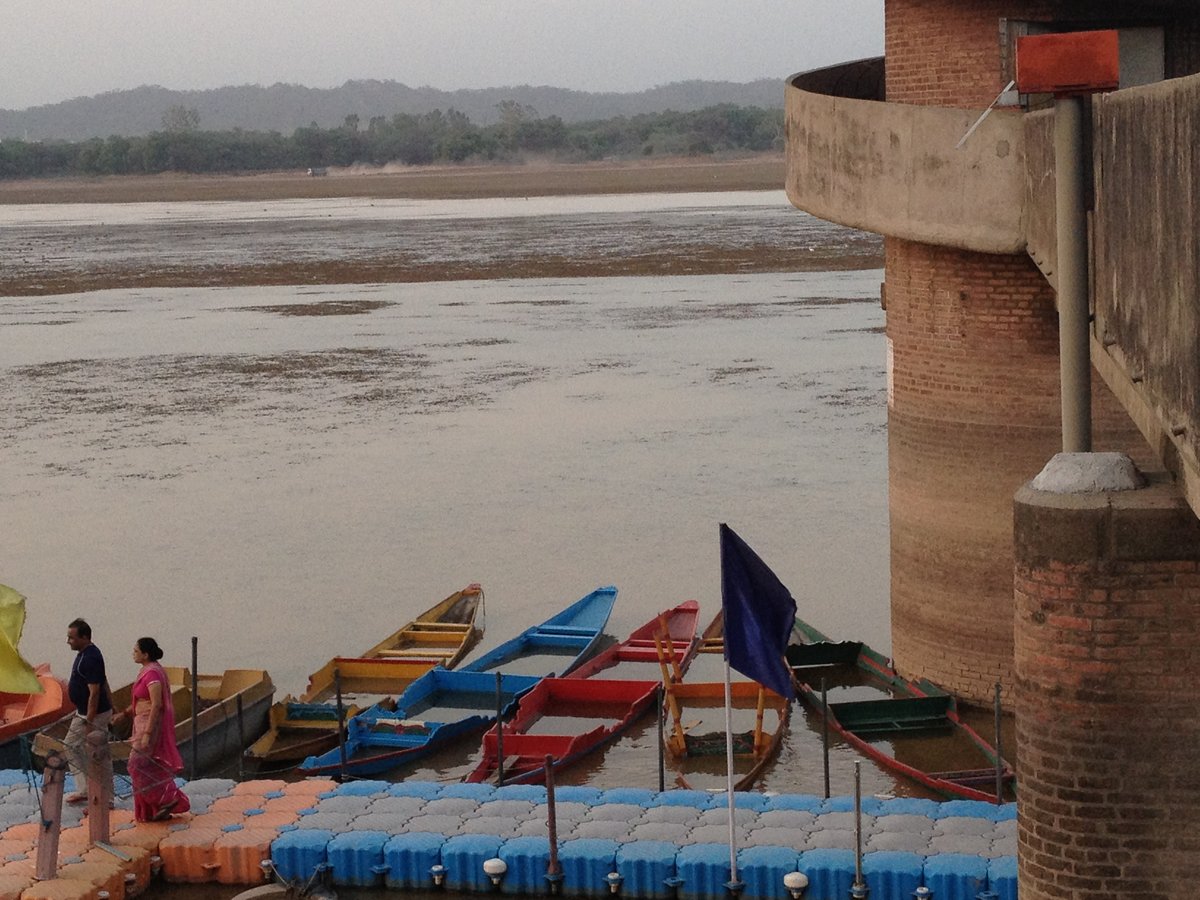
Engineers dam the seasonal Sukhna Choe with 400 meters of earthen fill. Monsoon water backs up into a 3-km crescent where sarus cranes land the same week. Within a year, rowing clubs form, morning walkers claim the eastern promenade, and the first photography studio opens to sell postcards of reflections that never existed before.
The Swiss architect who stayed fifteen years—who designed every park bench, every streetlamp, every college dormitory—flies out of Chandigarh with two teak trunks. Inside: original drawings, a pair of rattan chairs, and malaria tablets he never needed. He dies in Geneva two years later, leaving his will: scatter my ashes in Sukhna Lake. They never do.
Punjab splits again—Punjabi-speaking Punjab, Hindi-speaking Haryana. Chandigarh, built with Punjab's money, becomes capital of both and property of neither. Bureaucrats wake up to new letterhead overnight. The High Court building—already inscribed 'GOVERNMENT OF PUNJAB'—suddenly serves two masters who refuse to share furniture.
Municipal bulldozers arrive to demolish Nek Chand's illegal sculpture kingdom. Instead, they find 12 acres of concrete waterfalls, amphitheaters, and 2,000 statues made from toilet bowls. The chief architect—who once threatened arrest—cuts the ribbon himself. Entry fee: 50 paise. First-day crowd: 3,000 people who have never seen anything built without government approval.
In a Delhi stadium 250 km away, the captain born in Sector 16 raises a golden trophy. Chandigarh listens on All India Radio, then pours into the streets. Processions circle the Capitol Complex—people who have never marched before, marching past buildings they still call 'new'. That night, every paan shop displays the same headline: 'City Beautiful Makes India Proud'.
The 22-year-old flight purser from Sector 46 shields three children as gunmen spray Pan Am 73 in Karachi. Her body, when it returns to Chandigarh, is carried through streets lined with schoolgirls who recognize their senior from St. Xavier's. The Ashoka Chakra arrives posthumously—the medal pinned to a coffin built in the same Le Corbusier grid she grew up in.
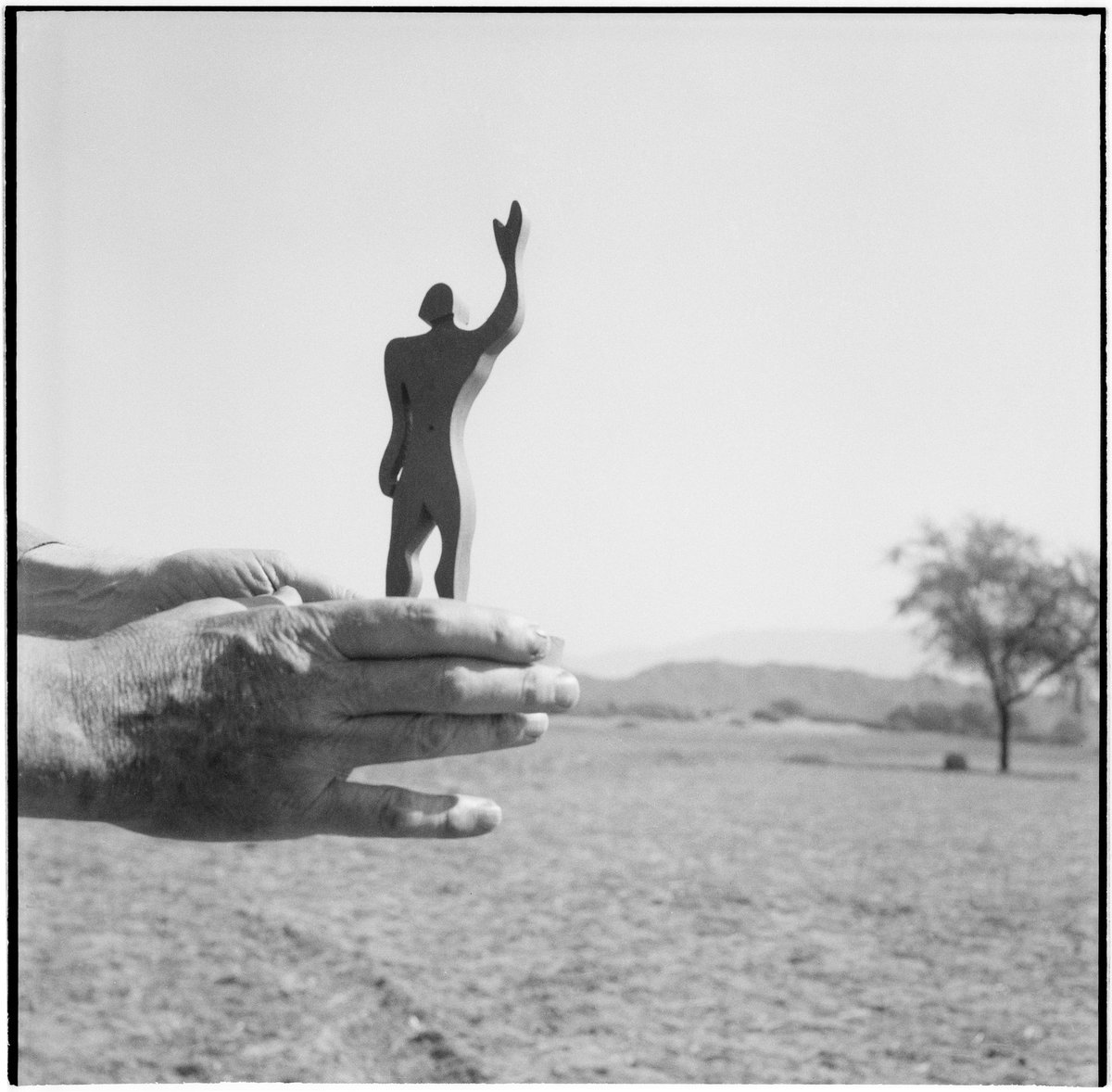
The concrete that once horrified Parliament—raw, unfinished, sun-scorched—becomes World Heritage. The High Court's parasol roof, the Assembly's hyperbolic cooling tower, the Open Hand spinning in wind: all now protected like Angkor Wat. Tour guides learn to pronounce 'béton brut'. Locals who walked past for decades suddenly see their own bus stops on postcards.
In a city planned for peace, a Mirage-2000 fuselage arrives by truck at dawn. The museum—built in a former ammunition depot—displays a piece of Karachi's Atlantic Ocean where Neerja's plane went down. Veterans bring grandchildren to sit in cockpits that once patrolled these same Shivalik foothills.
A teak-and-cane chair designed for Government College fetches ₹10.36 lakh in Milan. Chandigarh Administration files FIR: heritage furniture is disappearing from offices overnight. Carpenters in Sector 25 start producing 'original' replicas using photocopied labels. The city that gave away its villages now watches its chairs fly to apartments in Brooklyn.
Artist · 1924–2015
Creator of Rock Garden
By day he inspected roads for the government; by night he hauled broken ceramics into a gorge and built a kingdom. When officials discovered his 12-acre secret in 1975, they shrugged and opened it to the public. Today 5,000 visitors a day walk his mosaic courtyards—he’d probably still be adding turrets if he were alive.
Architect · 1887–1965
Master planner of Chandigarh
He arrived in 1951 with a T-square and Nehru’s mandate to ‘let this be symbolic of freedom.’ Corbusier swapped Albert Mayer’s fan for a rigid grid, painted the High Court doors neon red, and planted the Open Hand to spin in the wind. Walk the Capitol at 8 a.m. and you’ll feel the exact light he drew in charcoal sketches.
Cricketer · born 1959
Born in Chandigarh
He learned swing bowling on the Sector 16 cricket ground, a five-minute pedal from the Rose Garden. In 1983 he lifted the World Cup at Lord’s; locals claim every sixth person in the city still owns a grainy VHS of that final. Drop by the stadium nets at dusk—some kid is always trying to replicate his 175* follow-through.
Flight purser & hero · 1963–1986
Born in Chandigarh
She modeled for Bombay ads on weekends and flew Pan Am weekdays. During the 1986 Karachi hijacking she died shielding three kids; India’s youngest Ashoka Chakra recipient was 22. Her childhood street in Sector 46 is quiet—no plaque, just a pink house where neighbors still hang marigolds on her birthday.
Architect & furniture designer · 1896–1967
Chief Architect 1951–1965
Cousin Corbusier got the headlines; Jeanneret stayed to pick door handles and design the V-leg chair every café now copies. He lived in a modest Sector 5 bungalow, cycled to office daily, and left his ashes in Sukhna Lake. The city sells overnight stays in his old bedroom—book early, there are only two.
Where locals actually book dinner — not the tourist menus.
Small things that change how the city treats you.
The city, as it actually looks.


Yes, if you care about 20th-century design. It’s the only city in India you can walk in a straight line for 8 km and never cross a cow. The Capitol Complex is UNESCO-listed and the Rock Garden is a 40-acre fever dream built secretly at night.
Two full days cover the big three—Capitol Complex tour, Rock Garden, Sukhna Lake sunrise—plus a food crawl in Sector 22. Add a third day if you want slower museum time or a side trip to the Shivalik foothills.
Yes. Entry is only with a guide and slots fill, especially weekends. Reserve online at chandigarhtourism.gov.in at least 24 h ahead; bring passport or Aadhaar for ID check at the gate.
Safer than most Indian cities. The grid is well-lit and auto-rickshaws use meters, but bars in Sector 26 empty around 1 a.m.—book a ride-share instead of hailing on the street.
A plate of chole bhature at a Sector 22 street stall is ₹60; a micro-brewery dinner with craft beer runs ₹1,200 per person. Mid-range Punjabi thali restaurants sit around ₹400–500.
Stick to packaged water. Chandigarh’s municipal supply is technically potable, but summer temperatures spike above 45 °C and plastic bottles are cheap insurance.
14 places to discover


Saved and recently read places — kept on this device only.
Photos may have been resized or cropped.