Visitor Information
Visiting Hours & Ticket Policies
- Open Daily 6:00 AM – 8:00 PM (hours may extend during major festivals such as Maha Shivaratri)
- Entry Fee Free for all visitors. Voluntary donations are appreciated and go towards temple upkeep and community services.
- Photography Permitted in the complex, but always check with temple authorities regarding current policies. Flash photography inside the sanctum is discouraged (OrissaTours).
How to Reach
- By Air Biju Patnaik International Airport (Bhubaneswar) – approx. 70–120 km from Kundeswar. Taxis and buses are available from the airport.
- By Train Nearest major railway station: Cuttack. From there, Kundeswar is accessible by taxi or local bus.
- By Road Well-connected highways from Bhubaneswar, Cuttack, and Jagatsinghpur. Regular buses and private vehicles service the route (OrissaTours).
Accessibility Features
- Wheelchair Access Ramps are available at key entry points, though some areas have uneven stone pathways.
- Assistance Support for elderly and differently-abled visitors can be arranged on request.
- Rest Areas & Sanitation Basic facilities available; more extensive amenities are found in nearby towns.
Dress Code & Etiquette
- Dress Modestly Traditional attire is preferred, but comfortable, respectful clothing is acceptable.
- Shoes Remove footwear before entering temple premises; socks may be worn for comfort.
- Conduct Maintain silence, avoid disruptive behavior, and respect the sanctity of the site.
Best Time to Visit
- October–March Cool, pleasant weather ideal for sightseeing.
- Maha Shivaratri (Feb–Mar) The temple comes alive with rituals, vigils, and cultural festivities (LightUpTemples).
- Shravan Month (Jul–Aug) Mondays are especially auspicious for Shiva devotees.
Historical Origins & Layout
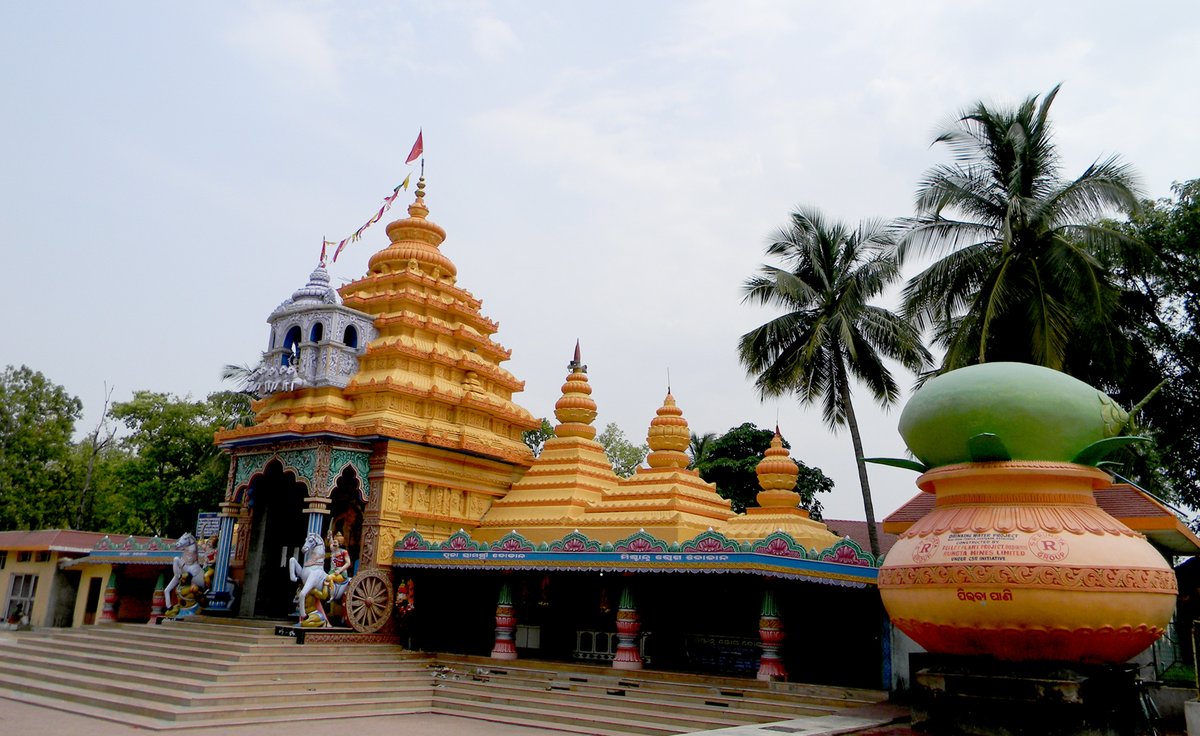
Trilochaneswar Temple’s origins date to the 8th–10th centuries CE, with patronage from rulers such as King Biswanbara of the Keshari dynasty (Dinalipi). The temple follows the canonical Odishan layout—comprising a main sanctum (Vimana/Rekha Deula), assembly hall (Jagamohana/Pidha Deula), subsidiary shrines, a temple kitchen (Rosaghara), and a small museum.
- Main Shrine Oriented east–west, symbolizing spiritual awakening.
- Subsidiary Shrines Typically dedicated to attendant deities or forms of Shiva.
- Museum Houses ancient idols and sculptures with inscriptions (Dinalipi).
Rekha Deula & Jagamohana
- Rekha Deula (Sanctum) Tall, curvilinear spire representing Mount Meru. Adorned with carvings of deities, mythological scenes, floral and geometric motifs (History of Odisha).
- Jagamohana (Assembly Hall) Added in the 10th–11th centuries CE. Features a stepped pyramidal roof and ornate doorways, demonstrating the architectural harmony unique to Odishan temples.
Sculptural Highlights
- Presiding Deity Lord Trilochaneswar (Shiva) in Swayambhu Linga form, one of only 69 such naturally occurring lingas in India (LightUpTemples).
- Chamunda Idol An 18-armed form worshipped as Mahalaxmi.
- Motifs Lotus, kalasha, urushringas, floral scrolls, and narrative panels depicting Hindu legends.
- Inscriptions Provide details on patrons, rituals, and historical context.
Construction Techniques
- Materials Locally sourced stone, primarily sandstone.
- Masonry Precise, interlocking stonework showcasing Odishan craftsmanship.
- Climate Adaptation Stone mass and strategic openings maintain cool interiors (Dinalipi).
Rituals, Festivals & Community Role
Daily Worship & Major Festivals
- Rituals Mangala Aarti (morning), Abhisheka (ritual bathing), Archana & Alankara (offerings and decoration), Evening Aarti.
- Festivals Maha Shivaratri (vibrant all-night worship), Dola Yatra, Kartik Purnima, and Chandan Yatra (LightUpTemples; TravelTriangle).
- Shravan Mondays Increased pilgrim activity and special pujas.
Cultural Activities & Social Functions
-
Performing Arts Odissi dance, Chhau, and devotional music enliven festivals (TravelTriangle).
-
Community Welfare The temple committee organizes free medical camps, disaster relief, and educational support (Hindu Mythology Worldwide).
-
Handicrafts Stalls selling Pattachitra paintings, silver filigree, and local crafts support the region’s artisanal economy.
-
Intergenerational Traditions Youth and children participate in rituals, cultural events, and temple upkeep, ensuring the continuity of heritage practices.
Facilities, Amenities & Safety
- Temple Grounds Clean, peaceful, with resting areas and basic washrooms.
- Shops Small stalls offer offerings, flowers, and refreshments; for hotels and restaurants, visit nearby towns.
- Security & Preservation Managed by the Archaeological Survey of India (ASI); visitors are urged to respect the site and report any suspicious activity (OrissaPost).
- Accessibility Some pathways may be challenging for those with mobility impairments; assistance is recommended.
Nearby Attractions
- Jagatsinghpur Explore local markets and ancient temples.
- Bhubaneswar Lingaraj Temple, Mukteshwar Temple, Odisha State Museum.
- Konark Sun Temple UNESCO World Heritage Site.
- Chilika Lake Asia’s largest brackish water lagoon.
Guided Tours & Special Events
- Guided Tours Available through local agencies and OrissaTours, offering historical and architectural insights.
- Special Events Annual festivals, cultural performances, and occasional community gatherings.
Frequently Asked Questions (FAQ)
Q: What are the visiting hours?
A: 6:00 AM to 8:00 PM daily; may extend during festivals.
Q: Is there an entry fee?
A: Entry is free; donations are welcomed.
Q: How can I reach the temple?
A: By air (Bhubaneswar), train (Cuttack), or road from major cities.
Q: Is the temple accessible for differently-abled visitors?
A: Partial accessibility; some areas may be challenging.
Q: Are guided tours and photography allowed?
A: Guided tours available; photography permitted with restrictions—ask temple authorities.
Q: When is the best time to visit?
A: October–March; Maha Shivaratri and Shravan Mondays offer vibrant experiences.
Tips for a Meaningful Visit
- Visit during early morning or evening aarti for an immersive spiritual experience.
- Dress modestly and remove shoes before entering.
- Check photography policies on arrival.
- Carry water and snacks; facilities are basic within the temple grounds.
- Engage with locals for stories and cultural insights.
- Respect the sanctity—maintain silence and follow etiquette.
- For festival visits, plan ahead for larger crowds and vibrant celebrations.
Visual Gallery
- Intricate stone carvings on Trilochaneswar Temple vimana. Alt: "Stone carvings on Trilochaneswar Temple vimana showcasing mythological scenes."
- Sunrise view of the Trilochaneswar Temple complex. Alt: "Sunrise illuminating the Trilochaneswar Temple in Odisha."
- Maha Shivaratri festival at Trilochaneswar Temple. Alt: "Devotees celebrating Maha Shivaratri at Trilochaneswar Temple."