Karnataka Chitrakala Parishath
BengaluruIndia 12° N · 77° E Updated Apr 2026
Svetoslav Roerich donated 117 paintings here in 1990; originals hang free to view alongside Amrita Sher-Gil works in 18 galleries on a 13-acre campus.
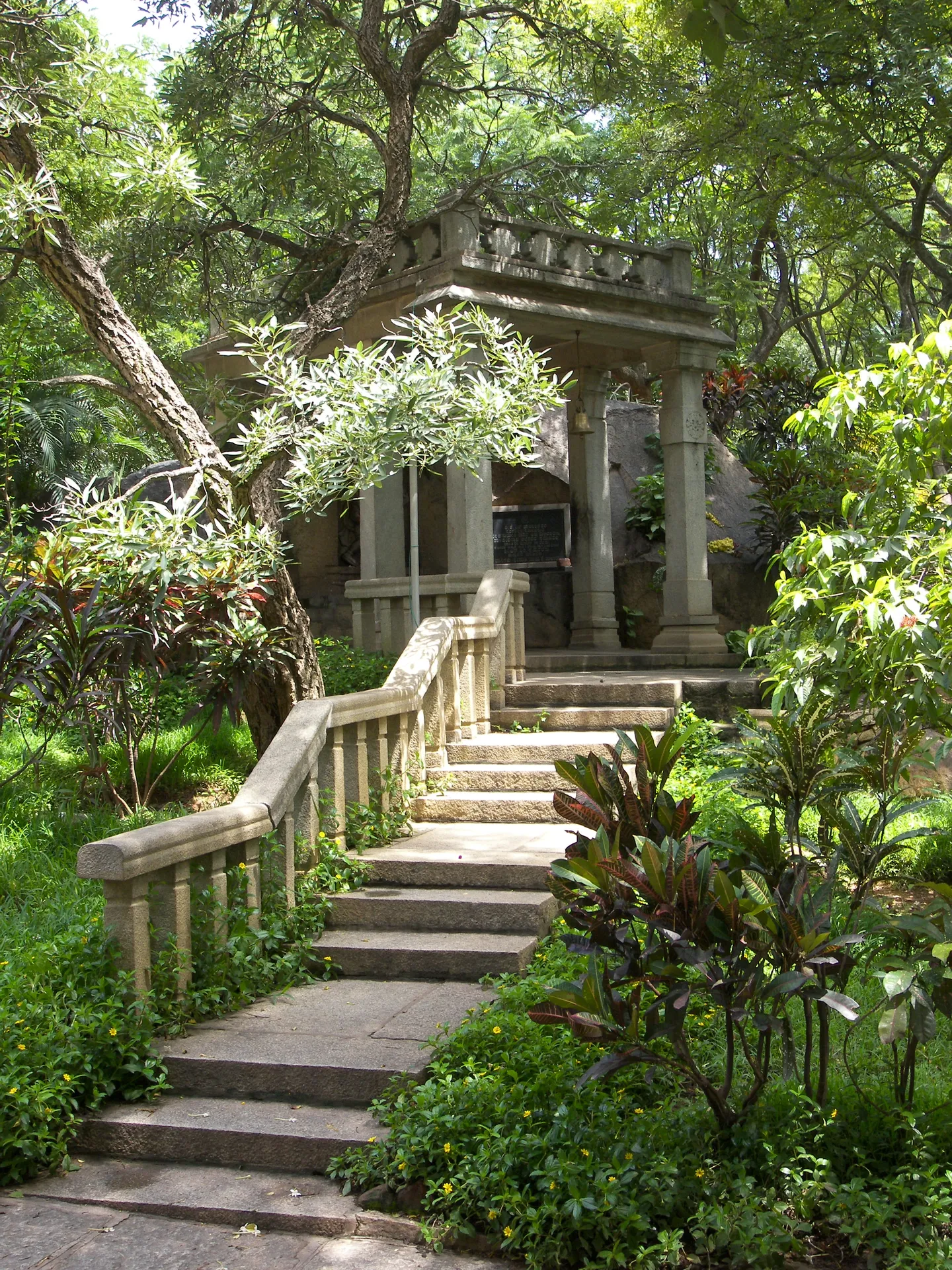 Photo: Rajesh_dangi (talk) (Uploads) · CC BY 3.0
- Time needed
- 2-3 hours
- Entry
- Free
- Best season
- October–February
The son of a Russian mystic married the first lady of Indian cinema, and together they gave 117 paintings to a gallery in Bengaluru that has never charged a single rupee to see them. Karnataka Chitrakala Parishath sprawls across 13 acres — larger than eight football pitches — in the middle of India's tech capital, housing 18 galleries where canvases by Amrita Sher-Gil and M.F. Husain hang steps away from translucent leather shadow puppets salvaged from dying village traditions. Almost no foreign guidebook bothers to mention it.
The campus sits on Kumara Krupa Road, a ten-minute auto-rickshaw ride from Majestic station, shaded by old rain trees that filter Bengaluru's equatorial light into something almost temperate. Thirteen permanent galleries thread through a complex that includes a graphics studio, a sculpture workshop, an open-air theatre, and a full degree-granting college of fine arts. Five rotating exhibition halls mean two visits a month apart will not be the same experience.
What holds you here is the range. One room preserves the Kejriwal Collection — paintings spanning 1800 to 1950 that trace the entire arc of modern Indian art — while the next holds Nicholas Roerich's luminous Himalayan landscapes, painted by a man who believed mountains were spiritual transmitters. Down the corridor, hand-cut leather puppets from Karnataka's Togalu Gombeyaata tradition hang backlit in a gallery that smells faintly of treated hide.
Admission is free. The campus is quiet. And the canteen serves filter coffee for less than you'd pay for bottled water at the airport.
What to see
-
The Roerich Gallery
In 1990, Svetoslav Roerich — son of the Russian mystic-painter Nicholas Roerich, husband of Devika Rani, the first lady of Indian cinema — donated 117 paintings to this gallery. Some are his father's luminous Himalayan landscapes, painted during decades of self-imposed exile in the Kullu valley. Others are Svetoslav's own portraits, including studies of Jawaharlal Nehru and Indira Gandhi that echo versions now hanging in India's Parliament. The originals are here, on Kumara Krupa Road, with free admission. That fact alone would justify a visit. But what stops you is the light in Nicholas Roerich's mountains — blues and violets that don't exist in photography, rendered by a man who believed the Himalayas were a portal to something beyond geography. His canvases glow as if lit from within, a trick of pigment layering that art historians still argue about. Stand close enough and you'll see the brushstrokes are unexpectedly rough, almost impatient. -
The Kejriwal Collection
H.K. Kejriwal first saved the Parishath from financial collapse in the 1960s. Thirty-five years later, in 1995, he gave it something harder to part with: his family's entire art collection, spanning 1800 to 1950. Amrita Sher-Gil hangs beside Jamini Roy. Rabindranath Tagore's paintings — lesser known than his poetry but no less strange — share wall space with early works by M.F. Husain and S.H. Raza, made before either became a household name. The collection reads like a compressed history of modern Indian art, assembled by someone who bought what moved him rather than what the market told him to. Sher-Gil's figures carry a melancholy that reproductions flatten; seen at actual scale, her colour palette is darker and more deliberate than you expect. The Tagore works are the real surprise — spidery, almost hallucinatory ink drawings from a Nobel laureate better known for verse. -
Shadow Puppets and the Full Campus Walk
Secretary M.S. Nanjunda Rao spent years collecting Togalu Gombeyaata shadow puppets from Karnataka's villages as the tradition was dying around him. His private obsession became an entire gallery — translucent leather figures, some taller than a child, pinned against backlit panels so you can see the intricate cutwork that once threw stories onto courtyard walls. The puppet gallery sits within a 13-acre campus that holds 18 galleries in total, plus a sculpture garden, an open-air theatre, and a graphics studio where printmakers still work. Thirteen acres in central Bengaluru is roughly the size of six football pitches — an improbable amount of green space within walking distance of the CBD. Give yourself two hours. Start with Roerich, cross through the sculpture courtyard where stone and bronze figures sit between rain trees, then end at the folk art galleries. The canteen sells filter coffee. You'll want it by then.
Plan your visit
- Getting There
- On Kumara Krupa Road in Seshadripuram, about 2 km north of Bangalore City Railway Station — a 10-minute auto-rickshaw ride. The nearest metro stop is Majestic (Kempegowda Interchange) on both the Purple and Green lines, roughly a 15-minute walk northwest through Kumara Park. Ask any auto driver for 'Chitrakala Parishath' — it's a well-known landmark, and you'll avoid the confusion of giving the full street address.
- Opening Hours
- As of 2026, the galleries are open daily from 10:00 AM to 5:30 PM, including weekends and most public holidays. The complex occasionally closes for setup between major exhibitions — if you're visiting during January (Chitra Santhe season), confirm timings in advance as the campus transforms for the outdoor art fair.
- Time Needed
- A focused visit covering the Roerich gallery and the Kejriwal collection takes about 90 minutes. To see all 18 galleries — including the shadow puppet collection and rotating exhibitions — allow three hours. The 13-acre campus rewards a slow pace, so budget an extra half-hour if you want to sit in the open-air theatre area or browse the Art Mart.
- Tickets & Cost
- As of 2026, general admission to the permanent galleries is free — one of the few places in India where you can see original Amrita Sher-Gil and M.F. Husain works without paying a rupee. Some special exhibitions and the College of Fine Arts events may charge a nominal fee (typically ₹20–50). The Art Mart shop sells prints and crafts at reasonable prices.
Tickets & tours.
These are guided options from our partners — same price as booking direct.
Prices are indicative — final pricing and availability are confirmed at checkout. Audiala may earn a commission from bookings made through these links.
Photo Gallery

History
The Art Complex That Almost Wasn't
In 1960, Bangalore was not yet a tech hub — it was a pensioner's city, mild-climated and slow, known for public gardens and military cantonment lanes. Into this setting, M. Arya Murthy and Prof. M.S. Nanjunda Rao leased 2.5 acres of government land and set out to build an art institution from nothing. They had no endowment, no permanent collection, no building — only conviction and a single wealthy believer.
That believer was H.K. Kejriwal, a Bangalore industrialist whose early funding kept the Parishath alive through its first precarious decade. The institution won recognition from both Karnataka state and the national Lalit Kala Akademi in 1966. By the 1970s, it had relocated to its current 13-acre campus on Kumara Krupa Road — a transformation from borrowed patch of ground to one of the largest art complexes in southern India.
The turning point
Kejriwal's Two Gifts, Thirty-Five Years Apart
H.K. Kejriwal first entered the Parishath's story in the early 1960s, when the institution was little more than an idea and a lease. Without his financial backing, the founders' vision of a dedicated art complex in Bangalore would likely have dissolved into the long list of cultural projects that never survive their first funding gap. Kejriwal's money bought time — and time bought credibility.
Then, in 1995, he did something harder than writing a cheque. Kejriwal donated his family's entire private art collection — works accumulated over generations, spanning 1800 to 1950, including paintings by Amrita Sher-Gil, Jamini Roy, Rabindranath Tagore, M.F. Husain, S.H. Raza, and F.N. Souza. A private treasure became a public one, and visitors now walk past canvases that auction houses would price in the tens of millions of dollars.
Thirty-five years separated the two acts of generosity. The first saved an institution. The second gave it a reason to endure.
The Secretary Who Dissolved His Own School
A Russian Painter's Bangalore Years
Tips for visitors
Photography Rules
Photography is generally permitted in the galleries, but flash is prohibited — the Roerich oils and Kejriwal-collection works on paper are light-sensitive. Tripods and professional equipment require prior written permission from the Parishath office.Best Time to Visit
Weekday mornings are nearly empty — you can stand alone with a Svetoslav Roerich painting of the Himalayas, which is the way they should be seen. Avoid Sunday afternoons, when art students and families fill the galleries. January brings Chitra Santhe, the annual open-air art fair stretching along Kumara Krupa Road — around 1,000 artists sell work directly, and the entire neighborhood becomes a gallery without walls.Eat Nearby
CTR (Central Tiffin Room) in Malleshwaram, a 10-minute auto ride northwest, serves what many consider Bangalore's best butter dosa — expect a queue, budget ₹150 for two. For a sit-down meal, Karavalli at the Gateway Hotel on Residency Road (mid-range, about ₹1,200 for two) does coastal Karnataka cuisine that pairs well with an afternoon of Karnataka art.Combine With Nearby
The Bangalore Palace is barely a kilometre east — a 15-minute walk through Jayamahal. Pair the two for a half-day that covers Karnataka's artistic heritage and its royal pretensions. The Government Museum on Kasturba Road is another 2 km south, giving you three institutions in a single afternoon if you're determined.Don't Miss the Puppets
Most visitors head straight for the Roerich paintings and skip the Togalu Gombeyaata shadow puppet gallery. That's a mistake. Secretary Nanjunda Rao collected these translucent leather figures as the tradition was dying out — some are taller than a child, depicting Ramayana scenes with perforated patterns that throw extraordinary shadows. The gallery is tucked away and easy to miss; ask at the entrance desk for directions.
Frequently asked
Is Karnataka Chitrakala Parishath worth visiting?
Yes — it holds one of the largest art collections in South India across 18 galleries, and admission is free. You'll find original Roerich paintings, Amrita Sher-Gil works, and a shadow puppet collection that documents a dying folk tradition, all on a 13-acre campus that feels oddly peaceful for central Bengaluru. The Kejriwal collection alone — spanning 150 years of Indian art history — would justify a dedicated museum anywhere else.
How long do you need at Karnataka Chitrakala Parishath?
Plan for two to three hours if you want to see all 18 galleries without rushing. The 13 permanent galleries cover everything from Roerich's Himalayan landscapes to traditional leather shadow puppets, and the rotating exhibitions change regularly. If you're short on time, prioritize the Roerich Gallery and the Kejriwal Collection — those two alone take about 45 minutes.
Can you visit Karnataka Chitrakala Parishath for free?
Entry to the museum galleries is free of charge. This makes it one of Bengaluru's best-value cultural stops — you're looking at original works by Husain, Sher-Gil, Souza, and both Roerichs without paying a rupee. Some special exhibitions or events may carry a nominal fee.
How do I get to Karnataka Chitrakala Parishath from Bengaluru city centre?
The complex sits on Kumara Krupa Road in Seshadripuram, roughly 2 km from Majestic (Kempegowda) Bus Station — about a 10-minute auto-rickshaw ride. The nearest metro station is Mahalakshmi on the Purple Line, from which it's a 15-minute walk or short auto ride northwest. Look for the Art Complex at No. 1 Kumara Krupa Road; the 13-acre campus is hard to miss once you're on the right street.
What should I not miss at Karnataka Chitrakala Parishath?
The Roerich Gallery, which houses 117 paintings donated by Svetoslav Roerich himself — his father Nicholas Roerich's luminous Himalayan scenes are unlike anything else in Bengaluru. The Kejriwal Collection covers Indian art from 1800 to 1950, including works by Rabindranath Tagore and Jamini Roy. And don't skip the Togalu Gombeyaata shadow puppet gallery — these translucent leather figures represent a Karnataka folk tradition that's actively disappearing.
What is the best time to visit Karnataka Chitrakala Parishath?
Weekday mornings are quietest, giving you the galleries mostly to yourself. If you visit in January, try to coincide with Chitra Santhe — an open-air art fair held annually on the streets around the complex since 2004, where hundreds of artists sell work directly. Bengaluru's mild climate means any season works, though the monsoon months (June–September) make the 13-acre campus especially green.
What is Chitra Santhe at Karnataka Chitrakala Parishath?
Chitra Santhe is an annual open-air art market held on Kumara Krupa Road, organized by the Parishath since 2004. Hundreds of artists — from students to established painters — display and sell work directly on the street. The 2026 edition was the 23rd, and the event has become one of the largest single-day art fairs in India.
Who donated the Roerich paintings at Karnataka Chitrakala Parishath?
Svetoslav Roerich donated 117 paintings in 1990 — both his own works and those of his father, the Russian mystic-painter Nicholas Roerich. Svetoslav spent decades splitting time between the Kullu Valley and Bangalore with his wife Devika Rani, the pioneering Indian actress. His portraits of Nehru and Indira Gandhi hang in India's Parliament House, but you can see his originals here for free.
Sources & attribution 6
- Wikipedia — Karnataka Chitrakala Parishath — Founding details, gallery count, campus size, Roerich and Kejriwal donations, sculpture gallery and international gallery dates
- Wikidata — Entity ID, location coordinates, and basic classification
- ExploreBees — Campus opening date (June 25, 1976), visitor experience details
- Lalit Kala Akademi recognition records — 1966 recognition by Karnataka state and national Lalit Kala Akademi
- Chitra Santhe event coverage — Annual art fair history, edition count confirming 2004 start date
- Kejriwal Collection documentation — Details of the 1995 donation including artists represented (Sher-Gil, Husain, Raza, Souza, Tagore, Jamini Roy)
Built from cited sources · see the method · How we make our guides →
More in Bengaluru.
83 places to discover — a few worth pairing.


Pick up where you left off
Saved and recently read places — kept on this device only.
Photo credits (1)
- ChitrakalaParishatCampus — Rajesh_dangi (talk) (Uploads) — CC BY 3.0 (https://creativecommons.org/licenses/by/3.0/) — Source: https://commons.wikimedia.org/wiki/File:ChitrakalaParishatCampus.jpg
Photos may have been resized or cropped.