An introduction.
Researched by the Audiala editorial team from historical records, architectural archives, and local expertise.
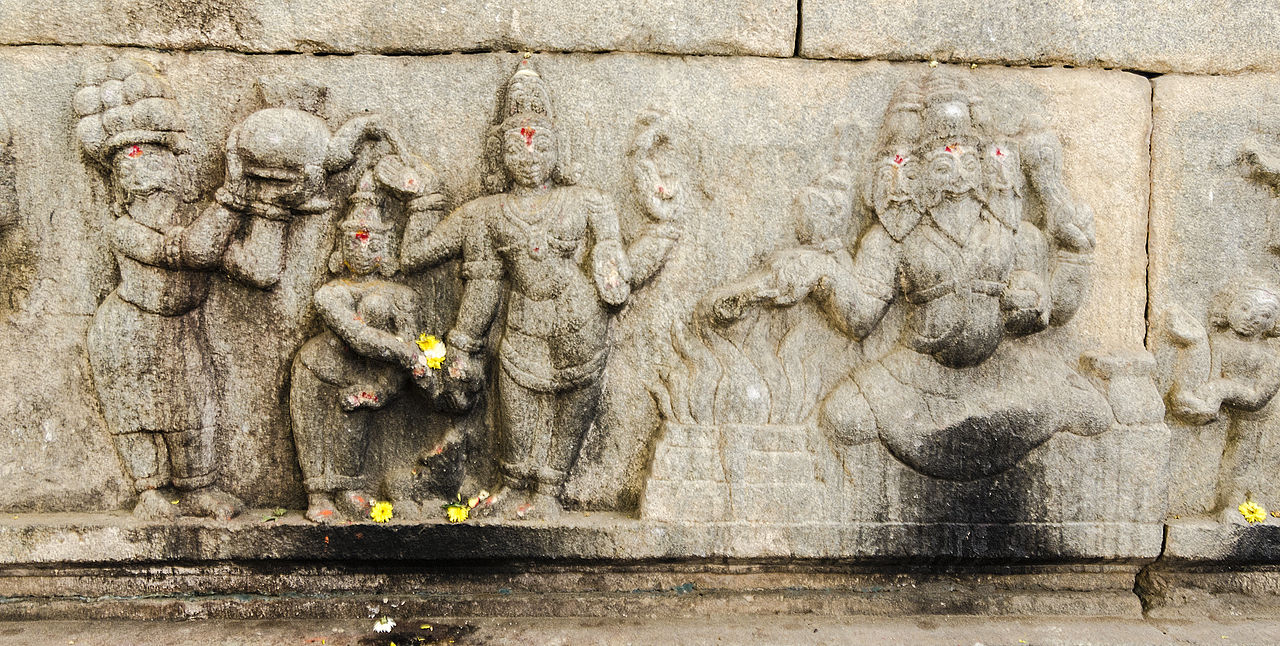
AA carved panel of Queen Victoria sits on a wooden temple chariot outside Halasuru Someshwara Temple, while the shrine behind it speaks in a much older language of stone, incense, and ringing bells. That clash is the reason to come: in Bengaluru, India, this temple lets you feel how a living city layers Chola-era memory, Vijayanagara ambition, Tamil patronage, and colonial afterlives into one compact courtyard. Visit for the sculpture, yes, but stay for the argument the place makes with its own past.
From the road, the temple barely announces itself. Then the gopuram rises, pale against apartment blocks, and the noise of Halasuru drops to a murmur broken by sandals on stone and the low metal clang of ritual.
Most visitors read it as a single old Shiva temple. The site is messier than that, and better for it: most scholars date the core shrine to a Chola-period or slightly later phase, the architecture points to major 16th-century Vijayanagara rebuilding, and Tamil inscriptions hint at communities that helped shape this corner of Bengaluru long before the city became an IT cliché.
Look closely at the yali pillars in the open hall. Each one twists with a different animal force, as if the sculptors refused repetition on principle.
01 What to see.
The Gopura and Nandi Axis
The 48-Pillared Open Mandapa
Take the Slow Circuit
02 In pictures.


Plan and listen to Halasuru Someshwara Temple, Bangalore with Audiala.
Audio guide in your pocket, itinerary in your browser. Built for the way you actually visit.
03 Visitor logistics.
The practical scaffolding for a good visit — kept short.
Getting There
Halasuru Metro station on Bengaluru's Purple Line is the cleanest approach in 2026; the temple sits about 300 to 500 meters away, a walk shorter than three cricket pitches laid end to end. If you come by bus, stops near Halasuru Police Station and Lido put you within 3 to 9 minutes on foot; by car, expect tight market lanes and limited parking, so many visitors leave the vehicle near Old Madras Road and walk the last 200 to 300 meters.
Opening Hours
As of 2026, the most consistently reported visiting hours are 6:00 AM to 12:30 PM and 5:30 PM to 9:00 PM. A Karnataka HRCE page shows slightly different minutes and an 8:30 PM evening close, so treat those exact times as unsettled and verify locally on festival days, especially during Maha Shivaratri and major Monday observances.
Time Needed
Give it 45 to 75 minutes for darshan and a quick circuit through the courtyard. Stay 2 to 3 hours if you want the pillars, side shrines, and ritual rhythm to sink in; this is the difference between reading a headline and reading the whole letter.
Accessibility
Halasuru Metro station has elevators, ramps, tactile paths, and accessible restrooms, which makes the approach easier than arriving by car. Inside the temple complex, clear official information on wheelchair access is missing, and the surrounding lanes can clog with vendors, scooters, and uneven foot traffic, so visitors with mobility needs should aim for quieter morning hours and avoid peak festival periods.
Cost & Tickets
As of 2026, general entry appears to be free, with no confirmed skip-the-line ticket for regular darshan. Paid pooja services are listed separately through the HRCE system, from Archana at Rs 10 to Rudrabhishekam at Rs 400 and Kalyanotsava at Rs 2,000, so the temple keeps worship and entry on different tracks.
05 Tips for visitors.
Small things that change the day.
Dress With Respect
Wear modest clothing and plan to remove your shoes at the entrance chappal stand. Shorts and sleeveless tops draw the wrong kind of attention here; this is a working temple, not a photo set.
Camera Rules
Exterior photos are generally fine, but multiple visitor sources say interior photography is not allowed, especially near the sanctum. Keep the phone in your pocket once you move inward unless a staff member says otherwise.
Choose Monday Morning
Monday morning is the smart slot if you want the temple at full pulse without major-festival crush. You may catch Anna Prasadam, and the compound feels more lived-in then, with incense, bells, and flower sellers doing brisk business before the day turns harsher.
Expect Market Chaos
The temple hides inside traffic, vendors, and dense old-neighborhood commerce, so keep bags close and ignore any unofficial guide offering a paid tour at the gate. Flower and offering sellers are normal; prices are often negotiable.
Eat Nearby, Not Inside
For a quick stop after darshan, the Halasuru station area has practical coffee options like Kumbakonam Traditional Coffee and NN Coffee Supplies at budget level. If you want a longer meal, ride or walk toward MG Road, where the choice opens up fast and the temple mood gives way to city noise.
Pair It Well
Combine the visit with a walk around Ulsoor Lake or another old-Bengaluru stop rather than forcing a rushed tech-city itinerary. If you want another living temple contrast later, Ragigudda Anjaneya Temple shows a very different devotional mood.
Where to Eat
Don't Leave Without Trying
Dining Tips
- check Halasuru Bazaar Street is the heart of the neighborhood—walk it for street food, bakeries, and quick bites. Most places here are cash-friendly.
- check Lunch (12:30–2 PM) is peak time at local eateries; expect crowds at Punjabi Food Court and Roti Junction.
- check All four verified restaurants are within walking distance of each other on Bazaar Street and Car Street—easy to hop between them.
- check Breakfast is huge in this area—arrive early at bakeries (9 AM) for the best fresh pastries and breads.
Restaurant data powered by Google
04 A history of reinvention.
Before Bengaluru Had a Skyline
Halasuru Someshwara Temple belongs to that frustrating, fascinating class of South Indian shrines whose dates refuse to behave. Most scholars place the site in the Chola-period orbit or slightly later, but the evidence stays patchy, and the temple you see now carries clear marks of a major Vijayanagara-era rebuilding rather than a single founding moment.
That matters because the site preserves a longer story than the standard "Kempe Gowda built it" line. Stone, legend, inscription, and later repair all pull in different directions, which is exactly why this temple feels alive instead of embalmed.
Kempe Gowda's Claim in Stone
According to tradition, Kempe Gowda I encountered the deity here through a dream while this area still lay under forest cover. Legend holds that the vision led him to a buried linga and to the decision to mark the spot with a shrine, a story B.L. Rice recorded in 1887 from local memory rather than inscriptional proof.
What stood at stake for Kempe Gowda was not private piety alone. He was a regional chieftain trying to turn authority into permanence while founding a new city under the shadow of the Vijayanagara court, and temple patronage gave that ambition sacred weight.
The turning point came in the 16th century, when the older sacred site became the stone complex whose gopuram and pillared halls still define the place. Scholars usually credit the major architectural transformation to Hiriya Kempe Gowda II, which means the temple preserves a handoff: one ruler enters as legend, another leaves visible masonry.
An Older Sacred Ground (c. 800-1200, uncertain)
Vijayanagara Rebuilding (16th century)
Colonial Eyes, Living Worship (19th-20th century)
Listen to the full story in the app
The whole Halasuru Someshwara Temple, Bangalore,
told well.
Audio guides for 1,100+ cities across 96 countries. History, stories, and local insight — offline ready.

06 Frequently asked.
The questions travellers send us most about Halasuru Someshwara Temple, Bangalore.
Is Halasuru Someshwara Temple worth visiting?
Yes, especially if you want a Bengaluru monument that still works as a temple rather than posing as a museum. The surprise is the setting: traffic, market noise, flower sellers, then a 16th-century stone hall with 48 carved pillars and older layers underneath. Go for the pillars, the gopuram, and the sense that old Bangalore still breathes here.
How long do you need at Halasuru Someshwara Temple?
Give it 45 to 75 minutes for darshan and a quick circuit, or 2 to 3 hours if you want to study the sculpture properly. The open mandapa measures about 15 by 22 meters, roughly the floor area of a modest city apartment block laid flat, and the detail sits at eye level. Slow walking pays off here.
How do I get to Halasuru Someshwara Temple from Bengaluru?
The easiest route is the Purple Line to Halasuru Metro Station, then a walk of about 300 to 500 meters, about the length of four to six cricket pitches. Autos work too, but parking around the temple lanes is limited and often annoying. From central MG Road, you are only about 2 to 3 kilometers away.
What is the best time to visit Halasuru Someshwara Temple?
Early morning on a weekday is the best bet, ideally soon after the temple opens around 6:00 AM. The stone feels cooler, the light is gentler on the carvings, and the crowd stays manageable unless you arrive on a Monday or during Maha Shivaratri. Avoid peak festival hours if you want time with the architecture rather than a queue.
Can you visit Halasuru Someshwara Temple for free?
Yes, general entry appears to be free. What costs money are specific rituals and poojas, with published fees ranging from ₹10 for an archana to ₹2,000 for a kalyanotsava. Carry cash or check the Karnataka HRCE service page if you plan a ritual rather than a simple visit.
What should I not miss at Halasuru Someshwara Temple?
Do not rush past the 48-pillared open mandapa, the yali columns, the Nandi axis, and the side shrines with Tamil Shaivite traces. Look for the mix of Kannada and Tamil devotional history in the sculpture program, then ask about the excavated kalyani, the temple tank that hints the site may be older than the stone structure by centuries. That is the temple's quiet confession.
Verified, and shown.
Researched and written by the Audiala editorial team from historical records, architectural archives, and local expertise.
Provided alternate names, Chola-period claims, coordinate references, and early-date framing.
Main synthesis source for history, architecture, inscriptions, legends, festivals, and scholarly debates.
Used for name variants and corroboration of Jayappa Gowda dating claims.
Used for visitor hours, local practical notes, crowd impressions, and review-based etiquette details.
Used for dedication, entry-fee guidance, and standard visitor information.
Used for hour listings, free-entry guidance, metro distance, and etiquette notes.
Used for dress-code and practical visitor guidance.
Used for temple identity, administration notes, and the low-confidence tank-age claim.
Used for travel observations, 1902 chariot detail, Queen Victoria panel, and local legends.
Used for festival list, practical visiting notes, and recent ceremonial context.
Used for visitor timing variants, descriptive observations, and festival context.
Used for observational detail about the visitor experience and architecture.
Academic source cited for the 16th-century gopuram assessment and Vijayanagara architectural reading.
Primary historical documentation for founding legends, colonial-era recording, and inscription references.
Journalistic source cited for Jayappa Gowda tradition and temple-history narrative.
Used for coordinate confirmation and basic identity metadata.
Used for official-facing timing display and temple administration context.
Used for pooja-service timings and fee listings.
Referenced in research for service-price snippets where the main page was difficult to extract.
Used to confirm the existence of online temple-service workflows.
Used for nearby transport-stop context.
Used for metro access, accessibility features, and station parking information.
Used for bus-stop names, bus lines, and walking estimates from transit points.
Used for parking limitations, street access, and distance from MG Road.
Used for community-style practical notes on parking and visit planning.
Used for nearby coffee and cafe options around the metro station.
Used for nearby dining context around the Halasuru area.
Used as a dated source on toilet conditions, flagged in research as historical rather than current.
Used for nearby rest-area fallback around Ulsoor Lake.
Used for community notes on amenities such as footwear storage.
Used as the main heritage documentation portal for site layout, architecture, and archaeology.
Used for entry sequence, circulation, and spatial layout.
Used for construction phases and stylistic layering.
Used for gopura dimensions and construction description.
Used for mandapa dimensions and pillar-hall planning.
Used for pillar variation, sculptural detail, and viewing advice.
Used for the excavated temple tank, its location, and access limitations.
Used for building materials and structural fabric.
Used for side shrines, sculptural program, and iconographic details.
Used for local tourism framing, side-shrine references, and festival mentions.
Used for local-neighborhood framing and visitor-experience cues.
Used for old-Bangalore neighborhood context and local sentiment.
Referenced in research for a brief sensory note about chanting at the entrance.
Used for local-culture framing and a low-confidence note on a Ganga-period sculpture find.
Last reviewed
Researched from Wikidata, Wikipedia & official sources · fact-checked · How we make our guides →