
Historical Background and Significance of Dr. B.R. Ambedkar
Early Life and Social Context
Born in 1891 in what is now Madhya Pradesh, Dr. Ambedkar faced severe social exclusion due to the caste system. Excelling academically, he earned degrees from Elphinstone College, University of Bombay, Columbia University, and the London School of Economics, becoming one of the most educated Indian leaders of his time.
Role in Social Reform and the Indian Freedom Movement
Ambedkar’s personal experiences with discrimination shaped his activism. He led movements like the Mahad Satyagraha (1927) and the Temple Entry Movement, championed women's and labor rights, and advocated for universal education.
Architect of the Indian Constitution
As Chairman of the Drafting Committee, Ambedkar was pivotal in shaping the Constitution, which enshrined social justice, secularism, and equality. He ensured the abolition of untouchability and the protection of minority rights.
Conversion to Buddhism
In 1956, Ambedkar and his followers converted to Buddhism to protest caste oppression, a landmark event that continues to inspire Dalit communities.
Legacy and Commemoration
Ambedkar Jayanti (April 14) is celebrated nationwide, with processions, talks, and tributes at statues and memorials—his message of “educate, agitate, organise!” remains central to ongoing social reform movements.
Ambedkar Statue Karnataka: Symbolism and Significance
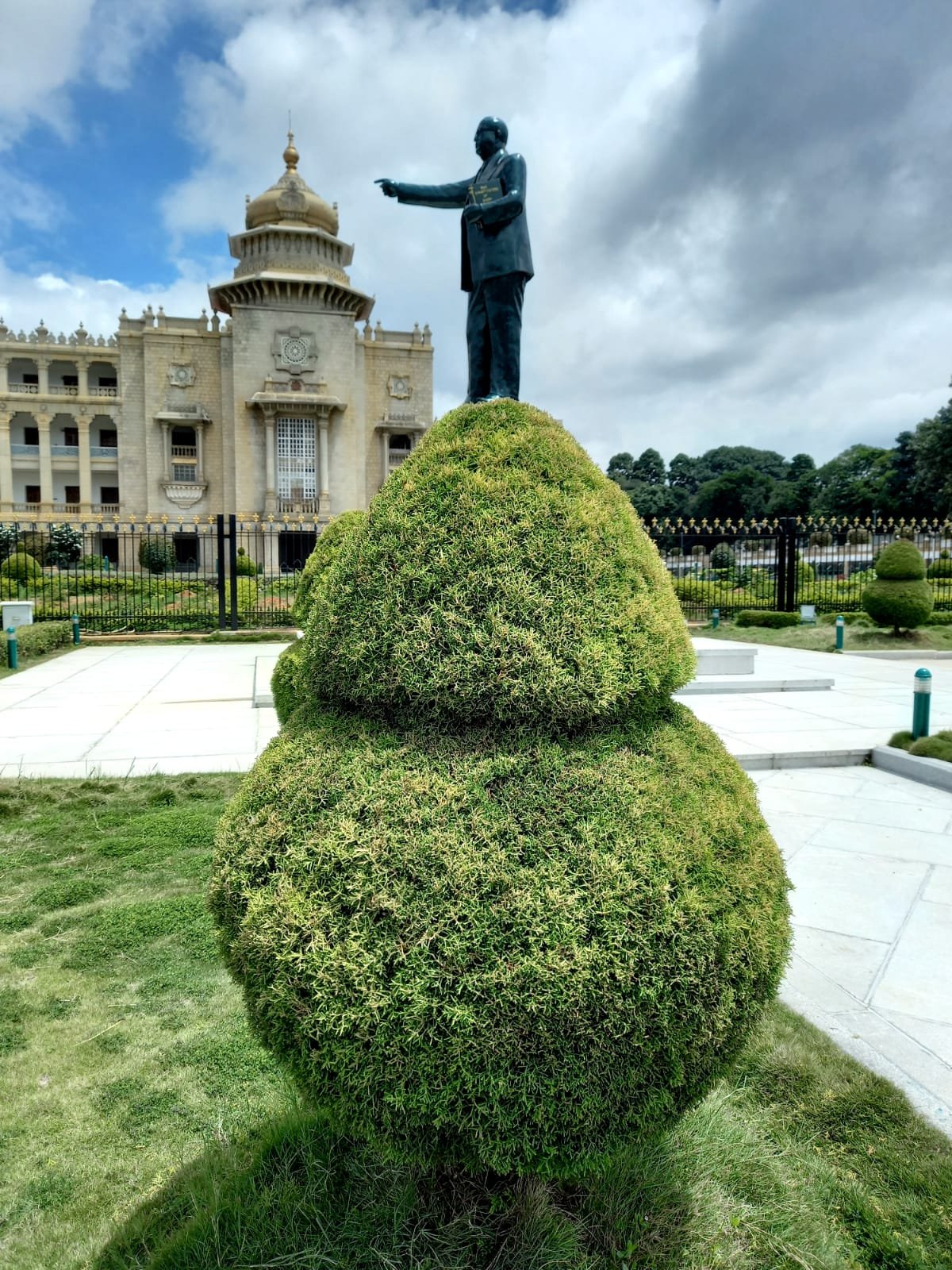
Statues of Ambedkar across Karnataka, notably at Suvarna Soudha (Belagavi), Vidhana Soudha (Bengaluru), and B R Ambedkar Park (Mandya), embody the region’s commitment to his ideals. These monuments serve as sites for cultural events, education, and public gatherings, underlining Ambedkar's foundational role in Indian democracy.
Visiting the Ambedkar Statue in Karnataka: Practical Information
- Visiting Hours Most sites are open daily, typically from 6:00 or 9:00 AM to 6:00–8:00 PM.
- Entry Free of charge.
- Accessibility Wheelchair access, ramps, and paved pathways are standard.
- Travel Sites are accessible via road, rail, and public transport; check specific city details below.
- Nearby Attractions Historic forts, parks, museums, and other cultural landmarks are close by.
- Special Events Ambedkar Jayanti and Constitution Day feature commemorations and public programs.
- Photography Allowed in most areas; be respectful during ceremonies.
Explore the Ambedkar Statue in Karnataka – Visiting Info, History & Attractions
Vision and Development
The statues were erected to inspire visitors with Ambedkar’s ideals of liberty, equality, and fraternity and to foster inclusive development. Their locations—near civic landmarks like Vidhana Soudha and Cubbon Park—underscore their symbolic significance (Frontline).
Architectural and Interpretive Features
Blending modern engineering with traditional symbolism, the statues often depict Ambedkar holding the Constitution. Many complexes feature interpretive centers, digital displays, and sustainable landscaping (The Hindu).
Best Time to Visit
October to February offers the most comfortable weather, while Ambedkar Jayanti brings cultural vibrancy.
Ambedkar Statue Karnataka: Visiting Hours, Tickets, and Cultural Significance in Mandya
Cultural and Community Impact
The Ambedkar Statue in Mandya’s B R Ambedkar Park is a focal point for Dalit pride, social justice, and educational activities (touristplaces.guide). The park hosts seminars, cultural events, and commemorations, reinforcing Ambedkar’s message and fostering community empowerment.
Political and Social Significance
It serves as a site for political mobilization, especially during election seasons and solidarity movements (dailypioneer.com). Community events promote social cohesion, address discrimination, and support local tourism.
Practical Visitor Information
- Visiting Hours 6:00 AM–8:00 PM
- Entry Free
- Getting There Accessible via Mandya Railway Station and local transport.
- Accessibility Paved walkways, ramps, and seating.
- Nearby Sites KRS Dam, Sri Ranganathaswamy Temple.
Ambedkar Statue Karnataka: Visiting Hours, Entry, and Guide to Historical Sites in Bengaluru
Location and Accessibility
The Vidhana Soudha Ambedkar Statue in Bengaluru is accessible via metro (Dr. B.R. Ambedkar Vidhana Soudha station), bus, train, and taxi. Other notable statues are found statewide (Ambedkar Statues Karnataka).
Visiting Hours and Entry
- Hours 6:00 AM–6:00 PM
- Entry Fee None (Thrillophilia)
- Best Time Post-monsoon (September–February); early mornings/late afternoons for comfort.
Features and Surroundings
The 9-foot brass statue stands near Vidhana Soudha, surrounded by gardens and close to major attractions: Cubbon Park, Attara Kacheri, and Visvesvaraya Museum (Visit Bangalore).
Cultural Etiquette and Visitor Conduct
- Dress modestly and behave respectfully.
- Photography is allowed but avoid flash/tripods during ceremonies (EIndiaTourism).
- Special events like Ambedkar Jayanti draw large crowds and increased security (The Hindu).
Facilities and Tips
- Public restrooms available nearby.
- Food options within 2 km (MG Road, Brigade Road).
- Combine with heritage walks and educational tours for deeper engagement (Sachivalayam).
Summary and Travel Tips
- Ambedkar Statues in Karnataka are more than monuments—they are living symbols of social justice, equality, and inclusion.
- Entry is free and sites are accessible to all.
- Special events offer unique cultural insights; check schedules on official tourism platforms.
- Enhance your visit by using resources like the Audiala app for real-time updates and guided tours.
- Combine visits to the statues with nearby historical and cultural sites for a comprehensive experience (Karnataka Tourism, The Hindu, Thrillophilia, TouristPlaces.guide).