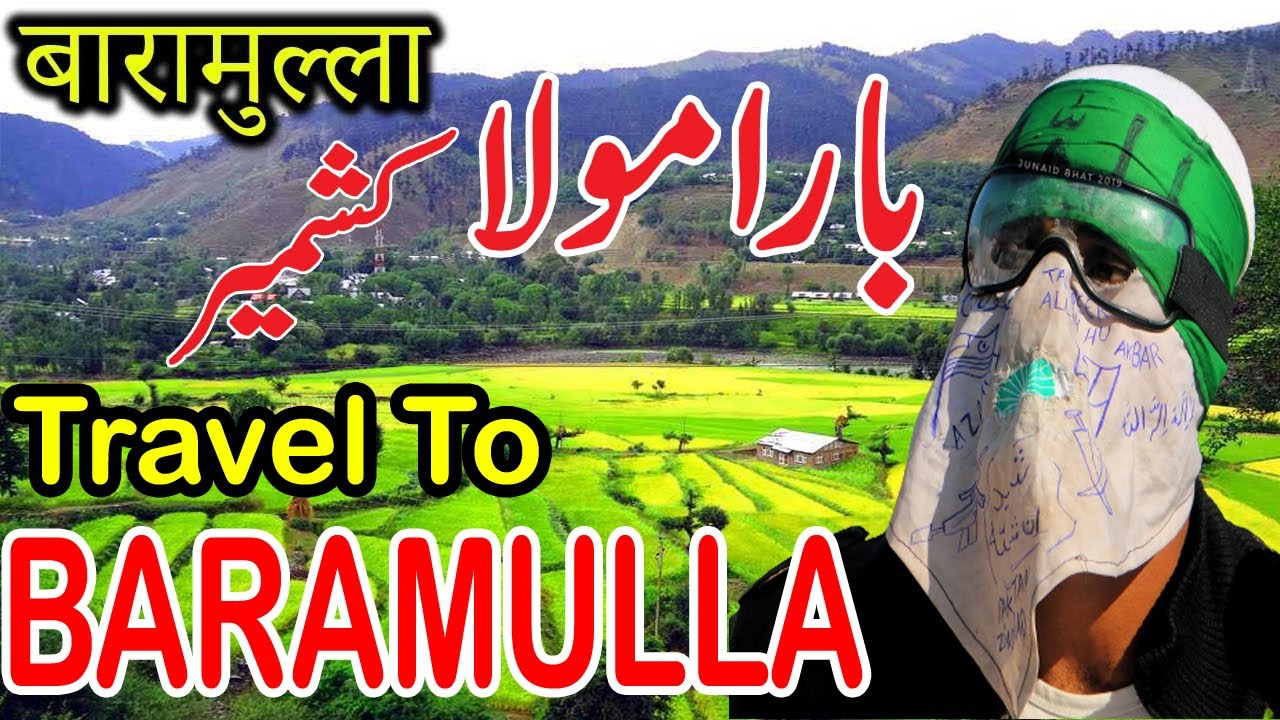
The first thing you notice in Baramulla, India, is the sound of water—not gentle, but the deep, muscular murmur of the Jhelum River shouldering its way through the Pir Panjal range. This is the valley’s ancient throat, a strategic gateway where empires, saints, and traders have entered for millennia, leaving layers of faith etched in wood and stone. Baramulla doesn’t announce itself; it reveals itself slowly, in the scent of wet earth from apple orchards, the echo of prayer from a Sufi shrine, and the lingering memory of a conflict that shaped a nation.
Baramulla · India
8
attractions
2-3 days
trip length
Autumn (September-October)
best season
EN · EN
narration
01An introduction
synthesized from 240+ sources ·
Researched from Wikidata, Wikipedia & official sources · fact-checked ·
How we make our guides →
BThe first thing you notice in Baramulla, India, is the sound of water—not gentle, but the deep, muscular murmur of the Jhelum River shouldering its way through the Pir Panjal range. This is the valley’s ancient throat, a strategic gateway where empires, saints, and traders have entered for millennia, leaving layers of faith etched in wood and stone. Baramulla doesn’t announce itself; it reveals itself slowly, in the scent of wet earth from apple orchards, the echo of prayer from a Sufi shrine, and the lingering memory of a conflict that shaped a nation.
History here is not a relic but a living texture. The town’s Sanskrit name, Varahamula, means ‘boar’s snout,’ a nod to its mythic origins, but its soul was shaped by the 14th-century Sufi saint Shah-i-Hamdan. His mosque, the Khanqah-e-Moula, sits at the town’s heart, its interiors a silent symphony of papier-mâché and khatamband woodwork—craftsmanship so precise it seems to hold its breath. Just a short walk away, the Holy Family Hospital complex, built by Catholic missionaries in the late 1800s, still operates, its colonial brickwork standing in quiet dialogue with the minarets. This is a place where faiths have converged, not clashed, for centuries.
Yet Baramulla is also a pivot point in a modern story. In October 1947, tribal forces stormed through this gorge in the first major invasion of Kashmir, burning parts of the town before Indian forces arrived—a scar still felt in local memory. That moment sealed the region’s fate, making Baramulla more than a scenic stop; it’s a living archive of partition’s aftermath. Today, life flows again across the Jhelum Bridge, where fishermen cast nets at dawn and the air carries the tang of woodsmoke and baking bread.
Photography Hotspot
Budget Friendly
02
Why Baramulla.
What makes this place worth slowing down for.
gate
The Ancient Gateway
Baramulla has been the primary entry into the Kashmir Valley since antiquity, its strategic position on the Jhelum River gorge through the Pir Panjal range making it a crossroads of cultures. You can feel the weight of that history in the silent ruins of the Sikh-era fort on the high ground, watching over the town's main artery, the suspension bridge.
diversity_3
A Tapestry of Faiths
The city is a quiet study in layered religious history, from the Sufi legacy of the Shah-i-Hamdan Mosque with its intricate woodwork to the 19th-century St. Joseph's Convent and Holy Family Hospital, still operating as a landmark of Catholic missionary work. A Sikh gurudwara on the riverbank marks where Guru Nanak is said to have passed through.
landscape
Gateway to Giants
Baramulla is the practical launchpad for two of Kashmir's natural titans: the world-class ski slopes and alpine meadows of Gulmarg (48 km away) and the vast, bird-thronged expanse of Wular Lake, one of Asia's largest freshwater wetlands. The district itself unfolds into a quieter landscape of sulphur springs, Mughal garden remnants, and the vast apple orchards of Sopore.
history_edu
The Imprinted Memory of 1947
The city carries a deep, somber imprint from October 1947, when it was the first major town attacked during the tribal invasion of Kashmir. This event is not just a footnote in a history book here; it's a living memory that shaped the modern political landscape of the entire region.
03
Places to Visit.
Not every monument, just the ones we'd walk you past ourselves.
Editor's pick
01 · Place
Jhelum River
Baramulla sits at the Jhelum's highest point, and this suspension bridge links Dewan Bagh to Gulnar Park with river wind, hill views, and no fee.
02 Place
Baramulla Railway Station
Baramulla Railway Station stands as a remarkable confluence of history, engineering excellence, and cultural significance, serving as the northern gateway to…
03 Place
Pattan Railway Station
Nestled in the scenic Kashmir Valley, Pattan Railway Station serves as a pivotal gateway to the rich cultural heritage and breathtaking natural beauty of…
04 Place
Uri Dam
Nestled in the scenic Baramulla district of Jammu and Kashmir, India, the Uri Dam stands as a remarkable confluence of engineering prowess, environmental…
Where to wander, by quarter — each with its own rhythm.
01
Town Center & Khanqah-e-Moula
This is the historic core, where the Jhelum Bridge—a suspension artery of rusting steel and constant foot traffic—anchors daily life. The air is dense with the scent of cardamom from tea stalls and the murmur of prayer from the Shah-i-Hamdan Mosque. Here, you’ll find the intricate, centuries-old woodwork of the Sufi shrine in quiet contrast to the bustling bazaar lanes selling woolen pherans and copper samovars.
02
Jhelum Riverfront
Follow the river’s curve west from the bridge to find Baramulla’s quieter, contemplative side. The Sri Pratap Singh Gurudwara sits on the banks, a whitewashed Sikh temple marking where Guru Nanak is said to have passed through. At dusk, the light turns the water molten gold, and the ruins of the Sikh-era Baramulla Fort loom on the high ground, offering fragmented views over a landscape that has watched armies come and go.
03
Mission Quarter
A pocket of unexpected calm and colonial brick, centered around the still-operating Holy Family Hospital and St. Joseph’s Convent. Built by Catholic missionaries in the late 19th century, the architecture—arched windows, weathered facades—speaks of a different kind of frontier. It’s a neighborhood of whispers and institutional gardens, where the legacy of care outlasts empire.
04
Sopore (Apple Town)
About 20 km north, Sopore is less a neighborhood and more Baramulla district’s economic engine. From September, the air turns sweet and cidery around Asia’s largest apple mandi, where mountains of crimson and green fruit are traded. Between the orderly orchards, the vast, reed-fringed expanse of Wular Lake provides a serene counterpoint, alive with migratory birds in winter.
05
Uri Sector
A 90-km journey northwest along the Jhelum gorge leads to a dramatic shift in landscape and atmosphere. The road climbs past the Uri Dam, its hydroelectric hum a modern backdrop to the alpine Naugam Meadows. This is gateway territory, with a palpable tension and raw beauty, lying close to the Line of Control—a reminder of the valley’s enduring political contours.
06
Who lived here.
The people who shaped the city — and were shaped by it.
Persian Sufi Saint
1304–1384
Mir Sayyid Ali Hamadani
Associated with Shah-i-Hamdan Mosque
Hamadani is credited with bringing Islam to Kashmir in the 14th century. He would have crossed the Pir Panjal range through Baramulla's Jhelum gorge, the only major entrance to the valley then. Today, his spiritual legacy lives on in the intricate papier-mâché interior of the shrine that bears his name.
Founder of Jammu & Kashmir
1792–1857
Maharaja Gulab Singh
Built Baramulla Fort
The Sikh ruler constructed Baramulla Fort on the strategic high ground overlooking the Jhelum, securing the valley's main entrance. He understood this town was the key to controlling Kashmir. His fort now lies in ruins, but its position still commands the same view of the river that was once a military lifeline.
Catholic Missionary Founder
1839–1904
Mother Mary of the Passion
Established Holy Family Hospital
As founder of the Franciscan Missionaries of Mary, she sent sisters to Baramulla in the late 1800s to establish what became the Holy Family Hospital. They chose this town precisely because it was the valley's gateway—where travelers, traders, and the wounded would arrive first. The hospital still operates today, a quiet testament to that practical compassion.
08
Where to Eat.
Where locals actually book dinner — not the tourist menus.
Pirates' Hive
Cafe
€€
Pirates' Hive
★ 4.4View
14th Avenue Café & Bake Shop - Baramulla
Cafe
€€
14th Avenue Café & Bake Shop - Baramulla
★ 4.6View
Kathi Junction Baramulla
Quick bite
€€
Kathi Junction Baramulla
★ 4.7View
Rose Avenue kashmir
Local favorite
€€
Rose Avenue kashmir
★ 4.3View
Lazeezo
Local favorite
€€€
Lazeezo
★ 4.2View
DDF Momos Point
Quick bite
€€
DDF Momos Point
★ 4.3View
09
Insider tips.
Small things that change how the city treats you.
wb_sunny
Visit in Autumn
Plan your trip for September or October to experience the spectacular apple harvest in Sopore, just a short drive away. The air is crisp, the markets are buzzing, and the surrounding valleys are at their most colorful.
directions_bus
Use Shared Sumos
For day trips to Gulmarg (48 km) or Wular Lake (20 km), skip expensive private cabs and look for shared Sumo jeeps at the main transport yard. They're the local standard, significantly cheaper, and depart when full.
restaurant
Try Local Fish
Don't leave without sampling fresh fish from the Jhelum or Wular Lake, often served as 'nadru' (lotus stem) with fish or 'tabak maaz' (fried lamb ribs). Small, family-run eateries near the river offer the best versions.
history_edu
Respect Shrine Silence
When visiting Shah-i-Hamdan Mosque, remove your shoes, dress modestly, and maintain a quiet, respectful demeanor. Photography inside the main prayer hall is often prohibited due to its sacred nature.
hotel
Base in Sopore
For a more relaxed stay with easy access to Wular Lake and the apple orchards, consider staying in Sopore town instead of Baramulla proper. It offers a quieter atmosphere and is the true heart of Kashmir's apple country.
The official emblem and wordmark for the Government Medical College located in Baramulla, Jammu and Kashmir, India.
GMC Baramulla
A striking red brick educational or institutional building featuring traditional arched architecture in Baramulla, India.
Afferninja
A tranquil and foggy morning view over the river in Baramulla, India, framed by bare winter trees.
Naina Sandhir
A serene and foggy morning on a suspension bridge in Baramulla, India, where two figures disappear into the thick mist.
Ayaan07
12
Frequently asked
Is Baramulla worth visiting?
Yes, if you're interested in Kashmir's layered history beyond the tourist hotspots. Baramulla is the valley's historic gateway, where Sikh forts, Sufi shrines, and a 19th-century Catholic hospital stand within a few blocks, telling a complex story of trade, faith, and conflict that Srinagar can't match.
How many days should I spend in Baramulla?
One full day for the town itself, plus two more for nearby districts. Spend a morning at Shah-i-Hamdan Mosque and the Jhelum Bridge, then use Baramulla as a base for day trips to Gulmarg (48 km) or Wular Lake (20 km) the following days.
What is the best way to get to Baramulla from Srinagar?
Take a shared Sumo jeep from Srinagar's Batmaloo bus stand; the 55 km journey takes about 90 minutes and costs a fraction of a private taxi. The route follows the Jhelum River gorge, the historic entrance to the Kashmir Valley.
Is Baramulla safe for tourists?
Yes, with standard precautions for any small Indian city. The town is calm and hospitable, but check current travel advisories for the wider district before visiting areas near the Line of Control like Uri (90 km northwest).
What are the main historical sites in Baramulla?
Start at the 14th-century Shah-i-Hamdan Mosque with its intricate woodwork, then see the ruins of the Sikh-era Baramulla Fort overlooking the Jhelum. Don't miss the 19th-century Holy Family Hospital complex, a legacy of Catholic missionaries still in operation.
Can I visit Gulmarg as a day trip from Baramulla?
Absolutely. Gulmarg is 48 km southeast, about a 90-minute drive. Leave early to ride the gondola to Apharwat Peak (4,200 m), ski in winter, or hike through alpine meadows in summer, returning to Baramulla by evening.
Ready to book?
13Before you go
Practical Information
Flight
Getting There
The primary airport is Sheikh ul-Alam International Airport (SXR) in Srinagar, 55 km southeast. The nearest railway station is Baramulla Railway Station, the northern terminus of the Kashmir Railway line from Srinagar and Banihal. The city is connected via National Highway 701A, linking it to Srinagar and the rest of the valley.
Directions transit
Getting Around
There is no metro system. Local transport relies on mini-buses, shared taxis, and auto-rickshaws for town navigation. For exploring the wider district and reaching sites like Gulmarg or Wular Lake, hiring a private taxi for the day is the most efficient, though not inexpensive, option. The Kashmir Railway provides a scenic but limited commuter link to Srinagar.
Thermostat
Climate & Best Time
Winters (Dec-Feb) are cold, with temperatures often dropping below freezing and snowfall common. Summers (Jun-Aug) are mild, with highs around 30°C (86°F). The peak tourism season is summer and early autumn (May-Oct), aligned with the trekking and sightseeing season in Gulmarg. For the best balance of weather and fewer crowds, target the shoulder months of April-May or September-October.
Translate
Language & Currency
Kashmiri is the primary local language, with Urdu and Hindi widely understood. English is commonly used in official contexts, hotels, and with tourism operators. The currency is the Indian Rupee (INR). While cards are accepted at larger hotels in Gulmarg, carrying sufficient cash is essential for most transactions in Baramulla town and local markets.
Shield
Safety & Sensitivities
Check current government travel advisories for the region before planning. The security situation can be fluid. As a district headquarters near the Line of Control, areas like Uri require special permits. Always respect local customs and dress modestly, especially when visiting religious sites like mosques and shrines. Photography near bridges, military installations, or in certain areas may be restricted.
Strictly necessary cookies keep navigation working. Analytics cookies (PostHog, Google Analytics) help us learn which pages work — aggregate only, no ads, no selling. You can change this any time from the footer.
Privacy
Cookie preferences
Pick what you're okay with. You can change this any time from the footer.
Strictly necessary
Always on
Sign-in, language, navigation. Always on.
Product analytics
PostHog and Google Analytics, aggregate usage only. Helps us see which pages work and which need fixing. No selling, no ads.
Marketing
Off today. Reserved if we ever run paid acquisition. We will ask again before turning it on.