Badami.

15° N · 75° E India

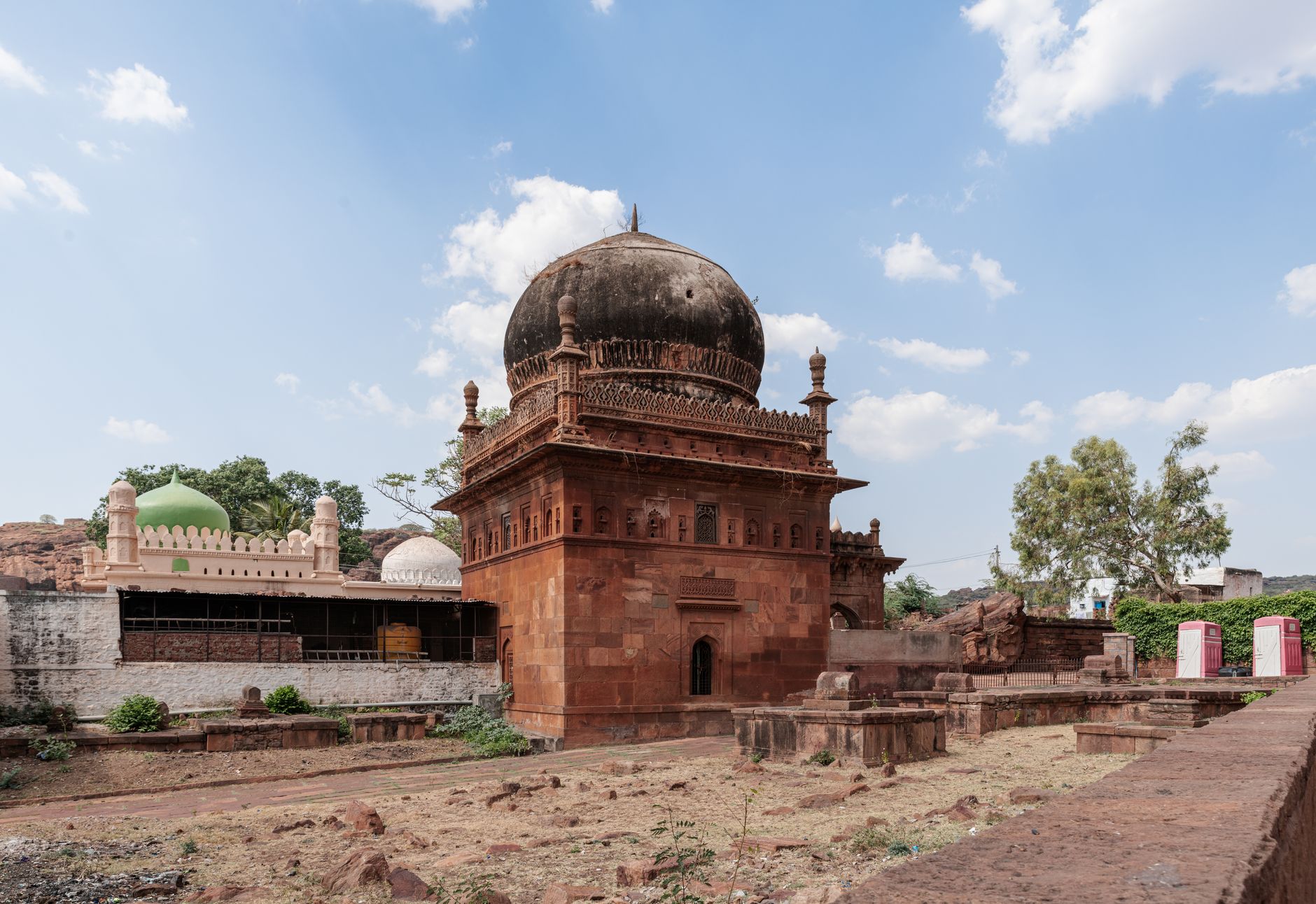
The first thing you notice in Badami isn't a temple or a carving, but the color: a deep, russet red that bleeds from the cliffs into the lake and stains the light of late afternoon. This isn't a museum piece but a living landscape, where Chalukyan kings carved their capital directly into the sandstone, and where the echo of a temple bell across Agastya Lake still feels like a conversation across 1,400 years. In this compact corner of Karnataka, India, history isn't displayed behind glass; it's the very air you breathe and the rock you touch.

Listen to audio guide — 47 min Open the map
Badami, India
Badami · India
8
attractions
2-3 days
days suggested
October to March
best season
EN · EN
narration

01 An introduction

synthesized from 240+ sources ·

BThe first thing you notice in Badami isn't a temple or a carving, but the color: a deep, russet red that bleeds from the cliffs into the lake and stains the light of late afternoon. This isn't a museum piece but a living landscape, where Chalukyan kings carved their capital directly into the sandstone, and where the echo of a temple bell across Agastya Lake still feels like a conversation across 1,400 years. In this compact corner of Karnataka, India, history isn't displayed behind glass; it's the very air you breathe and the rock you touch.

Badami functions as the capital of an open-air museum, a dense and walkable epicenter for the Chalukyan 'laboratory of architecture.' The town is ingeniously cradled between two red sandstone ridges, with the man-made Agastya Lake acting as its reflective heart. To the south are the four famous cave temples, their facades staring placidly across the water. To the north, the hill fort bristles with gateways and granaries, leading to hilltop shrines like the Upper Shivalaya. The genius of the layout is that you are always within sight of a masterpiece, whether it's the monumental 6th-century relief of Vishnu in Cave 3 or the serene, lakeside Bhutanatha temple complex, its gopura perfectly mirrored in the still water at dusk.

The culture here is a layered one, where devout pilgrims circumambulating the Banashankari Temple share the road with architecture students sketching the experimental vaults at nearby Aihole. In the small Archaeological Museum, a trilingual film and finely labeled sculptures provide the crucial key to deciphering what you're seeing in the field. This isn't a place of relentless cheer; the heat can be intense, the climbs steep. But the reward is a profound intimacy with a pivotal era. You don't just visit a site; you follow a narrative thread from the early experiments at Aihole, to the royal statement here in Badami, to the mature, UNESCO-inscribed perfection at Pattadakal—all within a short drive.

Budget Friendly Photography Hotspot

02 Why Badami.

What makes this place worth slowing down for.

The Red-Rock Canvas

Badami isn't just built on the land; it's carved from it. The entire town is cradled by dramatic, rust-red sandstone cliffs that glow like embers at sunset, with the still, reflective Agastya Lake at its heart. This natural amphitheater was the stage for the Chalukyas, who sculpted their capital directly into the rock face.

Cradle of Architecture

This is where southern Indian temple architecture found its early voice. The four cave temples are a living textbook: you can trace the evolution from the experimental, intimate Cave 1 to the monumental, confidently ornate Cave 3. It's a dialogue in stone that continued at nearby Aihole and reached its zenith at Pattadakal.

A Walkable Timeline

Badami's history unfolds on foot. Start at the 6th-century caves, descend to the 7th-century Bhutanatha temples mirrored in the lake, then climb past 8th-century hilltop shrines like the Upper Shivalaya to the fort. In a single morning, you physically ascend through 300 years of architectural ambition.


03 Places to Visit.

Not every monument, just the ones we'd walk you past ourselves.

Badami Cave Temples
Editor's pick
01 · Place

Badami Cave Temples

The Badami Cave Temples, situated in the picturesque town of Badami in Karnataka, India, stand as a remarkable testament to the architectural prowess and…

Banashankari Amma Temple
02 Place

Banashankari Amma Temple

Badami's living goddess shrine sits 5 km from the caves, where a quiet tank-side temple turns into a winter fair of chariots, cattle, and 108 vegetables.

All 2 places in Badami

04 Neighborhoods.

Where to wander, by quarter — each with its own rhythm.

01

The Cave Temples & South Cliff

This is the dramatic face of Badami, where four cave temples (6th-8th century CE) are carved directly into the southern cliff face. The climb is a procession through time: from Shaivite Cave 1, to the Vishnu-centric grandeur of Cave 2, into the vast, politically charged Cave 3 with its 18-armed dancing Shiva, and finally to the serene Jain Cave 4. The quality of light shifts as you move from the dark, cool interiors, smelling of damp stone, out onto the open verandahs overlooking Agastya Lake—a view best savored as the late sun ignites the red rock.

02

Agastya Lake & Bhutanatha Complex

The still, green waters of Agastya Lake are the town's visual and spiritual center. On its eastern shore, the Bhutanatha Temple complex seems to grow from the water's edge, its later Chalukya additions reflected perfectly on calm mornings. This area feels quieter, more contemplative than the cave side. Wander behind the main shrines to find lesser-known carvings and a hidden Vishnu sanctuary, a detail most visitors miss in their rush between the major sites.

03

Badami Fort & North Hill

A steep climb from the town leads to the fortified upper city, a realm of granaries, watchtowers, and vast reservoirs carved into the hilltop. This is for the traveler who wants history paired with a hike and panoramic payoff. The route passes through massive gateways and leads to the hilltop Upper Shivalaya temple, offering a commanding, eagle-eye view over the entire Chalukyan landscape—the lake, the caves, and the town laid out like a living diagram.

04

Lower Shivalaya & Malegitti Shivalaya Precinct

Tucked along the slopes between the town and the fort, these are the hidden gems for architecture purists. The Lower Shivalaya is an elegant stop on the fort climb, but the Malegitti Shivalaya, a beautifully preserved early Chalukyan structure, is the star. Standing in relative solitude, it offers a clearer, less crowded study of the style's evolving form than the always-busy caves. The nearby Dattatreya Temple adds another quiet layer to this niche heritage walk.

05

Town Center & Archaeological Museum

The functional heart of modern Badami clusters around the museum and market streets. The small but essential Archaeological Museum is your necessary primer: its sculptures, inscriptions, and cave-painting reproductions provide the context that brings the surrounding ruins to life. The 20-minute trilingual AV show is worth the time, framing the sites you're about to see. Outside, the town hums with the everyday life that continues amidst the monuments—auto-rickshaws, chai stalls, and pilgrims en route to Banashankari.
08 Where to Eat.

Where locals actually book dinner — not the tourist menus.

Krishna Bhavan Krishna Bhavan
Local favorite €€

Krishna Bhavan

4.5 View
Brindavan Cafe ಬೃಂದಾವನ ಕೆಫೆ Brindavan Cafe ಬೃಂದಾವನ ಕೆಫೆ
Quick bite €€

Brindavan Cafe ಬೃಂದಾವನ ಕೆಫೆ

4.8 View
Saanvi cake corner bakery Saanvi cake corner bakery
Cafe €€

Saanvi cake corner bakery

4.7 View
Bagwan Pan Shop Bagwan Pan Shop
Quick bite €€

Bagwan Pan Shop

5 View
HAP daily HAP daily
Quick bite €€

HAP daily

5 View
Ayyangar Cake Paradise Bakery & Sweets Ayyangar Cake Paradise Bakery & Sweets
Quick bite €€

Ayyangar Cake Paradise Bakery & Sweets

5 View

09 Insider tips.

Small things that change how the city treats you.

Time Your Cave Visit

Visit the Cave Temples in the late afternoon. The setting sun hits the red sandstone directly, turning the cliffs molten gold and creating spectacular photo opportunities across Agastya Lake.

Fort Climb Strategy

Tackle the Badami Fort climb early in the morning or late afternoon to avoid the midday heat. The steep path has little shade, but the panoramic views from the watchtowers are worth the effort.

Find the Hidden Shrine

Behind the main Bhutanatha Temple complex, look for a concealed Vishnu shrine area with additional carvings. It's quieter and offers a more intimate glimpse at Chalukyan artistry.

Use the Museum First

Start your visit at the Archaeological Museum. The trilingual AV film and sculpture collection provide essential context that makes exploring the caves and temples far more meaningful.

Don't Skip Malegitti

Make time for Malegitti Shivalaya, a short walk from the main sites. It's one of the best-preserved early Chalukyan monuments and feels like a secret discovery compared to the busier caves.

12 Frequently Asked

Is Badami worth visiting?

Absolutely, if you have any interest in architecture, history, or dramatic landscapes. Badami offers the capital city setting of the Chalukyan empire, with its rock-cut caves, hill fort, and lakeside temples forming a remarkably complete 6th-8th century tableau. It's the essential first act to understanding the experimental temples of Aihole and the mature UNESCO site at Pattadakal.

How many days do I need in Badami?

Two full days is ideal. Spend one day exploring Badami itself—the caves, fort, and lakeside temples. Use the second day for the essential side trips to Pattadakal (UNESCO World Heritage) and Aihole, which together complete the 'cradle of Chalukyan architecture' story.

What's the best way to get around Badami and see Pattadakal?

Hire a local auto-rickshaw for the day or a car with driver from Hubli or Hospet. The sites in Badami town are walkable, but Pattadakal is 22km away and Aihole is 34km. Having a driver lets you move efficiently between these scattered heritage sites in the hot climate.

Is Badami safe for solo travelers?

Yes, Badami is generally safe. The heritage circuit is well-trodden by tourists. Standard precautions apply: be aware of your surroundings, avoid isolated areas after dark, and dress modestly when visiting temples. The main challenge is the physical terrain—wear sturdy shoes for the rocky, uneven paths.

What are the entry fees for Badami's attractions?

Expect modest fees. Foreign nationals pay around ₹600 for the Archaeological Survey of India composite ticket covering Badami, Pattadakal, and Aihole. Indian citizens pay about ₹40. The Badami Fort has a separate small fee. These costs make it very budget-friendly for serious heritage exploration.

When is the worst time to visit Badami?

April through June, when temperatures regularly exceed 40°C (104°F). The red sandstone cliffs radiate heat, and climbing to the fort or caves becomes uncomfortably strenuous. If you must visit then, plan all outdoor activities for early morning or late afternoon.

Ready to book?

13Before you go

Practical Information

Flight

Getting There

The nearest major airport is Hubballi Airport (HBX), about 105 km away. The most convenient railhead is Badami Railway Station, well-connected to Hubballi and Bengaluru. By road, Badami sits on State Highway 14, easily accessible from Hubballi (2.5 hrs) or via the Pattadakal circuit from Hampi (approx. 4 hrs).

Directions transit

Getting Around

The heritage core is compact and best explored on foot. For the fort climb and sites further afield like Malegitti Shivalaya, auto-rickshaws are plentiful and can be hired by the hour. To visit Aihole (35 km), Pattadakal (22 km), or Mahakuta (15 km), hiring a car or taxi for the day is the most practical option in 2026.

Thermostat

Climate & Best Time

Summers (Mar-Jun) are hot and dry, with temperatures often exceeding 40°C. The monsoon (Jul-Sep) brings heavy, dramatic rainfall that intensifies the red-rock colors but can make climbing slippery. The ideal window is October to February, with pleasant days (20-30°C) and cool nights, perfect for exploration.

Translate

Language & Currency

Kannada is the local language, but Hindi and basic English are widely understood in the tourism sector. The currency is the Indian Rupee (INR). Carry sufficient cash, as ATMs are available but card acceptance beyond major hotels can be limited, especially for auto-rickshaws and small eateries.

Take Badami with you

47 minutes of Badami,
downloaded once.

2 places, one continuous walking route. Free with your first city.

Get this guide on the app Open in browser

All Places to Visit.

2 places to discover

Badami Cave Temples
Place

Badami Cave Temples

Banashankari Amma Temple
Place

Banashankari Amma Temple