Introduction
The first thing that unsettles you in Ahmedabad, India, is the silence inside a 600-year-old mosque at rush hour. Step through the stone filigree of Sidi Saiyyed’s famous ‘tree-of-life’ window and the traffic roar on the other side of the wall simply vanishes, replaced by the soft click of pigeon wings and the smell of old basalt cooling in the shade. This is the city’s sleight of hand: for every lane that detonates with honking three-wheelers and cardamom-scented steam, there is a courtyard, a step-well, or a timber-framed ‘pol’ house where time has folded in on itself.
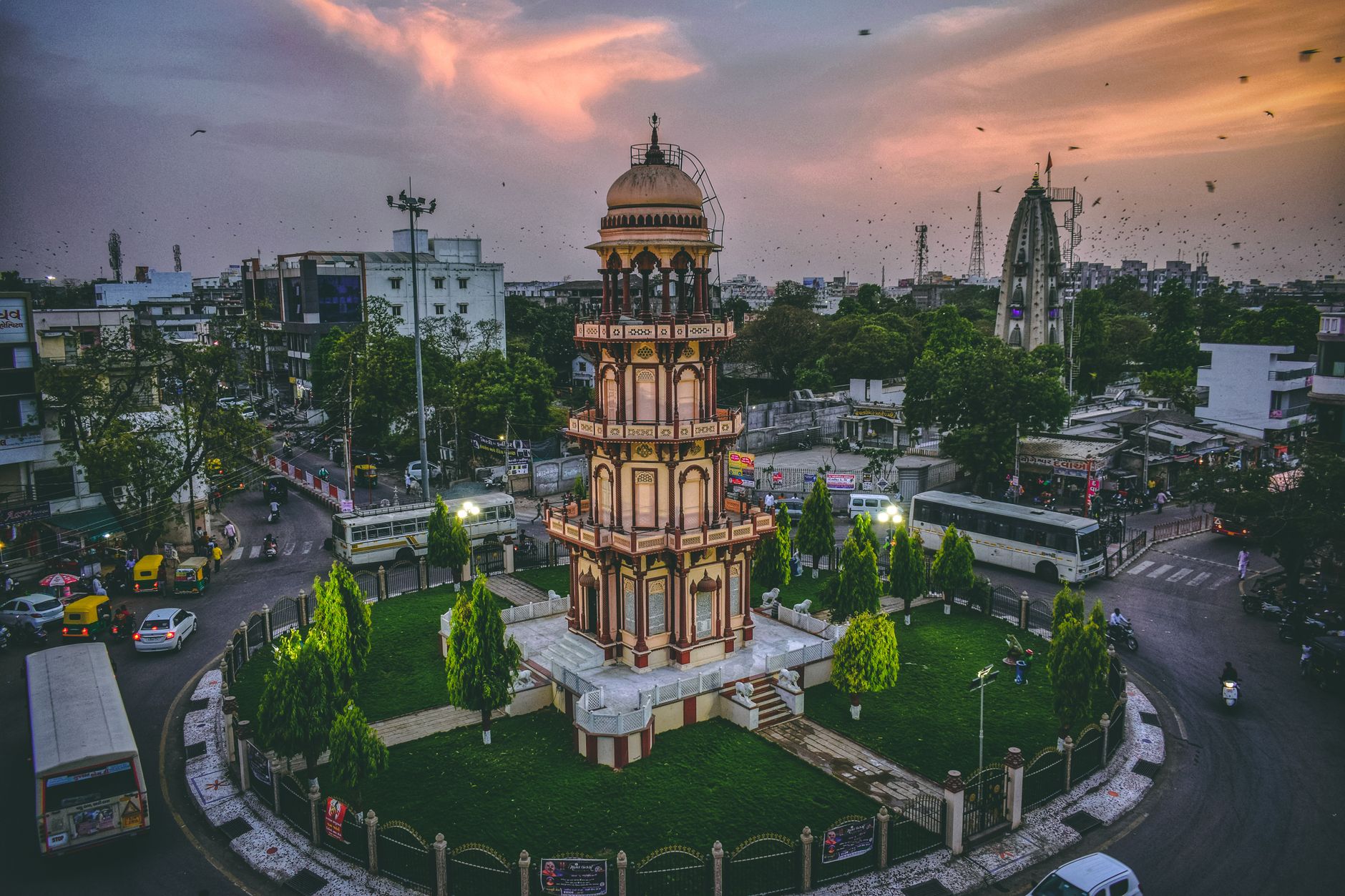
Ahmedabad doesn’t reveal itself in a sweep. It leaks out in details—how a chabutra bird-feeder rises three storeys so sparrows can dine above the flood line; how a mill-owner’s modernist palace built by Le Corbusier now hosts fashion shows; how the same street that sells 4 a.m. fafda-jalebi will, by midnight, be slinging butter-drenched pav bhaji under floodlights while jewellers lock up vaults of mirror-work skirts. The city’s genius is juxtaposition: UNESCO-listed pols shoulder-check glass-box start-ups, and riverfront kayaks glide past ashram charkhas Gandhi once spun.
Come January, the sky itself becomes architecture. Kites with razor-sharp strings gridlock the blue for Uttarayan, turning terraces into battlements and grandmothers into generals. When the kites fall, the city’s other aerialists—migratory cranes—take over the horizon at Nalsarovar lake, 60 km out. Whether you’re here for textile archives deep enough to clothe an empire or for thali lunches that require strategic planning, Ahmedabad rewards the curious. The trick is to look sideways: the museum you almost skip houses the world’s finest 17th-century chintz, and the doorway you photograph for its carved brackets is actually a 600-year-old storm-water gauge. In Ahmedabad, secrets don’t whisper—they wait, patient as stone, for you to notice the quiet.
Places to Visit
The Most Interesting Places in Ahmedabad
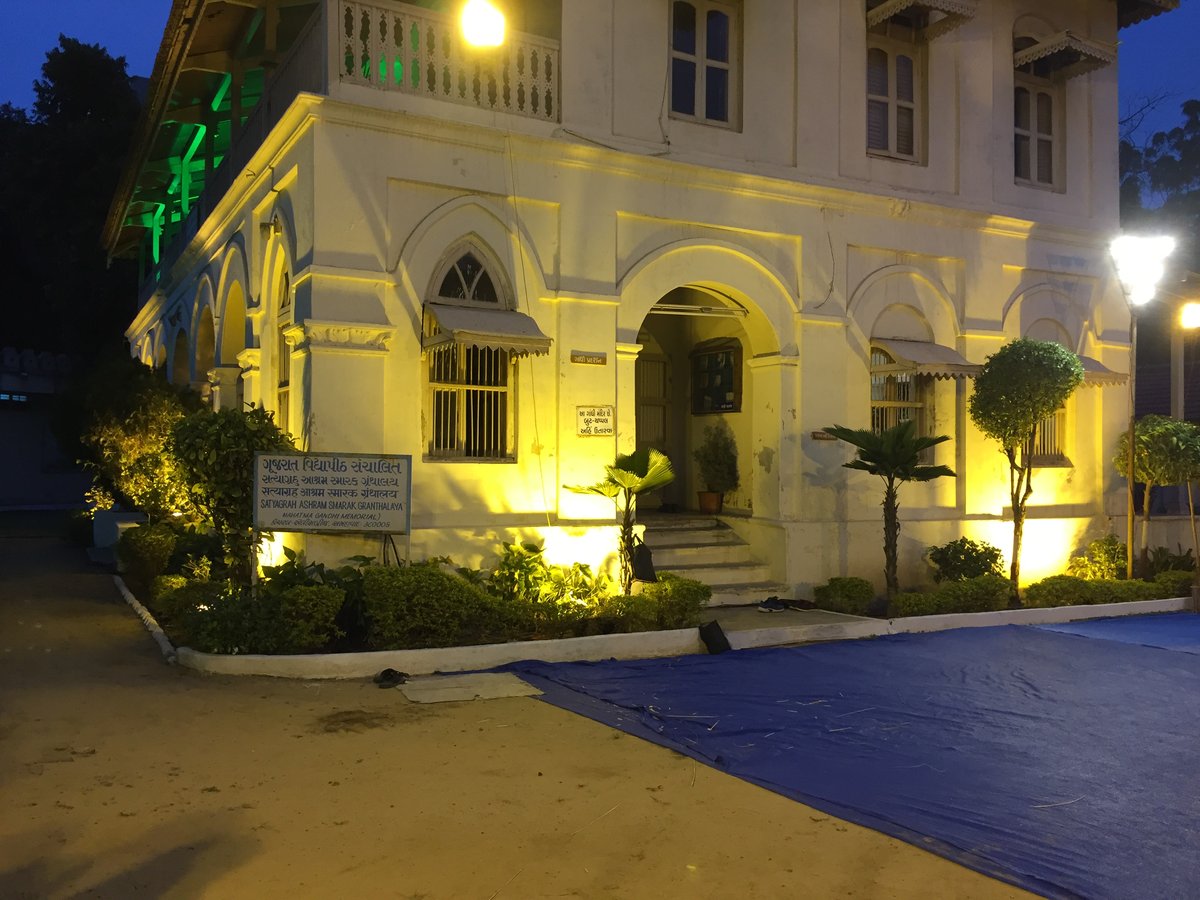
Sabarmati Ashram
The Gandhi Memorial Museum, also known as the Sabarmati Ashram, is an iconic historical site in Ahmedabad, Gujarat, India.
Hutheesing Jain Temple
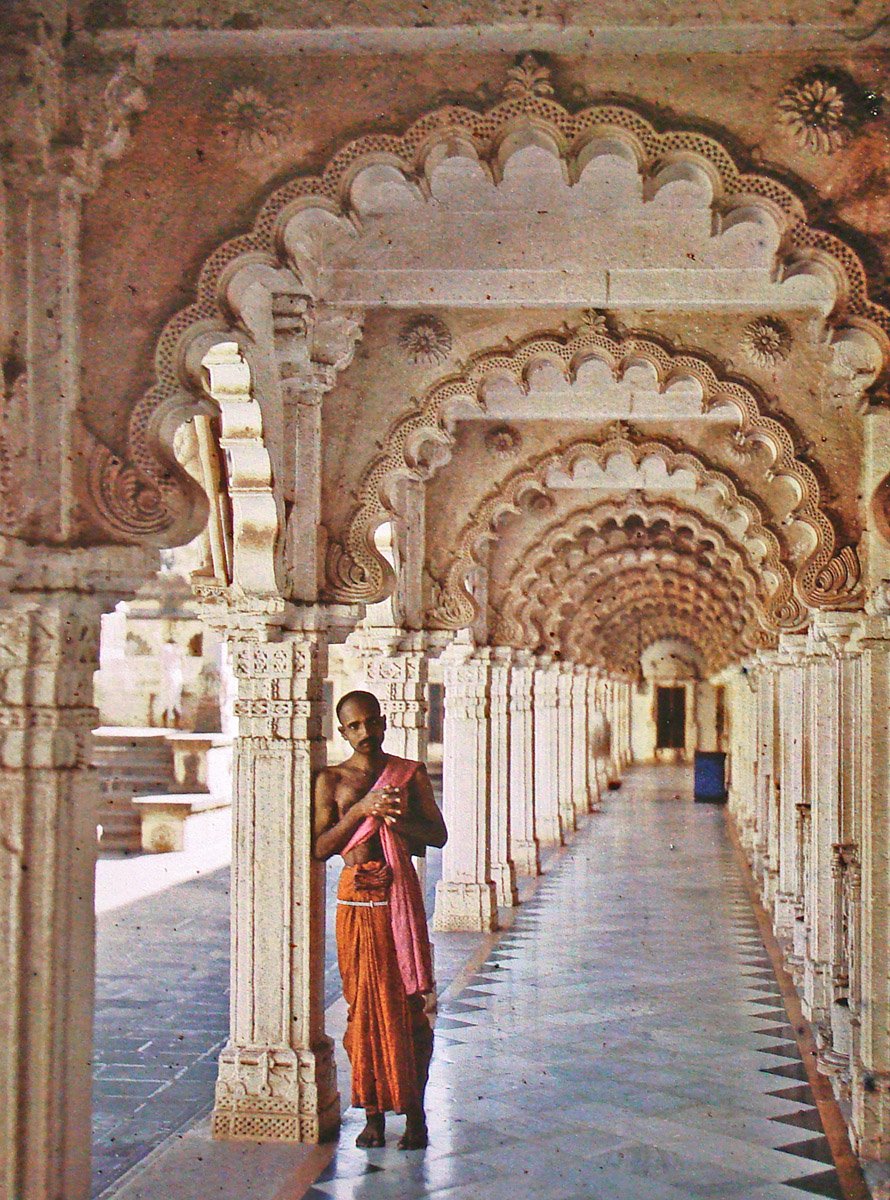
The Hathi Singh Jain Temple, an architectural marvel located in Ahmedabad, India, stands as a testament to Jain cultural and religious heritage.
Atal Pedestrian Bridge
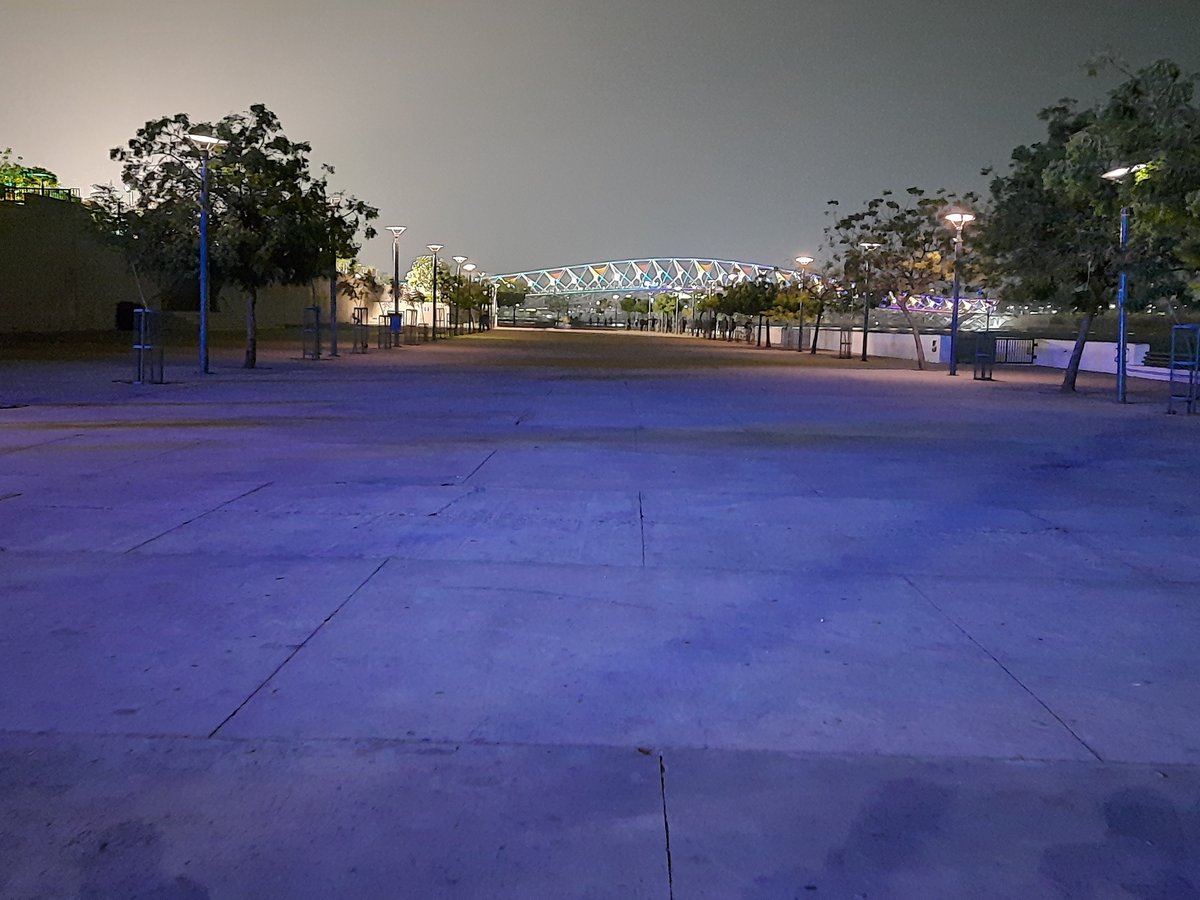
The Atal Pedestrian Bridge, inaugurated in August 2022, stands as a testament to innovative urban design and engineering in Ahmedabad, India.
Gujarat Science City
Gujarat Science City in Ahmedabad stands as a premier destination that seamlessly blends education, innovation, and entertainment, offering visitors an…
Sidi Saiyyed Mosque
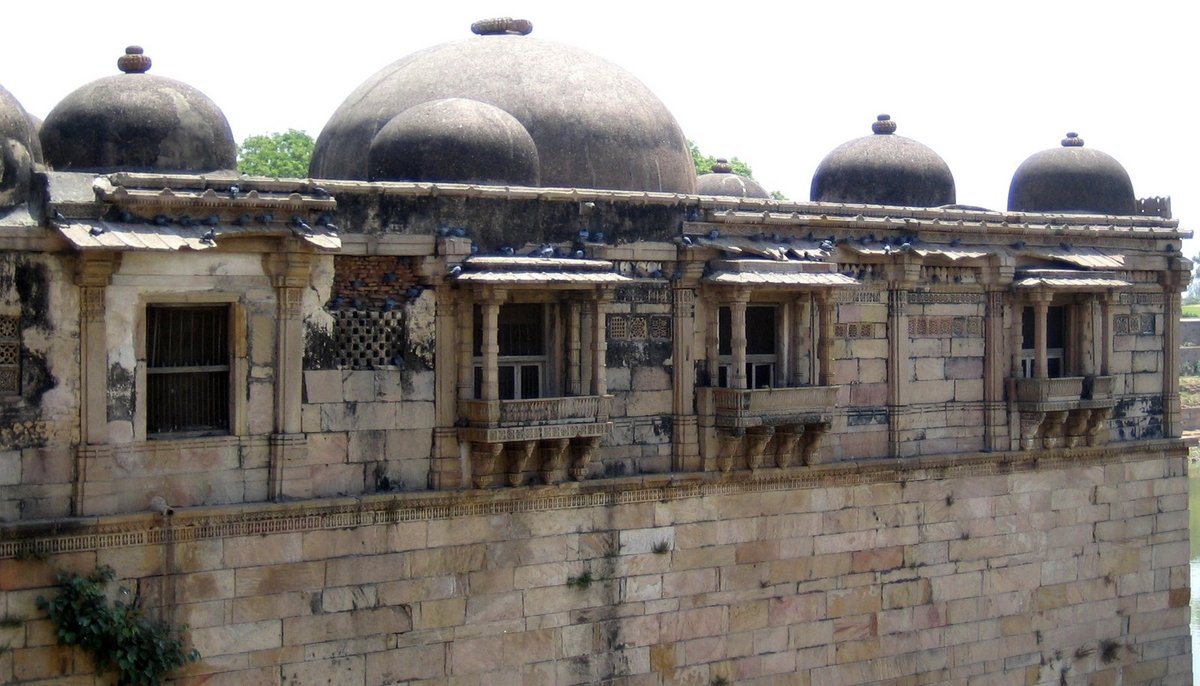
Nestled in the bustling heart of Ahmedabad, India, the Sidi Saiyad Mosque stands as a testament to the city’s rich cultural and architectural heritage.
Bibiji'S Masjid
Bibiji’s Masjid, nestled in the vibrant city of Ahmedabad, Gujarat, is a remarkable testament to the city’s rich Indo-Islamic heritage and the notable role of…
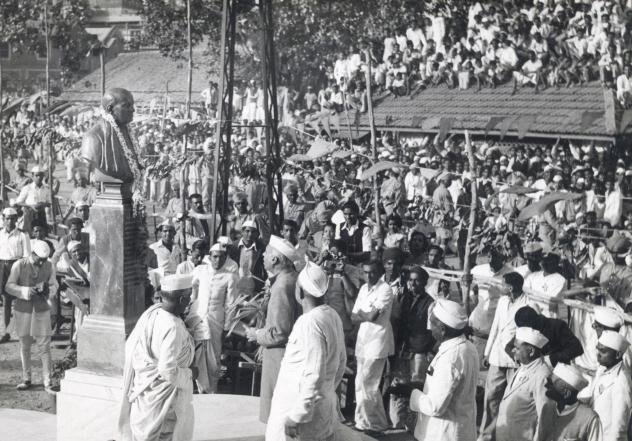
Sardar Vallabhbhai Patel National Memorial
The Sardar Vallabhbhai Patel National Memorial, located in the historical Moti Shahi Mahal in Ahmedabad, Gujarat, is a significant tribute to one of India's…
Sarkhej Roza
Sarkhej Roza is a historical and architectural gem located in Makarba village, approximately 7 kilometers southwest of Ahmedabad, Gujarat.
Law Garden
Nestled in the vibrant cityscape of Ahmedabad, India, Law Garden stands out as a cherished urban oasis that beautifully intertwines natural tranquility with a…
Magen Abraham Synagogue
Located in the historic heart of Ahmedabad, the Magen Abraham Synagogue stands as a unique and enduring symbol of the Bene Israel Jewish community’s rich…
Swaminarayan Museum
The Swaminarayan Museum in Ahmedabad stands as a profound testament to the spiritual and cultural legacy of Bhagwan Shree Swaminarayan, the founder of the…
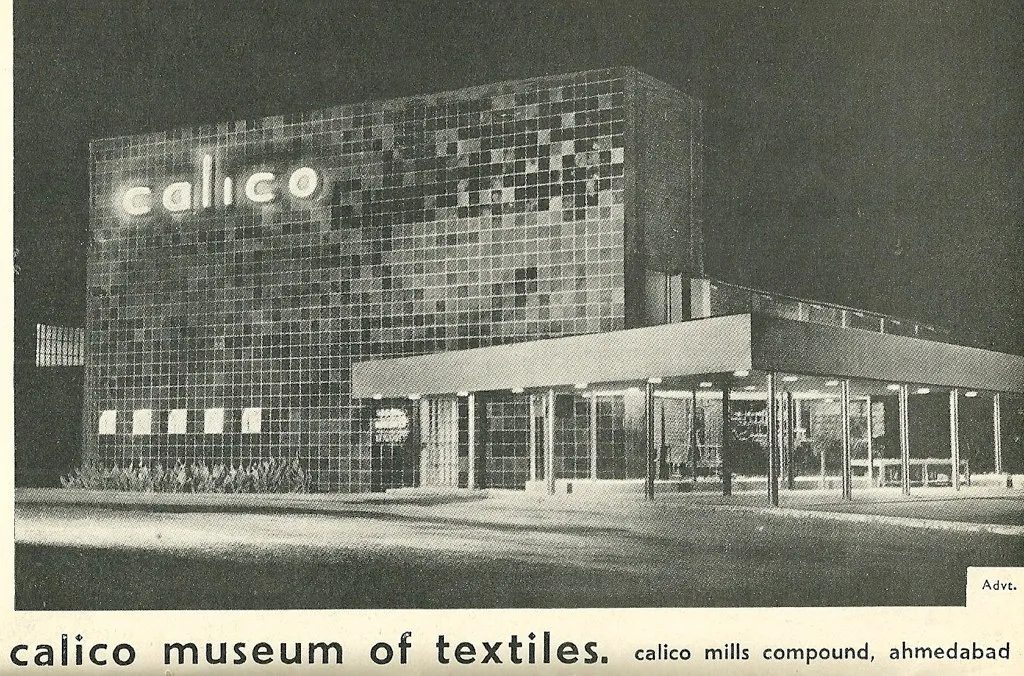
Calico Museum of Textiles
Welcome to the comprehensive guide on visiting Rani Sati Mandir in Ahmedabad, India.
What Makes This City Special
A Living 600-Year-Old Walled City
Inside the 21 pol gates, timber havelis, secret Jain temples and chabutra bird-feeders still hum with morning chai chatter; the 7 a.m. heritage walk from Kalupur Swaminarayan Temple to Jama Masjid is the fastest way to feel the pulse.
Modernism Meets Medieval
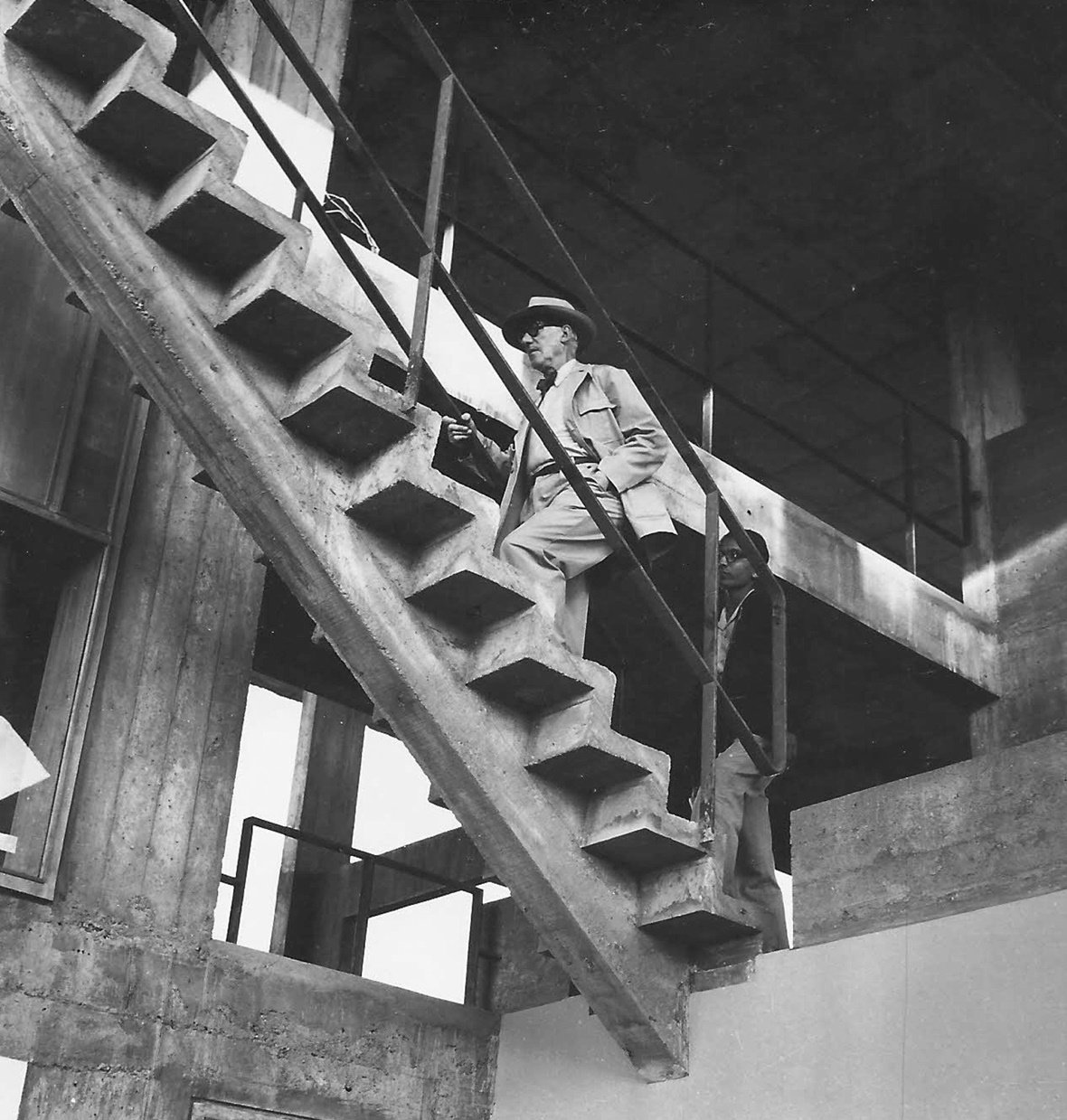
Louis Kahn’s brick IIM-A campus, Le Corbusier’s Sanskar Kendra and B.V. Doshi’s underground Amdavad ni Gufa sit only 15 min apart—an open-air syllabus of 20th-century architecture most cities would kill for.
Riverfront That Doubles as Civic Stage
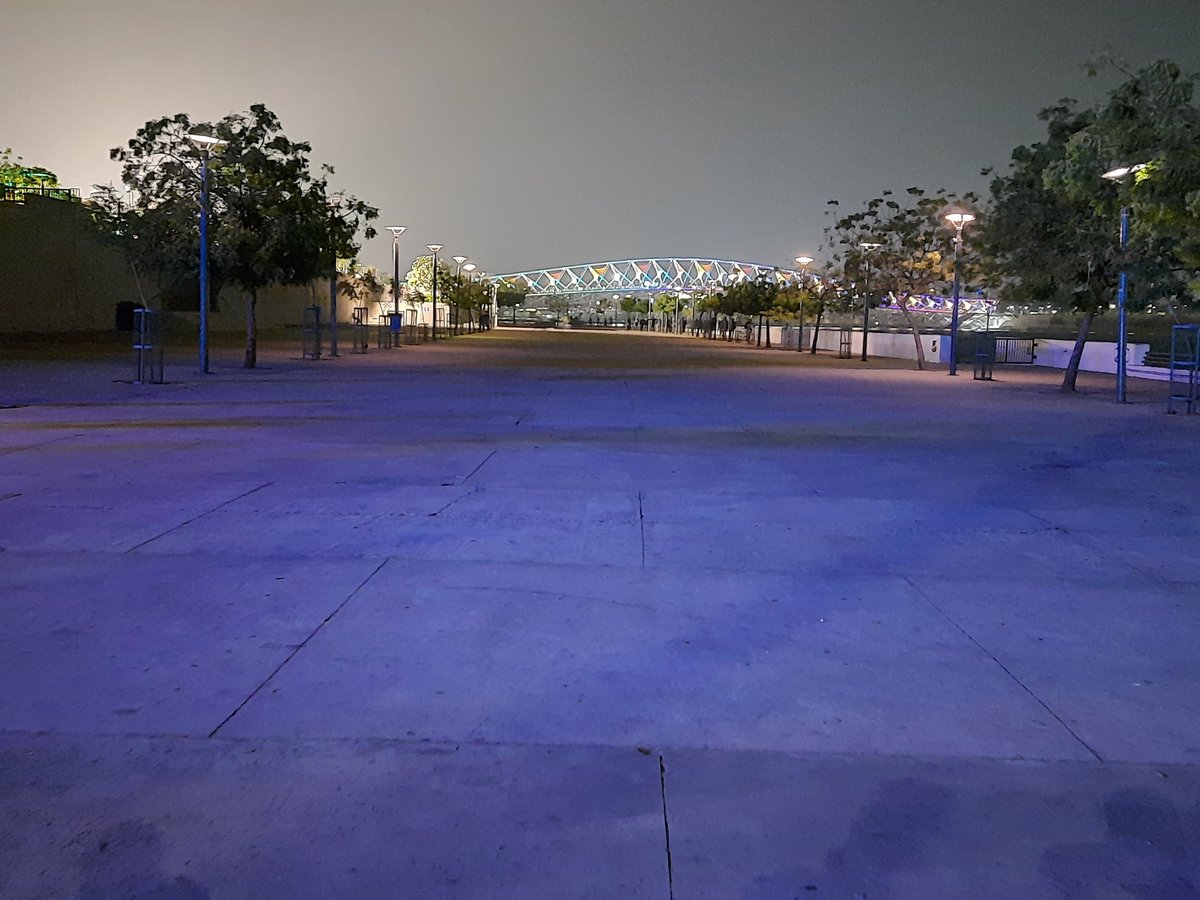
Sabarmati’s 11.5 km continuous promenade switches from flower gardens to open-air gyms; sunset on the Atal Bridge gives you the skyline mirrored in the river and a breeze that smells of neem rather than diesel.
Midnight Food Theatre at Manek Chowk
Jewellery shutters slam shut at 20:30, steel tandoons fire up at 21:00—butter-drenched dosa, chocolate-pineapple sandwich and 30-second bhaji pav under naked bulbs; eat standing, pay by UPI, leave before the cops whistle last orders.
Historical Timeline
Where the Sabarmati Became a City of Spindles, Satyagraha and Space
From Bhil hamlet to UNESCO World Heritage and world-record stadium
Ashaval Takes Root
On the river’s eastern bank, Bhil chieftain Asha’s mud-walled village hums with bead-makers and cattle fairs. The smell of millet porridge drifts through bamboo thickets while black-buck antlers are traded for Gujarati salt. No one suspects this scatter of huts will father a metropolis.
Karna Deva Founds Karnavati
Solanki king Karna storms Ashaval, raises a red-sandstone citadel and renames the bend in the river Karnavati. His architects mark the cardinal points with tanks; masons carve sun motifs into the walls. The settlement is still a frontier town—peacocks outnumber people.
Ahmad Shah I Builds Ahmedabad
On 26 February the Sultan of Gujarat pitches his scarlet tent at Manek Burj and lays out a new capital—grid-patterned streets, the Bhadra citadel, and a name that carries his own: Ahmedabad. Carpenters swarm in from Cambay; the air rings with adze on teak.
Jama Masjid Consecrated
Fifteen thousand worshippers spill across a marble courtyard larger than a cricket pitch. Sultan Ahmad Shah’s new Jama Masjid rises on 260 pillars looted from Hindu temples, its central dome framed by lotus-bud chains and Quranic calligraphy that still smells of wet lime-plaster.
Mahmud Begada Fortifies the City
The Sultan who loves war and architecture equally rings Ahmedabad with a 10-km wall, 12 gates, 189 bastions. Each dawn cannon smoke drifts over the battlements; each dusk the gates slam shut, the clang echoing along caravanserais stacked with Arabian coffee and Malwa opium.
Adalaj Stepwell Completed
Five kilometres north of the walls, Queen Rudabai’s sandstone stepwell sinks five storeys underground. Sunlight filters through carved lattices onto water so cool that Persian travellers call it ‘a palace reversed’. It becomes the city’s communal refrigerator and emergency reservoir.
Akbar Captures Ahmedabad
Mughal cannons breach Bhadra’s eastern wall; Gujarat’s last sultan flees by moonlight. Akbar’s cavalry stable horses in the Jama Masjid’s courtyard. Overnight the city’s currency changes—from heavy Sultanate tankas to lightweight Mughal silver rupees clinking in silk merchants’ pouches.
Shah Jahan Builds Moti Shahi Mahal
Still a prince, Khurram constructs a riverside palace of milk-white stone and cypress gardens. He watches monsoon clouds billow above the Sabarmati and dreams of the Peacock Throne. The building will later house British officers, then Gujarat’s governors; locals nickname it the Shahi Baug.
Marathas Storm the City
Peshwa Raghunath Rao’s horsemen pour through Kalupur gate, looting warehouses stacked with indigo and calico. Ahmedabad’s population halves in a week; the once-bustling cloth market reeks of gunpowder and spoiled ghee. Maratha tax collectors replace Mughal mansabdars, coinage shrinks, trade stalls.
British Union Jack Raised
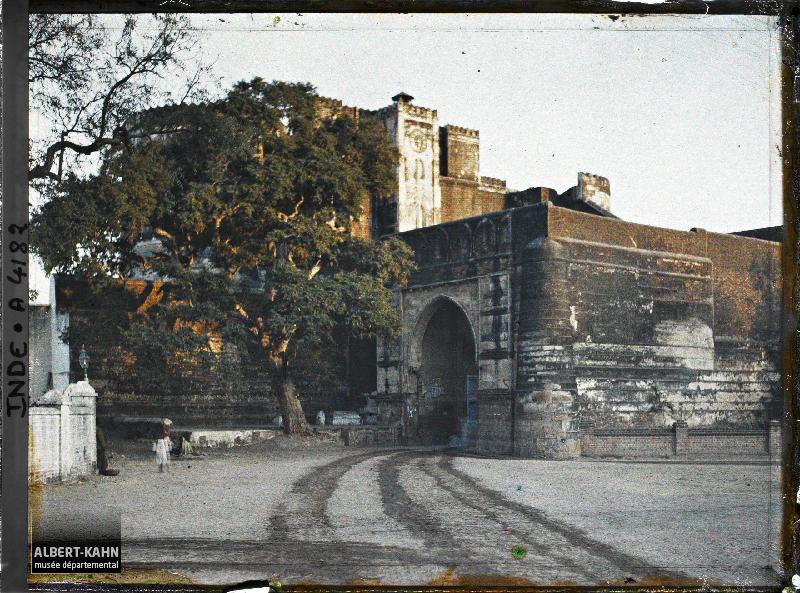
Colonel John Dunlop marches through Delhi Gate; the East India Company inherits a city scarred by decades of siege. Cotton mills sprout along the riverbank—red-brick chimneys dwarfing mosque minarets. Steam whistles replace the call to prayer as the soundtrack of dawn.
First Cotton Mill Opens
Ranchhodlal Chhotalal’s Ahmedabad Spinning and Weaving Company hums to life on 30 May, drawing 2,000 Gujarati farmers into soot-dark sheds. The city’s nickname, ‘Manchester of India,’ is born in the clatter of 22,000 spindles and the sharp smell of coal-smoke mixed with raw cotton lint.
Mohandas Gandhi Born
In nearby Porbandar, the boy who will rename Ahmedabad ‘Satyagraha’s laboratory’ takes his first breath. The city’s pol lanes, riverfront breezes and merchant ethos will shape his fusion of ethics and economics; he will repay the debt by giving Ahmedabad a place in world history.
Gandhi Moves to Sabarmati
On a marshy bend of the Sabarmati, Gandhi plants neem and peepal saplings, founding an ashram that becomes India’s cockpit of non-violence. Morning prayers echo across the river; evening spinning wheels clack like looms weaving freedom. The city acquires a moral compass visible from every cotton mill.
Mill Strike Grips Ahmedabad
20,000 mill hands down shuttles demanding a plague bonus. Gandhi mediates, fasting for three days until owners relent with a 35 % wage hike. The compromise births India’s first trade union and proves moral pressure can move industrial capital faster than British bayonets.
Salt March Departs
At dawn Gandhi leads 78 marchers past the ashram’s wooden gate, spinning wheel on his shoulder, bound for the sea 240 km away. Ahmedabad’s textile barons fund khadi clothes; women clap from pol balconies. The world’s newspapers turn the city’s dusty riverfront into a global stage.
IIM & NID Founded
Two steel-and-glass campuses open the same year: one to teach management to mill heirs, the other design to artists. Louis Kahn and Le Corbusier walk the riverbank sketching concrete grids. Ahmedabad leapfrogs from textile capital to ideas capital overnight.
Vikram Sarabhai Builds India’s Space Nursery
In a cow-pasture west of the city the physicist installs a dish antenna to track NASA’s Echo balloon. The pasture becomes ISRO’s Space Applications Centre—Ahmedabad’s new skyline is radar domes and satellite dishes beaming data to coconut groves in Kerala.
Communal Riots Erupt
During Rath Yatra a rumor ignites three weeks of street battles; 560 die, curfew sirens replace temple bells. The old pols—once Hindu-Muslim mosaics—harden into single-faith enclaves. Barbed wire sprouts on timber balconies that once shared rainwater pipes.
Earthquake Flattens Neighborhoods
At 8:46 a.m. the ground jerks 6.9 magnitude; 752 Ahmedabad residents are crushed beneath fallen mill-worker chawls. The smell of turmeric and concrete dust hangs over rubble for weeks. Reconstruction rules outlaw timber balconies—UNESCO will later call the loss ‘irreversible’.
UNESCO World Heritage Badge
The walled city becomes India’s first living World Heritage site, beating Delhi and Mumbai. Officials cheer, residents worry about paint-color police. Pol homeowners quietly install AC units behind carved screens, balancing comfort with 600-year-old façades.
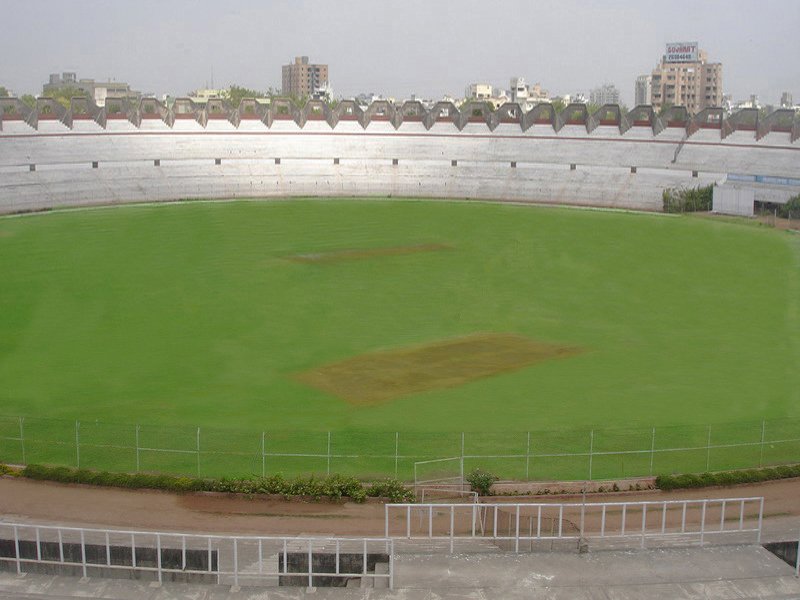
World’s Largest Cricket Stadium Opens
Narendra Modi Stadium unfurls 132,000 blue seats where textile mills once stood. Floodlights outshine mosque domes; the roar during the IPL final drowns out the 6 p.m. azaan. Ahmedabad’s newest monument is concrete, not stone—and sponsored by Ambani, not Ahmedabad Shah.
Air India Crash Shocks the City
Flight AI171 noses into a Bopal shantytown seconds after take-off, killing 260. The crash site smells of jet fuel and mangoes from splintered orchards. For the first time since Gandhi’s fast, Ahmedabad holds a collective minute of silence—televised, hashtagged, monetised.
Notable Figures
Ahmad Shah I
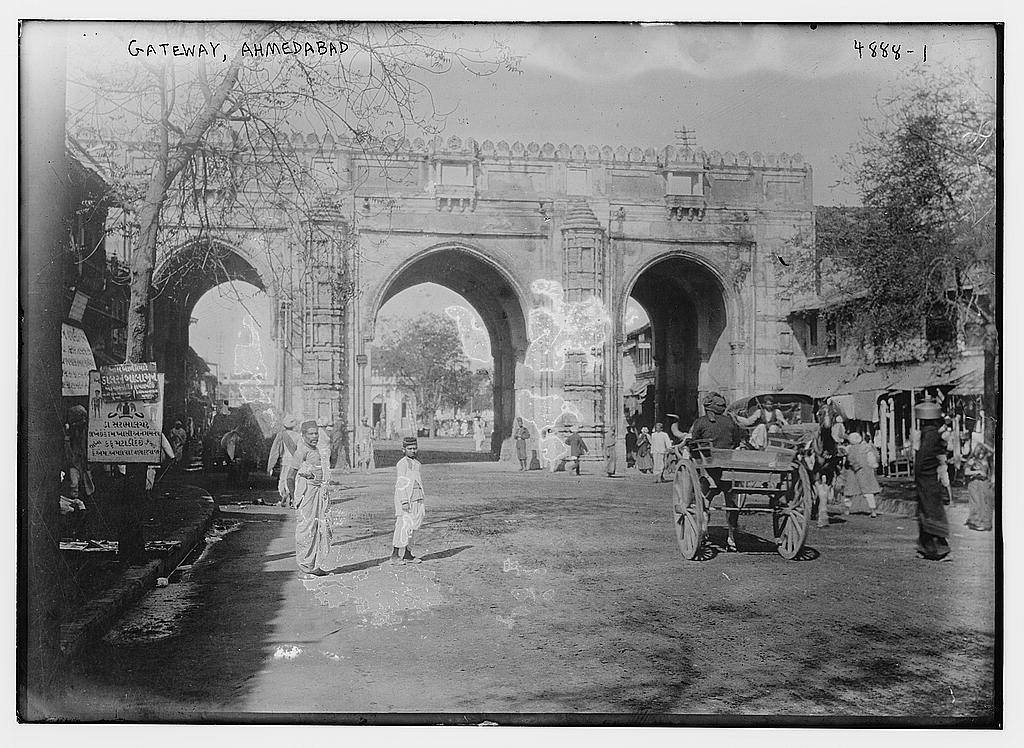
1391–1442 · Founder-SultanHe laid Ahmedabad’s first brick on the east bank of the Sabarmati, watched cranes circle overhead, and declared the forest would become a bazaar. Today the Teen Darwaza still faces the same river bend he chose.
Mahatma Gandhi
1869–1948 · Freedom LeaderHe spun khadi under a mango tree here and launched the Dandi March. If he returned at dawn, he’d still recognize the charkha’s echo against the Sabarmati’s quiet.
Vikram Sarabhai
1919–1971 · Space-program ArchitectHe turned a riverside house into the Physical Research Laboratory and told friends the city’s clear skies were perfect for counting stars. The Vikram Sarabhai Space Exhibition now stands where he first plotted India’s orbit.
B. V. Doshi
1927–2023 · ArchitectHe buried Amdavad ni Gufa underground so the earth itself could be a gallery. Students still sketch the same stepped amphitheater where Doshi once sipped chai and told them architecture is music in stone.
Mrinalini Sarabhai
1918–2016 · Dancer-ChoreographerShe turned a 19th-century riverside mansion into the city’s beating heart for Bharatanatyam. On Navratri nights, the Natarani stage still trembles with the footfalls she taught.
Ela Bhatt
1933–2022 · Labor ActivistFrom a terrace near Ellisbridge she organized the city’s poorest women into a 2-million-member cooperative. Walk past the SEWA courtyard at dusk and you’ll hear sewing machines still stitching together her revolution.
Photo Gallery
Explore Ahmedabad in Pictures
The vibrant atmosphere of the Narendra Modi Stadium in Ahmedabad, India, captured during a night match with a full crowd under bright floodlights.
Shlok on Pexels · Pexels License
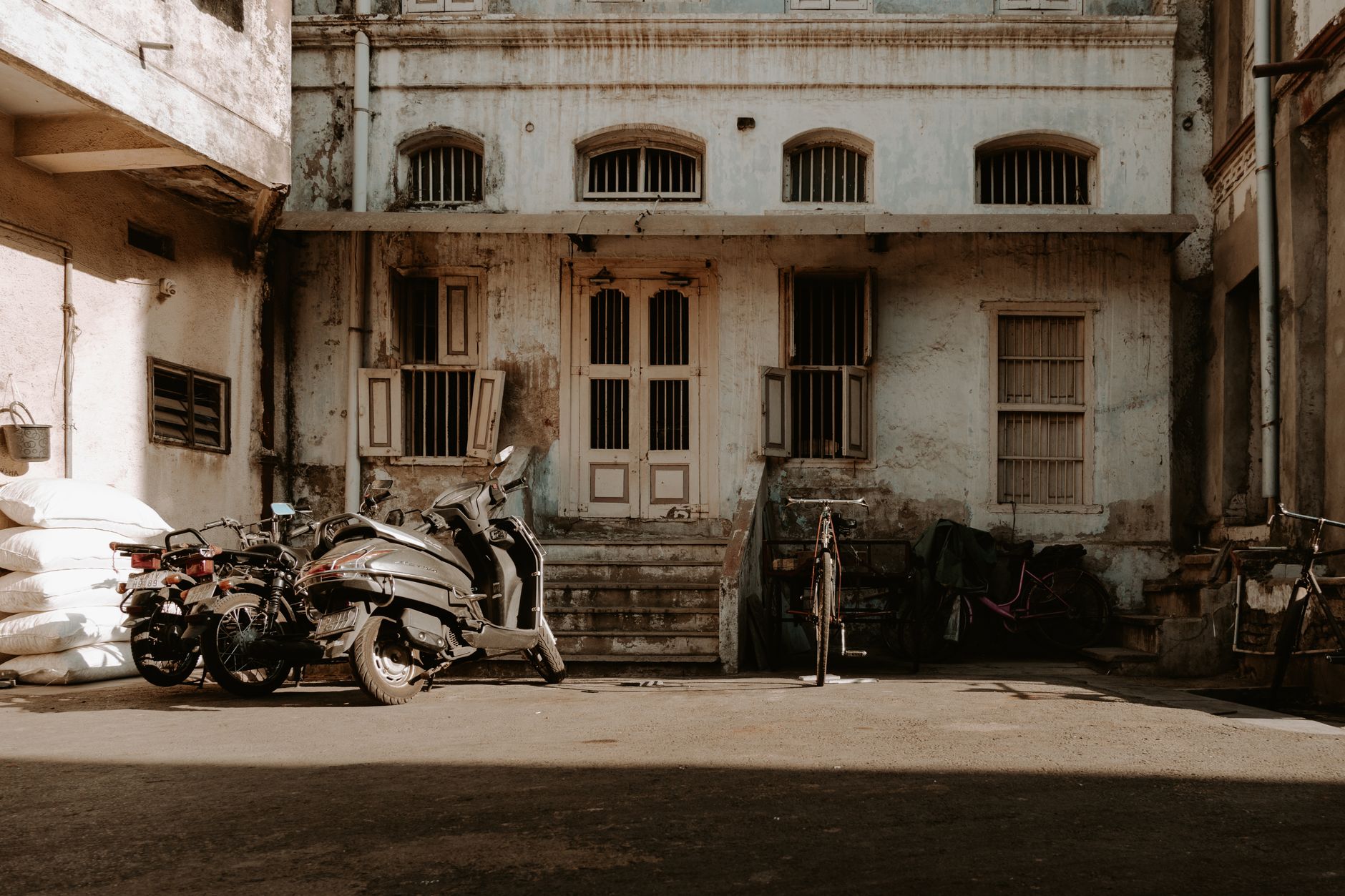
The sun-drenched courtyard of a historic building in Ahmedabad, India, showcases a blend of aging colonial architecture and daily life.
Ranjeet Chauhan on Pexels · Pexels License
A striking example of modernist architecture in Ahmedabad, India, featuring distinctive angular concrete pillars against an orange facade.
Patel Poojan on Pexels · Pexels License
Practical Information
Getting There
Sardar Vallabhbhai Patel International Airport (AMD) is 9 km north; prepaid & app cabs reach the old city in 25 min. Kalupur (Ahmedabad Junction) is the main rail terminus with Rajdhani expresses to Delhi and Shatabdis to Mumbai. NH-48 (Ahmedabad-Mumbai) and the new Ahmedabad-Dholera Greenfield Expressway (opened 1 Apr 2026) plug the city into the Golden Quadrilateral.
Getting Around
Ahmedabad Metro: Phase I & II give 62 km and 53 stations across East-West & North-South corridors; QR ticket, NCMC or GMRC Smart Card (10 % discount). AMTS city buses run 45 ₹ unlimited-day passes; BRTS ‘Janmarg’ has its own prepaid card and enclosed corridors. AmdaBike public sharing (MYBYK) clusters around metro and BRTS hubs; riverfront has 11 km cycle track.
Climate & Best Time
Winter (Nov–Feb) 12–28 °C, dry and ideal. March hits 35 °C; April–May bake at 40–42 °C with 5 mm rain. Monsoon June–Sept 310 mm in July, humid 26–33 °C. Best window: late November to mid-February—sunlight slants perfectly on stone jalis and hotel tariffs drop 15-20 % outside Christmas week.
Language & Currency
Gujarati first, Hindi understood everywhere, English works in hotels/museums. Indian Rupee (₹) only; UPI One World wallet gives foreign visitors zero-fee QR payments. Tipping 10 % in restaurants if no service charge; round up cabs.
Safety
Dial 181 (women), 108 (ambulance), 1363 (tourist helpline, 24 h, multilingual). Old-city lanes are safe by day but keep phones zipped after 23:00; stick to lit riverfront or app cabs. Traffic is the real hazard—look both ways even on one-way BRTS lanes.
Where to Eat
Don't Leave Without Trying
The Food Maniacs Co.
local favoriteOrder: Their signature bar bites and curated drinks menu showcase a modern approach to casual dining in Paldi.
A neighborhood favorite with a perfect 5-star rating, The Food Maniacs Co. brings contemporary bar culture to Ahmedabad's west side. Small but mighty — locals know this spot for quality over hype.
Janta Bakery
quick biteOrder: Fresh breads, pastries, and traditional Gujarati baked goods — grab a loaf or a pastry with chai for the authentic old-city bakery experience.
Tucked into the heart of old Ahmedabad near Gandhi Road, Janta Bakery is a working neighborhood institution with a 4.8-star rating. This is where locals actually buy their daily bread.
Indie Productions
cafeOrder: Coffee, specialty drinks, and light bites in a creative setting — the go-to spot for Navrangpura's creative crowd and remote workers.
With 159 reviews and a 4.7-star rating, Indie Productions is Ahmedabad's answer to the modern cafe culture. Located on Ashram Road, it's become a genuine neighborhood gathering spot with real character.
Monginis Cake Shop
quick biteOrder: Custom cakes, pastries, and desserts — a reliable stop for celebrations or a quick sweet treat in the old city.
Monginis is the city's trusted bakery chain with deep roots in Ahmedabad's old city. The Khadia location stays open late (until midnight), making it perfect for last-minute cake needs or evening dessert runs.
Kesari chai & Bites (Brand By Karnavati)
quick biteOrder: Kesari chai (a local specialty) paired with light bites — this is your 24-hour anchor for late-night cravings or early-morning chai before exploring the city.
Open 24 hours opposite Gujarat College, Kesari chai & Bites is an essential Ellisbridge landmark. It's where Ahmedabad's night owls and early risers converge, and the chai is genuinely excellent.
લકી બેકરી
local favoriteOrder: Traditional Gujarati bakery items and fresh bread — a neighborhood gem on Raykhad Darwaja Road in the heart of old Ahmedabad.
Lucky Bakery (લકી બેકરી) is a perfectly-rated local bakery in the old city, the kind of place where locals queue up for their daily bread. Authentic, unpretentious, and genuinely good.
Saharsa
local favoriteOrder: Local drinks and bar bites in a traditional old-city setting — a quiet local spot away from tourist crowds.
Saharsa sits deep in old Ahmedabad's Tankshal neighborhood with a solid 4.7-star rating. This is where locals go for an evening drink, not where tourists end up by accident.
Ahemdabad
local favoriteOrder: Drinks and bar fare in a central Ellisbridge location — a solid neighborhood option near the college district.
Perfectly rated at 5 stars, Ahemdabad is a neighborhood bar near Ellisbridge with a local following. It's the kind of place that feels like it's always been there.
Dining Tips
- check Old City (Khadia, Tankshal, Bhadra area) is where you'll find the most authentic and historic eating spots — bakeries, breakfast joints, and local bars have been operating for decades.
- check Sunday mornings are fafda-jalebi time in Ahmedabad — it's a cultural tradition, especially around Dussehra.
- check Manek Chowk transforms by time of day: vegetable market in the morning, bullion/jewelry during the day, and a full food bazaar in the evening with ghotala dosa, sandwiches, pav bhaji, and faluda-style desserts.
- check Ravivari (Sunday Market) happens every Sunday along Ellis Bridge and the Sabarmati riverfront — a weekly all-day flea market with local food stalls mixed in.
- check Ellisbridge and Ashram Road areas have become the new cafe and modern dining hub — expect younger crowds, specialty coffee, and contemporary restaurants.
- check Many neighborhood bakeries and local spots don't have formal websites or consistent online hours — call ahead or ask locals for current opening times.
- check Chai culture is serious in Ahmedabad — 24-hour chai stops like Kesari are genuine community anchors, not tourist attractions.
- check The thali experience is central to Ahmedabad dining — it's not just food, it's a complete meal ritual and represents the city's vegetarian heritage.
Restaurant data powered by Google
Tips for Visitors
Book Calico Early
The Calico Museum takes only 20 visitors per session via advance email; request a slot at least two weeks before arrival or you’ll miss India’s finest textile collection.
Manek Chowk Midnight
The food market opens at 10 pm; walk in via Rani no Hajiro, order the chocolate sandwich first, then queue for the rabri kulfi before the stalls sell out at 1 am.
Dry State Rule
Alcohol is permit-only; if you want a drink, keep your hotel bar receipt — outside hotel premises it’s both scarce and officially illegal.
Heritage Walk Shoes
The 7 am walk from Kalupur Swaminarayan to Jama Masjid crosses uneven pol lanes — light sneakers and socks you don’t mind removing at temple thresholds are essential.
Kite Festival Week
Come for Uttarayan in January to see the sky fill with paper; terraces open to guests, prices spike, and Adalaj stepwell looks magical under winter light.
Uber Old City Curfew
Rideshare cars can’t enter pol lanes after 9 pm; plan to walk the last 500 m or you’ll be stranded outside Teen Darwaza.
Explore the city with a personal guide in your pocket
Your Personal Curator, in Your Pocket.
Audio guides for 1,100+ cities across 96 countries. History, stories, and local insight — offline ready.
Audiala App
Available on iOS & Android
Join 50k+ Curators
Frequently Asked
Is Ahmedabad worth visiting or just a stopover? add
Absolutely worth it. The 600-year-old UNESCO walled city alone rivals Jaipur for living architecture, and the modernist circuit (Kahn, Corbusier, Doshi) is unmatched outside Chandigarh. Add sunrise heritage walks and midnight food streets and you’ll forget it was ever a transit city.
How many days should I spend in Ahmedabad? add
Minimum three full days: Day 1 for the UNESCO core and Calico, Day 2 for modern architecture (IIM exterior, ATMA, Gufa) plus Adalaj, Day 3 for Sabarmati Ashram at dawn and Sarkhej Roza at dusk. Add a fourth if you want birding at Nalsarovar or Modhera temple.
How do I get from the airport to the old city late at night? add
Pre-paid taxis cost ₹350–₹450 and run 24/7; the ride to Bhadra is 20 min via the new riverfront road. Uber and Ola also operate, but cash is king after midnight.
Is Ahmedabad safe for solo women travelers? add
Yes, one of India’s safer large cities. Heritage walks run in mixed-gender groups, and Manek Chowk at 11 pm is lively, well-lit, and patrolled. Dress modestly in the old city and you’ll blend in without hassle.
What does a meal cost in Ahmedabad? add
Breakfast fafda-jalebi at Chandravilas is ₹50, a full thali at Agashiye is ₹750, and midnight Manek Chowk snacks run ₹100–₹200 per plate. Even upscale restaurants rarely cross ₹1200 per person.
Sources
- verified UNESCO Urban Heritage Atlas: Ahmedabad — Official UNESCO page confirming the walled city’s inscription and morning walk route details.
- verified Ahmedabad City Heritage Walk Official Site — Booking and practical information for the 7 am guided walk starting at Kalupur Swaminarayan Temple.
- verified Gujarat Tourism: Calico Museum Visitor Guidelines — Explains the strict 20-visitor cap and advance email requirement for museum tours.
- verified Live Mint Ahmedabad Food Guide 2025 — Current street-food timings, café culture on Sindhu Bhavan Road, and price ranges for late-night eats.
- verified Gujarat Excise Department: Liquor Permit Rules — Official summary of dry-state regulations and hotel-bar permit procedures.
Last reviewed: