volcano
Fire and Ice
Iceland sits on the Mid-Atlantic Ridge and a volcanic hotspot, which means lava fields, glacier tongues, steam vents, and black sand can all appear in a single day’s drive.
Iceland is what happens when a whole country sits on a geological fault line and still manages to run on punctual buses, hot water, and very good coffee. Few places feel this unruly and this readable at the same time.
EntrySchengen, visa-free short stays for many travelers
IThis Iceland travel guide starts with a shock: Europe’s rawest geology comes with paved roads, card readers, and Reykjavík heated by the ground below it.
Iceland makes sense the moment you stop calling it remote and start calling it concentrated. In a country roughly the size of England, you can stand in the rift at Þingvellir, watch Strokkur erupt every few minutes, and reach the black sand near Vík the same day without feeling rushed. Reykjavík gives you the urban counterpoint: corrugated houses, serious coffee, geothermal pools, and a harbor that still smells faintly of fish and weather. This is a place where the landscape does the talking, but the infrastructure is better than first-time visitors expect.
The classic loop is the 1,332-kilometer Ring Road, but Iceland gets richer when you notice its regional personalities. Akureyri and the north feel drier, brighter, and less crowded in summer; Höfn opens the door to Vatnajökull, ice caves, and glacial lagoons; Ísafjörður leads into the sharp-edged quiet of the Westfjords, where roads narrow and tourist traffic thins. Even smaller bases such as Egilsstaðir, Stykkishólmur, Selfoss, and Vestmannaeyjar change the trip from a checklist into a route with texture. Come for waterfalls if you must. Stay for the strange calm of a country that keeps remaking itself in fire, ice, and wind.
Settlement and Commonwealth, c. 800-1262
A pair of carved high-seat pillars bobbed in the cold Atlantic, somewhere off a shore no one in Norway could yet place on a map. Around 874, Ingólfr Arnarson let the gods choose for him, then sent his people to search the coast until the timber turned up beside steaming vents. He built his farm there and named the place Reykjavík, Smoky Bay. Ce que l'on ignore souvent, c'est que the name does not come from house fires or romance, but from geothermal breath rising out of the earth.
The island was not so much discovered as occupied by people who had run out of patience elsewhere. Norse settlers arrived with wives, livestock, slaves, grudges, and legal habits they were not prepared to abandon. Auðr the Deep-Minded came by way of Scotland and Ireland with wealth, freed people, and a Christian cross in a still-pagan land; the sagas remember her because she gave land to former slaves, which shocked men who had thought property should travel in one direction only.
Then, in 930, these farmers did something astonishing. They created a republic with no king. Each summer, chieftains and householders rode to Þingvellir, where the rift valley itself seems to split the island open, and gathered at the Law Rock while the lawspeaker recited memory into government. Picture the scene: horses tethered in the lava fields, lawsuits argued in tents, marriage bargains and death threats conducted within earshot of the same cliff.
The conversion to Christianity in the year 1000 has the elegance of a saga and the pragmatism of a trade deal. With the island near civil war, the pagan lawspeaker Þorgeir Ljósvetningagoði lay under his cloak for a day and a night, then rose and declared that Iceland would be Christian, though private pagan practice could continue for a time. It was compromise dressed as revelation. And it worked.
This free commonwealth also bred egos large enough to break it. Men like Egill Skallagrímsson could turn a killing into a family story and a grief into immortal verse; poets were politicians here, and memory itself was a weapon. By the early 13th century, the old balance had curdled into feud, and the republic that had no king began to learn what happened when ambition arrived with Norwegian silver.
Auðr the Deep-Minded turns up in the sagas as a matriarch, but the real surprise is her audacity: widow, ship-owner, land distributor, and one of the first great political minds in Icelandic memory.
According to Landnámabók, Ingólfr's slaves spent three years searching the coast for his high-seat pillars before Reykjavík was chosen.
Submission, Plague and Piety, 1262-1800
The old republic died not in one grand battle but in a long series of farm burnings, betrayals, and exhausted bargains. During the Sturlung Age, Icelandic chieftain families turned the island into a chessboard of revenge, each move financed or flattered by the Norwegian crown. In 1262, Icelanders accepted the Old Covenant and submitted to King Hákon IV. A country without a king had acquired one at last, and not on its own terms.
No figure from this age is more revealing than Snorri Sturluson. He wrote the Prose Edda, preserved the myths of Odin and Thor, and gave medieval Scandinavia its most dazzling literary mirror; he was also vain, rich, politically slippery, and disastrously sure of his own cleverness. In 1241, royal agents cornered him in a cellar at Reykholt. His last reported words, "Eigi skal höggva" — do not strike — did him no good.
Then came colder centuries. The Black Death and later epidemics cut through Iceland with special cruelty because isolation protects until it fails, and then it traps. After Norway entered union with Denmark, Iceland slid into a distant dependency governed by bishops, sheriffs, and trade rules drafted far from its turf roofs and fishing beaches. The Reformation arrived in the 16th century with steel in its hand: the last Catholic bishop, Jón Arason, was beheaded in 1550 with two of his sons, a family execution that still hangs over northern Iceland like weather.
Ce que l'on ignore souvent, c'est que hardship did not produce silence. It produced paper. In farmhouses lit by fish oil and guarded from storms by walls of turf thicker than a wagon is long, Icelanders copied sagas, poems, genealogies, and law books because memory was the one treasury Copenhagen could not ship away. Even poverty had an archive.
By the 18th century, volcanic ash, famine, and trade monopoly had made daily life brutally narrow. Yet the language held, the sagas held, and the idea of Iceland as something older than Danish administration held too. That stubborn memory would become the seed of politics.
Snorri Sturluson preserved the pagan gods for Europe, yet in life he behaved less like a sage than a gifted court intriguer who misjudged the moment once too often.
When Jón Arason was executed at Skálholt in 1550, legend says his daughter sought revenge soon after by arranging the killing of the local lawman who had helped condemn him.
Awakening and Independence, 1800-1944
In the 19th century, Iceland's political rebirth began not in a palace but in reading rooms, private letters, and arguments about memory. Copenhagen had suspended the Althing in 1800, treating the old assembly as an antique relic; Icelandic students and officials answered by turning history into a claim. If a nation had once governed itself at Þingvellir, why should it remain a dependency forever?
The presiding spirit was Jón Sigurðsson, a scholar with the look of a careful librarian and the will of a field marshal. From Denmark, where he spent much of his adult life, he wrote and lobbied with maddening persistence, insisting that Iceland's rights were historical, legal, and moral all at once. His phrase "Vér mótmælum allir" — we all protest — became the clean, cold music of Icelandic constitutional nationalism.
Yet history never advances by documents alone. In 1874, Denmark granted Iceland its first constitution, timed to the millennium of settlement, a concession wrapped in ceremony and royal optics. Then nature intervened with its own savage reminder of who still ruled the island most directly: the Laki eruption of 1783 had already shown what volcanic catastrophe could do, and in the 19th century bad harvests, sea ice, and poverty kept pushing Icelanders toward emigration, especially to North America. Nationhood was discussed in the same breath as survival.
The 20th century tightened the thread. Home Rule came in 1904; sovereignty followed in 1918 under the Act of Union, with the Danish king still shared. When Nazi Germany occupied Denmark in 1940, Iceland was abruptly left to itself in constitutional terms and strategically exposed in every other way. British troops landed, then American forces followed, and the old fishing island found itself standing in the middle of the Atlantic war.
On 17 June 1944, at Þingvellir, in rain and ceremony, Iceland declared itself a republic. The date was chosen for Jón Sigurðsson's birthday, which tells you everything about how carefully Iceland stages its symbols. The medieval plain where the lawspeaker once stood now received a president instead of a king, and the past was made to ratify the present.
Jón Sigurðsson is remembered as the father of the nation, but his real gift was patience: years of paper warfare, fought from desks in Copenhagen on behalf of farms he never romanticized.
The republic was proclaimed at Þingvellir during miserable weather, and the driving rain only strengthened the mood; Icelanders have never trusted a national myth that arrives too comfortably.
Republic of Fire and Fish, 1944-present
A new republic began modestly, then discovered that geography could be turned into leverage. Postwar Iceland was poor by western European standards, dependent on fish, weather, and luck; it became rich by deciding that the surrounding sea was not an open buffet for bigger powers. The Cod Wars with Britain, fought between 1958 and 1976 with trawler cables, patrol ships, and NATO embarrassment, looked almost comic from afar. They were not comic at all in Reykjavík. They were about sovereignty in its most edible form.
The island also kept reminding its citizens that history here is written from below. In January 1973, a fissure opened on Heimaey in Vestmannaeyjar and lava began swallowing streets. Families fled in fishing boats before dawn while ash fell on roofs and the harbor, by a piece of improbable luck, stayed usable long enough to save the town. Ce que l'on ignore souvent, c'est que Icelanders then pumped seawater onto the lava front in one of the strangest rescue operations in modern Europe, trying to persuade a volcano to change its mind.
Modern Iceland likes to look tidy from the outside: geothermal pools, literary festivals, design shops in Reykjavík, aurora photographs, a president on first-name terms with half the country. But the inner life has been rougher. The banking crash of 2008 shattered the illusion of invincibility, sending protesters into Austurvöllur square with pots and pans while financiers who had spoken the language of global greatness suddenly sounded very small.
And yet the republic keeps producing firsts that would have startled its saga ancestors. Vigdís Finnbogadóttir became the world's first woman elected president in a national vote in 1980 and gave the office intellectual glamour without turning it theatrical. Writers, musicians, and filmmakers have since projected Iceland far beyond its size, while eruptions from Eyjafjallajökull in 2010 to the Reykjanes peninsula crises of the 2020s keep reminding everyone that the ground under the nation is still being drafted.
That is the Icelandic arrangement in a sentence: a society small enough to feel personal, built on land large enough to feel unfinished. The next chapter is never safely in the archive. It is already rumbling underfoot.
Vigdís Finnbogadóttir made the presidency feel both intimate and grand, as if a nation of readers had briefly put one of its own librarians on the throne it no longer had.
During the 1973 Heimaey eruption, residents and engineers sprayed millions of tons of seawater at the lava to keep the harbor from closing, and against all expectation the plan partly worked.
Icelandic behaves like a language that refused emigration. In Reykjavík, you hear words that still carry the bone structure of the sagas, then watch them applied to espresso machines, airport buses, tax apps, and weather alerts. A computer is tölva, a number-prophetess. A telephone is sími, once a thread. The vocabulary does not borrow with gratitude; it invents with appetite.
This has consequences for the ear. Place names are not labels but small spells: Þingvellir, Eyjafjallajökull, Snæfellsjökull. You do not pronounce them perfectly on the first day. Good. The mouth should have to work for a country built by lava and grammar.
And then the social miracle: no Icelandic word for please in the English sense, no verbal curtsey attached to every request. People ask directly, thank directly, and spare you the theater of false delicacy. What sounds abrupt to a foreigner is often a form of respect. A country is a syntax before it is a map.
Icelandic food began as an argument with scarcity and somehow ended as a ceremony. The land offered sheep, fish, dairy, roots, and little patience for ornament, so the table learned concentration instead of display. In Reykjavík, the hot dog stand and the tasting menu both understand this. They differ in price, not in seriousness.
Consider skyr. It arrives plain, white, cool, almost austere, then reveals a depth that ordinary yogurt cannot manage. Or plokkfiskur, that humble union of cod, potato, onion, and white sauce, which tastes exactly like a January evening should taste if evenings were edible.
The extremes are honest too. Hákarl is not served because it flatters the palate. It is served because cultures keep a few edible tests, and Iceland prefers its tests clean, salted, fermented, and impossible to misunderstand. Brennivín follows. Naturally.
The great pleasure, though, is rúgbrauð baked by geothermal heat, sliced thick beside butter and smoked trout, perhaps near Hveragerði where the earth still does part of the cooking. Bread from the ground itself. A metaphor so obvious one forgives it.
Few countries are so obviously written into existence. Iceland did not merely preserve its sagas; it let them colonize the national bloodstream. In Borgarnes, where the Settlement Center retells the old narratives, and at Þingvellir, where law and storytelling once shared the same air, you feel the old arrangement still holding: words are not decoration here. Words decide blood feuds, property lines, marriages, reputations, salvation.
Egil Skallagrímsson remains the patron saint of this severe literary confidence. He killed, grieved, insulted kings, and saved his own life with a poem. One hesitates to compare modern writers with a man who treated verse as both weapon and ransom note. Yet the Icelandic respect for language still carries that voltage.
Then came Halldór Laxness, who wrote farms, pride, weather, and human stubbornness with the gravity other nations reserve for empire. His novels understand something outsiders often miss: in Iceland, independence is not a slogan but a costly habit. The land makes romantics pay cash.
Books sell well in a dark country for practical reasons. When winter lowers itself over the island and the afternoon disappears before many office workers have finished pretending to answer emails, reading becomes less hobby than survival with style.
Icelandic manners have the elegance of plain cutlery. People remove shoes at home. They queue without opera. They do not drape every exchange in linguistic velvet. In Reykjavík cafes, orders are placed cleanly, received cleanly, thanked cleanly. The absence of fuss is not coldness. It is hygiene.
The deeper code is trust. Babies sleep outside in prams. Swimming pools require the full naked shower before entry, with diagrams for the doubtful and no patience for coyness. This is one of the first Icelandic lessons: shame is less respectable than chlorine discipline.
And yes, everyone seems to know everyone, or at least to know a cousin, a former classmate, a fishing partner, or a person last seen at a party in Akureyri when the snow was shoulder-high and somebody brought fermented shark as if that counted as charm. Small populations create large memories.
What visitors should understand is simple. Do not mistake brevity for disdain. Do not mistake informality for intimacy either. Icelanders can be warm in a way that asks nothing theatrical of them, and that, in a century drunk on performance, feels almost aristocratic.
The national phrase is þetta reddast. It means something like it will sort itself out, though the English version lacks the wool, the irony, and the faint smell of wet gloves. People say it about missed buses, burst pipes, political embarrassment, sideways sleet, and roads that were definitely open ten minutes ago. Optimism is too decorative a word. This is composure with frost on it.
Such a philosophy makes sense in a place where the ground splits, glaciers move, and forecasts speak in tones usually reserved for military dispatches. Control is not a reasonable religion on an island that keeps manufacturing new geology. Adaptation is. So is humor.
You see the attitude on the Ring Road and in smaller places like Vík or Höfn, where weather can edit the day without consulting your itinerary. Plans stay provisional. Coffee stays non-negotiable. People proceed.
Resignation would be a mistake. The Icelandic temperament is not passive. It is alert, competent, and almost suspicious of melodrama. If a storm comes, you check Vedur, call ahead, tighten your hood, and continue with the business of being alive. Calm is a practical art.
Icelandic architecture begins with the admission that nature is larger and less sentimental than you are. Turf houses sank into the land because wind had opinions. Corrugated iron took hold because timber was scarce, weather was brutal, and painted metal could survive where gentler materials would have sulked themselves to death. Beauty arrived through necessity and then stayed.
In Reykjavík, the old iron-clad houses gleam in red, blue, and white like toys built by stoics. Then Hallgrímskirkja rises above them, all basalt fantasy and Lutheran severity, its concrete ribs echoing lava columns without becoming kitsch. The church looks less built than cooled.
Elsewhere the conversation changes tone. In Stykkishólmur, houses sit with a maritime neatness that owes everything to trade and weather; in Ísafjörður, timber structures from the merchant era stand with the defensive dignity of people who know what winter can do. Every settlement feels provisional and stubborn at once.
This is the island's architectural genius. Buildings do not pretend to conquer the landscape. They negotiate with it, flatter it, and occasionally survive it. One should ask no more of a wall.
Iceland sits on the Mid-Atlantic Ridge and a volcanic hotspot, which means lava fields, glacier tongues, steam vents, and black sand can all appear in a single day’s drive.
Route 1 circles the island for 1,332 kilometers, linking Reykjavík, Vík, Höfn, Akureyri, and Egilsstaðir in one of Europe’s most cinematic road trips.
From September to March, dark skies and low light pollution make Iceland one of the clearest places in Europe to watch the aurora move across the horizon.
Gullfoss, Dettifoss, and the ice around Vatnajökull turn raw water into spectacle, from canyon thunder to blue cave walls that look lit from within.
Ísafjörður and the Westfjords offer the version of Iceland many travelers miss: fjords, sea cliffs, empty roads, and villages where the weather sets the schedule.
12 cities — start with the ones we'd send you to first.
The world's northernmost capital runs on geothermal heat, dark winters, and an outsized literary culture that produces more published authors per capita than any other nation.
Iceland's self-declared second city sits at the head of Eyjafjörður fjord, where summers run warm enough to grow flowers in traffic roundabouts and the ski slope is a ten-minute walk from the main street.
A village of 300 people on the south coast where black basalt sea stacks rise from the Atlantic surf and the nearest glacier sits close enough to reflect in your windshield.
This small harbour town on the southeast coast is where glacier lagoon ice meets the fishing dock, and a single langoustine bisque at the right table will rearrange your priorities for the rest of the trip.
The de facto capital of the Westfjords occupies a spit of land so narrow that the town has barely room to exist, ringed by 600-metre cliffs that hold snow until June.
The quiet hub of the East Fjords sits beside the Lagarfljót river, whose lake allegedly hides Iceland's own serpent, and serves as the last real supply stop before the empty eastern coast swallows you.
A Snæfellsnes Peninsula port of painted timber houses and a volcanic island harbour that Jules Verne never visited but clearly imagined when he sent his characters underground to the centre of the Earth.
Thirty minutes from Reykjavík, this small town bakes rye bread in geothermal ground heat and offers a hot-spring river hike that requires crossing ankle-deep scalding streams to reach the pools.
The largest town on the south coast is a working agricultural hub rather than a tourist set piece, which makes it the most honest place to eat a bowl of kjötsúpa and understand what Iceland actually runs on.
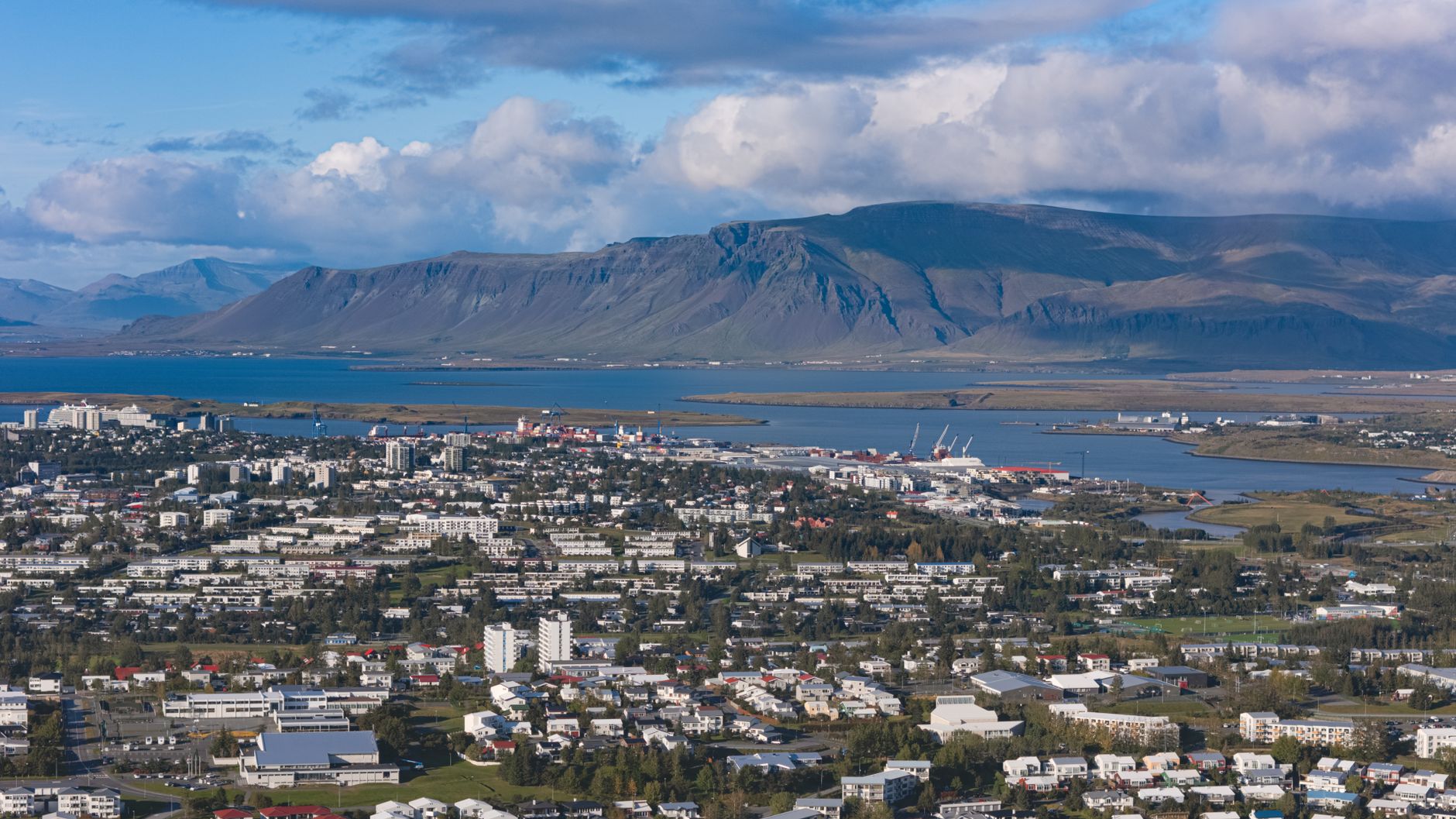
Reykjavík is the country's front door, but the point is not only the capital. This corner of Iceland mixes harbor life, geothermal bathing, lava fields, and the sort of practical infrastructure that makes a first day easy after a red-eye. Hveragerði sits close enough for a smart detour if you want steam vents and greenhouse lunches without committing to a longer drive.
Selfoss is less romantic than Reykjavík and all the more useful for that. The south lowlands are where many travelers sleep, refuel, and cut costs before heading to waterfalls, rift valleys, or the ferry for Vestmannaeyjar. Roads are fast by Icelandic standards, weather changes fast too, and distances that look minor on the map still demand attention.
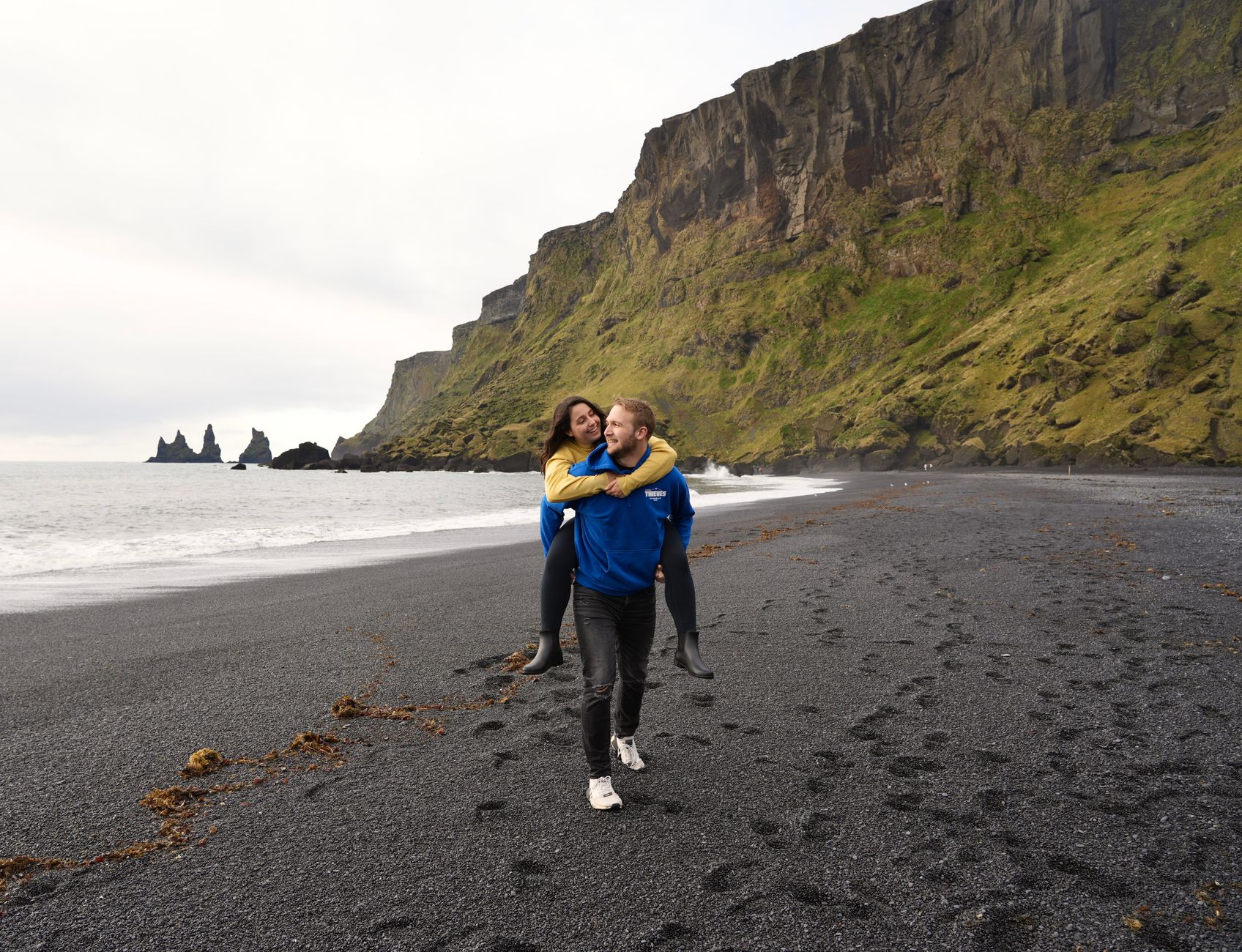
Vík stands at the point where Iceland turns theatrical without becoming tidy. Black sand beaches, glacier-backed horizons, and wind that can yank a car door out of your hand define this coast. It is one of the country's busiest corridors, yet a stormy afternoon here still feels bigger than tourism.
Höfn is the hinge between the glacier country of the southeast and the quieter roads that lead toward Egilsstaðir. This region is about scale: Vatnajökull pressing down from the north, lagoons full of broken blue ice, then fjords and long bends where traffic nearly disappears. Seafood is better here than in many more famous stops.
Akureyri has the confidence of a real town rather than a scenic waypoint. The north is drier than the south, often brighter in summer, and rich in places where Icelandic history feels less packaged: Siglufjörður's herring boom, Goðafoss, turf farms, whale-watching harbors, and broad valleys that look almost gentle until winter arrives.
The Westfjords are where Iceland stops pretending to be convenient. Ísafjörður is the practical base, but the appeal lies in the long fjord roads, old trading posts, sea cliffs, and villages that seem attached to the mountain by stubbornness alone. Stykkishólmur, across Breiðafjörður, belongs to a softer western world of islands, ferries, and low-slung light.
From saga settlement to a republic that still negotiates with volcanoes
Landnám tradition places Ingólfr Arnarson's farm at the bay he named Reykjavík after steam rising from hot springs. Icelandic history begins with exile, intuition, and a coast still being read for signs.
Icelanders establish a national assembly in the rift valley at Þingvellir, creating one of the oldest parliamentary traditions in the world. Law here is spoken aloud before it is written down, which gives politics the force of performance.
After a day and night under his cloak, the lawspeaker Þorgeir declares that the island will be Christian, while allowing some private pagan practice for a time. It is one of medieval Europe's most elegant political compromises.
Icelandic saga tradition places Leif Erikson's westward voyage around this date, linking Iceland to the first known European venture to North America. The island is already acting as a hinge between worlds.
The oral law code is formally recorded, a major shift in a culture that had trusted memory as public infrastructure. Iceland begins turning its spoken order into manuscripts.
Powerful clans drag Iceland into civil war, with ambushes, burnings, and alliances shaped by Norwegian pressure. The republic that prided itself on law now bleeds through family politics.
The author of the Prose Edda dies in a cellar when royal agents and Icelandic enemies catch up with him. His death marks the end of a brilliant, compromised age in which literature and ambition shared the same table.
Through the Old Covenant, Icelanders accept royal rule after decades of internal violence. The Commonwealth is over; the island keeps its memory, but loses its political independence.
With the union of the Scandinavian crowns, Iceland's fate becomes tied ever more closely to Denmark. Distance hardens into administration, and the island is governed from farther away than ever.
The last Catholic bishop in Iceland is beheaded with two of his sons at Skálholt after resisting the Reformation. Theology becomes family tragedy, and Lutheran Iceland is born in blood.
Copenhagen restricts Icelandic trade to licensed Danish merchants, narrowing the island's economic room for maneuver. Monopoly makes remoteness more expensive than geography alone ever could.
Iceland carries out the first complete national census in the world. A small, harsh country turns counting itself into an act of statecraft.
A fissure eruption sends lava and poisonous haze across Iceland, killing livestock on a colossal scale and helping trigger famine. The disaster also darkens skies across Europe, proving Icelandic geology never stays politely local.
The future leader of Iceland's independence movement is born in the Westfjords. He will later fight with petitions, archives, and constitutional argument rather than with swords.
Denmark re-establishes the Althing as a consultative assembly. It is not yet sovereignty, but the old parliamentary memory is back on the stage.
On the millennium of settlement, Denmark grants Iceland a constitution and limited legislative powers. Ceremony and concession arrive together, as they often do in 19th-century politics.
Executive power moves to Reykjavík under an Icelandic minister responsible to the Althing. Government starts to look less colonial and more local.
The Act of Union recognizes Iceland as a sovereign kingdom sharing a monarch with Denmark. Independence is now real, though not yet republican.
After Germany occupies Denmark, Britain moves into Iceland to secure North Atlantic routes; American forces later take over the defense role. War makes the island strategically unavoidable.
At Þingvellir, on Jón Sigurðsson's birthday, Iceland formally becomes a republic. The old assembly plain once used by chieftains now witnesses the burial of monarchy.
A series of disputes with Britain over fishing limits ends with Iceland securing a 200-nautical-mile exclusive zone. A tiny state proves that fisheries can matter as much as fleets.
A volcanic fissure opens beside the town on Heimaey, forcing a dramatic night evacuation by fishing fleet. Residents later help save the harbor by cooling the advancing lava with seawater.
Iceland chooses the first woman in the world to become a head of state through a direct national election. The office acquires a new authority: cultured, calm, and unmistakably modern.
Iceland's oversized banks fail with spectacular speed, wiping out confidence and sending protesters into the streets of Reykjavík. A country that had seemed improbably rich is forced into a brutal reckoning with scale and illusion.
The eruption beneath the glacier sends ash into major flight corridors and introduces the world to an Icelandic name almost no one can pronounce. For Icelanders, it is less novelty than a familiar truth: the ground is never fully still.
Settlement and Commonwealth
Auðr the Deep-Minded turns up in the sagas as a matriarch, but the real surprise is her audacity: widow, ship-owner, land distributor, and one of the first great political minds in Icelandic memory.
A pair of carved high-seat pillars bobbed in the cold Atlantic, somewhere off a shore no one in Norway could yet place on a map. Around 874, Ingólfr Arnarson let the gods choose for him, then sent his people to search the coast until the timber turned up beside steaming vents. He built his farm there and named the place Reykjavík, Smoky Bay. Ce que l'on ignore souvent, c'est que the name does not come from house fires or romance, but from geothermal breath rising out of the earth.
The island was not so much discovered as occupied by people who had run out of patience elsewhere. Norse settlers arrived with wives, livestock, slaves, grudges, and legal habits they were not prepared to abandon. Auðr the Deep-Minded came by way of Scotland and Ireland with wealth, freed people, and a Christian cross in a still-pagan land; the sagas remember her because she gave land to former slaves, which shocked men who had thought property should travel in one direction only.
Then, in 930, these farmers did something astonishing. They created a republic with no king. Each summer, chieftains and householders rode to Þingvellir, where the rift valley itself seems to split the island open, and gathered at the Law Rock while the lawspeaker recited memory into government. Picture the scene: horses tethered in the lava fields, lawsuits argued in tents, marriage bargains and death threats conducted within earshot of the same cliff.
The conversion to Christianity in the year 1000 has the elegance of a saga and the pragmatism of a trade deal. With the island near civil war, the pagan lawspeaker Þorgeir Ljósvetningagoði lay under his cloak for a day and a night, then rose and declared that Iceland would be Christian, though private pagan practice could continue for a time. It was compromise dressed as revelation. And it worked.
This free commonwealth also bred egos large enough to break it. Men like Egill Skallagrímsson could turn a killing into a family story and a grief into immortal verse; poets were politicians here, and memory itself was a weapon. By the early 13th century, the old balance had curdled into feud, and the republic that had no king began to learn what happened when ambition arrived with Norwegian silver.
According to Landnámabók, Ingólfr's slaves spent three years searching the coast for his high-seat pillars before Reykjavík was chosen.
Submission, Plague and Piety
Snorri Sturluson preserved the pagan gods for Europe, yet in life he behaved less like a sage than a gifted court intriguer who misjudged the moment once too often.
The old republic died not in one grand battle but in a long series of farm burnings, betrayals, and exhausted bargains. During the Sturlung Age, Icelandic chieftain families turned the island into a chessboard of revenge, each move financed or flattered by the Norwegian crown. In 1262, Icelanders accepted the Old Covenant and submitted to King Hákon IV. A country without a king had acquired one at last, and not on its own terms.
No figure from this age is more revealing than Snorri Sturluson. He wrote the Prose Edda, preserved the myths of Odin and Thor, and gave medieval Scandinavia its most dazzling literary mirror; he was also vain, rich, politically slippery, and disastrously sure of his own cleverness. In 1241, royal agents cornered him in a cellar at Reykholt. His last reported words, "Eigi skal höggva" — do not strike — did him no good.
Then came colder centuries. The Black Death and later epidemics cut through Iceland with special cruelty because isolation protects until it fails, and then it traps. After Norway entered union with Denmark, Iceland slid into a distant dependency governed by bishops, sheriffs, and trade rules drafted far from its turf roofs and fishing beaches. The Reformation arrived in the 16th century with steel in its hand: the last Catholic bishop, Jón Arason, was beheaded in 1550 with two of his sons, a family execution that still hangs over northern Iceland like weather.
Ce que l'on ignore souvent, c'est que hardship did not produce silence. It produced paper. In farmhouses lit by fish oil and guarded from storms by walls of turf thicker than a wagon is long, Icelanders copied sagas, poems, genealogies, and law books because memory was the one treasury Copenhagen could not ship away. Even poverty had an archive.
By the 18th century, volcanic ash, famine, and trade monopoly had made daily life brutally narrow. Yet the language held, the sagas held, and the idea of Iceland as something older than Danish administration held too. That stubborn memory would become the seed of politics.
When Jón Arason was executed at Skálholt in 1550, legend says his daughter sought revenge soon after by arranging the killing of the local lawman who had helped condemn him.
Awakening and Independence
Jón Sigurðsson is remembered as the father of the nation, but his real gift was patience: years of paper warfare, fought from desks in Copenhagen on behalf of farms he never romanticized.
In the 19th century, Iceland's political rebirth began not in a palace but in reading rooms, private letters, and arguments about memory. Copenhagen had suspended the Althing in 1800, treating the old assembly as an antique relic; Icelandic students and officials answered by turning history into a claim. If a nation had once governed itself at Þingvellir, why should it remain a dependency forever?
The presiding spirit was Jón Sigurðsson, a scholar with the look of a careful librarian and the will of a field marshal. From Denmark, where he spent much of his adult life, he wrote and lobbied with maddening persistence, insisting that Iceland's rights were historical, legal, and moral all at once. His phrase "Vér mótmælum allir" — we all protest — became the clean, cold music of Icelandic constitutional nationalism.
Yet history never advances by documents alone. In 1874, Denmark granted Iceland its first constitution, timed to the millennium of settlement, a concession wrapped in ceremony and royal optics. Then nature intervened with its own savage reminder of who still ruled the island most directly: the Laki eruption of 1783 had already shown what volcanic catastrophe could do, and in the 19th century bad harvests, sea ice, and poverty kept pushing Icelanders toward emigration, especially to North America. Nationhood was discussed in the same breath as survival.
The 20th century tightened the thread. Home Rule came in 1904; sovereignty followed in 1918 under the Act of Union, with the Danish king still shared. When Nazi Germany occupied Denmark in 1940, Iceland was abruptly left to itself in constitutional terms and strategically exposed in every other way. British troops landed, then American forces followed, and the old fishing island found itself standing in the middle of the Atlantic war.
On 17 June 1944, at Þingvellir, in rain and ceremony, Iceland declared itself a republic. The date was chosen for Jón Sigurðsson's birthday, which tells you everything about how carefully Iceland stages its symbols. The medieval plain where the lawspeaker once stood now received a president instead of a king, and the past was made to ratify the present.
The republic was proclaimed at Þingvellir during miserable weather, and the driving rain only strengthened the mood; Icelanders have never trusted a national myth that arrives too comfortably.
Republic of Fire and Fish
Vigdís Finnbogadóttir made the presidency feel both intimate and grand, as if a nation of readers had briefly put one of its own librarians on the throne it no longer had.
A new republic began modestly, then discovered that geography could be turned into leverage. Postwar Iceland was poor by western European standards, dependent on fish, weather, and luck; it became rich by deciding that the surrounding sea was not an open buffet for bigger powers. The Cod Wars with Britain, fought between 1958 and 1976 with trawler cables, patrol ships, and NATO embarrassment, looked almost comic from afar. They were not comic at all in Reykjavík. They were about sovereignty in its most edible form.
The island also kept reminding its citizens that history here is written from below. In January 1973, a fissure opened on Heimaey in Vestmannaeyjar and lava began swallowing streets. Families fled in fishing boats before dawn while ash fell on roofs and the harbor, by a piece of improbable luck, stayed usable long enough to save the town. Ce que l'on ignore souvent, c'est que Icelanders then pumped seawater onto the lava front in one of the strangest rescue operations in modern Europe, trying to persuade a volcano to change its mind.
Modern Iceland likes to look tidy from the outside: geothermal pools, literary festivals, design shops in Reykjavík, aurora photographs, a president on first-name terms with half the country. But the inner life has been rougher. The banking crash of 2008 shattered the illusion of invincibility, sending protesters into Austurvöllur square with pots and pans while financiers who had spoken the language of global greatness suddenly sounded very small.
And yet the republic keeps producing firsts that would have startled its saga ancestors. Vigdís Finnbogadóttir became the world's first woman elected president in a national vote in 1980 and gave the office intellectual glamour without turning it theatrical. Writers, musicians, and filmmakers have since projected Iceland far beyond its size, while eruptions from Eyjafjallajökull in 2010 to the Reykjanes peninsula crises of the 2020s keep reminding everyone that the ground under the nation is still being drafted.
That is the Icelandic arrangement in a sentence: a society small enough to feel personal, built on land large enough to feel unfinished. The next chapter is never safely in the archive. It is already rumbling underfoot.
During the 1973 Heimaey eruption, residents and engineers sprayed millions of tons of seawater at the lava to keep the harbor from closing, and against all expectation the plan partly worked.
Icelandic behaves like a language that refused emigration. In Reykjavík, you hear words that still carry the bone structure of the sagas, then watch them applied to espresso machines, airport buses, tax apps, and weather alerts. A computer is tölva, a number-prophetess. A telephone is sími, once a thread. The vocabulary does not borrow with gratitude; it invents with appetite.
This has consequences for the ear. Place names are not labels but small spells: Þingvellir, Eyjafjallajökull, Snæfellsjökull. You do not pronounce them perfectly on the first day. Good. The mouth should have to work for a country built by lava and grammar.
And then the social miracle: no Icelandic word for please in the English sense, no verbal curtsey attached to every request. People ask directly, thank directly, and spare you the theater of false delicacy. What sounds abrupt to a foreigner is often a form of respect. A country is a syntax before it is a map.
Icelandic food began as an argument with scarcity and somehow ended as a ceremony. The land offered sheep, fish, dairy, roots, and little patience for ornament, so the table learned concentration instead of display. In Reykjavík, the hot dog stand and the tasting menu both understand this. They differ in price, not in seriousness.
Consider skyr. It arrives plain, white, cool, almost austere, then reveals a depth that ordinary yogurt cannot manage. Or plokkfiskur, that humble union of cod, potato, onion, and white sauce, which tastes exactly like a January evening should taste if evenings were edible.
The extremes are honest too. Hákarl is not served because it flatters the palate. It is served because cultures keep a few edible tests, and Iceland prefers its tests clean, salted, fermented, and impossible to misunderstand. Brennivín follows. Naturally.
The great pleasure, though, is rúgbrauð baked by geothermal heat, sliced thick beside butter and smoked trout, perhaps near Hveragerði where the earth still does part of the cooking. Bread from the ground itself. A metaphor so obvious one forgives it.
Few countries are so obviously written into existence. Iceland did not merely preserve its sagas; it let them colonize the national bloodstream. In Borgarnes, where the Settlement Center retells the old narratives, and at Þingvellir, where law and storytelling once shared the same air, you feel the old arrangement still holding: words are not decoration here. Words decide blood feuds, property lines, marriages, reputations, salvation.
Egil Skallagrímsson remains the patron saint of this severe literary confidence. He killed, grieved, insulted kings, and saved his own life with a poem. One hesitates to compare modern writers with a man who treated verse as both weapon and ransom note. Yet the Icelandic respect for language still carries that voltage.
Then came Halldór Laxness, who wrote farms, pride, weather, and human stubbornness with the gravity other nations reserve for empire. His novels understand something outsiders often miss: in Iceland, independence is not a slogan but a costly habit. The land makes romantics pay cash.
Books sell well in a dark country for practical reasons. When winter lowers itself over the island and the afternoon disappears before many office workers have finished pretending to answer emails, reading becomes less hobby than survival with style.
Icelandic manners have the elegance of plain cutlery. People remove shoes at home. They queue without opera. They do not drape every exchange in linguistic velvet. In Reykjavík cafes, orders are placed cleanly, received cleanly, thanked cleanly. The absence of fuss is not coldness. It is hygiene.
The deeper code is trust. Babies sleep outside in prams. Swimming pools require the full naked shower before entry, with diagrams for the doubtful and no patience for coyness. This is one of the first Icelandic lessons: shame is less respectable than chlorine discipline.
And yes, everyone seems to know everyone, or at least to know a cousin, a former classmate, a fishing partner, or a person last seen at a party in Akureyri when the snow was shoulder-high and somebody brought fermented shark as if that counted as charm. Small populations create large memories.
What visitors should understand is simple. Do not mistake brevity for disdain. Do not mistake informality for intimacy either. Icelanders can be warm in a way that asks nothing theatrical of them, and that, in a century drunk on performance, feels almost aristocratic.
The national phrase is þetta reddast. It means something like it will sort itself out, though the English version lacks the wool, the irony, and the faint smell of wet gloves. People say it about missed buses, burst pipes, political embarrassment, sideways sleet, and roads that were definitely open ten minutes ago. Optimism is too decorative a word. This is composure with frost on it.
Such a philosophy makes sense in a place where the ground splits, glaciers move, and forecasts speak in tones usually reserved for military dispatches. Control is not a reasonable religion on an island that keeps manufacturing new geology. Adaptation is. So is humor.
You see the attitude on the Ring Road and in smaller places like Vík or Höfn, where weather can edit the day without consulting your itinerary. Plans stay provisional. Coffee stays non-negotiable. People proceed.
Resignation would be a mistake. The Icelandic temperament is not passive. It is alert, competent, and almost suspicious of melodrama. If a storm comes, you check Vedur, call ahead, tighten your hood, and continue with the business of being alive. Calm is a practical art.
Icelandic architecture begins with the admission that nature is larger and less sentimental than you are. Turf houses sank into the land because wind had opinions. Corrugated iron took hold because timber was scarce, weather was brutal, and painted metal could survive where gentler materials would have sulked themselves to death. Beauty arrived through necessity and then stayed.
In Reykjavík, the old iron-clad houses gleam in red, blue, and white like toys built by stoics. Then Hallgrímskirkja rises above them, all basalt fantasy and Lutheran severity, its concrete ribs echoing lava columns without becoming kitsch. The church looks less built than cooled.
Elsewhere the conversation changes tone. In Stykkishólmur, houses sit with a maritime neatness that owes everything to trade and weather; in Ísafjörður, timber structures from the merchant era stand with the defensive dignity of people who know what winter can do. Every settlement feels provisional and stubborn at once.
This is the island's architectural genius. Buildings do not pretend to conquer the landscape. They negotiate with it, flatter it, and occasionally survive it. One should ask no more of a wall.
He enters Icelandic history with a theatrical gesture worthy of a saga: throwing his carved high-seat pillars into the sea and promising to settle where they drifted ashore. The search ended at Reykjavík, which means the country's capital begins not with a surveyor's logic but with a religious gamble.
Auðr arrived with ships, followers, and the authority of someone used to command. What matters is not only that she claimed land, but that the sagas remember her freeing people and settling them, which gives Iceland's origin story a rarer note than conquest alone: deliberate social invention.
Egill could kill in a rage and compose in meters so complex they still leave scholars sweating over the lines. When a Norwegian king was ready to execute him, he wrote a praise poem overnight and walked away alive by morning. Few countries make poetry feel this dangerous.
Without Snorri, much of what the world thinks it knows about Norse mythology would have vanished into smoke. He was no serene man of letters, though; he maneuvered among kings and rivals until politics caught him in a cellar at Reykholt, where literature lost one of its great archivists to an ugly little assassination.
Jón Arason resisted the Lutheran Reformation with the stubbornness of a man who believed doctrine and family honor belonged in the same fight. His execution with two of his sons in 1550 turned a church dispute into one of the starkest family tragedies in Icelandic memory.
He did not lead armies, and that is precisely the point. Jón Sigurðsson turned archives into ammunition, arguing from history until Denmark had to admit Iceland's claim could no longer be treated as sentimental folklore. His authority came from restraint, which is often harder to wield than charisma.
Laxness gave 20th-century Iceland its sharpest literary mirror, especially in "Independent People," where pride, poverty, and sheep all become tragic in equal measure. He loved the country enough to write it without cosmetic light, which is another form of patriotism altogether.
Vigdís changed the image of power by making it learned, calm, and unmistakably female in a country that often preferred plain speech to ceremony. She spoke for language, culture, and education with such ease that the presidency began to look less like remote authority than a national conscience.
Björk took the textures of Icelandic weather, folklore, electronics, and emotional candor and turned them into a global sound no one else could imitate without embarrassment. She matters historically because she made a very small country impossible to confuse with anywhere else.
This short route works if you want geothermal landscapes, easy food stops, and minimal driving after landing. Reykjavík gives you the urban base, Hveragerði adds steam and greenhouses, and Selfoss makes a practical hub for day trips without the hotel prices of the capital.
This is Iceland at its most cinematic: black sand, mossy lava, glacier tongues, and long empty stretches where the weather writes the mood. Starting in Vík and pushing east to Höfn keeps the route focused, with Egilsstaðir giving you a quieter finish among fjords and mountain passes.
Western Iceland trades headline attractions for space, fishing towns, and roads that force you to slow down. Borgarnes sets up the west, Stykkishólmur opens the Breiðafjörður island world, and Ísafjörður leads you into the fjords where distances look short on the map and prove otherwise.
Two weeks lets you link the sharper north with the volcanic islands off the south coast without pretending Iceland is small. Akureyri gives you museums and whale-watching, Siglufjörður brings herring-era drama, and Vestmannaeyjar ends the trip on a lava-built archipelago that still feels slightly provisional.
Breakfast, spoon, silence. Eaten cold in Reykjavík kitchens and hotel dining rooms, often with cream, sugar, or berries, as if restraint had decided to become pleasure.
Lunch or early dinner, usually with dark rye bread and too much butter. Families eat it at home; restaurants serve it when they want to prove that cod and potatoes can still command respect.
Thick slices beside smoked trout, hangikjöt, or boiled eggs. Best after a hot-spring visit near Hveragerði or on a farmhouse table where the bread tastes faintly of earth and patience.
Late night, cold fingers, mustard, remoulade, raw onion, fried onion. The ritual belongs to Reykjavík, standing outside with strangers who all pretend the hot dog is a joke until the first bite.
Served in deep bowls when the wind has become personal. Lamb broth, carrots, potatoes, rutabaga, and the company of people who understand that soup is sometimes a form of shelter.
Tiny cubes, fast courage, one shot after the other. Eaten at Þorrablót midwinter gatherings, with laughter that suggests survival itself may be the oldest national seasoning.




Iceland is in the Schengen Area, so most visitors from the US, Canada, the UK, Australia, and the EU can enter visa-free for up to 90 days in any 180-day period. Your passport should be valid for at least 3 months beyond your planned Schengen departure; 6 months gives you breathing room. ETIAS is not in force yet as of April 20, 2026.
Iceland uses the Icelandic króna, not the euro, and cards are accepted almost everywhere from Reykjavík to remote fuel pumps near Höfn. Cash is close to irrelevant, but a 4-digit card PIN still helps. Tipping is not expected because service is built into the price.
Most travelers arrive through Keflavík International Airport, 50 km southwest of Reykjavík, with a road transfer of about 45 minutes. The cheapest airport connection is Strætó route 55 at around 2,400 ISK, while Flybus is simpler if you want luggage space and departures timed to flights. Iceland has no passenger rail, so the airport journey is always by road.
A rental car is the practical choice once you leave Reykjavík, especially for routes linking Vík, Höfn, Akureyri, or Ísafjörður. Route 1, the Ring Road, ties the country together, but Highlands F-roads require a 4x4 and usually open only in summer. Domestic flights from Reykjavík Airport cut long distances fast if you want to reach Akureyri, Egilsstaðir, or Ísafjörður without losing a day to driving.
The cold is rarely the main problem; the wind is. Summer in Reykjavík usually sits around 9-14°C, while winter hovers near -1 to 3°C, and conditions can flip in an hour on exposed roads near Vík or the Eastfjords. June to August brings long light and open roads, while September to March is better for northern lights and ice-cave tours.
Mobile coverage is strong on the Ring Road and in towns such as Selfoss, Egilsstaðir, and Akureyri, but it drops in the Highlands and on quieter peninsulas in the Westfjords. Hotels, guesthouses, and most cafes offer reliable Wi-Fi. Download maps before long drives, especially if you are heading beyond Borgarnes or into thinly populated areas.
Iceland is one of the safest countries in Europe for crime, but nature injures careless people every season. Check Vedur for weather, road.is for closures, and SafeTravel for alerts before any long drive or coastal stop. Sneaker waves, loose volcanic ground, glacier rivers, and sudden crosswinds matter more than pickpockets.
Iceland is expensive by almost any European standard. Save money with supermarket lunches, guesthouse kitchens, and day planning that reduces backtracking; fuel and restaurant dinners will do the damage first.
Do not build an Iceland itinerary around rail passes or station transfers because the country has no passenger train network. Your real choices are bus, rental car, domestic flight, or organized tour.
Fill up before long stretches in the Eastfjords, Westfjords, or late-evening drives beyond Vík. Many pumps are self-service and card-based, so a working PIN matters more than cash.
For June through August, reserve rental cars and popular stays months ahead, especially in Vík, Höfn, and around Lake Mývatn. Small towns do sell out, and the last rooms are rarely the good-value ones.
Summer gives you absurdly long days, which means you can sightsee late and drive when roads are quieter. In winter, reverse the logic: keep major driving for daylight hours and leave northern-lights hunting for the evening.
You do not need to add 10 or 15 percent in restaurants. If service was especially kind, round up or leave a small extra amount, but locals will not expect it.
When a beach sign says stay back, stay back. Reynisfjara, glacier edges, and geothermal ground injure people who assume the rope or sign is just legal theater.
Explore Iceland with a personal guide in your pocket
Audio guides for 1,100+ cities across 96 countries. History, stories, and local insight — offline ready.

No, US citizens can visit Iceland visa-free for up to 90 days within a 180-day Schengen period. Your passport should be valid for at least 3 months beyond your planned departure from Schengen, and border officers can still ask for proof of onward travel or funds.
Yes, Iceland is expensive, especially for accommodation, car rental, fuel, and alcohol. A careful budget traveler can manage on roughly 15,000-23,000 ISK per day, while a more comfortable trip often lands closer to 32,000-50,000 ISK per day before international flights.
Usually no, because cards are accepted almost everywhere. Keep a physical card with a 4-digit PIN for fuel stations and occasional unattended terminals, but you do not need to arrive with much króna in your pocket.
Renting a car is better for most travelers once they leave Reykjavík. Buses exist and work for some routes, but schedules are thin outside the capital area and they make it hard to stop at waterfalls, viewpoints, and short trailheads on your own timing.
September to March is the best season for northern lights because you need darkness as well as clear skies. October and February often strike a good balance between road access and night length, but you still need to watch cloud cover on Vedur.
Yes, but only if you are comfortable changing plans fast and driving in snow, ice, and violent crosswinds. Route 1 is maintained, yet closures happen, daylight is short, and sections near open plains can become dangerous long before they look dramatic in photos.
Yes, Iceland is generally very safe for solo travelers in terms of crime. The real risks come from weather, ocean waves, mountain roads, and overconfidence around geothermal and glacier areas, so your planning matters more than your personal-security strategy.
A useful minimum is 3 to 4 days if you stay around Reykjavík and the south lowlands. One week lets you do the south coast properly, while 10 to 14 days gives you enough time for the Westfjords, the north, or a full Ring Road without turning the trip into a driving contest.
Last reviewed