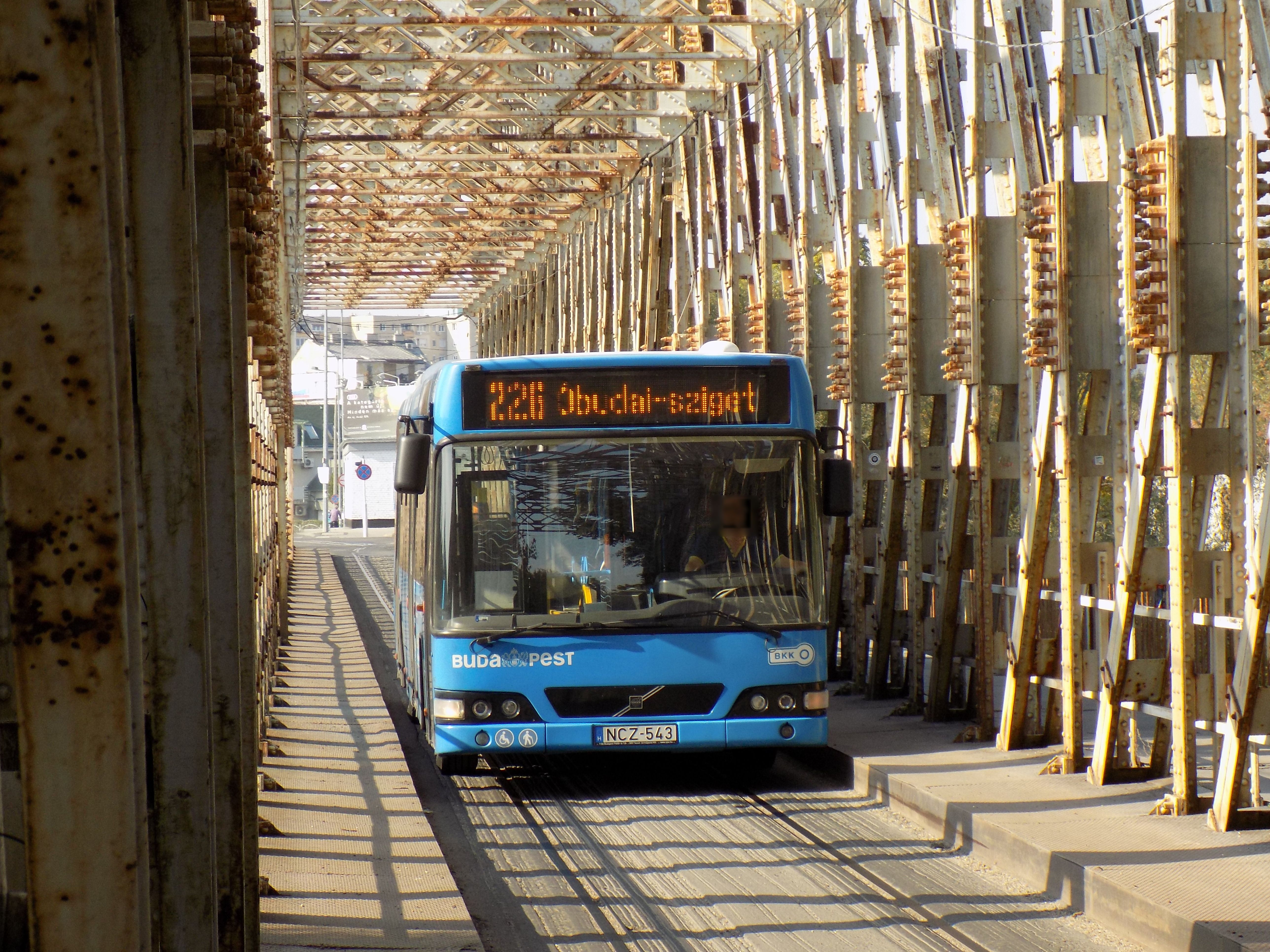
Introduction
Kossuth Bridge (Kossuth híd) was a temporary steel truss bridge that spanned the Danube beside the Hungarian Parliament from 15 January 1946 until its dismantling in 1960. Conceived as an emergency link after all five permanent Budapest bridges were blown up in World War II, it became a potent symbol of the city’s post-war recovery. Because it was never meant to last more than a decade, corrosion and low clearance soon rendered it unsafe and an obstacle to shipping. Today only two memorial plaques—one on Kossuth Square (Pest) and one on Batthyány Square (Buda)—mark the spot where the bridge once stood.
Table of Contents
- Planning & Rapid Construction (1945 – 1946)
- Role in Post-War Recovery (1946 – 1957)
- Decline & Demolition (1957 – 1960)
- Architectural & Engineering Features
- Cultural Memory & Legacy
- Visiting the Site Today
- Nearby Attractions
- Frequently Asked Questions
- Conclusion
Planning and Rapid Construction (1945 – 1946)
- Need for a quick fix. When Soviet troops captured Budapest in February 1945, every permanent Danube crossing lay in ruins. Army pontoon bridges were too fragile for winter ice, so a semi-permanent structure was ordered.
- Eight-month build. Work began on 16 May 1945 using salvaged steel from oil-derrick ruins in Zala county; the bridge opened to pedestrians on 15 January 1946 and to vehicles three days later—an engineering feat accomplished in just eight months.
Role in Post-War Recovery (1946 – 1957)
Kossuth Bridge carried buses, trams, trucks (one-way at 20 km/h), and millions of pedestrians while permanent bridges were rebuilt. Its presence shortened Parliament–Buda transit times by nearly 3 km and became a morale booster in the devastated capital.
Decline & Demolition (1957 – 1960)
- Structural fatigue. Hasty welding and timber approach spans demanded constant repair. The outer wooden spans were replaced with steel in 1953, but cracks kept appearing.
- Obstruction to shipping. The bridge’s low clearance hampered Danube cargo traffic; by spring 1957 it was closed to vehicles, and pedestrian access ended in 1958.
- Dismantling. Final demolition occurred in 1960; the riverbed was cleared of piers by 1963.
- Brief revivals. Temporary pontoon bridges were installed on national holidays in 1973 and 2003, echoing the lost crossing.
Architectural & Engineering Features
| Metric | Figure |
|---|---|
| Total length | ≈ 400 m |
| Width | 11.5 m |
| Main span | 80.3 m (five-span continuous truss) |
Designed as an all-steel Warren truss resting on reinforced-concrete caissons, the bridge could handle 16-ton trucks—remarkable given the post-war shortages.
Cultural Memory & Legacy
Although physically absent, Kossuth Bridge survives in photographs, films, and literature as a symbol of Budapest’s “eight-month miracle.” Memorial plaques on both banks outline its silhouette, and local history walks often pause here to recount its story.
Visiting the Site Today
| What to See | Tip |
|---|---|
| Memorial Plaques at Kossuth Square (Parliament side) and Batthyány Square | Look for the stylised bridge outline and 1946–1960 dates. |
| Danube Promenade Viewpoint | Stand beside the plaques to align old photos with today’s skyline. |
| Interpretive Panels (seasonal) | Temporary exhibits appear on major anniversaries (20 August national day). |
There is no bridge to cross—consider pairing this stop with a walk across nearby Chain Bridge or Margaret Bridge for actual Danube views.
Nearby Attractions
- Hungarian Parliament Building – neo-Gothic masterpiece 100 m south.
- Shoes on the Danube Bank memorial – 10 min walk.
- Buda Castle District – accessible via Széchenyi Chain Bridge.
Frequently Asked Questions
| Question | Answer |
|---|---|
| Why was it called “Kossuth” Bridge? | Named after 19th-century statesman Lajos Kossuth. |
| Can I still walk across it? | No. It was dismantled in 1960; only plaques remain. |
| Why wasn’t it rebuilt? | By the late 1950s all permanent bridges had reopened, and Kossuth Bridge’s low clearance hindered river traffic. |
| Are there plans to reconstruct it? | None; urban planners favour preserving the open vista toward Parliament. |
Listen to the full story in the app
Your Personal Curator, in Your Pocket.
Audio guides for 1,100+ cities across 96 countries. History, stories, and local insight — offline ready.
Audiala App
Available on iOS & Android
Join 50k+ Curators
Last reviewed:


