castle
Citadel and Sans-Souci
Near Milot, the Citadelle Laferrière and Sans-Souci ruins turn Haitian independence into architecture on a grand scale. Few places in the Caribbean carry so much political ambition in stone.
Haiti is not a checklist beach destination but one of the most consequential countries in the Americas, where independence, art, religion, and mountain geography still press on daily life.
EntryVisa-free up to 90 days for many passports; check current advisory
HA Haiti travel guide starts with the hard truth: current advisories say do not travel, yet the country holds the Caribbean's most radical history and its largest fortress.
Any honest introduction to Haiti begins with risk, not fantasy. As of April 2026, major government advisories still say do not travel, so this page works best as a research base for essential or tightly planned trips. Start with Port-au-Prince for the country's political and artistic pulse, then look north to Cap-Haïtien and Milot, where the Haitian Revolution stops being an abstract chapter and turns into stone, altitude, and military ambition.
Haiti rewards travelers who care about history with specifics, not slogans. Independence was declared on January 1, 1804, making Haiti the first Black republic and the only nation born from a successful slave revolt; you feel that fact most sharply at the Citadelle Laferrière above Milot and in the ruined palace of Sans-Souci below it. But the country is not only monumental: Jacmel still carries its papier-mache traditions and artists' workshops with a stubborn, handmade confidence that feels very different from the north.
Taíno Ayiti, c. 400-1492
Night falls on a stone batey court, and the game begins under torchlight. The Taíno called this island Ayiti, "land of high mountains," and they were not speaking in metaphor: ridges rise sharply behind the northern plain, above what is now Cap-Haïtien, and the landscape still explains the name better than any textbook can.
This was not an empty paradise waiting to be discovered. By 1492, the island held powerful chiefdoms, ceremonial plazas, carved zemí figures, and areítos, those sung histories that carried memory from one generation to the next. Power had ceremony here. It also had poetry.
Ce que l'on ignore souvent, c'est que the most dazzling political figure of this world was a woman: Anacaona, the ruler of Xaragua, remembered as poet, diplomat, and queen. In 1503 she received the Spanish governor Nicolás de Ovando with dances, gifts, and all the codes of noble hospitality. He answered by trapping her fellow chiefs in a building and burning them alive, then hanging her in Santo Domingo. One of the great crimes of the early Atlantic world began with a courtly welcome.
That massacre did not simply destroy a dynasty. It cleared the ground for a future colony built on absence, then on forced labor imported from Africa. The silence left behind would shape everything that followed, from the plantations of Saint-Domingue to the revolution that would one day break them.
Anacaona stands at the beginning of Haiti's story not as a symbol but as a ruler who tried diplomacy first and paid for it with her life.
When Columbus's Santa María wrecked on Christmas Eve 1492, the Taíno chief Guacanagarix helped salvage the cargo and hosted the stranded sailors; the first alliance in the Americas began with generosity and ended in conquest.
Saint-Domingue, 1492-1791
Stand for a moment on Île de la Tortue, with the wind coming off the north coast and the sea looking deceptively innocent. In the seventeenth century, this was a pirate outpost, a place of smoked meat, contraband, and opportunists who lived by the gun and the tide before the French crown decided it preferred empire to improvisation.
Then came Saint-Domingue, the richest colony in the Caribbean and one of the most profitable places on earth. Sugar, coffee, indigo, cotton: the figures still stun. By the late eighteenth century this colony was producing a vast share of Europe's sugar and coffee, while hundreds of thousands of enslaved Africans worked under a regime so violent that death was built into the business model.
But wealth did not make the colony stable. It made it brittle. The grands blancs wanted power without restraint, the free people of color wanted rights equal to their property and education, and the enslaved majority watched a world built on whips, debts, and theatrical refinement. One could dance at a ball in Cap-Français while men were being branded in the plain beyond the lanterns.
Ce que l'on ignore souvent, c'est que Saint-Domingue had already entered Atlantic history before its own revolution. In 1779, free men of color from the colony fought at the Siege of Savannah in Georgia; among those who passed through that campaign were future rivals of Haitian history, including André Rigaud, and very likely the young Henri Christophe. Haiti's future had already put on a uniform before it raised its own flag.
The colony looked invincible. It was already dying. On the night of 14 August 1791, at Bois Caïman, oath, rum, blood, and storm clouds fused into insurrection. After that, Saint-Domingue would never again belong quietly to France.
Dutty Boukman appears for an instant in the archive, then vanishes into legend, but that instant was enough to set a colony on fire.
Cap-Français was once called the Paris of the Antilles, a city of theaters and chandeliers built on plantation money so cruel that contemporaries themselves described the colony as both magnificent and unlivable.
Revolution and Independence, 1791-1806
Imagine a letter unfolding in a cold stone prison in the Jura mountains, far from the Caribbean heat. Toussaint Louverture, once enslaved, then general, then governor, wrote from Fort de Joux after Napoleon's men had seized him through deception. He warned that in overthrowing him, France had cut down only "the trunk of the tree of liberty"; the roots, he said, were deep. He was right.
The Haitian Revolution was not one rebellion but many wars layered on top of one another: enslaved insurgents against planters, Spain against France, Britain against France, Black generals against one another, and all of them against the imperial fantasy that a plantation colony could be reset by force. Toussaint tried order, discipline, and uneasy compromise. Napoleon answered with troops and the hidden intention to restore slavery.
Then yellow fever and Haitian resistance did their work. Jean-Jacques Dessalines, harder, less conciliatory, and far more willing to look the French project in the eye and call it what it was, led the final struggle. On 1 January 1804, at Gonaïves, independence was declared. Haiti became the first Black republic in the modern world and the only state born from a successful slave revolution. Every empire heard the news as a threat.
Ce que l'on ignore souvent, c'est how intimate the break with France was. This was not an abstract anticolonial gesture. It was a reckoning carried out by people who had known chains, mutilation, sale, and pursuit. Dessalines was creating a nation and settling accounts in the same breath.
Yet victory did not bring peace. Dessalines crowned himself emperor in 1804, was assassinated in 1806, and the new state split almost at once. Haiti had won its freedom in battle; it now had to decide who would inherit the ruins, the glory, and the impossible burden of that triumph.
Toussaint Louverture remains the great strategist of the revolution, a man of discipline, ambition, and fatal trust in French promises.
The blue and red of the Haitian flag are traditionally said to come from the French tricolor with the white torn out, a piece of political theater so sharp that it still feels modern.
Kingdom, Republic, and the long price of freedom, 1806-1915
At Milot, the ruins of Sans-Souci still stage an argument about what Haiti should have been. Henri Christophe, once a revolutionary general, made himself king in the north in 1811, built a court with titles, ceremonies, and liveried servants, and raised the Citadelle Laferrière above the mountains like a stone ultimatum to any French fleet tempted to return. Up there, 900 meters above sea level, the fortress still looks less like architecture than defiance made masonry.
Christophe fascinates because he was both visionary and severe. He wanted schools, roads, administrative order, and a Black monarchy that could meet Europe without bowing to it. He also enforced labor with harsh discipline and created a nobility in a country born from revolt against inherited rank. One understands the grandeur. One also sees the contradiction.
South of this royal experiment, Alexandre Pétion built a republic centered on Port-au-Prince, more urbane in style, no less fragile in practice. Haiti was divided between crown and republic, between military authority and republican language, between the need to defend freedom and the temptation to imitate the very old world it had overthrown. And yet this divided country still found room for generosity: Pétion gave arms, men, and refuge to Simón Bolívar in 1815, asking only that he free enslaved people where he triumphed.
Then came the scandal that still shadows Haiti's finances. In 1825, under threat of French warships, King Charles X imposed an indemnity on Haiti as the price of diplomatic recognition. The former enslaved were forced to compensate former slaveholders for lost "property." One scarcely knows whether to call it extortion or dark comedy. Both fit.
That debt bled the nineteenth century. Palaces cracked, governments fell, and the state entered modernity carrying a bill for its own liberation. By the time foreign powers were circling more openly, the question was no longer whether Haiti had paid too much for freedom. It was how much more outsiders intended to extract.
Henri Christophe wanted Haiti to look Europe in the eye from a throne of its own making, and he built stone proof of that ambition above Milot.
When Christophe suffered paralysis and revolt closed in, he is said to have taken his own life with a silver bullet, a detail so theatrical that it sounds invented, yet it persists because it suits the man almost too well.
Occupation, dictators, and unfinished sovereignty, 1915-present
The twentieth century opens with foreign marines landing in Port-au-Prince in 1915 after the lynching of President Vilbrun Guillaume Sam. The United States occupation that followed lasted until 1934, rewrote finances, centralized power, and claimed to bring order while forcing corvée labor and crushing resistance. Modern bureaucracy arrived with a rifle butt close behind.
Charlemagne Péralte, the rebel leader of the cacos, became the occupation's martyr after U.S. forces killed him in 1919 and photographed his body tied to a door. The image was meant as intimidation. It turned him into an icon. Haiti has a habit of converting humiliation into memory.
Then came François Duvalier, "Papa Doc," elected in 1957 and soon ruling through fear, patronage, and the Tonton Macoute. His son Jean-Claude, "Baby Doc," inherited the state like family silver in 1971. Ce que l'on ignore souvent, c'est how much of daily life under the Duvaliers depended on whispers: who had disappeared, who had paid, who had switched allegiance, who still dared joke in a back room in Jacmel or Pétionville.
The democratic hope that followed their fall in 1986 never arrived cleanly. Jean-Bertrand Aristide's rise, coups, interventions, the 2010 earthquake in Port-au-Prince, Hurricane Matthew in 2016 near Les Cayes, the 2021 assassination of Jovenel Moïse, and the present spiral of gang control and institutional collapse have left the country bruised but not erased. Cap-Haïtien still wakes to light on the northern plain. Milot still keeps Christophe's ruins. Saut-d'Eau still draws pilgrims.
Haiti's modern history is not a simple descent. It is a struggle over who gets to speak for a revolution that changed the world. That argument is not over, and the next chapter, as always in Haiti, will be written under pressure.
Charlemagne Péralte, peasant officer turned resistance symbol, forced an occupied country to remember that sovereignty can survive defeat.
The photograph of Péralte's corpse was so widely circulated by the occupiers that it accidentally gave Haiti one of its most enduring nationalist icons, with many viewers seeing in the pose an eerie echo of a crucifixion.
Haiti speaks with two mouths. French wears the pressed shirt, sits at the desk, signs the decree; Kreyòl laughs in the yard, bargains in the market, scolds the child, blesses the meal. This is not bilingualism as a tourist brochure imagines it. It is a social weather system.
In Port-au-Prince, you hear the switch happen mid-sentence, like someone changing shoes without breaking stride. Kreyòl moves with superb economy: direct, warm, sometimes devastating. French arrives with hierarchy tucked into its cuffs. The miracle is that Haitians make both serve life.
A few words contain entire philosophies. Lespri means intelligence with voltage. Responsab means accountable not only for yourself but for your people, your promises, the face you show the world. A country reveals itself in its nouns. Haiti does it twice.
Haitian food has the decency to tell the truth. Griot crackles because pork deserves a final act of violence before tenderness wins. Pikliz arrives to punish complacency. Soup joumou, eaten on 1 January, is not symbolic in the lazy sense of the word; it is history made edible, a pot of pumpkin and beef that says freedom must pass through the mouth or it remains abstract.
In Cap-Haïtien, diri ak djon djon turns rice black with mushroom broth the color of ink. It looks almost ceremonial, as if each grain had dressed for mourning and celebration at once. That is often Haiti's way: grief and feast seated at the same table, refusing to take turns.
Then come the mountain products, quieter but no less eloquent. Coffee from Kenscoff carries cold air inside it. Vetiver from the south perfumes the world while remaining, in Haiti, a root pulled from difficult soil. A country is a table set for strangers. Haiti sets it with memory.
Haiti does not use rhythm as decoration. Rhythm is administration. It orders the feet in rara processions before Easter, drives the shoulders in kompa dance halls, and keeps old conversations alive in Vodou ceremonies where the drum does not accompany the event but summons it.
Kompa, born in 1955 with Nemours Jean-Baptiste, is a lesson in controlled heat. The groove stays polished, almost courtly, while the body understands perfectly well what is being asked of it. Good Haitian music often behaves like good manners: form on the surface, fire underneath.
During rara season, bamboo trumpets, vaksin, scrape the air with a raw insistence that no studio can civilize. It is street music in the noblest sense. In Jacmel the carnival bands add papier-mache masks and theatrical excess; in the countryside the beat can feel older than the road itself. One drum says dance. Another says remember.
Religion in Haiti is not a clean shelf of separate boxes. Catholic images stand in churches; Vodou spirits stand beside them, behind them, within them, depending on who is speaking and who is pretending not to notice. The foreign observer often calls this contradiction. Haiti calls it Tuesday.
At Saut-d'Eau, pilgrims climb toward the waterfall in July for Our Lady of Mount Carmel. They also come for Erzulie. Candles, ribbons, flowers, wet stone, prayer, rum, white clothing, muddy feet: the categories dissolve before the body does. This is what ritual does when it survives every attempt to simplify it.
The lazy mind reduces Vodou to spectacle. Haiti knows better. It is theology, medicine, memory, ethics, music, choreography, and an archive of African continuities carried through catastrophe. The lwa are not metaphors. Even those who do not serve them speak with the caution reserved for realities that do not require permission to exist.
Haitian art dislikes passivity. In Croix-des-Bouquets, outside Port-au-Prince, sheet metal cut from oil drums becomes saints, trees, mermaids, suns, and graveyard gates intricate enough to humble lace. The material begins as industrial residue and ends as something ceremonial. Few transformations are more satisfying.
Jacmel works another register. Papier-mache there is not a child's craft but a civic delirium, especially at carnival, when masks swell into devils, birds, politicians, skeletons, ancestral jokes. The faces are comic until they are not. Good masks always know something about judgment.
Painting, too, has its own Haitian argument with reality. The naive-school label never quite fits; it sounds condescending, and Haiti has no obligation to flatter European categories. What these painters often possess instead is exact freedom: flat planes, fierce color, and a composure that lets the marvelous sit at the table as if it had every right. Which, in Haiti, it does.
Milot contains one of the most audacious architectural sentences in the Caribbean. The Citadelle Laferriere rises 900 meters above sea level, built after independence under Henri Christophe between 1805 and 1820, with walls thick enough to answer cannons and clouds alike. You do not look at it so much as submit to its scale.
Below it, the ruins of Sans-Souci still perform monarchy with unnerving elegance. Christophe wanted a Black kingdom with architecture large enough to silence Europe. The 1842 earthquake wrecked the palace, but not the ambition. Stones remember posture.
Then Haiti changes mood entirely. In Port-au-Prince and Petionville, the old gingerbread houses of the late 19th and early 20th centuries lace wood, brick, ironwork, balconies, and steep roofs into buildings that seem to sweat ornament. They were designed for heat, rain, status, and gossip. Architecture should know how people live. Haiti's best buildings know, and listen.
Near Milot, the Citadelle Laferrière and Sans-Souci ruins turn Haitian independence into architecture on a grand scale. Few places in the Caribbean carry so much political ambition in stone.
Jacmel's papier-mache masks, painters' studios, and carnival craft traditions feel handmade, local, and slightly unruly in the best way. In Port-au-Prince, recycled oil-drum metalwork does the same with steel.
Griot, pikliz, soup joumou, and diri ak djon djon are not just good meals; they carry class history, revolution, and regional identity. Cap-Haïtien and Gonaïves are especially tied to the black mushroom rice of the north.
Haiti means Ayiti, 'land of high mountains,' and the name still fits. Kenscoff's cooler ridges, the road to the Citadel, and the country's folded terrain shape the trip as much as the coast does.
This is the only country created by a successful slave revolt, and that fact changes how you read every fort, square, and ceremony. Port-au-Prince, Cap-Haïtien, and Milot each tell a different chapter of that story.
At Saut-d'Eau, Catholic devotion and Vodou practice meet at the waterfall with remarkable intensity. Haiti's religious life is lived in public, with drums, candles, and layered meanings rather than neat categories.
12 cities — start with the ones we'd send you to first.
The capital holds the Musée du Panthéon National Haïtien, where the anchor of Columbus's Santa María sits in a basement vault alongside the pistol Jean-Jacques Dessalines carried at independence.
France's second city in the Americas, where the grid of colonial streets runs straight to a waterfront that once loaded more sugar than any port on earth.
A southern port of crumbling French Creole ironwork balconies and papier-mâché workshops that supply the country's most theatrical Carnival masks.
A village in the northern foothills where Henri Christophe built Sans-Souci Palace and the Citadelle Laferrière — a mountaintop fortress that required 20,000 workers and has never been taken.
The city where Dessalines read the Act of Independence aloud on January 1, 1804, making Haiti the first Black republic in history and the only nation born of a successful slave revolt.
Gateway to Île-à-Vache, a near-roadless island offshore where most of the population still moves by horse, and the beaches remain genuinely unbuilt.
Perched above Port-au-Prince at 900 metres, this hillside suburb holds the galleries, restaurants, and iron-sculpture workshops where Haiti's internationally collected art market actually operates.
At 1,450 metres above the capital, market women sell strawberries and carrots in the cold morning air — a climate so improbable in the Caribbean that the first visit feels like a cartographic error.
A near-intact French colonial fort on a deep natural harbour in the northeast, where Toussaint Louverture negotiated with Napoleon's envoys before his arrest and deportation to die in a French mountain prison.
Northern Haiti is where the revolution stops being an abstraction and turns into walls, staircases, and gun emplacements. Cap-Haïtien has the country's best urban bones, Milot carries the royal dream of Henri Christophe, and Fort-Liberté feels quieter, flatter, and older than the headlines suggest.
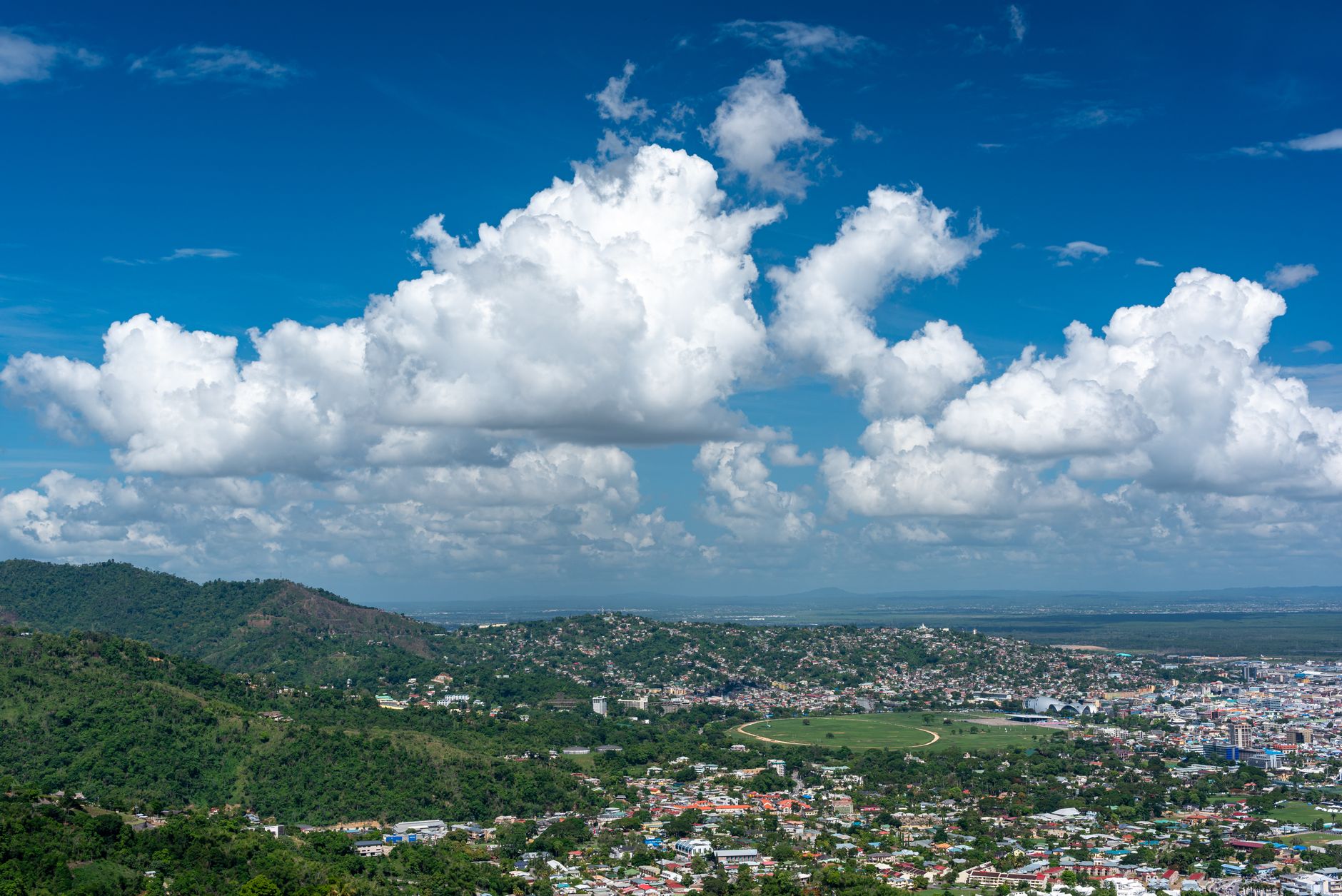
The capital region is dense, improvised, exhausting, and still the place where politics, galleries, embassies, and logistics collide. Pétionville sits higher and moves faster, while Kenscoff offers a cooler ridge of vegetable farms, pine air, and a reminder that Haiti changes dramatically with altitude.
Jacmel has a different texture from the capital: painted balconies, carnival workshops, and an old coffee-port street plan that still holds together. The road east and south is about craft, shoreline, and patient detail rather than blockbuster sights, which is precisely why the region stays in your head.
The inland plateau trades sea views for rivers, shrines, and long agricultural horizons. Hinche and Saut-d'Eau matter less for monuments than for movement itself: pilgrims arriving on foot, market days thick with transport trucks, and a religious landscape where Catholic and Vodou practice sit side by side without pretending otherwise.
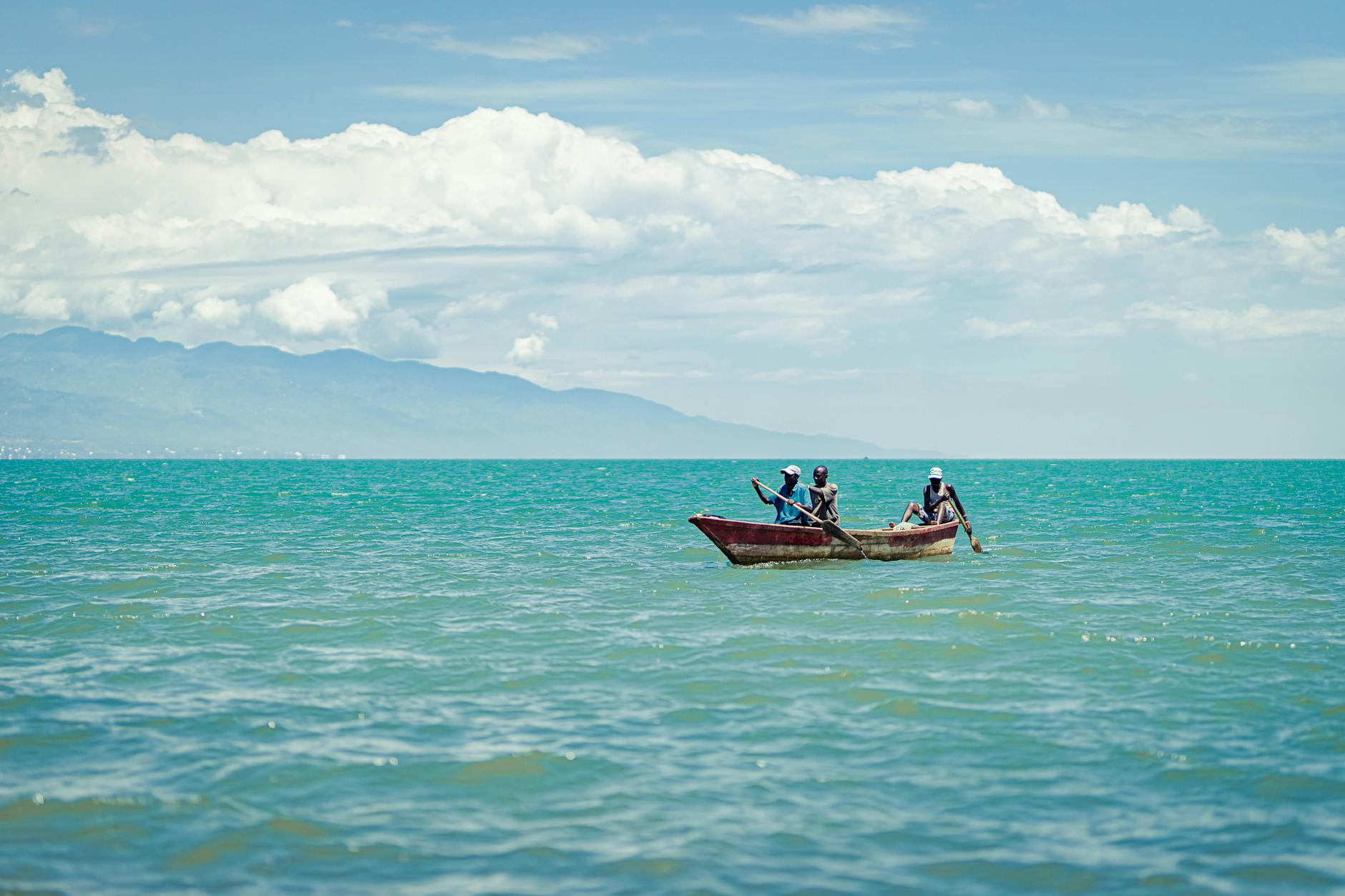
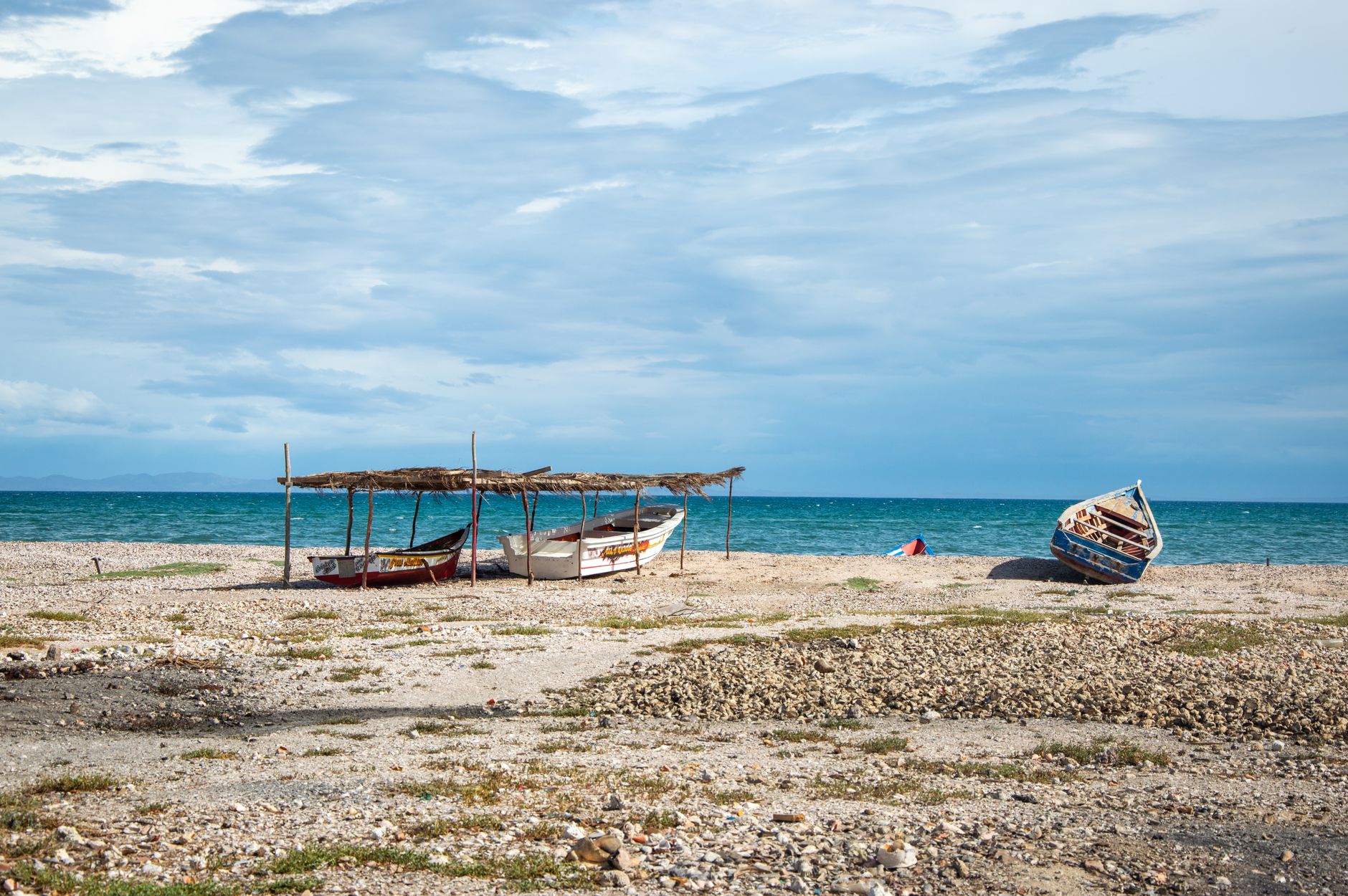
The southwest opens out after the mountains: Les Cayes is the practical anchor, not a theatrical one, and that makes it useful. From here you read southern Haiti through fishing harbors, offshore islands, and roads that feel far from Port-au-Prince in every sense, including tempo.
Gonaïves belongs to the national story in a way few cities do; independence was proclaimed here on January 1, 1804, and that fact still shadows the place. The wider Artibonite region is flatter, hotter, and more agricultural than the mountain districts, with rice country, processions, and roads that matter because they connect the country to itself.
A history of queens, plantations, revolution, kings, occupations, and survival
Migrants from the Orinoco world gradually settle the island and build the culture later known as Taíno. By the late pre-Columbian period, Ayiti is organized into chiefdoms with ceremonial courts, oral traditions, and sacred zemí figures.
Christopher Columbus lands on Hispaniola and enters a world that already has rulers, protocols, and place names. The Spanish rename what the Taíno had called Ayiti, and the collision is immediate.
Governor Nicolás de Ovando crushes the Taíno elite of Xaragua and hangs Queen Anacaona. The event becomes one of the foundational traumas of Caribbean conquest.
The Treaty of Ryswick formalizes French control over the colony that becomes Saint-Domingue. Piracy gives way to plantation empire and astonishing wealth built on enslaved labor.
A regiment from Saint-Domingue joins the French side in the Siege of Savannah during the American War of Independence. Future Haitian leaders pass through this Atlantic military world before Haiti exists as a state.
In the northern plain, a slave revolt erupts after the famous ceremony associated with Dutty Boukman. Plantations burn, colonial certainty collapses, and the revolution enters history.
Under military pressure and political chaos, French commissioners in the colony begin emancipating enslaved people. Paris ratifies general abolition in 1794, changing the war's stakes completely.
Napoleon's expedition lures Toussaint into negotiations, seizes him, and ships him to Fort de Joux in France. He dies there in 1803, but the war turns even harder against France.
Jean-Jacques Dessalines proclaims Haiti independent on 1 January 1804. The new nation becomes the first Black republic in the modern era and the only state born from a successful slave revolution.
The founder of independent Haiti is killed near Port-au-Prince. His death opens the split between northern monarchy and southern republic.
In northern Haiti, Henri Christophe becomes King Henry I and builds a royal court at Milot. The monarchy seeks legitimacy through ceremony, architecture, and military preparedness.
After illness and revolt, Christophe dies and his northern kingdom collapses. Jean-Pierre Boyer reunifies the country under one government.
Under naval pressure, King Charles X recognizes Haiti only after demanding compensation for former slaveholders. The debt burdens Haitian finances for generations and poisons the promise of independence.
A major earthquake devastates the north, including Cap-Haïtien and the royal complex at Milot. The ruins of Sans-Souci become part of Haiti's historical memory rather than its political future.
After the killing of President Vilbrun Guillaume Sam, U.S. Marines land in Port-au-Prince and take control of Haitian finances and politics. The occupation lasts until 1934 and reshapes the state through force as much as administration.
The cacos resistance leader dies in an ambush during the occupation. The photograph of his body, circulated to break morale, turns him into a nationalist martyr instead.
U.S. troops withdraw, though financial influence lingers. Haiti regains formal sovereignty with institutions marked by two decades of outside control.
Papa Doc rises from electoral politics into dictatorship, building rule through noirisme, patronage, and the Tonton Macoute. The state becomes intimate with fear.
At nineteen, Baby Doc succeeds his father and treats the republic like an inheritance. The regime softens its image at times but keeps the machinery of repression.
Mass protest and political pressure bring down the Duvalier dynasty. Haiti enters a turbulent democratic transition that never stabilizes for long.
A former priest with immense popular support wins Haiti's first broadly democratic election. The victory raises hopes the old order may finally have cracked.
On 12 January 2010, a catastrophic earthquake kills hundreds of thousands and destroys homes, ministries, churches, and archives. The capital's physical collapse becomes a national wound still visible years later.
Moïse is killed at his private residence near Port-au-Prince, plunging the country deeper into instability. The murder exposes how thin state authority has become.
As gang power spreads and institutions falter, Haiti enters another provisional political phase. The revolution's descendants are still arguing over sovereignty, order, and who gets to rebuild the republic.
Taíno Ayiti
Anacaona stands at the beginning of Haiti's story not as a symbol but as a ruler who tried diplomacy first and paid for it with her life.
Night falls on a stone batey court, and the game begins under torchlight. The Taíno called this island Ayiti, "land of high mountains," and they were not speaking in metaphor: ridges rise sharply behind the northern plain, above what is now Cap-Haïtien, and the landscape still explains the name better than any textbook can.
This was not an empty paradise waiting to be discovered. By 1492, the island held powerful chiefdoms, ceremonial plazas, carved zemí figures, and areítos, those sung histories that carried memory from one generation to the next. Power had ceremony here. It also had poetry.
Ce que l'on ignore souvent, c'est que the most dazzling political figure of this world was a woman: Anacaona, the ruler of Xaragua, remembered as poet, diplomat, and queen. In 1503 she received the Spanish governor Nicolás de Ovando with dances, gifts, and all the codes of noble hospitality. He answered by trapping her fellow chiefs in a building and burning them alive, then hanging her in Santo Domingo. One of the great crimes of the early Atlantic world began with a courtly welcome.
That massacre did not simply destroy a dynasty. It cleared the ground for a future colony built on absence, then on forced labor imported from Africa. The silence left behind would shape everything that followed, from the plantations of Saint-Domingue to the revolution that would one day break them.
When Columbus's Santa María wrecked on Christmas Eve 1492, the Taíno chief Guacanagarix helped salvage the cargo and hosted the stranded sailors; the first alliance in the Americas began with generosity and ended in conquest.
Saint-Domingue
Dutty Boukman appears for an instant in the archive, then vanishes into legend, but that instant was enough to set a colony on fire.
Stand for a moment on Île de la Tortue, with the wind coming off the north coast and the sea looking deceptively innocent. In the seventeenth century, this was a pirate outpost, a place of smoked meat, contraband, and opportunists who lived by the gun and the tide before the French crown decided it preferred empire to improvisation.
Then came Saint-Domingue, the richest colony in the Caribbean and one of the most profitable places on earth. Sugar, coffee, indigo, cotton: the figures still stun. By the late eighteenth century this colony was producing a vast share of Europe's sugar and coffee, while hundreds of thousands of enslaved Africans worked under a regime so violent that death was built into the business model.
But wealth did not make the colony stable. It made it brittle. The grands blancs wanted power without restraint, the free people of color wanted rights equal to their property and education, and the enslaved majority watched a world built on whips, debts, and theatrical refinement. One could dance at a ball in Cap-Français while men were being branded in the plain beyond the lanterns.
Ce que l'on ignore souvent, c'est que Saint-Domingue had already entered Atlantic history before its own revolution. In 1779, free men of color from the colony fought at the Siege of Savannah in Georgia; among those who passed through that campaign were future rivals of Haitian history, including André Rigaud, and very likely the young Henri Christophe. Haiti's future had already put on a uniform before it raised its own flag.
The colony looked invincible. It was already dying. On the night of 14 August 1791, at Bois Caïman, oath, rum, blood, and storm clouds fused into insurrection. After that, Saint-Domingue would never again belong quietly to France.
Cap-Français was once called the Paris of the Antilles, a city of theaters and chandeliers built on plantation money so cruel that contemporaries themselves described the colony as both magnificent and unlivable.
Revolution and Independence
Toussaint Louverture remains the great strategist of the revolution, a man of discipline, ambition, and fatal trust in French promises.
Imagine a letter unfolding in a cold stone prison in the Jura mountains, far from the Caribbean heat. Toussaint Louverture, once enslaved, then general, then governor, wrote from Fort de Joux after Napoleon's men had seized him through deception. He warned that in overthrowing him, France had cut down only "the trunk of the tree of liberty"; the roots, he said, were deep. He was right.
The Haitian Revolution was not one rebellion but many wars layered on top of one another: enslaved insurgents against planters, Spain against France, Britain against France, Black generals against one another, and all of them against the imperial fantasy that a plantation colony could be reset by force. Toussaint tried order, discipline, and uneasy compromise. Napoleon answered with troops and the hidden intention to restore slavery.
Then yellow fever and Haitian resistance did their work. Jean-Jacques Dessalines, harder, less conciliatory, and far more willing to look the French project in the eye and call it what it was, led the final struggle. On 1 January 1804, at Gonaïves, independence was declared. Haiti became the first Black republic in the modern world and the only state born from a successful slave revolution. Every empire heard the news as a threat.
Ce que l'on ignore souvent, c'est how intimate the break with France was. This was not an abstract anticolonial gesture. It was a reckoning carried out by people who had known chains, mutilation, sale, and pursuit. Dessalines was creating a nation and settling accounts in the same breath.
Yet victory did not bring peace. Dessalines crowned himself emperor in 1804, was assassinated in 1806, and the new state split almost at once. Haiti had won its freedom in battle; it now had to decide who would inherit the ruins, the glory, and the impossible burden of that triumph.
The blue and red of the Haitian flag are traditionally said to come from the French tricolor with the white torn out, a piece of political theater so sharp that it still feels modern.
Kingdom, Republic, and the long price of freedom
Henri Christophe wanted Haiti to look Europe in the eye from a throne of its own making, and he built stone proof of that ambition above Milot.
At Milot, the ruins of Sans-Souci still stage an argument about what Haiti should have been. Henri Christophe, once a revolutionary general, made himself king in the north in 1811, built a court with titles, ceremonies, and liveried servants, and raised the Citadelle Laferrière above the mountains like a stone ultimatum to any French fleet tempted to return. Up there, 900 meters above sea level, the fortress still looks less like architecture than defiance made masonry.
Christophe fascinates because he was both visionary and severe. He wanted schools, roads, administrative order, and a Black monarchy that could meet Europe without bowing to it. He also enforced labor with harsh discipline and created a nobility in a country born from revolt against inherited rank. One understands the grandeur. One also sees the contradiction.
South of this royal experiment, Alexandre Pétion built a republic centered on Port-au-Prince, more urbane in style, no less fragile in practice. Haiti was divided between crown and republic, between military authority and republican language, between the need to defend freedom and the temptation to imitate the very old world it had overthrown. And yet this divided country still found room for generosity: Pétion gave arms, men, and refuge to Simón Bolívar in 1815, asking only that he free enslaved people where he triumphed.
Then came the scandal that still shadows Haiti's finances. In 1825, under threat of French warships, King Charles X imposed an indemnity on Haiti as the price of diplomatic recognition. The former enslaved were forced to compensate former slaveholders for lost "property." One scarcely knows whether to call it extortion or dark comedy. Both fit.
That debt bled the nineteenth century. Palaces cracked, governments fell, and the state entered modernity carrying a bill for its own liberation. By the time foreign powers were circling more openly, the question was no longer whether Haiti had paid too much for freedom. It was how much more outsiders intended to extract.
When Christophe suffered paralysis and revolt closed in, he is said to have taken his own life with a silver bullet, a detail so theatrical that it sounds invented, yet it persists because it suits the man almost too well.
Occupation, dictators, and unfinished sovereignty
Charlemagne Péralte, peasant officer turned resistance symbol, forced an occupied country to remember that sovereignty can survive defeat.
The twentieth century opens with foreign marines landing in Port-au-Prince in 1915 after the lynching of President Vilbrun Guillaume Sam. The United States occupation that followed lasted until 1934, rewrote finances, centralized power, and claimed to bring order while forcing corvée labor and crushing resistance. Modern bureaucracy arrived with a rifle butt close behind.
Charlemagne Péralte, the rebel leader of the cacos, became the occupation's martyr after U.S. forces killed him in 1919 and photographed his body tied to a door. The image was meant as intimidation. It turned him into an icon. Haiti has a habit of converting humiliation into memory.
Then came François Duvalier, "Papa Doc," elected in 1957 and soon ruling through fear, patronage, and the Tonton Macoute. His son Jean-Claude, "Baby Doc," inherited the state like family silver in 1971. Ce que l'on ignore souvent, c'est how much of daily life under the Duvaliers depended on whispers: who had disappeared, who had paid, who had switched allegiance, who still dared joke in a back room in Jacmel or Pétionville.
The democratic hope that followed their fall in 1986 never arrived cleanly. Jean-Bertrand Aristide's rise, coups, interventions, the 2010 earthquake in Port-au-Prince, Hurricane Matthew in 2016 near Les Cayes, the 2021 assassination of Jovenel Moïse, and the present spiral of gang control and institutional collapse have left the country bruised but not erased. Cap-Haïtien still wakes to light on the northern plain. Milot still keeps Christophe's ruins. Saut-d'Eau still draws pilgrims.
Haiti's modern history is not a simple descent. It is a struggle over who gets to speak for a revolution that changed the world. That argument is not over, and the next chapter, as always in Haiti, will be written under pressure.
The photograph of Péralte's corpse was so widely circulated by the occupiers that it accidentally gave Haiti one of its most enduring nationalist icons, with many viewers seeing in the pose an eerie echo of a crucifixion.
Haiti speaks with two mouths. French wears the pressed shirt, sits at the desk, signs the decree; Kreyòl laughs in the yard, bargains in the market, scolds the child, blesses the meal. This is not bilingualism as a tourist brochure imagines it. It is a social weather system.
In Port-au-Prince, you hear the switch happen mid-sentence, like someone changing shoes without breaking stride. Kreyòl moves with superb economy: direct, warm, sometimes devastating. French arrives with hierarchy tucked into its cuffs. The miracle is that Haitians make both serve life.
A few words contain entire philosophies. Lespri means intelligence with voltage. Responsab means accountable not only for yourself but for your people, your promises, the face you show the world. A country reveals itself in its nouns. Haiti does it twice.
Haitian food has the decency to tell the truth. Griot crackles because pork deserves a final act of violence before tenderness wins. Pikliz arrives to punish complacency. Soup joumou, eaten on 1 January, is not symbolic in the lazy sense of the word; it is history made edible, a pot of pumpkin and beef that says freedom must pass through the mouth or it remains abstract.
In Cap-Haïtien, diri ak djon djon turns rice black with mushroom broth the color of ink. It looks almost ceremonial, as if each grain had dressed for mourning and celebration at once. That is often Haiti's way: grief and feast seated at the same table, refusing to take turns.
Then come the mountain products, quieter but no less eloquent. Coffee from Kenscoff carries cold air inside it. Vetiver from the south perfumes the world while remaining, in Haiti, a root pulled from difficult soil. A country is a table set for strangers. Haiti sets it with memory.
Haiti does not use rhythm as decoration. Rhythm is administration. It orders the feet in rara processions before Easter, drives the shoulders in kompa dance halls, and keeps old conversations alive in Vodou ceremonies where the drum does not accompany the event but summons it.
Kompa, born in 1955 with Nemours Jean-Baptiste, is a lesson in controlled heat. The groove stays polished, almost courtly, while the body understands perfectly well what is being asked of it. Good Haitian music often behaves like good manners: form on the surface, fire underneath.
During rara season, bamboo trumpets, vaksin, scrape the air with a raw insistence that no studio can civilize. It is street music in the noblest sense. In Jacmel the carnival bands add papier-mache masks and theatrical excess; in the countryside the beat can feel older than the road itself. One drum says dance. Another says remember.
Religion in Haiti is not a clean shelf of separate boxes. Catholic images stand in churches; Vodou spirits stand beside them, behind them, within them, depending on who is speaking and who is pretending not to notice. The foreign observer often calls this contradiction. Haiti calls it Tuesday.
At Saut-d'Eau, pilgrims climb toward the waterfall in July for Our Lady of Mount Carmel. They also come for Erzulie. Candles, ribbons, flowers, wet stone, prayer, rum, white clothing, muddy feet: the categories dissolve before the body does. This is what ritual does when it survives every attempt to simplify it.
The lazy mind reduces Vodou to spectacle. Haiti knows better. It is theology, medicine, memory, ethics, music, choreography, and an archive of African continuities carried through catastrophe. The lwa are not metaphors. Even those who do not serve them speak with the caution reserved for realities that do not require permission to exist.
Haitian art dislikes passivity. In Croix-des-Bouquets, outside Port-au-Prince, sheet metal cut from oil drums becomes saints, trees, mermaids, suns, and graveyard gates intricate enough to humble lace. The material begins as industrial residue and ends as something ceremonial. Few transformations are more satisfying.
Jacmel works another register. Papier-mache there is not a child's craft but a civic delirium, especially at carnival, when masks swell into devils, birds, politicians, skeletons, ancestral jokes. The faces are comic until they are not. Good masks always know something about judgment.
Painting, too, has its own Haitian argument with reality. The naive-school label never quite fits; it sounds condescending, and Haiti has no obligation to flatter European categories. What these painters often possess instead is exact freedom: flat planes, fierce color, and a composure that lets the marvelous sit at the table as if it had every right. Which, in Haiti, it does.
Milot contains one of the most audacious architectural sentences in the Caribbean. The Citadelle Laferriere rises 900 meters above sea level, built after independence under Henri Christophe between 1805 and 1820, with walls thick enough to answer cannons and clouds alike. You do not look at it so much as submit to its scale.
Below it, the ruins of Sans-Souci still perform monarchy with unnerving elegance. Christophe wanted a Black kingdom with architecture large enough to silence Europe. The 1842 earthquake wrecked the palace, but not the ambition. Stones remember posture.
Then Haiti changes mood entirely. In Port-au-Prince and Petionville, the old gingerbread houses of the late 19th and early 20th centuries lace wood, brick, ironwork, balconies, and steep roofs into buildings that seem to sweat ornament. They were designed for heat, rain, status, and gossip. Architecture should know how people live. Haiti's best buildings know, and listen.
Anacaona belongs to Haiti's story before the country existed, which is exactly why she matters. She greeted the Spanish as a sovereign, not a supplicant, and her execution turned her into the tragic face of a world the conquerors tried to erase.
Toussaint was the strategist who understood that muskets alone would not build a state. He moved from plantation slavery to constitutional power with astonishing speed, then died in a French prison before seeing the nation his campaign made possible.
Dessalines is the iron nerve of Haitian independence, the man who refused every polite illusion about Napoleon's intentions. At Gonaïves he did not ask the world for permission; he announced that a slave colony had become a country.
Christophe gave Haiti one of the strangest afterlives of any revolution: a Black kingdom with titles, palaces, and a mountaintop fortress. His ruins above Milot are not decorative relics; they are the stone autobiography of a man determined to make freedom look formidable.
Pétion offered a republican counterpoint to Christophe's monarchy, elegant in style and deeply political in instinct. His support for Simón Bolívar made Haiti a quiet accomplice in South American independence, which is an extraordinary fate for a young state already exhausted.
Catherine Flon enters Haitian memory with needle and cloth rather than cannon fire. Tradition says she sewed the first blue-and-red flag after the white band of the French tricolor was removed, giving the revolution one of its most durable images.
Péralte was a provincial officer who became the face of refusal when Haiti fell under foreign occupation. The occupiers meant to make an example of him after his death; instead they handed the country a martyr.
Papa Doc understood symbols, fear, and the uses of mystique better than many kings. He turned the presidential palace into a theater of dread, and Haiti paid dearly for the performance.
Michaëlle Jean carries Haiti into another register: exile, language, diplomacy, and cultural memory rather than battlefield command. Born in Port-au-Prince, she became Governor General of Canada while keeping the country's fractures and brilliance in public view.
This is the tightest Haiti route that still delivers the country's central historical argument: independence, monarchy, and military ambition written into stone. Base yourself in Cap-Haïtien, climb to Milot for Sans-Souci and the Citadelle Laferrière, then end at Fort-Liberté for a quieter stretch of coast and colonial geometry.
This route pairs the urban high ground of Pétionville and Kenscoff with the painted facades of Jacmel and the slower Caribbean edge around Les Cayes. It works best for travelers who want mountain air, craft traditions, and a clearer sense of how southern Haiti shifts from crowded ridges to open sea.
Start in Gonaïves, where national history keeps colliding with the everyday, then move inland through Saut-d'Eau and Hinche for pilgrimage culture, waterfalls, and plateau landscapes. It is less polished than the north, but that is the point: this route gets you into the country's religious life and agricultural interior.
This long route is for travelers with fixed logistics who want the capital's density, then the sea, then the offshore detour few people attempt. Spend your first days in Port-au-Prince, continue to Cap-Haïtien for the north coast, and finish on Île de la Tortue, where the pirate legend survives mostly because the geography still feels half outside time.
Families cook it at dawn on 1 January. Friends visit, bowls pass, history returns.
Hands reach, forks follow, arguments start over the crisp pork edges. Sundays, parties, birthdays, courtyard tables.
Hosts serve it at weddings, baptisms, and serious lunches. Rice steams, shrimp joins, conversation slows.
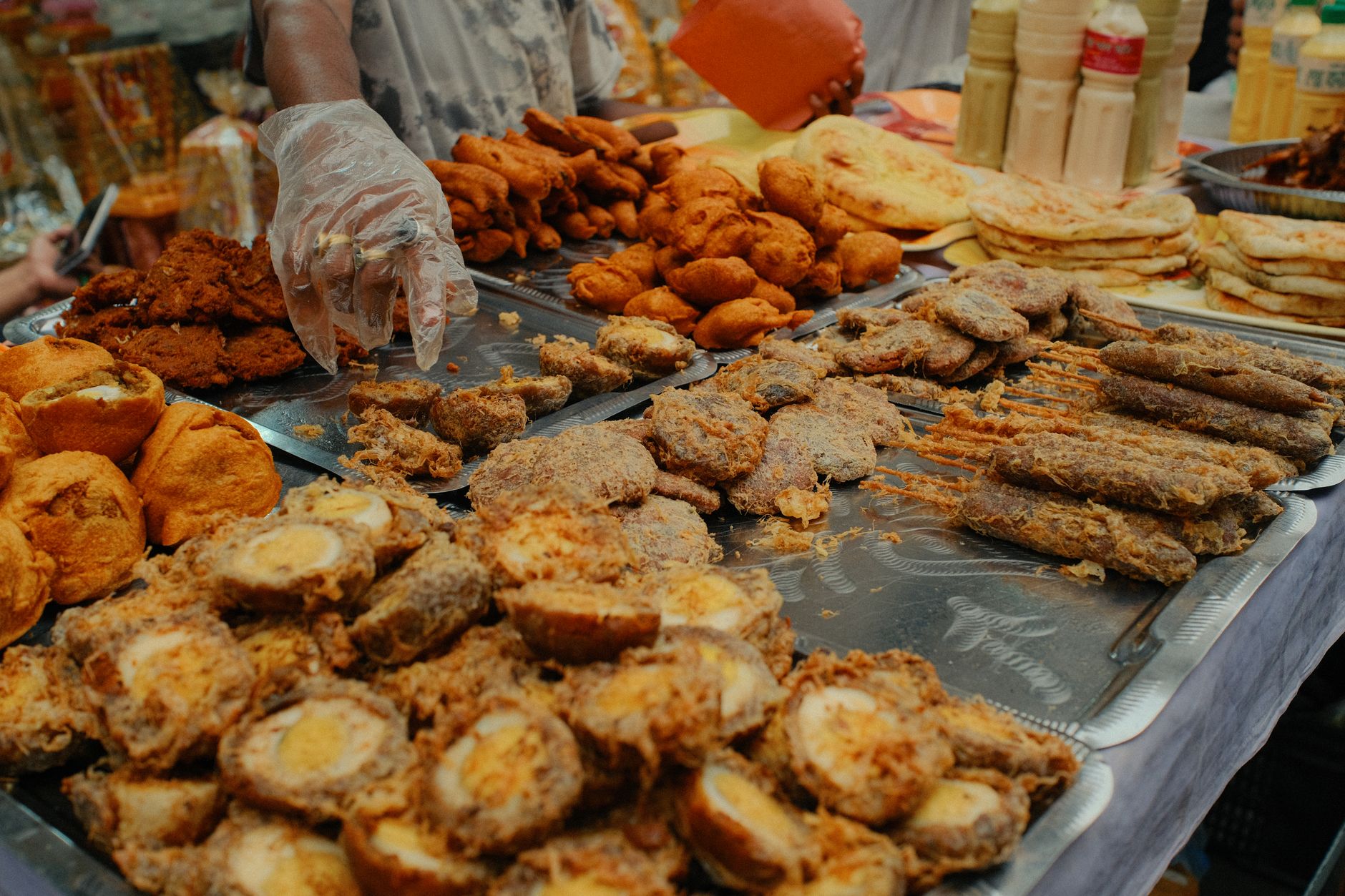
Vendors fry, paper wraps, fingers burn. Intersections, late afternoons, impatient appetites.
Grandmothers bake, markets slice, children hover. Coffee follows, silence falls.
Small glasses rise before meals, deals, and ceremonies. Elders pour, guests sip, faces confess.
Morning begins with enamel cups, thick sugar, and conversation. Kitchens wake, porches fill, sleep retreats.




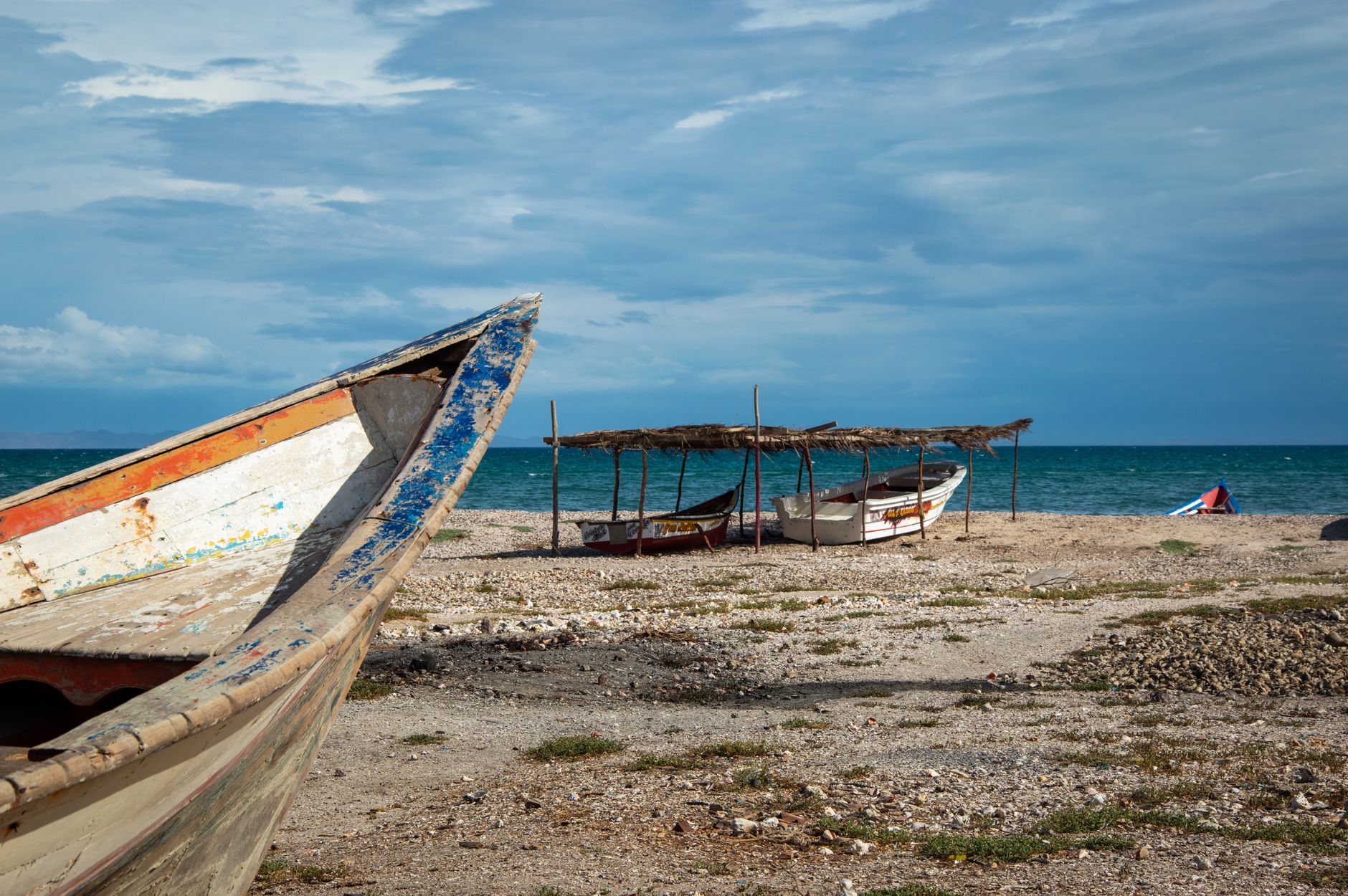
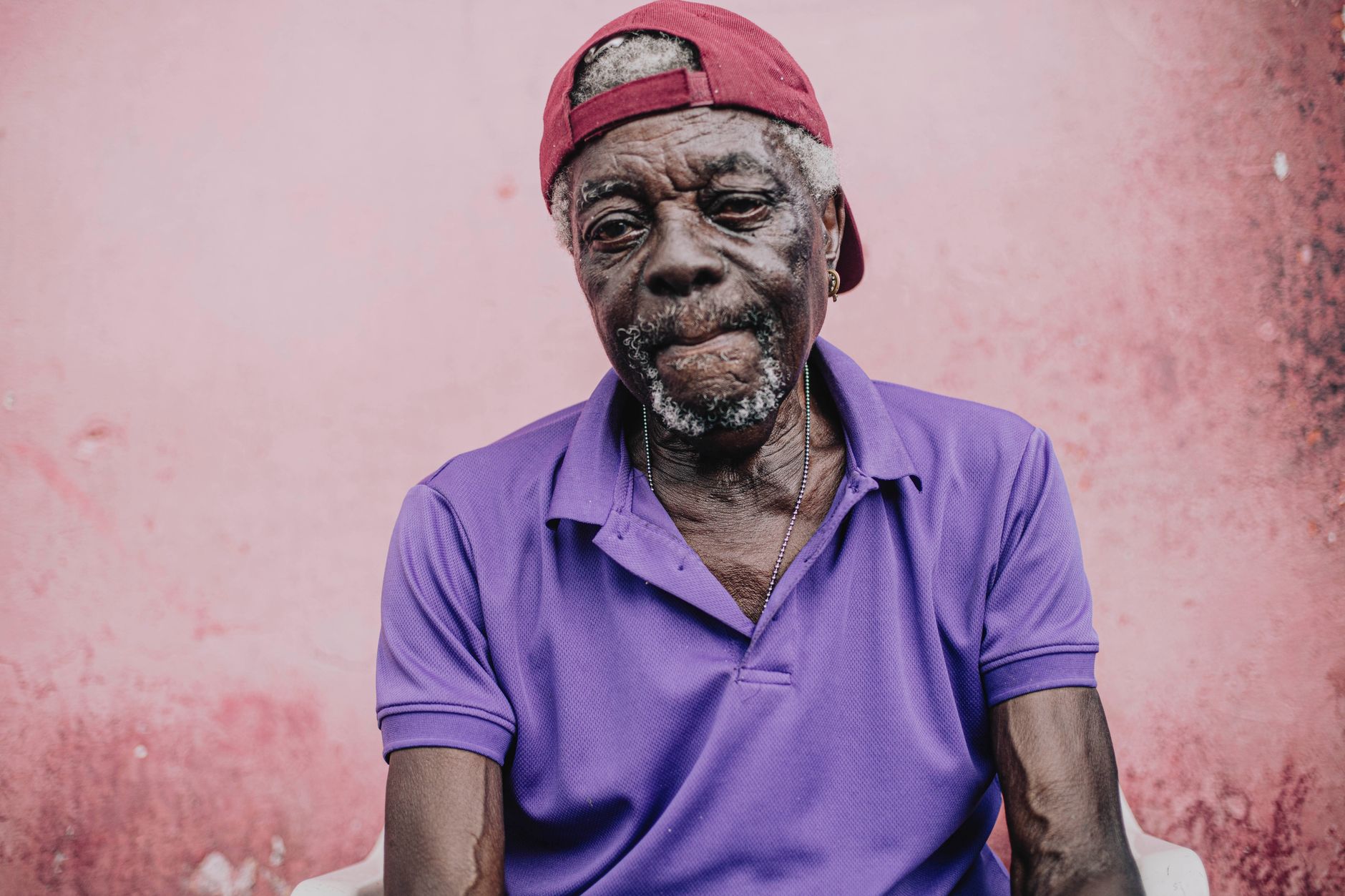
Government advisories remained at the highest level in April 2026, including a U.S. "Do Not Travel" update dated April 16, 2026. Read any Haiti plan as essential travel with fixed logistics, not a casual beach break, and confirm route-level conditions before you move between Port-au-Prince, Cap-Haïtien, Les Cayes, or the Dominican border.
U.S., EU, UK, Canadian, and Australian passport holders can usually enter visa-free for short tourist stays, with a passport valid for at least 6 months beyond arrival. Most travelers also pay a US$10 tourist fee at the airport, and stays beyond 90 days need extra paperwork.
Haiti uses the Haitian gourde, but U.S. dollars are common in hotels, transfers, and many traveler-facing businesses. Ask whether a quote is in HTG or USD, and remember the local pricing shortcut: 1 "Haitian dollar" means 5 gourdes, not US$1.
Cap-Haïtien is the most practical international gateway at the moment, with links including Miami and Providenciales. Port-au-Prince airport is technically open, but flight access remains constrained, while Les Cayes works as a secondary entry point for the south.
Domestic flights, when running, save the most time across a mountainous country with weak road infrastructure and abrupt security shifts. For road travel, pre-arranged drivers are the safest workable option; shared tap-taps and motorcycle taxis are cheap, but they are a poor fit for most foreign travelers right now.
November to March is the easiest window for travel, with drier weather, lower humidity, and Carnival season in late winter. The north around Cap-Haïtien and Milot often works better in April to June than the south, while June to November brings hurricane risk and heavier rain.
WhatsApp is the tool people actually use for hotels, drivers, guides, and last-minute logistics. Buy a local Digicel or Natcom SIM, or load an eSIM before arrival, because card payments, booking systems, and roadside Wi-Fi all fail more often than you would like.
Bring small U.S. bills and some gourdes. Hotels may quote in USD, street purchases often land in HTG, and the informal "Haitian dollar" can confuse the unwary fast.
Haiti has no passenger rail network. If a plan depends on rail, rebuild it around flights, a trusted driver, or staying in one region instead of trying to cover the whole country.
Reserve airport pickup, first-night hotel, and onward driver before arrival. Last-minute improvisation works poorly in a country where roads, checkpoints, and flight schedules can all shift on the same day.
Most real coordination happens on WhatsApp, not through polished booking portals. Confirm transfers, hotel check-ins, and meeting points in writing, then screenshot everything in case the signal disappears.
In restaurants, 5 to 10 percent is enough if service is not already included. For drivers, porters, and guides, small cash tips are normal and easier than trying to settle extras by card.
Plan intercity travel in daylight and keep buffer time around every transfer. Night driving adds road hazards, weak lighting, and slower emergency response to an already fragile transport picture.
Open politely with "Monsieur" or "Madame," especially with older people and in formal transactions. A small show of respect goes further here than overfriendly first-name habits imported from elsewhere.
Explore Haiti with a personal guide in your pocket
Audio guides for 1,100+ cities across 96 countries. History, stories, and local insight — offline ready.

For most travelers, no. Major government advisories were still warning against travel in April 2026 because of gang violence, kidnappings, civil unrest, and limited medical support, so any trip needs a hard reason, fixed logistics, and current local intelligence.
Usually no for short tourist stays. U.S. travelers can generally enter visa-free for up to 90 days, need a passport valid for at least 6 months, and should expect to pay the US$10 tourist fee on arrival.
Sometimes, but you should not assume normal access. Port-au-Prince airport is open on paper, yet U.S. aviation restrictions and security conditions have made Cap-Haïtien the more practical gateway for many international arrivals.
January and February are the easiest months for most travelers. The weather is drier, the heat is less punishing, and the climb to the Citadelle Laferrière is far more tolerable than it is in the wet season.
Yes, often. Hotels, drivers, flights, and many traveler-facing businesses accept U.S. dollars, but local purchases still lean on gourdes, so carry both and clarify which currency a price refers to.
Yes, but that does not make it a good idea for most foreign travelers. Shared transport exists, yet current safety conditions make pre-arranged private transfers or domestic flights the more realistic choice.
Three days is enough if you base yourself in Cap-Haïtien and move efficiently. That gives you one day for arrival, one full day for Milot and the Citadelle, and one day to recover or add Fort-Liberté.
Sometimes, but do not build a trip around it without same-day confirmation. Border rules and operating conditions can change abruptly, and several foreign advisories have warned that crossings may be closed or unreliable.
Last reviewed