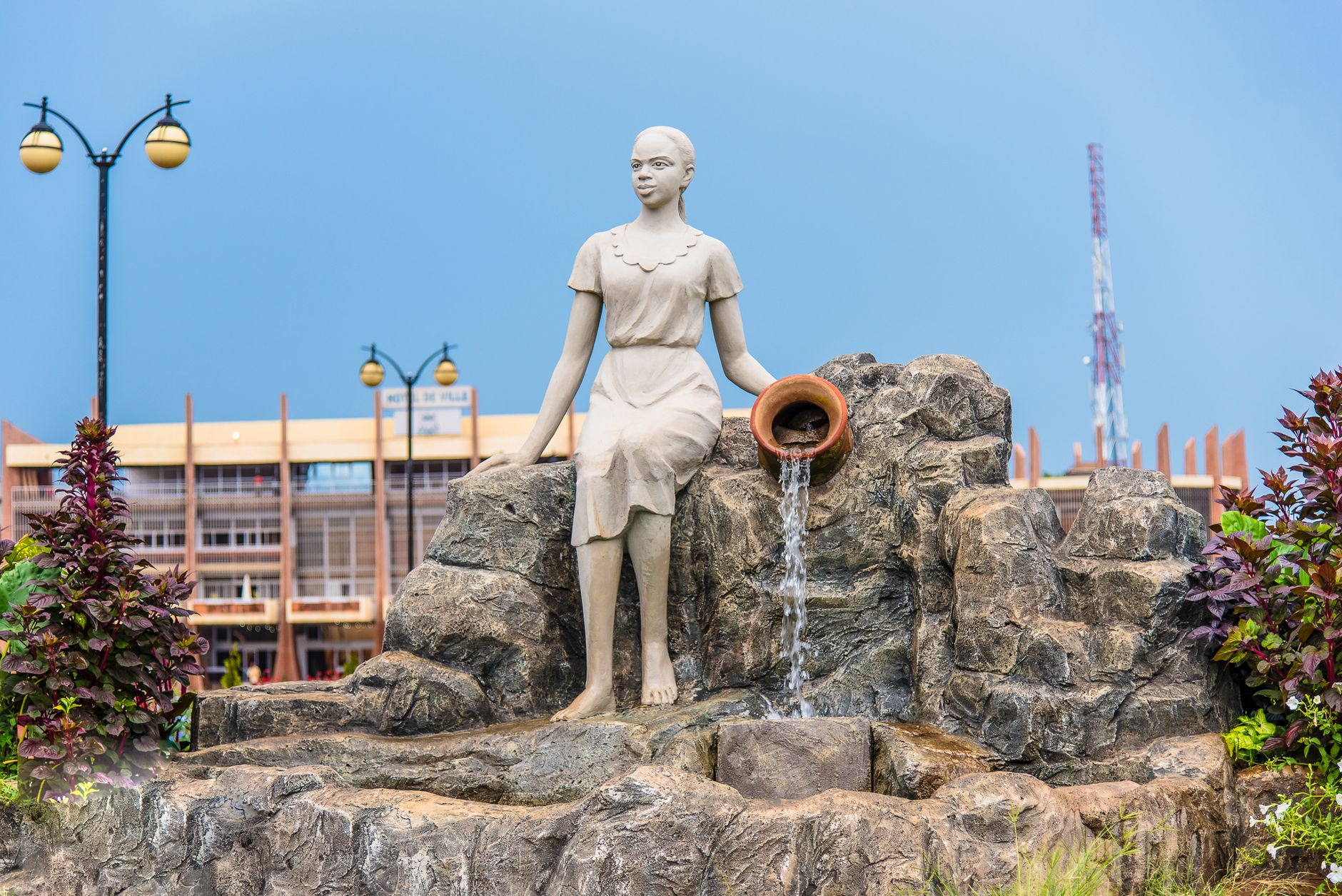
The first thing you hear in Bissau is Crioulo, the Creole lingua franca, a rapid-fire Portuguese hybrid that crackles through the market stalls and docks. This isn't a city of monuments. It's a city of stories, etched into the stone of a colonial fort and whispered in the shade of a monument commemorating dockworkers massacred in 1959. Guinea-Bissau's capital feels lived-in, its pastel facades peeling under the equatorial sun, its history a quiet, persistent pulse.
Researched from Wikidata, Wikipedia & official sources · fact-checked ·
How we make our guides →
BThe first thing you hear in Bissau is Crioulo, the Creole lingua franca, a rapid-fire Portuguese hybrid that crackles through the market stalls and docks. This isn't a city of monuments. It's a city of stories, etched into the stone of a colonial fort and whispered in the shade of a monument commemorating dockworkers massacred in 1959. Guinea-Bissau's capital feels lived-in, its pastel facades peeling under the equatorial sun, its history a quiet, persistent pulse.
Walk the compact Colonial Quarter, Bissau Velho, and the Estado Novo-era Presidential Palace looms over Praça dos Heróis Nacionais. You can't go inside. That's the point. Power here is often just for viewing. The real texture is elsewhere: in the 17th-century Fortaleza de São José da Amura, its cannons silent but its interior still guarded by the military, and at the Pidjiguiti Memorial, where an open-air café sits beside a monument to a strike that changed everything.
The port is where the city breathes. Ferries leave for the Bijagós Islands, and the air smells of salt and engine oil. At the Artisan Market, men carve wood in real time, the sound of their tools a steady rhythm against the uneven ground. This is a multilingual, multi-ethnic capital where Portuguese is official but Crioulo is truth.
Photography Hotspot
02
Why Bissau.
What makes this place worth slowing down for.
architecture
Fading Colonial Elegance
Bissau Velho's pastel Portuguese facades bake quietly in the sun, their Estado Novo grandeur now softened by decades of humidity and history. The Presidential Palace stands at the top of the avenue like a statement no one bothers to finish.
museum
Memory in Stone
The Pidjiguiti Memorial commemorates the dockworkers killed in 1959, a massacre that changed everything. It's marked by a simple open-air café, where people drink coffee next to the weight of that moment.
anchor
The Gateway to the Archipelago
Bissau's working port isn't just for cargo ships—it's your embarkation point for the Bijagós Islands. Watch ferries load supplies for Orango National Park while local traders weave through the chaos with baskets and small animals.
groups
Crioulo Cadence
Portuguese might be official, but the city's true rhythm is set by Guinea-Bissau Creole. The sound of it fills the Artisan Market, where you can watch carvers shape wood and hear a language built for this specific place.
04
Neighborhoods.
Where to wander, by quarter — each with its own rhythm.
01
Colonial Quarter (Bissau Velho)
This is the historic core, a walkable grid of wide avenues and pastel Portuguese facades. Spend a half-day here. You'll find the Presidential Palace, the National Ethnographic Museum, and the Sé Catedral clustered around Praça dos Heróis Nacionais. The light is harsh, the shadows are deep, and the architecture tells one story while the street life tells another.
02
Port & Docklands Area
A working port of large ships, cranes, and small boats. This is the embarkation point for Orango National Park. The atmosphere is kinetic—locals with wares, the smell of the sea, ferries loading. It's also where you find the Fort d'Amura and the Pidjiguiti Memorial, placing colonial military power and the struggle against it literally at the water's edge.
03
Praça Che Guevara & Central Squares
The political and symbolic heart of the city. Praça Che Guevara is a central landmark, but the true gravity lies in Praça dos Heróis Nacionais. These spaces are for gathering, for memory, for the public performance of a nation's complex identity. They feel more like statements than parks.
04
Artisan Market District
Not just a market, but a zone of production. At the Mercado Artesanal Bissau, you can watch carvers work. The ground is worn down. The goods—wood carvings, bags, paintings—are all handmade. It’s a direct, unvarnished encounter with local craft, visited by tour groups but still retaining its raw rhythm.
09
Insider tips.
Small things that change how the city treats you.
explore
Start at the docks
Begin your walk at the Port of Bissau. The old town is compact, and you can move from the working port up through the Colonial Quarter to the Presidential Palace in a single stroll.
permissions
Fort d'Amura access
Fortaleza de São José da Amura is still used by the military. You can walk around its exterior walls, but you need military permission to go inside. Don't expect a tour.
shopping_bag
Artisan Market footing
The Mercado Artesanal Bissau has uneven, worn ground. Watch your step as you browse the wood carvings and paintings made by artisans working on-site.
language
Speak Crioulo
Portuguese is the official language, but Guinea-Bissau Creole (Crioulo) is what people use every day. Learning a few greetings in Crioulo will go further than Portuguese.
photo_camera
Find the real memorial
The Pidjiguiti Memorial commemorating the 1959 dockworkers massacre is at the bottom of the road leading to the docks, not next to the Presidential Palace. It's a quiet spot with an open-air café.
museum
Check museum status
The National Ethnographic Museum reopened in 2017, but its current status is unconfirmed. It's next to the Presidential Palace on National Heroes Square—check locally before planning a visit.
11
Gallery.
The city, as it actually looks.
A quiet, sun-drenched street in Bissau, Guinea-Bissau, showcasing the city's unique mix of residential architecture and unpaved roads.
Kelly on Pexels
Devotees gather at the entrance of a church in Bissau, Guinea-Bissau, marked by its distinctive red tiled facade and the Latin inscription 'In Cruce Salus'.
David Iloba on Pexels
A bustling street scene in Bissau, Guinea-Bissau, captures the daily life and colorful architecture of the city under natural daylight.
Faruk Tokluoğlu on Pexels
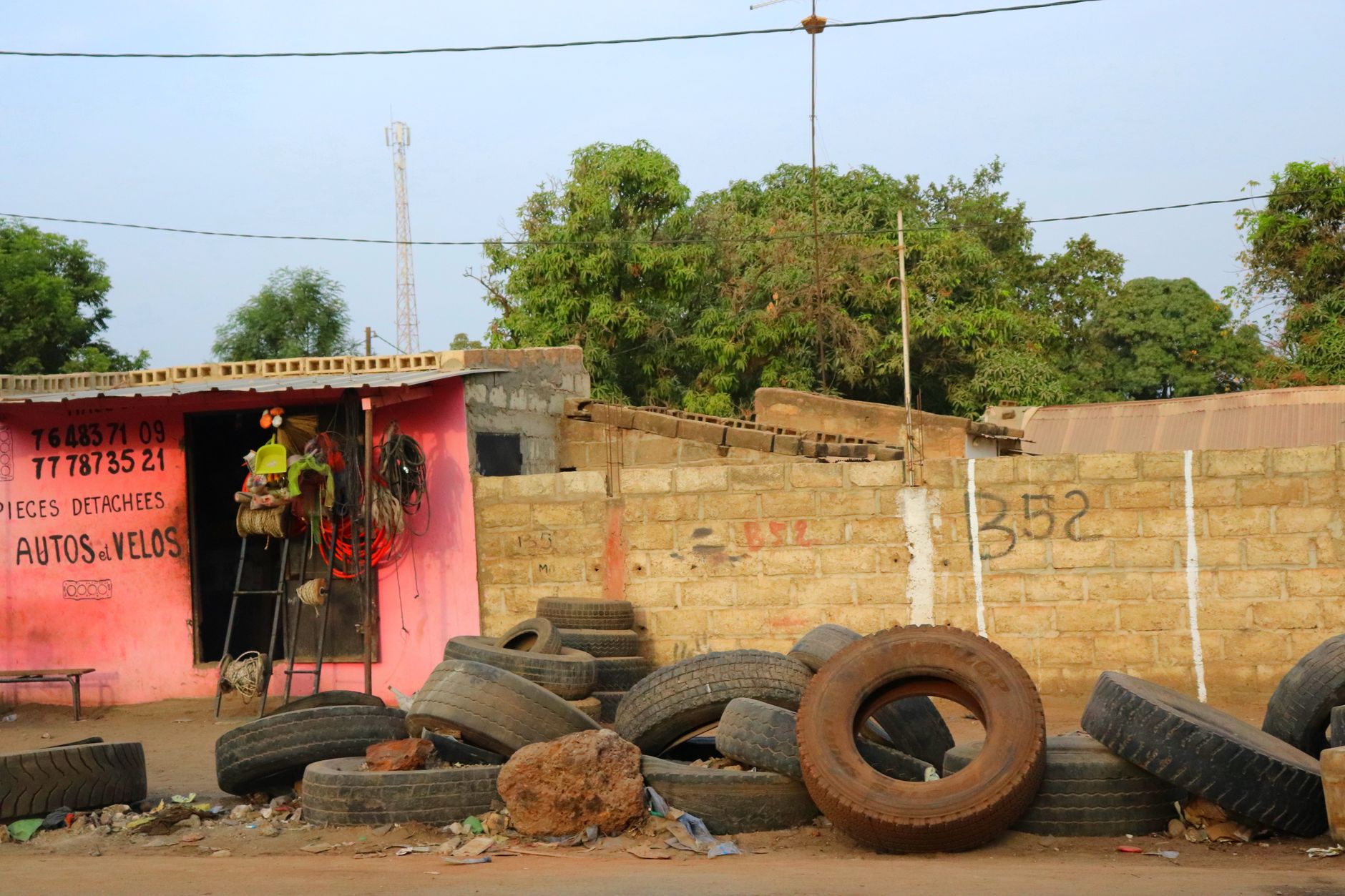
A local auto and bicycle parts shop in Bissau, Guinea-Bissau, surrounded by a collection of discarded tires and weathered brick architecture.
Emilie Leenaerts on Pexels
12
Frequently asked
Is Bissau worth visiting?
Yes, if you're interested in post-colonial history and raw, unpolished urban texture. It's a city of faded Portuguese facades, pivotal independence monuments, and a working port that's the gateway to the Bijagós Islands. It offers a perspective few other capitals do.
How many days should I spend in Bissau?
Two or three days is enough. A half-day can cover the Colonial Quarter's main sites. Another day for the port and artisan market. Use extra time to organize a trip to the islands or simply absorb the city's unique rhythm.
What is the best way to get around Bissau?
Walk the compact old town. The key attractions—the port, Pidjiguiti Memorial, Fort d'Amura, Colonial Quarter, and Presidential Palace—are all within a walkable area. For longer distances, taxis are the standard mode of transport.
Is Bissau safe for tourists?
Exercise standard urban caution. The historic center is generally safe for daytime wandering. Be aware of your surroundings, especially at the bustling port area. Political stability can fluctuate, so check current conditions before traveling.
What is the main language in Bissau?
Portuguese is the official language, but Crioulo (Guinea-Bissau Creole) is the true lingua franca. It's a multilingual, multi-ethnic city. You'll hear Crioulo in markets and streets, Portuguese in official contexts.
Ready to book?
13Before you go
Practical Information
Flight
Getting There
Osvaldo Vieira International Airport (OXB) is Bissau's main international gateway, located about 8 km from the city center. There are no passenger train services into the city, and road connections from neighboring Senegal or Guinea are long, rough journeys best attempted with a local driver.
Directions transit
Getting Around
There's no metro or tram system. Movement relies on a network of shared taxis (toca-toca), motorbike taxis, and brightly painted minibuses. The Colonial Quarter is compact and walkable, but for anything beyond that, negotiate your fare with a driver before you get in.
Thermostat
Climate & Best Time
Bissau has a tropical savanna climate with a long, punishingly humid rainy season from June to October. The dry season from November to May brings intense heat, with temperatures consistently above 30°C (86°F). Visit between December and February for slightly cooler, dustier air and manageable humidity.
Translate
Language & Currency
Portuguese is the official language, but Crioulo (Guinea-Bissau Creole) is what you'll hear on the street. English is rarely spoken. The currency is the West African CFA franc (XOF). Credit cards are not widely accepted—carry cash, preferably in smaller denominations.
Shield
Safety & Permissions
The Fortaleza de São José da Amura is still an active military site. You cannot just wander in—access to the interior requires permission from the Guinean armed forces. Exercise normal urban vigilance, especially after dark, and keep official documents on you.
Take Bissau with you
All of Bissau, downloaded once.
0 places, one continuous walking route. Free with your first city.
Strictly necessary cookies keep navigation working. Analytics cookies (PostHog, Google Analytics) help us learn which pages work — aggregate only, no ads, no selling. You can change this any time from the footer.
Privacy
Cookie preferences
Pick what you're okay with. You can change this any time from the footer.
Strictly necessary
Always on
Sign-in, language, navigation. Always on.
Product analytics
PostHog and Google Analytics, aggregate usage only. Helps us see which pages work and which need fixing. No selling, no ads.
Marketing
Off today. Reserved if we ever run paid acquisition. We will ask again before turning it on.