sailing
Bijagós by Boat
The country's signature landscape is the Bijagós Archipelago, where ferries, pirogues, and charter boats thread between islands, sandbars, and mangrove channels. Bubaque and Orango are the names to know.
Guinea-Bissau makes sense once you stop treating it like a checklist country and start reading it as an estuary: part mainland, part archipelago, always moving with the tide.
EntryVisa required for most travelers; airport visa on arrival may be available at Bissau only.
GA Guinea-Bissau travel guide starts with one fact that changes everything: this is a country shaped less by roads than by tides, rivers, and islands.
Guinea-Bissau sits between Senegal, Guinea, and the Atlantic, but its real map is water. Estuaries split the coast into mangroves, mudflats, and ferry crossings, while the Bijagós Archipelago scatters offshore in a maze of channels and beaches. Start in Bissau, where the country's politics, markets, and cracked Portuguese facades meet the Geba River. Then the country opens outward: north to Cacheu for slave-trade history that still hangs in the air, south through Bolama toward the islands, east to Bafatá and Gabu where the landscape dries into savanna and the memory of Kaabu still matters.
This is not a place for frictionless travel, and that is part of its character. Boats run late, roads break down in the rains, and plans often bend around weather, fuel, or tide tables. What you get in return is rarity: saltwater hippos near Orango, turtle-nesting beaches, cashew groves, smoke from fish grills, and towns that still feel tied to river trade rather than to package tourism. Bubaque is the usual island gateway, but Quinhamel, Farim, Canchungo, Catió, and Varela each show a different edge of the country, from mangrove creeks to quiet Atlantic sand.
Tides and Kingdoms, c. 1000-1867
Morning begins in the Bijagós with wet sand, mangrove roots, and a canoe pushed out before the heat settles over the water. Long before Europeans tried to name this coast, island communities already knew every tidal channel by memory, and inland the Mandinka state of Kaabu was building a courtly world of cavalry, praise-singers, and royal protocol around Kansala, near today's Gabu.
Ce que l'on ignore souvent, c'est que these two worlds lived by entirely different clocks. On the islands, Bijagó society developed matrilineal rules that startled later missionaries: houses, fields, and domestic authority ran through women. Inland, Kaabu cultivated hierarchy with almost theatrical rigor. Court visitors threw dust on their own heads before the ruler. One can imagine the scene: white cloth, red earth, drums sounding across the dry season plain.
Kaabu mattered because it sat on the routes between the Atlantic coast and the interior, taxing what moved west and east: kola, cloth, livestock, prestige, and, later, people. The kingdom's rulers traced their legitimacy back to the Mandinka expansion that followed Sundiata Keita. That memory was political capital. It also gave Kaabu the self-confidence of an old house that believes it will never fall.
But old houses do fall. In 1867, after decades of pressure from Fula forces linked to Futa Jallon, the last great stand at Kansala ended in catastrophe. Tradition holds that Mansa Janke Wali chose explosion over surrender, igniting the powder magazine rather than submit. Whether every detail of the story is recoverable or not, the force of the memory remains: the end of Kaabu was not a quiet decline but an act remembered as pride, ruin, and warning. From that crater, a new age would enter from the rivers.
Mansa Janke Wali is remembered less as a remote king than as a man who chose annihilation over humiliation when Kaabu's walls finally failed.
Portuguese reports describe Bijagó war canoes striking far offshore, and one late seventeenth-century raid even reached Cape Verde, turning the logic of Atlantic predation back on a Portuguese settlement.
River Forts and Heretics, 1446-1879
A riverbank at Cacheu in the late sixteenth century did not look like imperial grandeur. It looked like mud, heat, timber, warehouses, and men who had come too far to pretend they still belonged entirely to Portugal. When the fort was established there in 1588, Cacheu became one of the main Atlantic outlets for the Upper Guinea slave trade, and with it came the brokers, interpreters, debtors, adventurers, and exiles known as the lançados.
These men are among the strangest figures in West African colonial history. They did not simply administer empire. They slipped sideways into local society, married African women, learned local languages, and raised mixed families whose loyalties were practical, layered, and hard for Lisbon to control. Ce que l'on ignore souvent, c'est que the real power on this coast often lay not with the crown but with households that knew how to bargain in several worlds at once.
The result was not tidy colonial Christianity but a restless border faith. Crosses sat near protective amulets. Baptism and local ritual could share a room. Traders invoked saints and consulted diviners without seeing the contradiction. Lisbon, of course, was scandalized. The Inquisition eventually noticed what had grown on the Cacheu River: not obedience, but improvisation.
One case became almost novelistic. In 1686, a trader named Gaspar Vaz was tried for heresy after accusations that he mixed Christian rites with local spiritual practices and claimed that God spoke in every language. It is a magnificent line. One hears in it both conviction and provocation. By then, Cacheu was no longer just a port. It was a frontier laboratory of the Atlantic world, one that would later be joined by Bissau and, after 1879, by Bolama as the capital of Portuguese Guinea. Administration had arrived, but control was always thinner than the map suggested.
Gaspar Vaz emerges from the archives not as a caricature of colonial greed but as a man who seems to have believed, dangerously for his time, that truth could survive translation.
Nuno Tristão, one of the earliest Portuguese explorers to enter these waters in 1446, was killed here by poisoned arrows, a brutal reminder that the coast did not greet caravels with submission.
Conquest, Cash Crops, and Revolt, 1879-1974
By the late nineteenth century, Portuguese Guinea had a governor, decrees, tax demands, and the kind of paperwork empires mistake for sovereignty. Bolama served as colonial capital, elegant in ambition and harsh in reality, while Bissau slowly became the practical center because the Geba estuary mattered more than ceremonial prestige. Inland and along the rivers, forced cultivation, military campaigns, and administrative coercion turned colonial rule from abstraction into daily intrusion.
Nothing about this conquest was smooth. It took decades to subdue communities that had no intention of paying for the privilege of being ruled. Campaigns against island and mainland groups continued well into the early twentieth century. The name most associated with that hardening of Portuguese authority is João Teixeira Pinto, remembered by some colonial accounts as an efficient officer and by many Bissau-Guineans as the face of violence. Efficiency, in empires, is often only a polished word for brutality.
Then the center of gravity shifted from governors to rebels. In 1956, Amílcar Cabral and his comrades founded the PAIGC, and Cabral understood something essential: a liberation war could not be won by slogans alone. It needed schools, political education, rice fields, discipline, and a language people trusted. His movement grew not from palace intrigue but from villages, river crossings, and the accumulated humiliation of colonial rule. After the Pidjiguiti dock strike in Bissau was crushed in 1959, with workers shot by colonial police, the route toward armed struggle was set.
The war that followed changed the country before independence was formally declared. Guerrilla zones in the south and east became workshops of a future state, however improvised. Cabral was assassinated in Conakry in January 1973, months before the unilateral declaration of independence that September and Portugal's recognition in 1974 after the Carnation Revolution. It is one of history's bitterest ironies: he did not live to see the flag he had done so much to imagine. But his death also made him larger than office. From then on, Guinea-Bissau would inherit both liberation and martyrdom.
Amílcar Cabral was an agronomist who read the soil as carefully as he read power, and that habit made him more dangerous to Lisbon than any mere rhetorician.
Cabral often insisted that fighters protect rice fields and village life, because a revolution that could not feed people was, in his eyes, only theatre with guns.
Independence and Unfinished Sovereignty, 1974-present
Independence brought ceremony, uniforms, speeches, and the intoxicating belief that a wounded country could now write for itself. Yet the republic inherited little that was stable: weak institutions, a war-shaped political culture, poor infrastructure, and a capital, Bissau, expected to carry the weight of the whole state. Luís Cabral became the first president, but the dream of seamless nation-building did not survive the decade.
In 1980, João Bernardo Vieira took power in a coup, and the pattern that would haunt Guinea-Bissau became familiar: authority changed hands not through calm constitutional rhythm but through barracks, faction, and sudden reversals. The civil war of 1998-1999 scarred Bissau again. Presidents were overthrown, killed, restored, or contested. What you see today in the country's politics is not simple dysfunction; it is the long afterlife of liberation movements that became states without first learning how to disagree safely.
And yet the country is never only its coups. Ce que l'on ignore souvent, c'est that one of Guinea-Bissau's strongest claims on the future lies not in the ministries but in the tide country itself. The Bijagós Archipelago, with Bubaque as its main jumping-off point and Orango known for its rare saltwater hippos, has become the country's great emblem: ecological richness, cultural continuity, and logistical difficulty all at once. Cashew orchards spread across the mainland economy. Cacheu still carries the memory of the Atlantic trade. Bafatá remembers Cabral. The map is full of long echoes.
Recent decades have brought another kind of recognition. The coastal and marine ecosystems of the Bijagós have moved from remote wonder to protected global heritage, prized for turtles, birds, sharks, manatees, and one of the most unusual estuarine-island systems on Africa's Atlantic coast. That is more than a conservation story. It is a political lesson. Guinea-Bissau still wrestles with sovereignty on land, but in the islands and mangroves it holds something the world now understands to be rare. The next chapter may depend on whether the state can protect what history forgot to destroy.
João Bernardo Vieira, known as 'Nino,' embodied the republic's contradictions: guerrilla hero, coup-maker, president, exile, and finally a victim of the violence he had long navigated.
For many travelers, the first real lesson in Guinea-Bissau's history comes not in an archive but at a jetty, waiting hours for a boat to the islands and discovering that here the tide still outranks the timetable.
In Guinea-Bissau, language behaves like tidewater. Portuguese keeps the stamp and the ministry desk. Kriol runs the market, the courtyard, the taxi rank, the joke that lands before you have translated it. In Bissau, a sentence can begin with Lisbon and end somewhere much older, carrying Balanta, Mandinka, Fula, Papel, or Manjaco inside it like contraband.
Kriol is not broken Portuguese. That would be like calling a drum a failed violin. It is quicker, warmer, more dangerous to the inattentive ear, because it lets intimacy enter the room before grammar has finished dressing. You hear it in greetings that take their time, in bargaining that sounds like teasing, in the small verbal caresses that make a stranger less strange.
One word matters more than a phrasebook can admit: mantenhas. Greetings, yes. Regards, yes. Also memory, distance, tenderness held in reserve. The word does too much. That is why it is useful.
In Cacheu or Bafatá, the social intelligence of speech becomes visible. People do not throw words like stones. They place them, wait, listen, circle back. A country reveals itself first in the way it greets. Guinea-Bissau greets as if speech were a meal and haste bad manners.
Politeness here begins with what an impatient person would call detour. You do not arrive and lunge for your question. You ask after health, family, the heat, the road, the night. The conversation tests your upbringing before it grants you information. This is not inefficiency. It is civilization.
A handshake may last longer than your European instincts permit. Let it. In Bissau, in Gabu, in villages where the dust sits red on sandals and trouser cuffs, the ritual of greeting decides whether you are merely present or properly received. Elders are not handled casually. Interrupt one, and you have announced your deficiencies without needing further vocabulary.
Public anger looks especially ugly in Guinea-Bissau because the ordinary tone is so controlled. People joke. People prod. People watch. The room notices how you bargain, how you sit, whether you begin eating before the host has shifted the air by a fraction and given permission without saying the word.
I like societies that make manners visible. They save time by seeming to waste it. A rushed person may get the answer. A patient one gets the room.
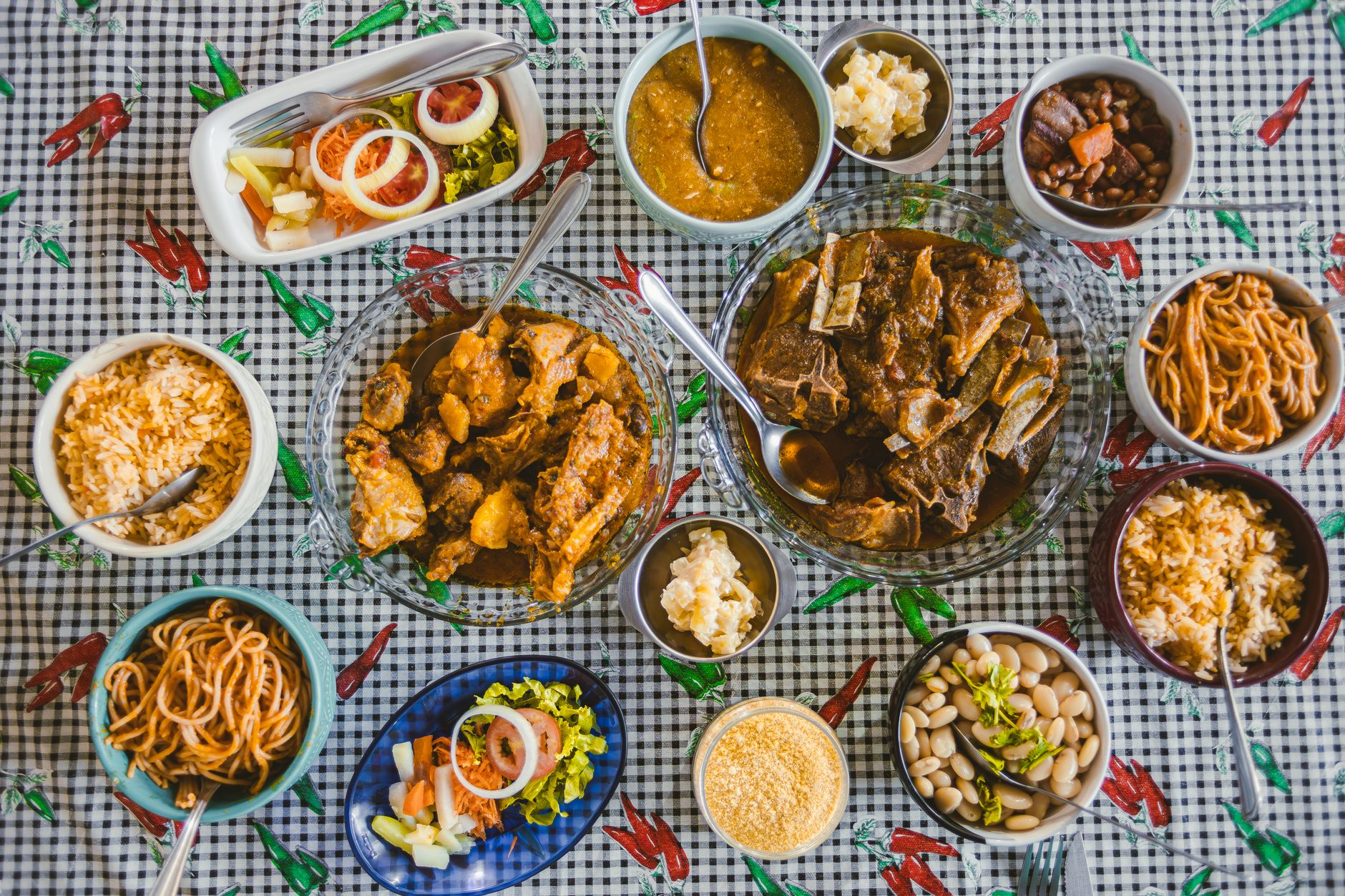
The cuisine of Guinea-Bissau tastes of water that cannot decide whether it is river or sea. Rice sits at the center because the country itself is low, tidal, estuarine, and impossible to understand without mudflats, mangroves, channels, fish smoke, and boats arriving late. In Bubaque or Orango, a plate tells you the geography before any map does.
Caldo de mancarra is the dish that argues for the nation with the least fuss. Groundnut, fish or chicken, onion, chili, rice. Thick, patient, persuasive. You eat it and understand that comfort can be serious work. Then comes caldo de chabéu, built from palm fruit pulp, orange as a declaration and faintly bitter in the intelligent way bitter things often are.
Cafriela chicken has no interest in elegance. Lemon, garlic, onion, malagueta, fire, fingers. The sauce runs where it pleases. Napkins perform a ceremonial role and little else. Plain grilled fish, meanwhile, arrives whole and asks you to behave like an adult: bones, skin, heat, attention.
Cashew hangs over the country like a sweet fermented rumor. It is an export, a season, a smell. Palm wine does what honest drinks should do: first charm, then warn. A country is a table set for strangers, but Guinea-Bissau adds one condition. Wash your hands and learn how to share.
A small country with many languages cannot afford lazy literature. Guinea-Bissau writes under pressure: colonial memory, war, disappointed independence, oral inheritance that refuses to stay outside the page. The result is not decorative. It bites.
Abdulai Silá is where many readers should begin. His novels understand that freedom can arrive wearing the face of paperwork, vanity, or fatigue. Odete Semedo carries poetry as archive, witness, and argument, moving between Portuguese and Kriol with the authority of someone who knows that each language exposes a different nerve. In Bafatá, birthplace of Amílcar Cabral, politics and literature never feel entirely separable. Words have had jobs here.
What moves me most is the tension between the written and the spoken. Guinea-Bissau remains a country where memory has long preferred the human voice: griots, songs, family recounting, proverbs that travel faster than print runs. A book does not replace that system. It negotiates with it.
In places shaped by official neglect, writing acquires a second function. It proves that experience occurred. That, too, is literature: not ornament, but refusal.
Music in Guinea-Bissau does not decorate life. It organizes it. Ceremony, courtship, protest, work, memory: each finds its rhythm, and the body understands before the mind catches up. In Bissau, you hear gumbe carrying the old Atlantic traffic inside it, not as museum residue but as a living, dancing argument between drum patterns, call-and-response, and modern amplification.
The great voice is José Carlos Schwarz, martyr and musician, who helped give post-independence Guinea-Bissau a sound with political blood in it. His songs with Cobiana Djazz did not merely entertain. They named a people into hearing themselves. That is a rare power. Most national anthems dream of doing half as much.
Beyond the capital, rhythm changes shape without losing authority. Bijagó ceremonies in the islands use percussion and dance with a gravity that outsiders often mistake for spectacle. It is not spectacle. It is social architecture. In Bolama and on the way to Bubaque, even casual music heard from a bar or a family compound can contain layered histories of migration, religion, work, and flirtation.
A drum says two things at once: come closer, and know your place. Guinea-Bissau excels at this double command.
The country's signature landscape is the Bijagós Archipelago, where ferries, pirogues, and charter boats thread between islands, sandbars, and mangrove channels. Bubaque and Orango are the names to know.
This coast is cut by rias, not lined with resort strips. Expect turtle beaches, migratory birds, manatees, and the odd fact that Guinea-Bissau's best wildlife viewing often starts with a tide chart.
Cacheu and Bolama hold some of the hardest chapters in Upper Guinea's story: slave trading, colonial ambition, and the mixed Luso-African world that grew along the rivers. The past is not tucked away here.
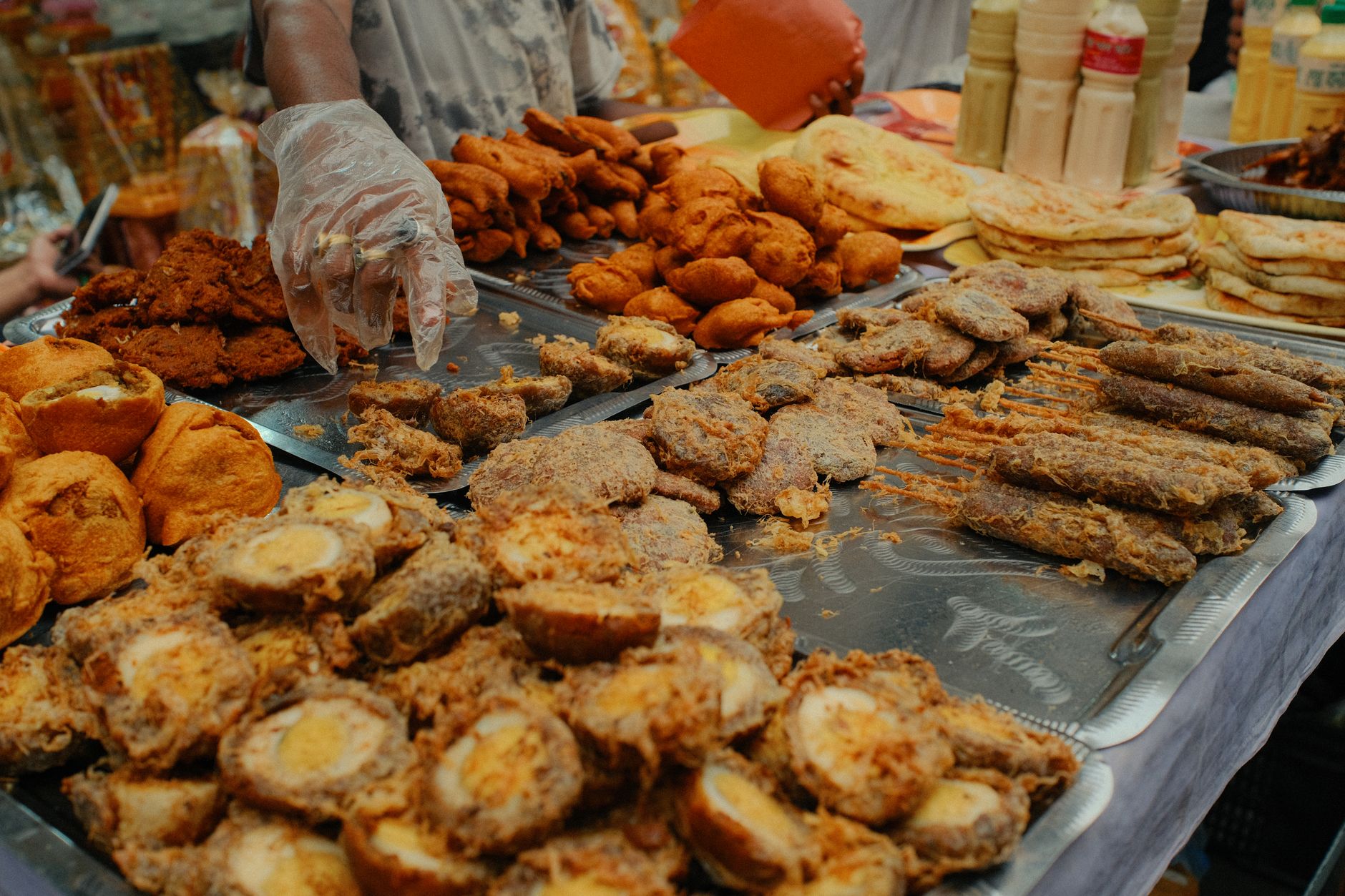
Food follows the water. Eat peanut stew over rice, grilled barracuda with lime, palm-fruit sauces, mangrove oysters, and anything built around the country's defining crop: cashew.
Guinea-Bissau suits travelers who can handle weak timetables and changing logistics without complaint. That difficulty is exactly why places like Varela, Catió, and Farim still feel unprocessed.
12 cities — start with the ones we'd send you to first.
The capital wears its colonial-era Pidjiguiti docks and crumbling Portuguese administrative quarter like a palimpsest — layers of ambition, abandonment, and stubborn daily life written over each other in pink stucco and
In the far east, a small stone monument marks the crater where the last king of the Kaabu Empire detonated his own powder magazine in 1867 rather than surrender to the Fula jihad — griots still sing the name Janke Wali h
A riverside town with a Portuguese fort built in 1588 that once anchored one of the earliest slave-trading posts on the West African coast, now half-swallowed by vegetation and the slow brown tide of the Cacheu River.
The most accessible of the Bijagós islands functions as the archipelago's low-key hub — a grid of sandy tracks, pirogue landings, and the odd generator-powered bar where fishermen and the occasional ornithologist compare
Birthplace of Amílcar Cabral, the agronomist-poet who built PAIGC into one of Africa's most intellectually rigorous independence movements, and still a market town where Fula, Mandinka, and Kriol trade and argue in the s
A ghost-capital of faded grandeur — Bolama served as the administrative seat of Portuguese Guinea until 1941, and its wide avenues, shuttered colonial mansions, and near-total silence make it feel like a film set that fo
A Cacheu River crossing town that sits at the junction of Senegal trade routes and the northern interior, where the weekly market pulls in Manjaco, Fula, and Balanta traders and the river ferry schedule governs the rhyth
A Papel heartland town close enough to Bissau to reach by bush taxi but sufficiently removed to feel the weight of traditional initiation ceremonies and the dense cashew orchards that fund the local economy every March a
The largest island in the southern Bijagós group is home to a population of saltwater hippos that graze the tidal flats at dawn — an ecological anomaly that marine biologists and UNESCO have been documenting for decades.
Bissau is the country's administrative hinge and the place where most trips become real: airport arrivals, cash withdrawals if the machine works, ferry questions, and a first encounter with Kriol in the street. The wider estuary matters as much as the capital itself, because the tidal landscape explains why onward travel to Quinhamel, Bolama, and the islands always runs on water as much as road.
The northwestern coast is all creeks, mangroves, river bends, and towns that mattered more in the Atlantic world than their quiet streets suggest today. Cacheu carries the heaviest historical weight, while Canchungo and Varela show how this region shifts from estuary trade routes to open coast and borderland roads.
The Bijagós are Guinea-Bissau's defining landscape: tidal channels, mudflats, remote beaches, and island communities that never feel arranged for visitors. Bubaque is the practical base, but the archipelago only makes sense once you add Bolama's colonial shell and Orango's protected ecosystems to the picture.
Central Guinea-Bissau trades mangroves for plains, river valleys, and market-town rhythms that feel closer to the interior of Senegambia than to the coast. Bafatá is the obvious anchor, and it works well with southern detours toward Catió if you want a longer mainland journey without island logistics.
Eastern Guinea-Bissau is hotter, drier, and less shaped by tides than the coast. Gabu matters for anyone interested in the old Kaabu sphere, overland movement toward the interior, and a version of the country where savanna, road dust, and long trading histories replace ferries and mangrove creeks.
The south is where travel slows down and plans become suggestions. Catió is the mainland anchor, but the real character of the region lies in river crossings, wet-season vulnerability, and the sense that you are well outside the country's limited tourism core.
Guinea-Bissau's history moves between river trade, imperial violence, liberation, and the stubborn survival of local worlds.
A Mandinka state linked to the legacy of Mali takes shape in the region of today's Gabu. Kaabu will dominate inland politics for centuries, building a warrior court culture that still echoes in oral tradition.
One of the earliest Portuguese expeditions enters these waters and meets immediate resistance. The episode sets the tone: this coast will not be incorporated politely into European maps.
Cacheu becomes a major Portuguese foothold on the river and later one of the key slave-trading centers of Upper Guinea. The town's history is inseparable from the Atlantic trade and the mixed societies it produced.
The Inquisition pursues a trader from Cacheu accused of blending Christian and local spiritual practices. His case reveals how far the coast had drifted from Lisbon's tidy religious fantasies.
Barreto will become one of the most consequential and ambiguous men on the coast: trader, governor, negotiator, and enforcer. His career shows how empire in Guinea depended on people who were themselves products of cultural mixing.
After a final war with Fula forces, the old kingdom of Kaabu collapses. Tradition remembers Mansa Janke Wali's last act as one of explosion and refusal, a memory still tied to Gabu.
The territory is administratively separated from Cape Verde and organized more directly as Portuguese Guinea. On paper, imperial control tightens; on the ground, resistance and negotiation continue.
One of the future presidents of independent Guinea-Bissau is born into a country still under colonial rule. His later career will belong to the long, difficult attempt to stabilize the republic.
Amílcar Cabral and his comrades create the party that will lead the independence struggle. It begins as an anti-colonial movement and grows into the political backbone of the future state.
Colonial police open fire on striking dockworkers at the Pidjiguiti docks in Bissau. The killings become a turning point, convincing many nationalists that peaceful protest has reached its limit.
The PAIGC launches guerrilla warfare against Portuguese rule, especially in the south and east. Villages, rice fields, and bush tracks become part of a political geography as important as any battlefield.
Cabral is killed in Conakry in January, a devastating blow to the movement he built. His death transforms him from leader into founding martyr just before independence becomes reality.
In September, the PAIGC proclaims the independence of Guinea-Bissau. Portugal recognizes it the following year after the Carnation Revolution topples the dictatorship in Lisbon.
A coup removes President Luís Cabral and ushers in the era of Nino Vieira. The new republic reveals how quickly liberation legitimacy can turn into military authority.
A military mutiny spirals into open conflict, damaging Bissau and deepening the country's institutional fragility. The war leaves political wounds that outlast the fighting itself.
After years of exile and return, João Bernardo Vieira dies violently in the capital. His end feels grimly emblematic of a political life shaped by force, rivalry, and unfinished reckonings.
The Bijagós Archipelago's ecological importance receives global recognition. In a country so often reduced to coups and crisis, the islands insist on another story: rarity, continuity, and protection.
Tides and Kingdoms
Mansa Janke Wali is remembered less as a remote king than as a man who chose annihilation over humiliation when Kaabu's walls finally failed.
Morning begins in the Bijagós with wet sand, mangrove roots, and a canoe pushed out before the heat settles over the water. Long before Europeans tried to name this coast, island communities already knew every tidal channel by memory, and inland the Mandinka state of Kaabu was building a courtly world of cavalry, praise-singers, and royal protocol around Kansala, near today's Gabu.
Ce que l'on ignore souvent, c'est que these two worlds lived by entirely different clocks. On the islands, Bijagó society developed matrilineal rules that startled later missionaries: houses, fields, and domestic authority ran through women. Inland, Kaabu cultivated hierarchy with almost theatrical rigor. Court visitors threw dust on their own heads before the ruler. One can imagine the scene: white cloth, red earth, drums sounding across the dry season plain.
Kaabu mattered because it sat on the routes between the Atlantic coast and the interior, taxing what moved west and east: kola, cloth, livestock, prestige, and, later, people. The kingdom's rulers traced their legitimacy back to the Mandinka expansion that followed Sundiata Keita. That memory was political capital. It also gave Kaabu the self-confidence of an old house that believes it will never fall.
But old houses do fall. In 1867, after decades of pressure from Fula forces linked to Futa Jallon, the last great stand at Kansala ended in catastrophe. Tradition holds that Mansa Janke Wali chose explosion over surrender, igniting the powder magazine rather than submit. Whether every detail of the story is recoverable or not, the force of the memory remains: the end of Kaabu was not a quiet decline but an act remembered as pride, ruin, and warning. From that crater, a new age would enter from the rivers.
Portuguese reports describe Bijagó war canoes striking far offshore, and one late seventeenth-century raid even reached Cape Verde, turning the logic of Atlantic predation back on a Portuguese settlement.
River Forts and Heretics
Gaspar Vaz emerges from the archives not as a caricature of colonial greed but as a man who seems to have believed, dangerously for his time, that truth could survive translation.
A riverbank at Cacheu in the late sixteenth century did not look like imperial grandeur. It looked like mud, heat, timber, warehouses, and men who had come too far to pretend they still belonged entirely to Portugal. When the fort was established there in 1588, Cacheu became one of the main Atlantic outlets for the Upper Guinea slave trade, and with it came the brokers, interpreters, debtors, adventurers, and exiles known as the lançados.
These men are among the strangest figures in West African colonial history. They did not simply administer empire. They slipped sideways into local society, married African women, learned local languages, and raised mixed families whose loyalties were practical, layered, and hard for Lisbon to control. Ce que l'on ignore souvent, c'est que the real power on this coast often lay not with the crown but with households that knew how to bargain in several worlds at once.
The result was not tidy colonial Christianity but a restless border faith. Crosses sat near protective amulets. Baptism and local ritual could share a room. Traders invoked saints and consulted diviners without seeing the contradiction. Lisbon, of course, was scandalized. The Inquisition eventually noticed what had grown on the Cacheu River: not obedience, but improvisation.
One case became almost novelistic. In 1686, a trader named Gaspar Vaz was tried for heresy after accusations that he mixed Christian rites with local spiritual practices and claimed that God spoke in every language. It is a magnificent line. One hears in it both conviction and provocation. By then, Cacheu was no longer just a port. It was a frontier laboratory of the Atlantic world, one that would later be joined by Bissau and, after 1879, by Bolama as the capital of Portuguese Guinea. Administration had arrived, but control was always thinner than the map suggested.
Nuno Tristão, one of the earliest Portuguese explorers to enter these waters in 1446, was killed here by poisoned arrows, a brutal reminder that the coast did not greet caravels with submission.
Conquest, Cash Crops, and Revolt
Amílcar Cabral was an agronomist who read the soil as carefully as he read power, and that habit made him more dangerous to Lisbon than any mere rhetorician.
By the late nineteenth century, Portuguese Guinea had a governor, decrees, tax demands, and the kind of paperwork empires mistake for sovereignty. Bolama served as colonial capital, elegant in ambition and harsh in reality, while Bissau slowly became the practical center because the Geba estuary mattered more than ceremonial prestige. Inland and along the rivers, forced cultivation, military campaigns, and administrative coercion turned colonial rule from abstraction into daily intrusion.
Nothing about this conquest was smooth. It took decades to subdue communities that had no intention of paying for the privilege of being ruled. Campaigns against island and mainland groups continued well into the early twentieth century. The name most associated with that hardening of Portuguese authority is João Teixeira Pinto, remembered by some colonial accounts as an efficient officer and by many Bissau-Guineans as the face of violence. Efficiency, in empires, is often only a polished word for brutality.
Then the center of gravity shifted from governors to rebels. In 1956, Amílcar Cabral and his comrades founded the PAIGC, and Cabral understood something essential: a liberation war could not be won by slogans alone. It needed schools, political education, rice fields, discipline, and a language people trusted. His movement grew not from palace intrigue but from villages, river crossings, and the accumulated humiliation of colonial rule. After the Pidjiguiti dock strike in Bissau was crushed in 1959, with workers shot by colonial police, the route toward armed struggle was set.
The war that followed changed the country before independence was formally declared. Guerrilla zones in the south and east became workshops of a future state, however improvised. Cabral was assassinated in Conakry in January 1973, months before the unilateral declaration of independence that September and Portugal's recognition in 1974 after the Carnation Revolution. It is one of history's bitterest ironies: he did not live to see the flag he had done so much to imagine. But his death also made him larger than office. From then on, Guinea-Bissau would inherit both liberation and martyrdom.
Cabral often insisted that fighters protect rice fields and village life, because a revolution that could not feed people was, in his eyes, only theatre with guns.
Independence and Unfinished Sovereignty
João Bernardo Vieira, known as 'Nino,' embodied the republic's contradictions: guerrilla hero, coup-maker, president, exile, and finally a victim of the violence he had long navigated.
Independence brought ceremony, uniforms, speeches, and the intoxicating belief that a wounded country could now write for itself. Yet the republic inherited little that was stable: weak institutions, a war-shaped political culture, poor infrastructure, and a capital, Bissau, expected to carry the weight of the whole state. Luís Cabral became the first president, but the dream of seamless nation-building did not survive the decade.
In 1980, João Bernardo Vieira took power in a coup, and the pattern that would haunt Guinea-Bissau became familiar: authority changed hands not through calm constitutional rhythm but through barracks, faction, and sudden reversals. The civil war of 1998-1999 scarred Bissau again. Presidents were overthrown, killed, restored, or contested. What you see today in the country's politics is not simple dysfunction; it is the long afterlife of liberation movements that became states without first learning how to disagree safely.
And yet the country is never only its coups. Ce que l'on ignore souvent, c'est that one of Guinea-Bissau's strongest claims on the future lies not in the ministries but in the tide country itself. The Bijagós Archipelago, with Bubaque as its main jumping-off point and Orango known for its rare saltwater hippos, has become the country's great emblem: ecological richness, cultural continuity, and logistical difficulty all at once. Cashew orchards spread across the mainland economy. Cacheu still carries the memory of the Atlantic trade. Bafatá remembers Cabral. The map is full of long echoes.
Recent decades have brought another kind of recognition. The coastal and marine ecosystems of the Bijagós have moved from remote wonder to protected global heritage, prized for turtles, birds, sharks, manatees, and one of the most unusual estuarine-island systems on Africa's Atlantic coast. That is more than a conservation story. It is a political lesson. Guinea-Bissau still wrestles with sovereignty on land, but in the islands and mangroves it holds something the world now understands to be rare. The next chapter may depend on whether the state can protect what history forgot to destroy.
For many travelers, the first real lesson in Guinea-Bissau's history comes not in an archive but at a jetty, waiting hours for a boat to the islands and discovering that here the tide still outranks the timetable.
In Guinea-Bissau, language behaves like tidewater. Portuguese keeps the stamp and the ministry desk. Kriol runs the market, the courtyard, the taxi rank, the joke that lands before you have translated it. In Bissau, a sentence can begin with Lisbon and end somewhere much older, carrying Balanta, Mandinka, Fula, Papel, or Manjaco inside it like contraband.
Kriol is not broken Portuguese. That would be like calling a drum a failed violin. It is quicker, warmer, more dangerous to the inattentive ear, because it lets intimacy enter the room before grammar has finished dressing. You hear it in greetings that take their time, in bargaining that sounds like teasing, in the small verbal caresses that make a stranger less strange.
One word matters more than a phrasebook can admit: mantenhas. Greetings, yes. Regards, yes. Also memory, distance, tenderness held in reserve. The word does too much. That is why it is useful.
In Cacheu or Bafatá, the social intelligence of speech becomes visible. People do not throw words like stones. They place them, wait, listen, circle back. A country reveals itself first in the way it greets. Guinea-Bissau greets as if speech were a meal and haste bad manners.
Politeness here begins with what an impatient person would call detour. You do not arrive and lunge for your question. You ask after health, family, the heat, the road, the night. The conversation tests your upbringing before it grants you information. This is not inefficiency. It is civilization.
A handshake may last longer than your European instincts permit. Let it. In Bissau, in Gabu, in villages where the dust sits red on sandals and trouser cuffs, the ritual of greeting decides whether you are merely present or properly received. Elders are not handled casually. Interrupt one, and you have announced your deficiencies without needing further vocabulary.
Public anger looks especially ugly in Guinea-Bissau because the ordinary tone is so controlled. People joke. People prod. People watch. The room notices how you bargain, how you sit, whether you begin eating before the host has shifted the air by a fraction and given permission without saying the word.
I like societies that make manners visible. They save time by seeming to waste it. A rushed person may get the answer. A patient one gets the room.
The cuisine of Guinea-Bissau tastes of water that cannot decide whether it is river or sea. Rice sits at the center because the country itself is low, tidal, estuarine, and impossible to understand without mudflats, mangroves, channels, fish smoke, and boats arriving late. In Bubaque or Orango, a plate tells you the geography before any map does.
Caldo de mancarra is the dish that argues for the nation with the least fuss. Groundnut, fish or chicken, onion, chili, rice. Thick, patient, persuasive. You eat it and understand that comfort can be serious work. Then comes caldo de chabéu, built from palm fruit pulp, orange as a declaration and faintly bitter in the intelligent way bitter things often are.
Cafriela chicken has no interest in elegance. Lemon, garlic, onion, malagueta, fire, fingers. The sauce runs where it pleases. Napkins perform a ceremonial role and little else. Plain grilled fish, meanwhile, arrives whole and asks you to behave like an adult: bones, skin, heat, attention.
Cashew hangs over the country like a sweet fermented rumor. It is an export, a season, a smell. Palm wine does what honest drinks should do: first charm, then warn. A country is a table set for strangers, but Guinea-Bissau adds one condition. Wash your hands and learn how to share.
A small country with many languages cannot afford lazy literature. Guinea-Bissau writes under pressure: colonial memory, war, disappointed independence, oral inheritance that refuses to stay outside the page. The result is not decorative. It bites.
Abdulai Silá is where many readers should begin. His novels understand that freedom can arrive wearing the face of paperwork, vanity, or fatigue. Odete Semedo carries poetry as archive, witness, and argument, moving between Portuguese and Kriol with the authority of someone who knows that each language exposes a different nerve. In Bafatá, birthplace of Amílcar Cabral, politics and literature never feel entirely separable. Words have had jobs here.
What moves me most is the tension between the written and the spoken. Guinea-Bissau remains a country where memory has long preferred the human voice: griots, songs, family recounting, proverbs that travel faster than print runs. A book does not replace that system. It negotiates with it.
In places shaped by official neglect, writing acquires a second function. It proves that experience occurred. That, too, is literature: not ornament, but refusal.
Music in Guinea-Bissau does not decorate life. It organizes it. Ceremony, courtship, protest, work, memory: each finds its rhythm, and the body understands before the mind catches up. In Bissau, you hear gumbe carrying the old Atlantic traffic inside it, not as museum residue but as a living, dancing argument between drum patterns, call-and-response, and modern amplification.
The great voice is José Carlos Schwarz, martyr and musician, who helped give post-independence Guinea-Bissau a sound with political blood in it. His songs with Cobiana Djazz did not merely entertain. They named a people into hearing themselves. That is a rare power. Most national anthems dream of doing half as much.
Beyond the capital, rhythm changes shape without losing authority. Bijagó ceremonies in the islands use percussion and dance with a gravity that outsiders often mistake for spectacle. It is not spectacle. It is social architecture. In Bolama and on the way to Bubaque, even casual music heard from a bar or a family compound can contain layered histories of migration, religion, work, and flirtation.
A drum says two things at once: come closer, and know your place. Guinea-Bissau excels at this double command.
Born in Bafatá and politically forged in Portuguese Guinea, Cabral turned agronomy into strategy, reading villages, crops, and power as parts of the same system. He gave Guinea-Bissau its sharpest anti-colonial mind, then was assassinated months before independence, which fixed him forever in the country's memory as the absent founder.
Amílcar's half-brother inherited the impossible task: turn a liberation movement into a functioning republic. From Bissau he tried to build a state out of wartime networks, then lost power in the 1980 coup, a family tragedy that became a national one.
Known everywhere as Nino, Vieira came out of the liberation struggle and then seemed to spend the rest of his life either taking power, defending it, or returning to it. His career tells you more about Guinea-Bissau's turbulent republic than any constitution ever could.
He belongs half to history, half to epic. In the memory of Gabu, Janke Wali is the king who chose fire over surrender when Kaabu fell, and that refusal still gives the eastern interior one of its most powerful historical legends.
Mixed-heritage and politically ruthless, Pereira Barreto understood the coast because he belonged to its entangled world more than to any neat imperial ideal. He expanded Portuguese influence with a combination of trade, diplomacy, and force, which is another way of saying he knew exactly how thin colonial authority really was.
Portuguese colonial memory long dressed him in the language of order and pacification. Local memory is colder. His campaigns helped impose effective colonial rule through violence, and his name still carries the atmosphere of a door kicked open before dawn.
Often overshadowed by the movement's male icons, Francisca Pereira matters because she reminds you that independence was not made by speeches from men alone. She held senior roles in the PAIGC and later in government, carrying into public life the disciplined seriousness of the liberation generation.
Correia belonged to the quieter, less theatrical side of power, which in Guinea-Bissau can be a dangerous place to stand. He served repeatedly as prime minister, trying to make administration function in a political culture that rarely rewarded patience.
Sanhá came from the old PAIGC world but carried himself with less swagger than some of his rivals. His presidency was an effort, never entirely successful, to give Guinea-Bissau a little constitutional breathing room after years of rupture.
This is the short trip that still shows you what makes Guinea-Bissau different: tidal rivers, old trading towns, and a capital that works by improvisation rather than polish. Start in Bissau, sleep better in Quinhamel if you want a quieter estuary base, then head north to Cacheu for river history and mangrove country.
This is the Bijagós trip for travelers who came for tide charts, beaches, and logistical uncertainty with a point. Bolama gives you faded colonial bones, Bubaque works as the practical island hub, and Orango brings the protected landscapes and wildlife that make the archipelago matter.
The inland route makes sense if you want river plains, market towns, and the drier eastern side of the country rather than island life. Bafatá gives you one of the country's key historic towns, Gabu points toward the old Kaabu world, and Farim adds a northern river stop that feels far from the coast in every sense.
This route is for travelers who do not need a capital-city scaffold every second day. Varela brings the far northwest coast, Canchungo anchors the old Cacheu corridor without repeating the same stops, and Catió opens the south, where road conditions, pace, and infrastructure remind you how large Guinea-Bissau feels once you leave the main axis.
Lunch or dinner. Shared bowl, white rice, spoons, silence, talk. Family first, guests after the host.
Palm fruit sauce, rice, fish. Sunday table, long cooking, stained fingers. Heat rises, conversation slows.
Chicken, lemon, garlic, malagueta, grill smoke. Beer, lunch, friends, hands. Sauce drips, napkins surrender.
Whole fish, charcoal, onion, lime, rice. Beach meal in Bubaque or evening table in Bissau. Bones demand patience.
Estuary snack, market purchase, quick grill, lime squeeze. Tide decides the hour. Salt stays on the lips.
Late afternoon, plastic chair, shade, informal company. Fresh first, sharper later. Stories lengthen with the gourd.
Cashew season, roadside stop, glass bottle or market cup. Sweetness, ferment, perfume. Drink fast.

Plan on needing a visa. U.S. guidance says visas are required but can be issued on arrival at Bissau airport, while German and Belgian consular guidance also says airport visa on arrival may be possible and land borders do not offer it. Yellow fever vaccination is required for arriving travelers aged 1 year and older, and CDC recommends the vaccine for travelers from 9 months.
Guinea-Bissau uses the West African CFA franc, XOF. This is still a cash-first destination: cards work in some larger hotels in Bissau, but official travel advisories warn that acceptance is patchy and ATMs are scarce or unreliable. Bring euros in clean notes and keep enough cash for ferries, fuel delays, and a few days off the grid.
Osvaldo Vieira International Airport in Bissau is the only practical international gateway. Most long-haul trips connect through Lisbon or Dakar, with schedule trackers also showing links to Casablanca and Praia. If you are building a trip around Bubaque, Bolama, or Orango, leave buffer time on both sides of your island legs.
Getting around means shared taxis, sept-place cars, hired drivers, and boats rather than a tidy national network. Roads outside Bissau can be slow, flood-damaged, and badly lit, and several official advisories warn against night driving and against leaving marked roads because of unexploded ordnance risk in some regions. For the Bijagós, organized boat transfers are safer than improvising with local pirogues.
The dry season, roughly November to May, is the easiest window for most trips. June to October brings the rains, high humidity, rougher road conditions, and more fragile boat logistics, especially outside Bissau. December to February is the most comfortable stretch; April and May are hotter but still workable if you pace your days.
Expect expensive, uneven mobile data and frequent power cuts outside the better hotels. Canadian travel advice still describes telecommunications as unreliable, and that matches the on-the-ground pattern in places like Cacheu, Catió, and the islands. Download maps, keep cash for generator-backed hotels, and do not assume your card machine or booking app will save you.
This is not a place for casual improvisation. Current U.S. and Canadian advisories flag political instability, crime, weak medical infrastructure, and landmine or unexploded ordnance risk in parts of the country; medical evacuation cover is a sensible expense, not a luxury. Stay current on local developments, avoid demonstrations, and keep border travel conservative, especially near Senegal.
Bring enough cash in euros to cover the whole trip, then change what you need in stages. In Bissau you may find a working ATM or card terminal; in Bubaque, Cacheu, and Catió, that is a gamble.
Do not build this trip around trains. Guinea-Bissau has no passenger rail system, so every inland move comes down to road transport, hired drivers, or a shared taxi seat.
Reserve island beds before you leave Bissau, especially for Bubaque and Orango in the dry season. Boats fill, generators fail, and the fallback hotel you imagine may not exist.
A rushed question lands badly here. Take the extra minute for greetings before you ask for prices, directions, or help, especially with older people and in smaller towns.
Poor lighting, livestock, broken pavement, and weak roadside support make night driving a bad bargain. If you are headed from Bafatá to Gabu or from Bissau toward Cacheu, leave early.
Signal drops fast once you leave major urban pockets. Keep screenshots of reservations, offline maps, and the phone number of your next hotel written down as well.
Small restaurants, market stalls, and shared taxis rarely have change for large bills. A stack of low-denomination XOF notes saves time and awkward bargaining.
Explore Guinea-Bissau with a personal guide in your pocket
Audio guides for 1,100+ cities across 96 countries. History, stories, and local insight — offline ready.

Usually yes. Current official guidance from multiple governments says most travelers should expect a visa requirement, and while visa on arrival may be available at Bissau airport for some nationalities, you should not count on getting one at land borders and should confirm with your airline and the nearest Guinea-Bissau mission before departure.
Yes, for entry if you are 1 year or older. CDC also recommends yellow fever vaccination for travelers from 9 months, and malaria prevention should be part of your pre-trip planning as well.
It can be done, but this is not an easy destination. Current official advisories flag political instability, crime, weak medical care, and landmine or unexploded ordnance risk in some regions, so cautious route planning and medical evacuation insurance make sense.
November to May is the safest bet for most trips. Roads are easier, boat connections are less fragile, and places like Bubaque, Bolama, and Cacheu are simply easier to reach than during the rains from roughly June to October.
Sometimes in bigger hotels, but do not rely on them. Guinea-Bissau remains a cash-heavy destination, and official travel advice still warns that cards are rarely accepted and ATMs are limited or unreliable.
Usually by organized boat transfer, ferry when running, or chartered air service in a few cases. Bubaque is the practical hub, while reaching places like Orango takes more planning and should not be left to the last afternoon in Bissau.
Yes, if you keep the route tight. A short trip based on Bissau, Quinhamel, and Cacheu gives you river landscapes, history, and daily-life texture without betting everything on an island connection.
In Bissau, yes; deeper into the country, not always comfortably. You can move independently, but hired drivers, hotel-arranged transfers, or trusted local contacts become much more useful once you head toward Farim, Gabu, Catió, or the islands.
Last reviewed