Pre-Colonial
public
1498
Columbus Sights the Bay
The Genoese navigator sails past the steep horseshoe harbour but never drops anchor. He scribbles 'Grenada' on his chart, borrowing the name of the conquered Spanish city, and sails on. The Caribs watching from the ridge have no idea their island is now on European maps.
French Colonial
swords
1649
French Buy, Then Burn
Jacques du Parquet lands 45 settlers and buys a strip of waterfront from Carib chief Kairouane. Within two years the bargain collapses into open war. By 1651 the last Caribs leap from Leapers’ Hill rather than surrender; their name for the bay is lost with them.
castle
1666
First Fort Rises
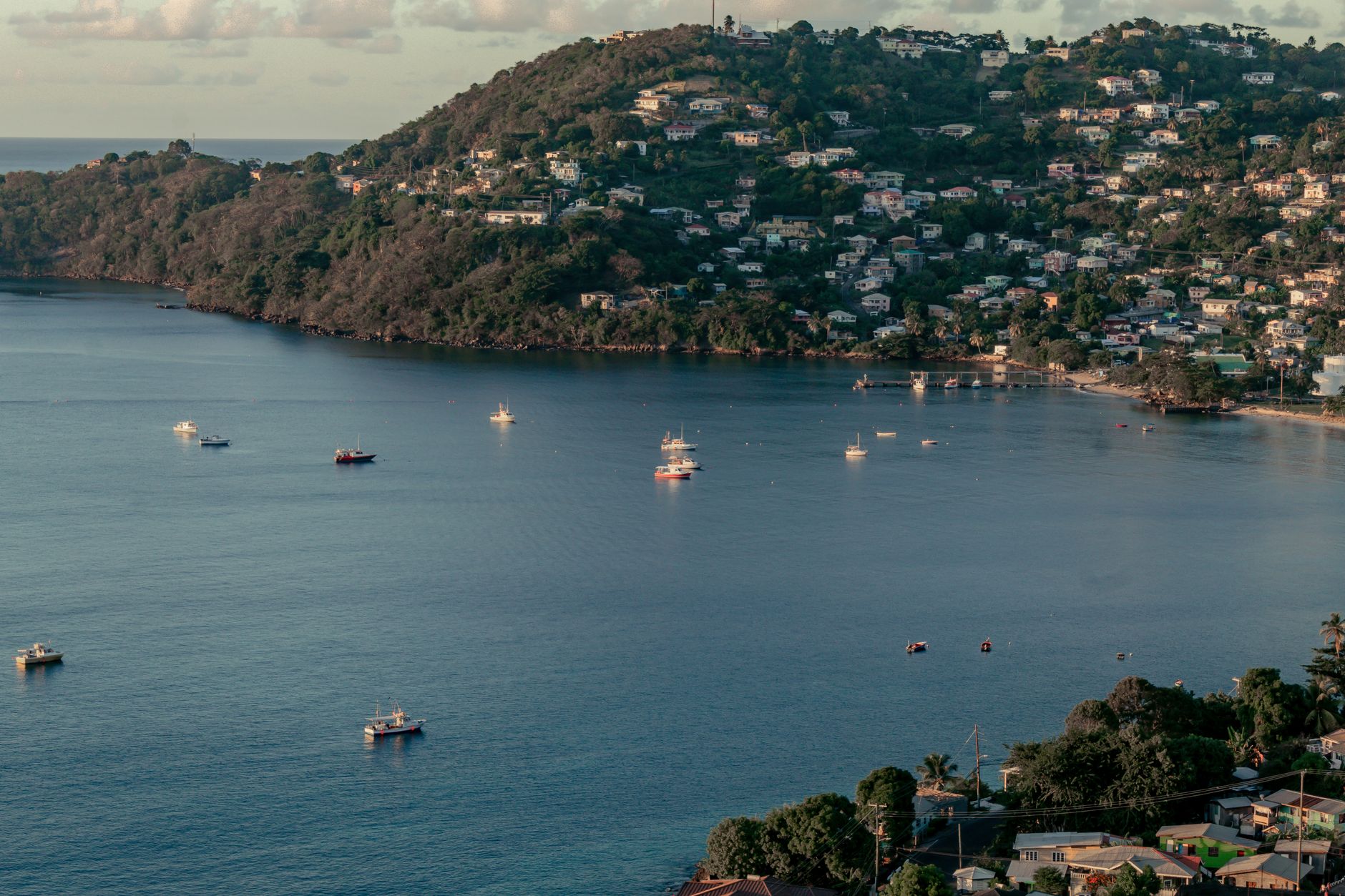
To keep out the Dutch and the English, the French throw up a wooden stockade on the headland. They call it Fort Royal. The timbers rot fast in the humid salt air, but the view—harbour on one side, rainforest on the other—will anchor every future power grab.
castle
1705–1710
Star Fort in Stone
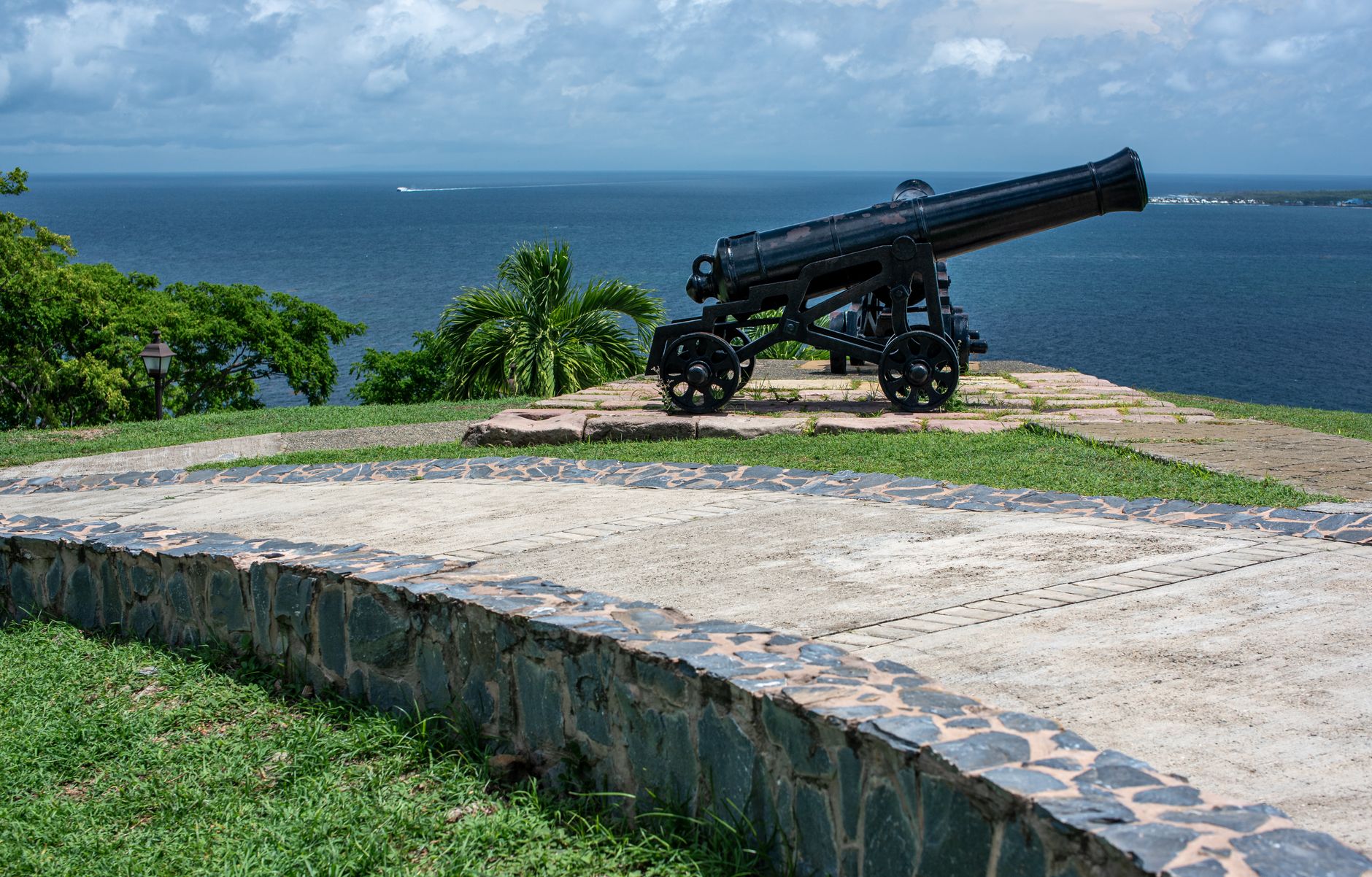
Royal engineer Jean de Giou de Caylus replaces rotten wood with four stone bastions in the shape of a star. Cannon can now sweep every approach. The town that grows beside it is still called Fort Royal; sailors shorten it to 'the Carenage' after the careening wharves where hulls are scraped clean.
British Colonial
gavel
1763
Union Jack Over the Harbour
The Treaty of Paris hands Grenada to Britain. Overnight, Fort Royal becomes Fort George and the town becomes St George’s. Anglican bells replace Catholic ones, but the street grid stays French—narrow, steep, and impossible for British carriages.
local_fire_department
1771
Great Fire Wipes Out Boarding Houses
A spark in a rum warehouse ignites Granby Street. Flames race uphill, devouring timber houses and merchant stores. The blaze is so hot it warps iron scales on the harbour scales. Rebuilding shifts the commercial district closer to the water; insurance maps are redrawn.
swords
1779
French Tricolour Returns
Admiral de Grasse sails in during the American Revolutionary War and retakes the island in three days. British prisoners are marched up Richmond Hill to build a new fort—Frederick—named after the Prussian ally. The Union Jack comes down; the baguettes come back.
swords
1795
Fedon’s Rebellion
Julien Fedon, a free mixed-race planter, raises 7,000 rebels inspired by the French Revolution. They seize 90 percent of the island, encircle St George’s, and hold it for 16 months. British hostages are executed on Fedon’s mountain camp; the town’s planters sleep with loaded pistols under their pillows.
gavel
1834
Chains Struck, Apprenticeship Begins
Slavery ends at sunrise on 1 August. Former slaves gather on Market Square to hear the proclamation read. Yet they must still work unpaid for four more years under 'apprenticeship'. The first Carnival erupts that night—drums banned by the governor echo anyway through the steep alleys.
factory
c. 1843
Nutmeg Arrives, Spice Town Awakens
A merchant docks with a pocketful of nutmeg seedlings from the Banda Islands. The volcanic soil and equatorial rain turn out to be perfect. Within decades St George’s warehouses reek of mace and clove; the harbour fills with barrels bound for London bakeries. The town’s nickname becomes official: the Isle of Spice.
gavel
1885
Capital of the Windwards
Britain moves the administrative seat of the Windward Islands from Bridgetown to St George’s. Clerks, governors, and mahogany filing cabinets arrive by steamer. The town gains a post office wired to London, a cricket pitch where slaves once sold yams, and a governor’s mansion that still faces the Carenage.
person
1922
Eric Gairy Born in the Lagoon
In a tin-roofed house on the edge of the mangroves, Eric Matthew Gairy enters the world. He will grow up to lead the 1951 general strike that shuts down the port, found the Grenada United Labour Party, and become the island’s first prime minister at independence. His voice—half-sermon, half-threat—will echo from these same harbour walls.
person
1944
Maurice Bishop Learns to Debate
Born in Aruba but raised in St George’s, Maurice Bishop absorbs the town’s layered accents—French patois, English rectitude, calypso wordplay. At St George’s Anglican School he wins every debate prize. Two blocks away, Fort George’s cannons remind him what arguments backed by force can achieve. He will test that lesson in 1979.
gavel
1951
Red Flag over the Wharf
Gairy’s “sky-red” union paralyzes the wharf. Dockers march with machetes raised; ships sit idle, spices rot on the quays. Britain sends a warship, but the workers hold out for 19 days. Wages rise, and St George’s learns that blockades can bend empires faster than petitions.
Independent Grenada
public
7 Feb 1974
Midnight Flag Ceremony
At the stroke of twelve the Union Jack is lowered and the gold-green-red Grenadian flag is hoisted on the same pole outside Government House. Fireworks scatter over the Carenage; cannons at Fort George fire a 21-gun salute that sets off car alarms. Eric Gairy, in white suit and sunglasses, proclaims: ‘Grenada is finally ours.’
Revolutionary Grenada
swords
13 Mar 1979
Radio Free Grenada Seized
While Gairy sleeps in a New York hotel, the New Jewel Movement storms the radio station on the hill. At 5:15 a.m. Maurice Bishop’s voice crackles across every transistor: ‘The revolution has begun. No bloodshed. Stay calm.’ Soldiers at Fort George lay down their rifles; St George’s wakes to Cuban trucks already unloading textbooks.
swords
19 Oct 1983
Gunfire inside Fort George
Bishop, freed by a crowd, walks back into the fort he once used as headquarters. This time the gates slam shut. At 1:20 p.m. soldiers loyal to Bernard Coard open fire on the steps where tourists now pose for selfies. Eight bodies, including Bishop’s, are lined against the inner wall. The crack of AK-47s echoes across the harbour yachts.
flight
25 Oct 1983
Helicopters over the Carenage
U.S. Marines descend on the cricket field at 5:30 a.m.; Navy Seals swim into the Carenage under floodlights. Cuban construction workers grab rifles from unfinished airport crates. Within 48 hours the Stars and Stripes flies over Fort Frederick, and Hudson Austin is marched out in handcuffs. St George’s will remember the smell of cordite mixed with nutmeg.
Independent Grenada
school
1986
St George’s University Expands
The American medical school that Reagan cited as reason to invade buys up hillside land above the city. Lecture halls replace former Cuban barracks; 600 U.S. students in scrubs crowd the Carenage bars each term. The town’s economy tilts from spices to tuition.
local_fire_department
7 Sep 2004
Hurricane Ivan Flattens the Spice Trees
A Category-3 eye wall sits on St George’s for three hours. Ninety percent of roofs vanish; nutmeg trees snap like matchsticks. The harbour fills with unmoored yachts, their masts tangled like pickup sticks. Reconstruction will take seven years and a diaspora of returning builders.
palette
2006
Sculptures Dropped into the Bay
Artist Jason deCaires Taylor sinks 65 concrete figures into Molinere Bay, two miles north of the Carenage. Snorkelers now glide past a man at a desk, a circle of children holding hands, and a lone cyclist staring back at the city. The installation turns living coral into history curators.
gavel
Jun 2022
New Prime Minister, Same Harbour
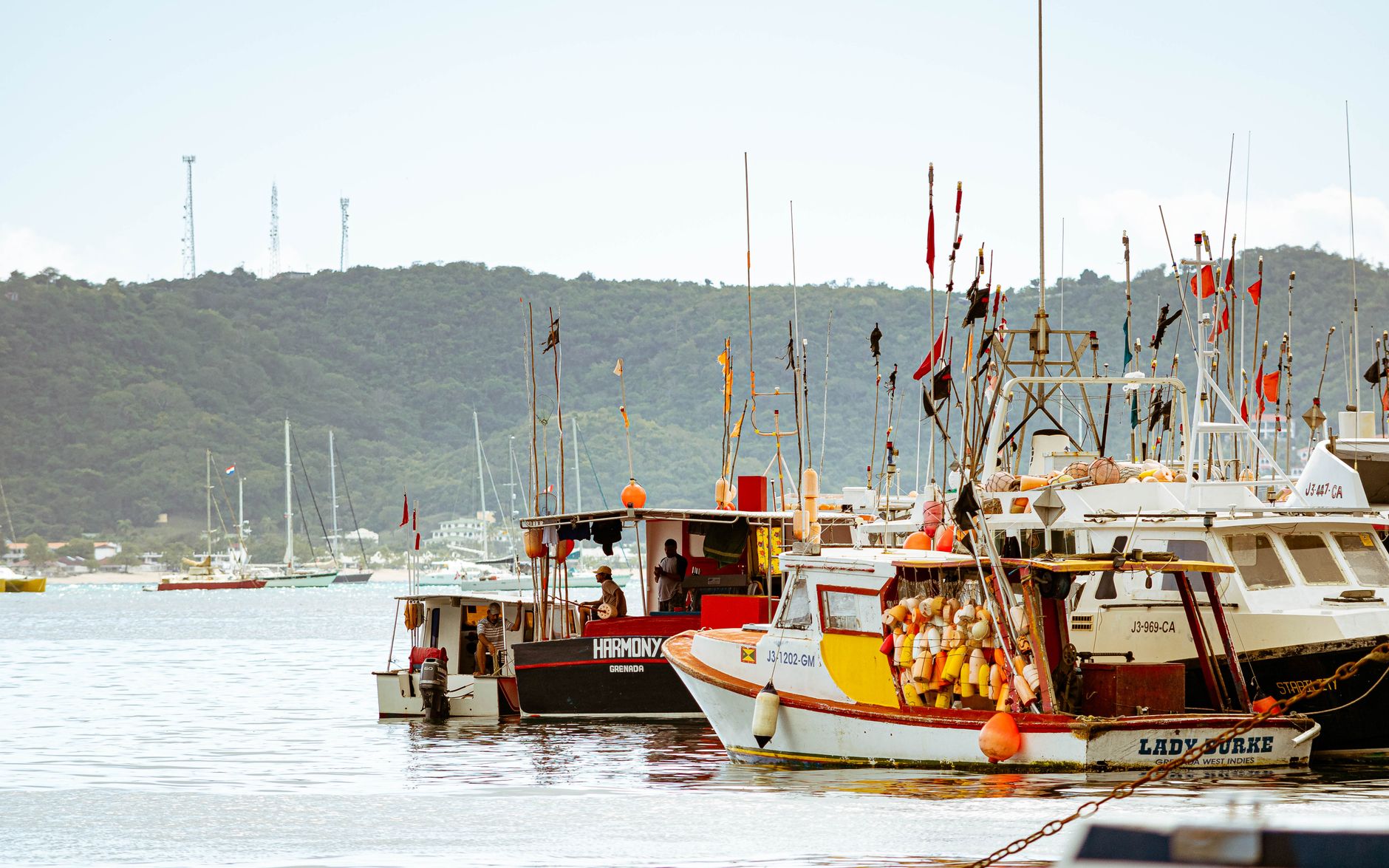
Dickon Mitchell, 44, sworn in on the steps of the Parliament building facing the Carenage. Keith Mitchell, who dominated politics since 1995, concedes on the same waterfront where Fedon once plotted. The crowd sings the national anthem; fishing boats sound their horns in rhythm, a reminder that whoever rules, the bay still decides the tempo.