Introduction
Grenada travel guide starts with a useful surprise: this is one country, three islands, and one of the Caribbean's strongest beach-to-rainforest contrasts.
Grenada makes sense fast. You land by Grand Anse, where the south coast runs on calm water, hotel belts, beach bars, and short drives into St. George's, a capital folded around a horseshoe harbor and steep streets. But the island's real trick is distance: within an hour, the coast gives way to wet forest, crater rims, and roads that climb into Grand Etang. That shift changes the trip. Grenada is not just a beach address with a few inland excursions attached. It is a volcanic island where nutmeg, cocoa, waterfalls, fishing towns, and old colonial fault lines still shape what you eat, hear, and notice.
The country works best when you stop treating it as a single strip of sand. Head east to Grenville for market energy and a rougher Atlantic edge. Go west to Gouyave, where Friday nights smell like frying fish and sea spray. Drive north to Sauteurs, where the cliff at Leapers' Hill holds one of the island's hardest historical memories. Then leave the coast again. Concord opens the door to waterfall country, while Belmont connects the island's agricultural identity to cocoa and spice rather than souvenir-shop versions of either. The result feels unusually complete: harbor town, beach arc, mountain spine, and working countryside in one compact circuit.
Grenada's smaller islands sharpen that contrast rather than repeating it. Hillsborough and Tyrrel Bay on Carriacou trade resort density for a slower sailing rhythm, lighter infrastructure, and a maritime culture that feels distinct from the main island. Back on Grenada proper, La Sagesse and Woburn show a quieter south than the Grand Anse strip, with bays, boats, and long views instead of concentrated nightlife. Food pulls the whole map together. Oil down, cocoa tea, saltfish, roti, and rum tell you as much about the country as any viewpoint. So does the language around you: formal greetings first, then jokes, then stories. Grenada rarely performs for outsiders. That's exactly why it stays with people.
A History Told Through Its Eras
Before Columbus, the canoes already knew the way
First Peoples and Sea Roads, c. 2000 BCE-1498
A painted bowl comes out of the soil at Grand Anse, white on red, as neat as if the potter had set it down yesterday and merely stepped outside. That is how Grenada's history begins: not with a European flag, but with hands shaping clay, with shell middens along the coast, with families crossing the sea from the Orinoco world because the Caribbean was never empty water to them. It was a road.
Records from archaeology point first to Archaic communities, then to Saladoid settlers between about 100 and 400 CE, people who brought farming, ceramic skill, and a sense of connection that stretched far beyond one island. Ce que l'on ignore souvent, c'est que the patterns found near Calivigny and Grand Anse echo designs from northern South America almost 2,000 kilometers away. Grenada was already part of a larger conversation.
Around 1200 to 1400, Kalinago power moved up the Lesser Antilles and changed the island's balance by force. Later accounts describe the destruction of earlier communities, the taking of women and children, and the formation of a new society that carried mixed ancestry but very practical inherited knowledge: how to plant, how to fish these waters, how to live with steep valleys and sudden rain. Conquest was brutal. Life continued anyway.
Then, in August 1498, Columbus sailed past on his third voyage and failed to possess what he barely understood. He named the island, then named it again, and did not stay. That small fact matters. For another century and a half, the people of Grenada kept the strangers at sea, and the green interior above what is now St. George's remained an indigenous stronghold rather than a Spanish colony. The next arrivals would come not to glance, but to settle.
The unnamed Kalinago leader who met Columbus with flaming arrows understood a simple truth: survival sometimes means refusing the stage altogether.
The oldest story Grenada tells in museums is often a ceramic fragment, because pottery survived where names did not.
Two bottles of brandy, a cliff at Sauteurs, and the price of an island
French Colony and the Kalinago Last Stand, 1649-1762
In 1649 Jacques du Parquet arrived from Martinique with settlers, trade goods, and the serene confidence of a man who believed islands could be purchased like bolts of cloth. According to tradition, he negotiated with the Kalinago chief Kairouane and obtained Grenada for knives, beads, hatchets, and two bottles of brandy. One almost hopes the brandy was at least decent.
What followed was not peaceful transfer but war. The French built, planted, pushed inland, and met resistance in the hills and forests. The climax came in 1651 at the northern cliff now known as Sauteurs, from the French name Le Morne des Sauteurs, where the last Kalinago fighters, trapped above the sea, chose death over capture. Schoolchildren still learn the site as a place of grief, not decoration.
French Grenada then became a plantation island. Enslaved Africans were brought in growing numbers, and the social order that formed was violent, profitable, and strangely enduring in its cultural traces. The language of power was French, but the island's real life was made in kitchens, provision grounds, and night-time storytelling, where African memory and Caribbean necessity produced the foodways and speech rhythms that still echo from St. George's to Grenville.
Ce que l'on ignore souvent, c'est que Grenada's famous spice identity did not descend from some postcard perfume. It grew from labor measured in acreage, punishment, and export ledgers. Tobacco and cotton came first; sugar tightened the vice; then the habits of cooking, naming, and believing survived the system that tried to crush the people who made them. That world would shape every rebellion to come.
Jacques du Parquet looks, in the surviving portraits, like many colonial entrepreneurs: tidy beard, hard eyes, and the moral imagination of an account book.
Sauteurs takes its name from the leap itself; a whole town still carries the memory of people who chose the rocks below over bondage above.
Fédon in the mountains, the governor as hostage, the empire suddenly afraid
Empire, Revolt, and Emancipation, 1762-1838
Britain seized Grenada in 1762 during the Seven Years' War with brisk imperial efficiency: ships offshore, guns trained, paperwork after the smoke. The Treaty of Paris confirmed the transfer in 1763, though France briefly returned during the American Revolutionary War before Britain regained control. Yet the island never became simply British. Catholic habits, French patois, and French-descended free colored families remained woven into its fabric, especially beyond the formal strongholds around St. George's.
Then came Julien Fédon, and Grenada entered the great age of Atlantic revolt. On 2 March 1795, inspired by the French Revolution and by the shockwaves running through Saint-Domingue, Fédon and his allies rose against British rule, gathered supporters in the mountainous interior above Grenville, and established what amounted to a rebel republic. For 22 months, the British could not fully master their own colony.
The most chilling scene belongs in a film. Governor Ninian Home and dozens of other hostages were held as bargaining pieces while fighting dragged on. When British relief seemed near, the hostages were executed. It was a dreadful act, but also a sign of how serious the revolt had become: this was not symbolic defiance but a bid to overturn the island's order from root to branch.
Fédon was defeated in 1796, but he was never properly caught. That disappearance gave him the strange afterlife of Caribbean history's most useful men: half documented, half legend. After abolition in 1834 and full emancipation in 1838, Grenada moved into another era, yet the memory of armed resistance remained in the landscape itself, in estate names, in family stories, in the mountain roads running away from the coast. A colony can suppress a rebellion. It cannot quite erase the route it took.
Julien Fédon was a free colored planter with the manners of a proprietor and the imagination of a revolutionary, which is why he frightened the British so deeply.
No one can say with confidence where Fédon died; Grenada's greatest rebel simply steps out of the archive and into rumor.
From estate island to People's Revolutionary Government
Nutmeg, Revolution, and a Fragile Democracy, 1838-1983
After emancipation, Grenada did not become free in any simple sense. The plantations weakened, but class power endured; the island's economy shifted toward cocoa and then nutmeg, and by the late 19th and early 20th centuries the so-called Spice Isle was taking shape on the backs of small farmers, estate workers, and market women who understood the price of every sack better than any governor did. Walk through the market in St. George's and you still feel that old economy breathing under the awnings.
Political modernity arrived with voices that knew how to speak to ordinary Grenadians. T. A. Marryshow campaigned for representative government with a newspaper man's persistence, while Eric Gairy, charismatic and alarming in equal measure, turned labor unrest into mass politics. Ce que l'on ignore souvent, c'est que Grenada's road to independence was not a tidy constitutional procession. It was noisy, personal, and full of bitterness.
Independence came in 1974, and almost at once the island lurched into sharper conflict. Maurice Bishop and the New Jewel Movement overthrew Gairy in 1979, promising a cleaner, fairer future, building schools and clinics, and speaking a language of dignity that still moves many Grenadians. But revolutions, like royal families, can devour their own children. Internal struggle led to Bishop's arrest and then his killing on 19 October 1983 at Fort Rupert, now Fort George, above St. George's harbor.
The American-led invasion followed within days. For outsiders it was a Cold War episode. For Grenadians it was also a family tragedy played out in public, with grief, relief, anger, and humiliation all mixed together. Modern Grenada was born from that fracture. The next chapter would be less theatrical, perhaps, but no less defining: rebuilding a democracy while carrying the memory of sudden violence.
Maurice Bishop had the rare gift of sounding intimate even in a crowd, which is why his death still feels personal to people who never met him.
The fort where Bishop was killed overlooks one of the prettiest harbors in the Caribbean, a brutal reminder that lovely settings do not produce gentle politics.
After the guns, a country learns to stand in its own weather
Rebuilding, Memory, and the Grenadian Present, 1984-present
The years after 1983 were quieter on the surface, but quiet is not the same as easy. Grenada returned to parliamentary life, argued through elections, and rebuilt institutions while tourism expanded along Grand Anse and yachts stitched new routes through Carriacou. One island became several at once: beach escape, farming country, dive destination, and a place still sorting out what the revolution had meant.
Then nature intervened with a ferocity politics could not match. Hurricane Ivan struck in September 2004 and wrecked close to 90 percent of the housing stock, flattening roofs, shredding nutmeg trees, and changing the smell of the island for months. A year later Emily hit again. The damage was not only economic. Nutmeg trees take years to mature, so a storm can destroy both a harvest and a generation's confidence.
And yet Grenada is stubborn. Gouyave still turns Friday night fish into a weekly rite. Grand Etang still gathers mist above the crater lake. In Hillsborough on Carriacou, and in smaller places such as Woburn and Belmont, the old habit of making life from weather, soil, and sea has not disappeared. Ce que l'on ignore souvent, c'est that resilience here is not a slogan. It is carpentry, replanting, mending nets, reopening a kitchen, voting again.
That is why Grenada's history feels so alive. The island has known conquest, slavery, rebellion, experiment, invasion, and storm, yet it has kept a taste for detail: nutmeg on the flag, French names on the map, African memory in the drumbeat, and modern ambition in the young athletes and writers who carry the place outward. History does not sit behind glass here. It walks beside you into the next decade.
Kirani James, calm almost to the point of mystery, gave modern Grenada a victory the whole country could claim without argument.
When Hurricane Ivan tore through the island in 2004, it damaged or destroyed so many nutmeg trees that the national emblem itself suddenly felt vulnerable.
The Cultural Soul
A Greeting Before the World Begins
In Grenada, speech does not begin with information. It begins with recognition. You enter a shop in St. George's, a minibus in Grenville, a rum counter in Gouyave, and the first currency is not the Eastern Caribbean dollar but "Good morning," delivered as if civilization itself depends on this small ceremony. It does.
The island lives in English, Grenadian Creole, and the aftertaste of French patois. You hear it in the soft bend of a vowel, in a joke that arrives sideways, in a sentence that sounds courteous and amused at once. Language here does not march. It sways.
A few local words do more work than whole dictionaries. To lime is to spend time as if time were edible. Ole talk is gossip, yes, but also social philosophy, the village mind speaking out loud. Jab jab carries drums, soot, defiance, Carnival, and the memory that some forms of freedom first had to wear a terrifying face.
This is why a visitor who asks a question before saying hello sounds oddly unfinished. Grenada dislikes haste in speech for the same reason it dislikes weak tea: both suggest a failure of character. A country is a table set for strangers, but first the strangers must prove they know how to knock.
Nutmeg in the Breath, Fire in the Pot
Grenada calls itself the Spice Isle, which could have been a slogan if the island did not smell so convincingly of cinnamon bark, mace, turmeric, bay leaf, hot oil, sea salt, and nutmeg split open by hand. The proof arrives through the nose before the eye has time to become skeptical. In the market of St. George's, spice is not decoration. It is weather.
The national dish, oil down, tells the whole history in one pot. Breadfruit from the older botanical order of the Caribbean, salted meat from empire, coconut milk from tropical abundance, dumplings from thrift, callaloo from African memory. Everything cooks until the liquid disappears and what remains is density, perfume, and the calm authority of a meal that never needed plating lessons.
Then come the side roads of appetite: roti folded around curry, cocoa tea thick enough to count as consolation, fish cakes eaten too hot, lambie with lime and pepper, pelau darkened with burnt sugar like an argument that turned delicious. Grenadian cooking does not flatter ingredients by leaving them alone. It improves them by persuasion.
And then the nutmeg returns. In dessert, in drink, in steam, in memory. One begins to suspect that Grenada has understood something the rest of the world forgot: spice is not excess. Spice is syntax.
The Elegance of Not Rushing
Grenadian etiquette has old bones. It is not stiff. It is exact. You greet elders properly, you do not barge into a request, you do not treat familiarity as a democratic right, and you learn very quickly that warmth and informality are not twins. They are cousins who visit on their own schedule.
This gives the island a grace that outsiders often misread. A woman at a counter may be perfectly kind and still refuse the false intimacy of tourist chatter. A driver may joke with you mercilessly and still expect your manners to remain intact. Respect here is not ornamental. It is structural.
The rule is simple enough to fit in a pocket: greet first, ask later. The rule is also profound enough to organize a society. In a place where everybody knows somebody's aunt, teacher, pastor, godchild, or fishing partner, behavior leaves residue. Courtesy is not performance. It is maintenance.
I find this magnificent. Modern life adores speed because speed excuses bad form. Grenada remains suspicious of that bargain. Even on a busy day in Gouyave, even when the buses are full and the fish smoke rises and Friday evening begins to tilt toward revelry, a person still has time to say good evening. That is culture. Everything after is detail.
Drums for the Living, Drums for the Dead
Music in Grenada does not ask permission to occupy space. It comes through steelpan, soca, hymn, string band, road-march thunder, and on Carriacou through Big Drum, where the past is not remembered in abstract terms but summoned in rhythm, gesture, and names carried across water from Africa and kept alive by repetition. Memory, here, has percussion.
Carnival gives outsiders the loud version, with jab jab bodies blackened in oil or paint, chains clanking, horns, whistles, a choreography of menace and release. But the subtler revelation comes elsewhere. It comes in a church where the singing leans half a beat behind the organ and becomes more beautiful for it. It comes in a bar in Hillsborough where one person taps a bottle, another answers with a spoon, and suddenly the room has found its pulse.
Grenadian music is often social before it is spectacular. People sing with each other more than at each other. That distinction matters. The result is less polished and more binding.
Even silence behaves musically on this island. Stand near the water in Sauteurs at dusk and listen: surf, voices, a radio somewhere behind a wall, a motorbike climbing the road, a dog objecting to existence. It should be chaos. It becomes counterpoint.
An Island That Prefers Memory to Monument
Grenada has produced writers who understand that small islands are not small subjects. Merle Collins writes with the intimacy of someone who knows that politics enters the kitchen before it enters the archive. Jacob Ross handles memory like a blade wrapped in cloth. The island's literature does not suffer from scale anxiety. It knows that one bay, one family, one uprising, one missing body can contain an era.
This matters in a country where history never stays politely in museums. Julien Fédon vanishes into the national imagination as if refusal itself could become a literary form. Leapers' Hill above Sauteurs remains a place where narrative hardens into cliff face. A market woman in St. George's can compress class, weather, and colonial afterlife into one sentence sharper than a seminar.
Grenadian writing tends to distrust official smoothness. That is one reason it feels alive. The best pages understand that beauty and violence have shared addresses here for centuries, sometimes the same estate, sometimes the same road.
I like literatures that smell faintly of earth and argument. Grenada has that smell. It also has humor, the dry kind, the useful kind, the kind that survives because sentimentality would be an insult to the dead. Books do not explain the island. They teach you how not to lie about it.
Sunday White, Candle Smoke, Sea Salt
Religion in Grenada is not a separate department of life. It enters dress, speech, cooking, mourning, music, and the timetable of the week. Catholic churches, Protestant chapels, Adventist discipline, Pentecostal fire, Spiritual Baptist undercurrents, all of it coexists with a seriousness about ritual that does not require solemn faces every minute. Faith can sing.
On Sunday, clothes tell theology. White dresses, pressed shirts, polished shoes, hats with authority. The streets of St. George's and Grenville acquire a composed brightness, as if the island had decided to iron itself. Even people who no longer attend regularly remain legible to the rhythm of the day. Bells still sort the morning.
And yet the Caribbean never leaves religion to remain purely imported. African inheritance, French Catholic residue, British Protestant order, local belief, ancestral respect: they continue their negotiations under the official liturgy. In Carriacou, ceremonial forms around ancestry and drum tradition make this especially plain. The dead are not gone. They have appointments.
What interests me is not doctrinal purity. It is the texture of devotion. Candle wax, starch, hymn books, a hand fan, sea wind at the church door, the scent of hair pomade and perfume and rain on concrete. One understands quickly that belief is also a choreography of materials.
What Makes Grenada Unmissable
Beach to rainforest
Few Caribbean trips change mood this quickly. You can start the morning on Grand Anse and be standing above the crater lake at Grand Etang before lunch.
Spice and cocoa
Nutmeg is not branding copy here; it is part of the national symbol system and daily cooking. Cocoa estates, rum, oil down, and market produce give Grenada one of the Caribbean's strongest food identities.
Dive and wrecks
Grenada has serious underwater range: reef sites, the Underwater Sculpture Park, and the Bianca C, widely promoted as the Caribbean's largest shipwreck. Snorkelers and divers both get a trip worth planning around.
Volcanic interior
The island's mountain spine creates steep valleys, short rivers, and a high concentration of waterfalls. Trails around Grand Etang and the forest reserve bring cooler air, birdlife, and a greener Grenada than many first-time visitors expect.
Hard history, close by
Grenada's scale makes its history feel immediate rather than abstract. In St. George's, Sauteurs, and the old estate districts near Grenville, colonial rule, rebellion, and survival are never far from the present landscape.
Three-island rhythm
Grenada, Carriacou, and Petite Martinique give one trip three distinct settings. The main island carries the beaches and capital; Carriacou brings slower sailing culture and a looser, lower-density pace.
Cities
Cities in Grenada
St. George's
"A horseshoe harbour ringed by Georgian warehouses and a 1705 fort where the cannon still points at nothing, the capital earns its reputation as the most beautiful town in the Caribbean without appearing to try."
Grand Anse
"Three kilometres of white sand backed by sea-grape trees where the water shifts from jade to deep blue within fifty metres of shore, and the only noise at dawn is a fisherman dragging a pirogue across wet sand."
Grenville
"Grenada's second town runs on nutmeg and market days rather than tourists, and the corrugated-roof produce stalls along the Esplanade show you the island's actual economy more honestly than any resort."
Gouyave
"On Friday nights this fishing town on the northwest coast turns its main street into an open-air kitchen of fried fish, lambie, and rum punch — the Gouyave Fish Friday is the closest thing Grenada has to a weekly public "
Sauteurs
"At the island's northern tip, Leapers' Hill drops forty metres to the sea where the last Kalinago warriors jumped rather than surrender to French troops in 1651, and the silence up there still feels earned."
Grand Etang
"Sitting in a volcanic crater at 530 metres, this jade lake surrounded by cloud forest and mona monkeys is the point where Grenada stops being a beach destination and becomes something stranger and greener."
Concord
"The Concord Valley hides three tiered waterfalls within a two-hour walk through nutmeg and cocoa estates, and the upper falls — a 65-metre drop into a cold pool — see almost no one."
Hillsborough
"Carriacou's quiet capital has one main street, a small museum with Amerindian pottery and African Big Drum tradition documented on the same shelf, and a pace of life that makes St. George's feel frantic."
Woburn
"This working fishing village on the south coast sits beside Woburn Bay, where boat-builders still construct wooden vessels using traditional techniques and the smell of fresh-cut timber mixes with brine."
La Sagesse
"A protected bay on the Atlantic-facing southeast coast shelters a mangrove estuary, a reef, and a ruined sugar estate where the silence is thick enough to feel deliberate."
Belmont
"The Belmont Estate in the northeast is a living cocoa plantation where you can trace a single bean from pod to fermentation box to drying table to bar, and the estate lunch of oil down served outdoors makes the lesson st"
Tyrrel Bay
"Carriacou's main anchorage fills each January with wooden sloops built on the island itself for the annual Carriacou Regatta, and the boatyard at the bay's edge is proof that the tradition is not yet a museum piece."
Regions
St. George's
Southwest Harbor and Beach Belt
This is the Grenada most visitors meet first: the horseshoe harbor of St. George's, the hotel strip at Grand Anse, and the yacht-and-fishing world around Woburn. It is the easiest part of the country for taxis, restaurants, and short stays, but it still feels worked-in rather than polished for display.
Grenville
Atlantic Coast and Quiet Bays
Grenville and the southeast feel greener, windier, and less arranged than the southwest, with rougher Atlantic light and fewer resort buffers. La Sagesse slows everything down; Belmont pulls you toward cocoa, spice, and the agricultural side of the island people often miss.
Grand Etang
Rainforest Highlands
Grand Etang is the interior Grenada postcards hint at but rarely explain: crater lake, cloud snagging on the ridge, wet forest, and roads that twist into cooler air within an hour of the beach. Concord sits on the edge of that upland world, where waterfall detours and village stops start to matter more than sun loungers.
Gouyave
Leeward Fishing Coast
The west coast runs on fishing, roadside cooking, and villages that still face the sea as a workplace first. Gouyave has the island's best-known Friday seafood ritual, and the whole stretch feels more local, more direct, and less interested in selling itself than the southwest.
Sauteurs
Northern Headlands
Northern Grenada is where the island's beauty turns stark and history presses harder, especially around the cliffs above Sauteurs. The scenery opens up, the traffic thins, and the story of the Kalinago last stand gives the north a gravity the beach brochures cannot carry.
Hillsborough
Carriacou and the Grenadines Edge
Carriacou trades rainforest drama for open water, dry light, and a sailing-town rhythm that feels closer to the Grenadines than to mainland Grenada. Hillsborough handles practical life; Tyrrel Bay handles anchorage, bars, and the easy maritime drift people mean when they talk about island time and usually get it wrong.
Suggested Itineraries
3 days
3 Days: Harbor, Beach, Bay
This short route keeps travel time low and gives you the side of Grenada most first-time visitors actually use: the harbor in St. George's, the long sweep of Grand Anse, and the working waterfront around Woburn. It suits a long weekend when you want sea views, easy food stops, and enough local texture to avoid feeling trapped in a resort bubble.
Best for: first-timers, short breaks, travelers without a car
7 days
7 Days: Atlantic Coast and Rainforest Roads
Start on Grenada's greener, less polished side in Grenville and La Sagesse, then climb into Grand Etang before ending among cocoa and estate country near Belmont. The distances are short, but the mood changes fast: fishing town, quiet bay, crater-lake forest, then agricultural Grenada with spice and chocolate in the air.
Best for: repeat Caribbean travelers, hikers, food-minded travelers
10 days
10 Days: West Coast to the Northern Headlands
This route follows the leeward coast from Gouyave through Concord and up to Sauteurs, where the island narrows and the history turns hard. You get fish-fries, waterfalls, village stops, and a better sense of how Grenada works beyond the hotel belt.
Best for: independent travelers, drivers, travelers who prefer towns over resorts
14 days
14 Days: Carriacou Slow Circuit
Spend two weeks on Carriacou, splitting time between Hillsborough and Tyrrel Bay instead of racing back to the main island. It is quieter, drier, and more maritime, with the kind of pace that rewards people who like beaches, boat traffic, and long lunches more than checklist sightseeing.
Best for: slow travel, sailors, couples, second-time Grenada visitors
Notable Figures
Kairouane
17th century · Kalinago chiefTradition names Kairouane as the chief who dealt with Jacques du Parquet in 1649, in that notorious exchange involving trade goods and two bottles of brandy. Whether he thought he was sharing land or surrendering it, he became the tragic hinge between indigenous Grenada and colonial Grenada.
Jacques du Parquet
1606-1658 · French colonial governorDu Parquet never had the glamour of a conqueror in a grand painting; he was more practical, which can be worse. His Grenada story is the story of Caribbean colonization in miniature: a transaction, a war, and an economy built for export before the graves were dry.
Julien Fédon
c. 1764-c. 1796? · Rebel leaderFédon remains the most magnetic ghost in Grenadian history. He came from the free colored class, owned property, knew the system from within, and still chose revolution; then, after shaking the island for nearly two years, he vanished so completely that rumor had to finish the biography.
Ninian Home
1732-1795 · British governor of GrenadaHome is remembered less for what he ruled than for how abruptly power failed him. Taken hostage during the uprising and later executed, he became the proof that the British state on Grenada was not nearly as secure as it pretended.
Theophilus Albert Marryshow
1887-1958 · Journalist and constitutional reformerMarryshow fought with editorials, petitions, and relentless pressure rather than muskets. People called him the Father of Federation, but his deeper gift was making politics sound like something ordinary Grenadians had the right to enter, not merely endure.
Sir Eric Gairy
1922-1997 · Trade union leader and first prime ministerGairy was brilliant at reading a crowd and reckless in what he did with that power. He gave Grenada independence, yes, but also a style of rule so turbulent that his enemies could plausibly present a coup as a rescue.
Maurice Bishop
1944-1983 · Prime minister and revolutionary leaderBishop could sound warm, modern, and radical all at once, which is rare in any politician. His murder at Fort Rupert turned him from a contested leader into something more enduring and more dangerous to memory: a martyr everyone still argues over.
Merle Collins
born 1950 · Writer and poetCollins writes the kind of Grenada that official speeches cannot hold: intimate, political, wounded, funny. If you want to understand how revolution entered kitchens, classrooms, and private thought, she is one of the finest guides you could ask for.
Kirani James
born 1992 · Olympic athleteWhen James won Olympic gold in London in 2012, Grenada suddenly saw itself on a stage that had nothing to do with invasion, debt, or disaster. He carries the country with extraordinary composure, which may be why the achievement felt so dignified as well as joyous.
Photo Gallery
Explore Grenada in Pictures

A group of women in vibrant red traditional attire participate in a cultural ceremony outdoors.
Photo by Zeal Creative Studios on Pexels · Pexels License

Joyful parade of people in vibrant cultural costumes celebrating outdoors.
Photo by Asso Myron on Pexels · Pexels License
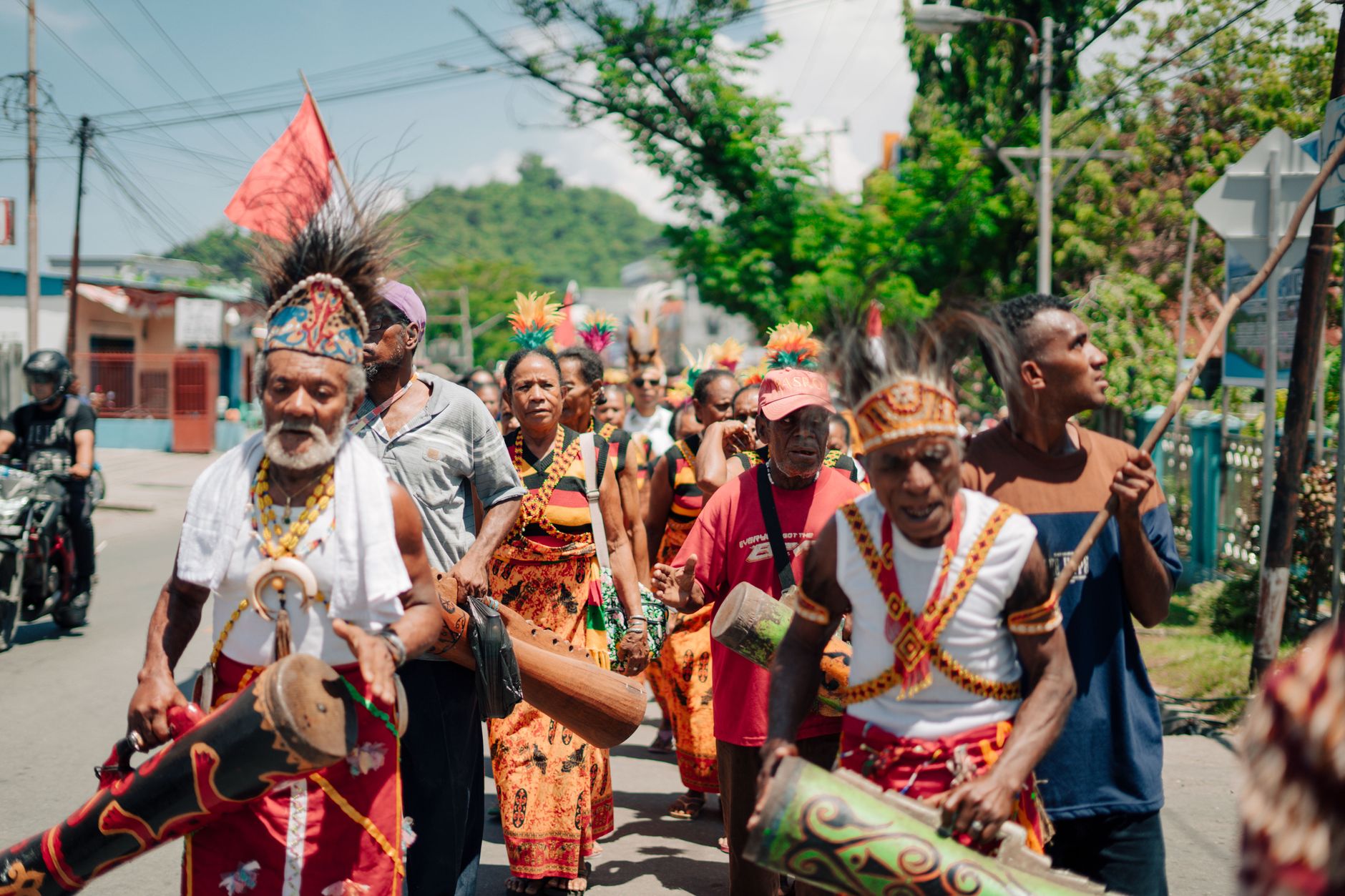
Vibrant street parade with people in traditional attire celebrating culture outdoors.
Photo by Asso Myron on Pexels · Pexels License

High-resolution close-up of ripe organic pomegranates showcasing texture and vibrant color.
Photo by Engin Akyurt on Pexels · Pexels License
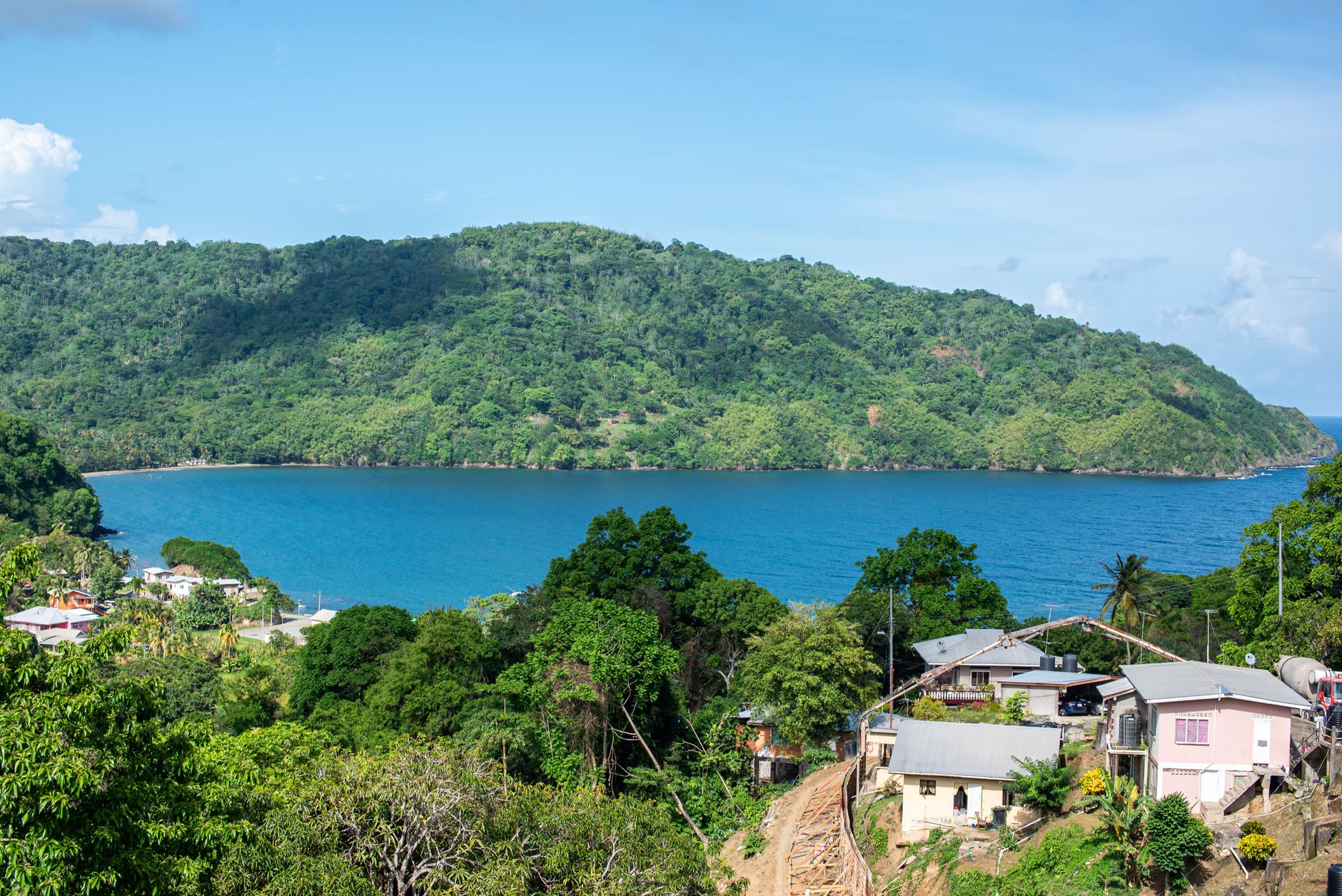
A stunning view of the lush green hills and blue ocean near a quaint village in Tobago, Trinidad and Tobago.
Photo by Dominik Gryzbon on Pexels · Pexels License

Colorful fishing boats moored in a lively harbor setting, surrounded by lush green landscapes.
Photo by G.isle px. on Pexels · Pexels License

A vibrant hillside neighborhood in Port of Spain, Trinidad and Tobago, surrounded by lush greenery.
Photo by Kenrick Baksh on Pexels · Pexels License
Practical Information
Visa
Grenada is visa-free for many short-stay travelers, including passport holders from the US, UK, Canada, Australia, and most EU countries. You still need a passport valid for 6 months beyond arrival, proof of onward or return travel, and the online Immigration and Customs form at edcard.gov.gd, which opens 72 hours before arrival.
Currency
Grenada uses the Eastern Caribbean dollar, written XCD or EC$, and the exchange rate is pegged at EC$2.70 to US$1.00. US dollars work in St. George's, Grand Anse, and most tourist-facing businesses, but change often comes back in EC dollars and not always at a generous rate.
Getting There
Most travelers arrive through Maurice Bishop International Airport (GND), 7 km from St. George's and close to Grand Anse. Direct and one-stop routes are strongest via New York, Miami or Charlotte, Toronto, London, Trinidad, Barbados, St. Lucia, Antigua, and St. Vincent.
Getting Around
Minibuses are the cheapest way to move between St. George's, Gouyave, Grenville, and Sauteurs, but they run on local rhythm rather than a clock-face timetable. A rental car makes more sense for Grand Etang, Concord, Belmont, and quieter coves, though roads are steep, narrow, and left-side driving catches people out.
Climate
Grenada stays warm all year, usually around 24 to 30 C, with the driest stretch from January to May and wetter weather from June to December. The south around Grand Anse feels drier and sunnier, while Grand Etang and the interior run cooler, greener, and much wetter.
Connectivity
Mobile coverage is solid around St. George's, Grand Anse, Grenville, and the main road network, and hotel or cafe Wi-Fi is common in the south. Speeds can dip in the highlands, on back roads, and during bad weather, so download maps before heading to Grand Etang or the quieter east coast.
Safety
Grenada is one of the easier Caribbean islands to handle independently, with the usual urban and beach precautions rather than a constant sense of risk. Keep an eye on bags in St. George's busier areas, avoid leaving valuables in parked cars, and treat Atlantic-facing beaches and rainy-season roads with more respect than the postcard scenery suggests.
Taste the Country
restaurantOil down
Breadfruit, callaloo, dumplings, salt meat, coconut milk. Sunday pot, family yard, many hands. Spoon, plate, shade, talk.
restaurantSaltfish souse with bakes
Morning meal, counter stool, paper napkin. Hands tear bakes, hands fill bakes, hands eat. Coffee, talk, road after.
restaurantPelau
Pot on fire, rice, pigeon peas, meat, burnt sugar. Beach day, funeral, lunch break, shared table. Spoon, bottle drink, second serving.
restaurantRoti
Flatbread wraps curry chicken, goat, conch, or vegetables. Noon hunger, bus stop hunger, late hunger. Fingers hold, teeth pull, sauce runs.
restaurantCocoa tea
Breakfast cup, rain morning, school morning. Cocoa stick, milk or water, nutmeg, cinnamon. Sip, pause, breathe.
restaurantFish Friday in Gouyave
Street smoke, snapper, tuna, marlin, lobster. Friday night, friends, families, rum cups, sea wall. Queue, choose, eat, stand, laugh.
restaurantLambie waters
Bowl, broth, conch, lime, pepper, onion. Weekend table, beach shack, small group. Sip first, chew after.
Tips for Visitors
Carry EC Cash
Keep small EC dollar notes for buses, roadside food, and beach bars. Paying in US dollars is easy in Grand Anse, but the change is usually worse than the headline convenience.
Use Buses Smartly
Minibuses are cheap and useful for trunk routes, especially St. George's to Gouyave, Grenville, or Sauteurs. They thin out at night and on some Sunday runs, so do not build a tight airport or dinner plan around them.
Rent for the Interior
If your list includes Grand Etang, Concord, Belmont, or multiple parish stops in one day, rent a car. The island is small on a map and slow on the road.
Check Service First
Many restaurant and hotel bills already include a service charge, often around 10 to 18 percent. Read the bill before adding another 10 percent out of habit.
Greet Before Asking
In shops, minibuses, and small offices, start with 'good morning' or 'good afternoon.' Skipping the greeting reads rude fast, even if your question is polite.
Book Ferries Early
If you plan to split time between Grenada and Carriacou, lock in ferry or flight seats before weekends and holiday periods. Waiting until the last minute can cost you a day, not just a better fare.
Download Offline Maps
Coverage is decent in settled areas but can wobble in Grand Etang and on quieter east-coast roads. Save maps, hotel details, and ferry confirmations before leaving town.
Explore Grenada with a personal guide in your pocket
Your Personal Curator, in Your Pocket.
Audio guides for 1,100+ cities across 96 countries. History, stories, and local insight — offline ready.
Audiala App
Available on iOS & Android
Join 50k+ Curators
Frequently Asked
Do I need a visa for Grenada with a US passport? add
No, US passport holders do not need a tourist visa for short stays in Grenada. Entry is typically granted for 3 months, and you should arrive with 6 months of passport validity, proof of onward travel, and the completed online ED card.
What currency should I use in Grenada? add
Use Eastern Caribbean dollars for day-to-day spending, especially on buses, in markets, and at small food stops. US dollars are widely accepted in St. George's and Grand Anse, but the exchange rate at the till is often less favorable than paying in EC dollars.
Is Grenada expensive for tourists? add
Grenada can be moderate or expensive depending on where you sleep and how often you use taxis. A careful traveler can manage on about US$70 to US$120 a day, while resort-heavy stays around Grand Anse climb much faster.
How do you get around Grenada without a car? add
You can cover a good part of the main island by minibus, especially between St. George's, Gouyave, Grenville, and Sauteurs. It works best if you are flexible with timing and not trying to string together remote waterfalls, estate visits, and late-night returns on the same day.
Is Grand Anse or St. George's better to stay in? add
Grand Anse is better for beach time and easier hotel logistics; St. George's is better if you care about the harbor, market life, and being in a real town. The two are close enough that the choice is more about mood than access.
When is the best time to visit Grenada? add
January to May is the easiest stretch for beach weather, road trips, and lower rain risk. June to December is greener and often quieter, but it overlaps with the wetter season and the broader Caribbean storm period.
Is Grenada safe for solo travelers? add
Yes, Grenada is generally manageable for solo travelers who use normal street sense. The bigger risks are petty theft, isolated beaches after dark, rough water on exposed coasts, and overconfident driving on steep roads.
How many days do you need in Grenada? add
Seven days is a strong baseline if you want more than a beach break. That gives you time for St. George's, Grand Anse, one interior day around Grand Etang, and at least one longer outing to places like Gouyave, Grenville, or Sauteurs.
Can you visit Carriacou on the same trip as Grenada? add
Yes, and it is worth doing if you have at least 10 days total. Carriacou, especially Hillsborough and Tyrrel Bay, feels slower and more maritime than the main island, but transport timing matters enough that you should plan it in advance.
Sources
- verified Government of Grenada Immigration and Customs ED Card — Official arrival form and core entry procedure for incoming travelers.
- verified Grenada Airports Authority — Airport facts, airline listings, and official taxi fares from Maurice Bishop International Airport.
- verified U.S. Department of State: Grenada International Travel Information — Passport validity, visa-free entry basics, and entry conditions for US travelers.
- verified UK Foreign, Commonwealth & Development Office: Grenada — Entry rules, temporary driving licence requirement, and current safety guidance.
- verified Eastern Caribbean Central Bank — Authoritative source for the EC dollar and its fixed exchange rate against the US dollar.
Last reviewed: