
An introduction.
Researched by the Audiala editorial team from historical records, architectural archives, and local expertise.
HHow does an island sell itself with Venetian romance when most of the city you see rose from rubble after 1953? Zakynthos, in Zakynthos Municipality, Greece, rewards a visit precisely because the postcard beauty is only half the story: you come for the shock of that contradiction, for the Ionian light on the harbor, and for a place that keeps its memory in music, processions, and fragments of stone more than in intact old streets. Today the seafront glints with ferries and fishing boats, the air smells of salt and coffee, and the rebuilt town climbs toward Bohali under a wash of pale cream facades and bell towers that look older than they are.
Most visitors arrive expecting a preserved Venetian island capital, the old Zante of noble palaces and arcaded lanes. Then the details start to misbehave. The street plan feels modern in places, the facades look rehearsed rather than inherited, and the real survivors are scattered: a church, a fortress ridge, a reused lion of Saint Mark worn soft by other people's footsteps.
Zakynthos has always lived in layers. Homer names it, Venetian officials renamed it Fior di Levante, records show it fed Athens with tar from Lake Keri for sealing warships, and local memory still measures time against the earthquake of 12 August 1953, when the old city collapsed in minutes.
That is why this island matters beyond beaches and boat trips. You visit Zakynthos for the rare pleasure of seeing a place whose visible fabric lies to you a little, while its deeper truth waits in the harbor air, in the climb to Bohali, and in the stubborn civic memory of people who rebuilt without pretending nothing had happened.
01 What to see.
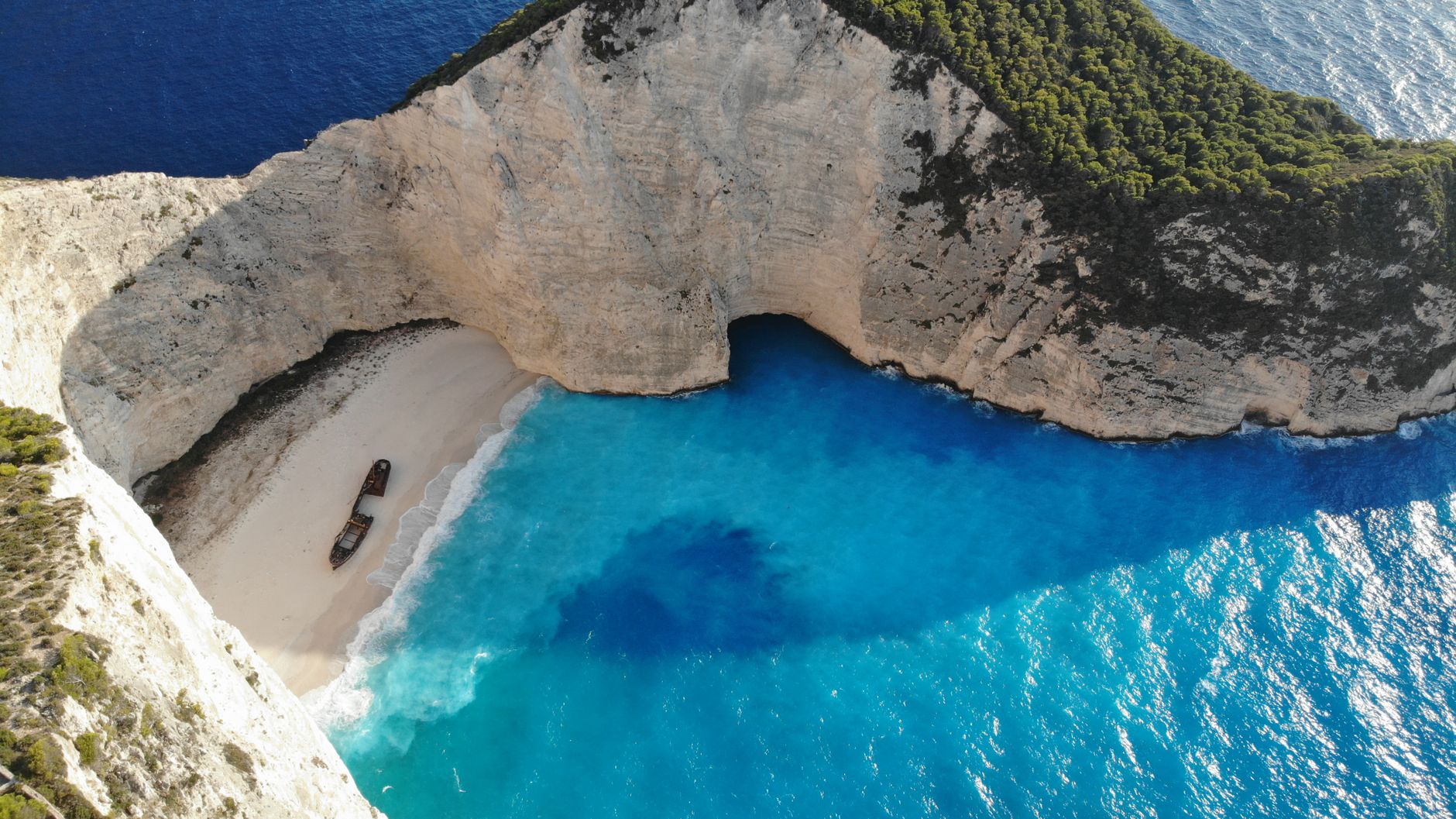
Navagio From the Clifftop
Venetian Castle and the Bochali Heights
Blue Caves to St. Mark's Square
02 In pictures.




Videos
Watch & Explore Zakynthos
THE Zakynthos Greece Travel Guide 🇬🇷 First Timers Zante Greece Travel
Travel Guide to Zakynthos Greece 4K
ZAKYNTHOS, GREECE Travel Guide - 10 Best Things To Do
Plan and listen to Zakynthos with Audiala.
Audio guide in your pocket, itinerary in your browser. Built for the way you actually visit.
03 Visitor logistics.
The practical scaffolding for a good visit — kept short.
Getting There
Zakynthos sits 6 km from Zakynthos International Airport (ZTH), about 15 minutes by taxi to Zakynthos Town, and 1 hour by ferry from Killini on the Peloponnese to Zakynthos Port. KTEL buses fan out from the town station to Laganas, Kalamaki, Argassi, Tsilivi, Vasiliko, Volimes, and Porto Vromi, but the island has no metro and little real-time tracking, so check the posted timetable before you commit to a full-island day.
Opening Hours
As of 2026, Zakynthos works on a hard seasonal rhythm: May to October is fully open, while November to April brings shorter ferry schedules and many shuttered beach businesses. Navagio beach itself remains closed to foot access because of cliff-fall risk, though the viewpoint is generally open from sunrise to sunset, and most churches and museums in town keep roughly 8:00 AM to 3:00 PM hours with many cultural sites closed on Mondays.
Time Needed
Give Zakynthos 2 to 3 days if you want the essentials: a town walk, one boat trip, and one beach. Five to 7 days makes more sense if you want weather wiggle room, the north coast and Blue Caves, the turtle-protected south, and mountain villages like Volimes without treating the island like a checklist.
Accessibility
Accessibility changes sharply by beach and viewpoint. Banana Beach has wooden boardwalks that help wheelchairs and strollers, Zakynthos Town is manageable but uneven in older streets, and many headline spots, from Navagio viewpoint to rocky coves like Porto Limnionas, involve stairs, loose ground, or steep descents with no elevators anywhere.
Cost & Tickets
As of 2026, the island itself has no entry fee, public beaches are free, and the main paid expense is time on the water: shared boat tours usually run about €30 to €50 per person, while private charters start around €120 and rise fast. Town museums usually charge about €3 to €5, and Greek national free-entry days often apply, but verify locally because site-by-site enforcement can shift.
05 Tips for visitors.
Small things that change the day.
Navagio Timing
The famous shock of white cliff and electric-blue water looks best early, and the queue proves it. Reach the Navagio viewpoint before 9:00 AM or after 6:00 PM in summer unless you enjoy baking in an unpaved car park for up to 2 hours just to stand at the rail.
Turtle Beach Rules
Laganas Bay, Gerakas, and Marathonisi are not casual photo sets during nesting season, which runs from May to October. Flash, bright lights, and drones are banned because loggerhead turtles use these beaches at night, and rangers do fine people for disturbing nests.
Church Clothes
St. Dionysios Cathedral and active churches expect covered shoulders and knees, and hats come off indoors. During liturgies or processions, keep your phone down and your voice lower than you think necessary; the island takes its saints more seriously than its nightlife brochures do.
Taxi And ATV
Airport and port taxis can quote soft, optimistic prices until the ride ends, so agree on the fare before the door shuts or use an official stand. If you rent an ATV or jet ski, photograph every scratch first; Zakynthos has a reputation for damage disputes and a worse one for summer road accidents.
Eat In Chora
Zakynthos Town is your best eating stop between beach runs. For budget plates, Kontis Taverna does local dishes like sofrito and ladotyri for about €10 to €15 per person; Café Solomos on Solomos Square works well for coffee and pastries; En Plo in the harbor district is the sunset splurge if you want local wine and a proper dinner.
Pair The Town
Zakynthos Town is compact enough to string together in one walk: port to Solomos Square to St. Mark Square to the Venetian Castle takes about 15 to 20 minutes of walking, not counting museum stops. Do that on your first or last day, when sea conditions are too rough for boats or you need a quieter counterpoint to the south-coast resort strip.
04 A history of reinvention.
The Island That Had To Rebuild Its Face
Legend holds that Zakynthos took its name from Zakynthos, son of Dardanus, who arrived from Arcadia and founded the first acropolis. Scholars are firmer on the later record: by the 5th century BC the island mattered enough to Athens for a very practical reason, the tar of Lake Keri, used to seal hulls against sea-worms and keep triremes alive.
Records then turn rougher. Vandals sacked the island in 466, Normans and Pisans raided it in the Middle Ages, Venice ruled from 1485 to 1797, and the city learned to think of itself as both Greek and unmistakably Ionian. Then the earthquake of August 1953 smashed about 95 percent of Zakynthos Town, which means the history here survives less as a frozen set of buildings than as a fierce act of cultural memory.
The List With Only Two Names
Zakynthos can seem like a place whose hardest battle was with earthquakes. White churches, harbor light, a saint's relics carried through town: the surface story is one of piety and recovery, and many visitors never suspect that the island also staged one of the most extraordinary acts of civilian defiance in wartime Europe.
Then a small detail breaks the picture. In 1943, when the German authorities demanded a full register of Zakynthos's Jews for deportation, Mayor Loukas Karrer and Metropolitan Chrysostomos Demetrios did not behave like frightened local officials trying to survive occupation. According to documented local and Holocaust records, the list they presented contained only two names: their own. Execution, reprisals, and the collapse of civic order were real possibilities for both men.
That was the turning point. While the delay held, villagers and monasteries hid all 275 Jews of the island, and Zakynthos became a rare place in occupied Europe where the entire Jewish community survived. Once you know that, the town changes shape: the harbor no longer looks merely pretty, the mountain road no longer looks merely scenic, and the island's rebuilt face starts to read as something tougher than beauty, a public memory of people who refused to hand their neighbors over.
Tar, Ships, and Athenian Power
When the Golden Book Burned
Listen to the full story in the app
The whole Zakynthos,
told well.
Audio guides for 1,100+ cities across 96 countries. History, stories, and local insight — offline ready.

06 Frequently asked.
The questions travellers send us most about Zakynthos.
Is Zakynthos worth visiting?
Yes, if you want one Greek island that can give you cliff drama, sea-cave light, turtle beaches, and a town with more history than its rebuilt facades first suggest. The surprise is that Zakynthos Town lost most of its old fabric in the August 11-12, 1953 earthquake, so the island's real magic often lives in sound and texture instead: Orthodox chanting near Agios Dionysios, hot stone under your shoes in Bohali, and Blue Caves water lit like polished glass.
How long do you need at Zakynthos?
You need at least 3 days to see the island without reducing it to a dash between beach bars and photo stops. Give it 5 to 7 days if you want the full shape of the place: Zakynthos Town, Bohali castle, a north-coast boat day for the Blue Caves, and a south-coast morning at Gerakas or Marathonisi, with time for weather changes and roads that coil through the hills like ribbon.
How do I get to Zakynthos from Athens?
The fastest way is a flight from Athens to Zakynthos International Airport, while the slower route is driving or taking a bus to Kyllini and then the ferry to Zakynthos Port. The airport sits about 6 kilometers from town, close enough to feel like a short hop rather than a transfer saga, and the ferry crossing from Kyllini takes about 1 hour across the Ionian.
What is the best time to visit Zakynthos?
Late May, June, and September are the sweet spot for Zakynthos. You get warm sea, long light, and fewer crowds than July and August, when heat can push past 35C and the famous viewpoints feel packed tight; spring also brings wildflowers on the cliffs, while early autumn keeps the water warm and the island a little quieter in the ears as much as on the roads.
Can you visit Zakynthos for free?
Yes, you can experience a lot of Zakynthos without paying an entry fee. Public beaches, clifftop viewpoints, and long walks through Zakynthos Town cost nothing, though boats, museums, and some guided visits do add up; the best free pleasures are often the simplest ones anyway, like sunset from Bohali or the salt-and-thyme air along the west coast.
What should I not miss at Zakynthos?
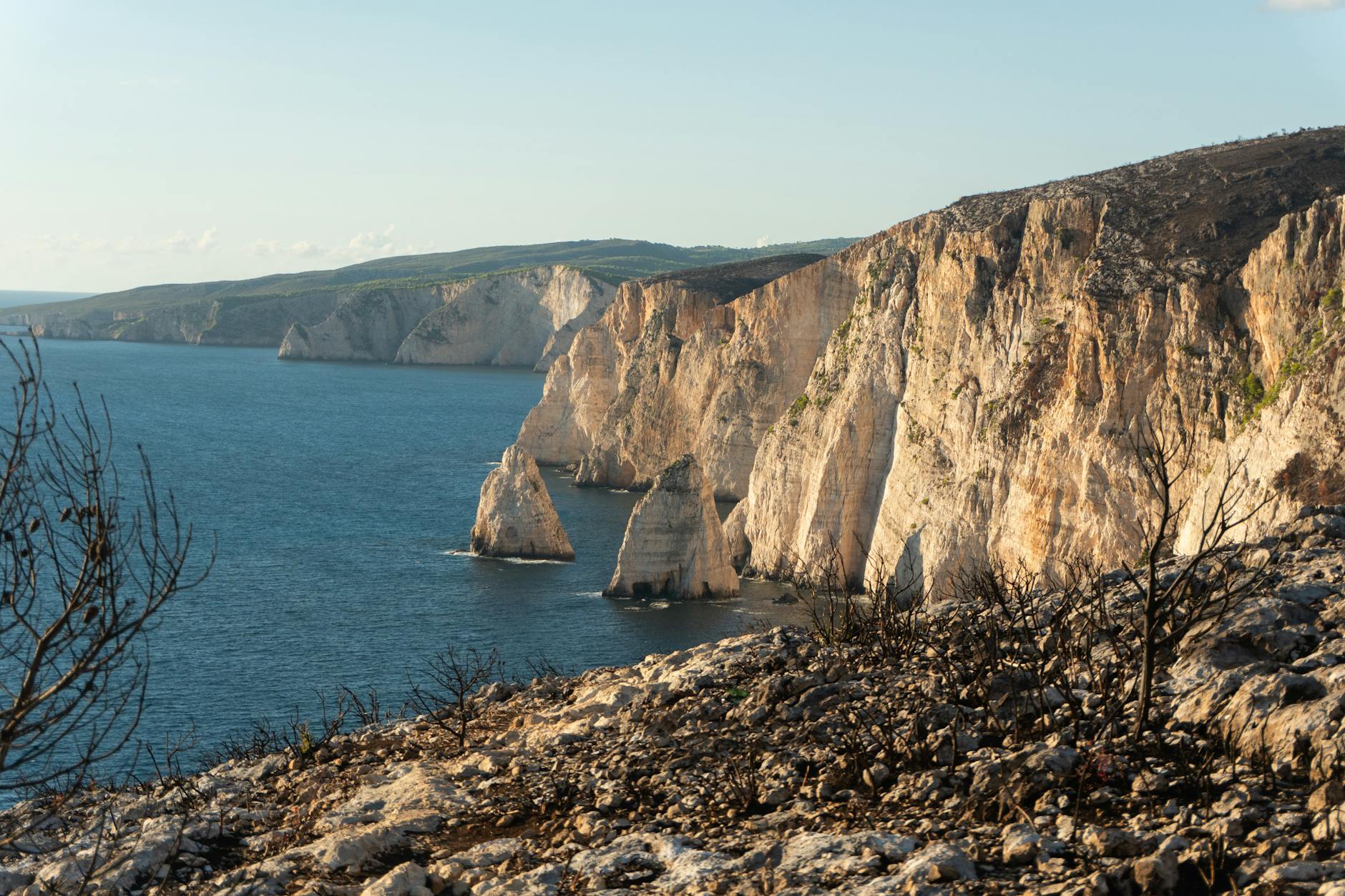
Don't miss Bohali and the Venetian Castle, a Blue Caves boat trip, and time in Zakynthos Town beyond the harbor strip. Most people chase Navagio first, but the island's deeper story sits elsewhere: the rebuilt streets after 1953, Solomos's literary shadow, the patron saint's church, and the quieter northern and western edges where the limestone drops 300 meters, about the height of the Eiffel Tower without its antenna, straight into the sea.
Verified, and shown.
Researched and written by the Audiala editorial team from historical records, architectural archives, and local expertise.
Historical timeline, ancient and Venetian-era context, island size, coastline, and core background facts.
Cultural identity, Venetian legacy, Bohali and castle context, local myths, and practical orientation for the island.
Seasonal atmosphere, Easter and summer festival context, and sensory details about local celebrations.
Festival calendar, seasonal rhythm, and cultural events that shape the best times to visit.
Visitor pattern context, practical impressions of different parts of the island, and how travelers experience Zakynthos Town and resorts.
Zakynthos as a literary and musical center, local identity beyond beaches, and the island's cultural inheritance.
Religious feast-day context, especially Saint Dionysios traditions that help explain local timing and atmosphere.
Last reviewed
Researched from Wikidata, Wikipedia & official sources · fact-checked · How we make our guides →